
Translated material
Surviving Germany
The 50,000th Bavarian city of Passau, near which the Rivers Danube, Tion and Ilts merge, more than once became a victim of floods. But in June 2013, the water here rose almost 13 meters-for the first time since 1501. Chancellor Angela Merkel spoke of "disaster of historical scale." How Germany fought him - in the report of The New Times 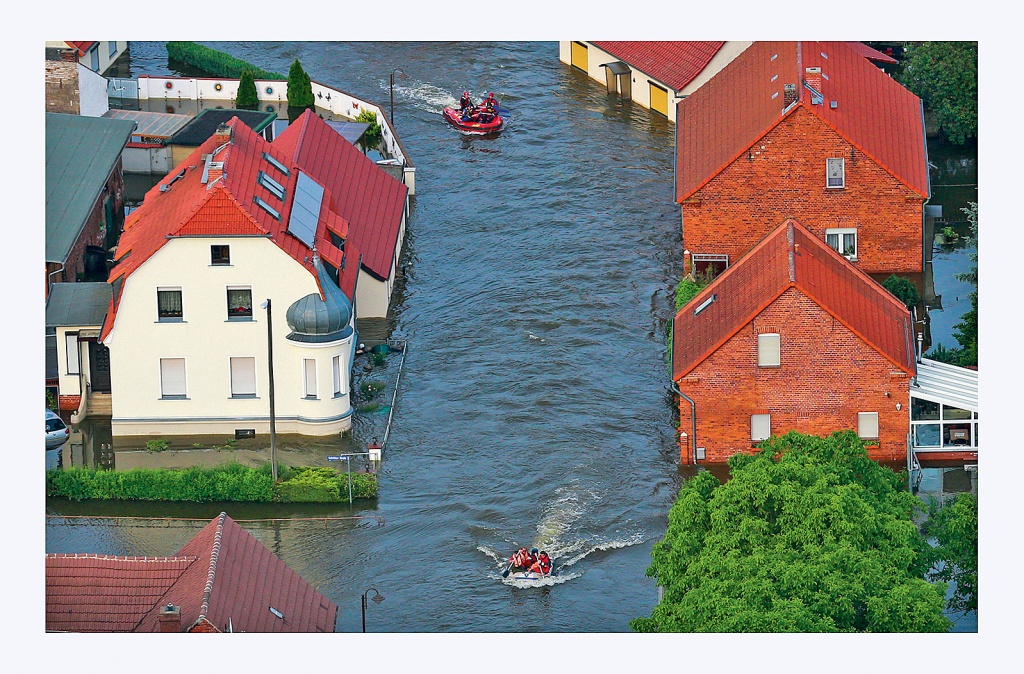
Firefighters on inflatable motor boats evacuate people in the flooded Elbo FishbackPillars of water levels in Passau are located on the town hall square and on the corner of Roßtränke/ NagelschmiedßSSE. On June 1, we, together with Khainets, an employee of a local newspaper, stood in the square, and he told what this ominous place was, because still the historian of the Pope of the Roman Pius II wrote that Danube, Tin and Ildz, joining in one place, form a kind of water traffic jam. But Khinets and I could not assume that after a few days Passau would become a distress area, that the supply of electricity and drinking water would stop, that the city would save 1800 military and 700 firefighters, and they would patrol the streets in ten -seater inflatable motor boats, and among the military there will always be a diver in a hydro -shit. Hinz did not know that his native Deggendorf, located near Passau, would almost completely go under water and that residents would be exported from the roofs with helicopters, that the section of autobahn No. 3, passing next to the city (this autobahn is the most lively route of Europe), would flood completely and that hundreds of cars will remain on the road until the water began to subside ...
Deceptive Elba
The New Times correspondent crossed the third autobahn without interference and went to the north, behind the water shaft, involuntarily turning into a “catastrophe tourist” so fashionable now - a fan of observing major troubles, whether it be tornado, tsunami, landslide, eruption of a volcano or earthquake. The greatest destruction was caused to the east of the country by the shallow elba (the depth in the Dresden region is not more than 2.5-3 meters), as well as her seemingly stunted tributaries: mulde, Zaale and white Elster. The water level in the rivers exceeded the usual three to four times. Nevertheless, all the cultural attractions of Dresden were saved - unlike the flood of 2002, when serious damage and gallery of old masters was caused (the storage was flooded - well, the paintings managed to transfer to the third floor), and the Albertinum museum, and the Ozvinger’s Opera, and the Palace Church.
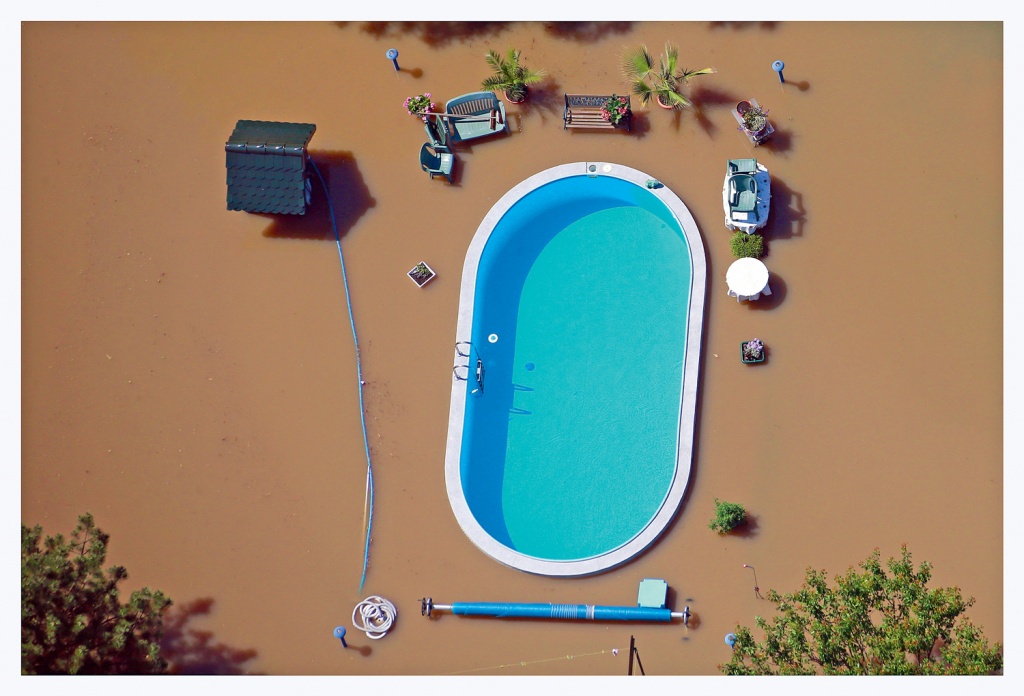
A garden with a pool in an Elbe house near Magdeburg from the Opera House to Tswinger was laid a mobile dam 500 meters long - it was purchased by the authorities immediately after the previous flood and is able to protect almost any objects within the city. The technical director of the opera Jan Zeeger says: “Now the mobile dam is protecting the buildings from water, which will rise from overflowing sewer wells, there is no longer direct pressure of the river.” Around the Dresden Theater, an additional 400 bags in the sand were laid, as the theater is closest to the water. The representative of the state art meetings of Dresden Michael Yon told The New Times that the famous Museum of Jewelry “Green Sunds” was additionally equipped with special pumps. In total, the land government of Saxony costs over € 80 million on protective measures from floods in Dresden. Nevertheless, the water in the capital of Saxony made it into the city, flooding, in particular, Schiller Park and the Elbe valley - the river level exceeded the usual by eight meters.
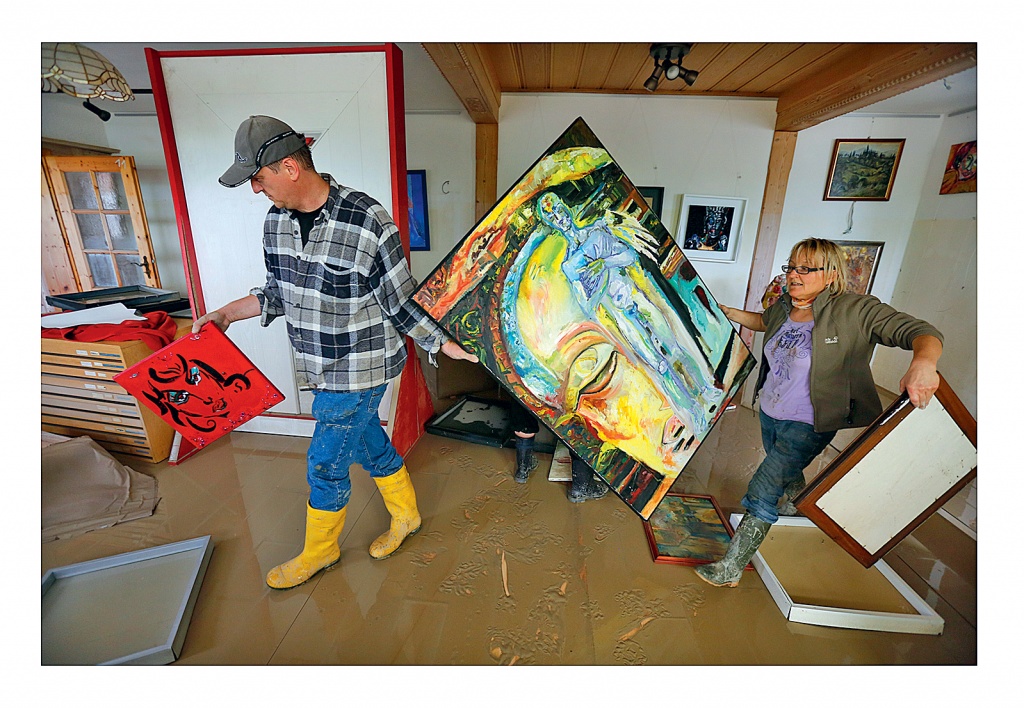
Artist Hans Peter Hundshammer and his wife save paintings from the gallery in Nattenberg
It was not possible to avoid flooding and Maisen. And although the famous porcelain manufactory was not injured, the city center was still under water. The list has more than a hundred injured settlements, including those where urgent evacuation of residents was carried out. There are very small Nitsshka and Froburg and Gösnits with a population of 3 thousand people, and a grabitz - only 170, 8 thousand people were evacuated from the city of Ans, and the inhabitants fled from large cities - Magdeburg, Galle, Bitterfeld - and smaller - Grace, Rosenhaim, Grima, etc.
In the second circle
The ancient Grimm managed to get almost immediately as the water was asleep. Electricity in the city was almost everywhere disconnected. In front of the entrance doors lay unnecessary bags of sand. Everywhere dirt, fragments of furniture, mountains of foul -smelling debris. Bridges collected from construction forests and thrown through the streets were not yet disassembled at about a month and a half height.
The city center, lying in the lowland, was flooded to the third floor, the inhabitants could not return to their homes yet. Oddly enough, he withstood the suspension bridge over the martial. But in general, the destruction turned out to be much smaller than 11 years ago, when the streets were simply blurred, turning into a trash. “Over ten years, we have made the city not only beautiful, but also more resistant to the elements,” says Grimna Worker, spokeswoman for the administration of the Grimna. - This experience will have to be repeated. But for residents this is a shock. Many will have to look for help from psychologists. ”
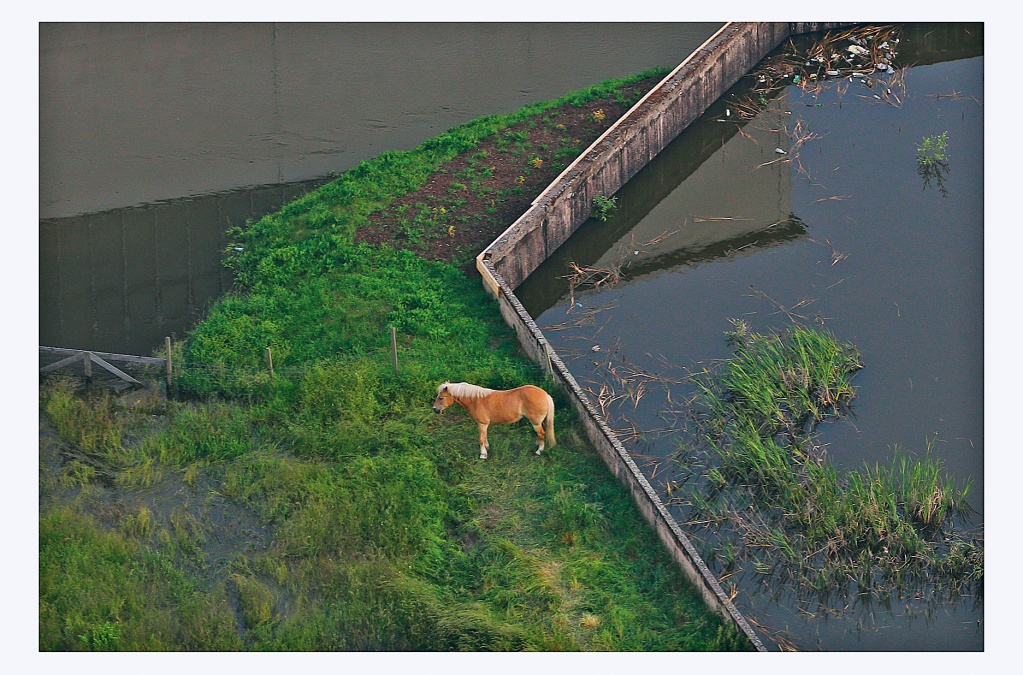
A horse cut off from a large earth is waiting for salvation on a pastry surrounded by water
“The destructive consequences of floods could be avoided if we had a protective wall,” said Matthias Berger burgomaster. “Moreover, there would be even a small margin of safety.” The fact that the city needs to build such a wall was spoke immediately after the 2002 tragedy. But residents did not agree for a long time, demanding that the new protective structure resemble the old city wall. It was possible to agree on how it should look, only five years later. As a result, the construction began in 2007, it should end in 2017.
There is another reason - the human factor. “No matter how dramatic the situation is,” says Gerda Bauer, psychologist from the University of Leipzig University, in a conversation with The New Times, “people forget about the natural disaster, and their willingness to put up with measures to protect the floods falls. Dams obscure the view of nature, disfigure the landscape, from the Polder - mosquitoes and dampness. So the problem is not only in expenses for protective measures, but often in a negative attitude towards them by local residents, in the hope that next time they will get off with a slight fright. ”
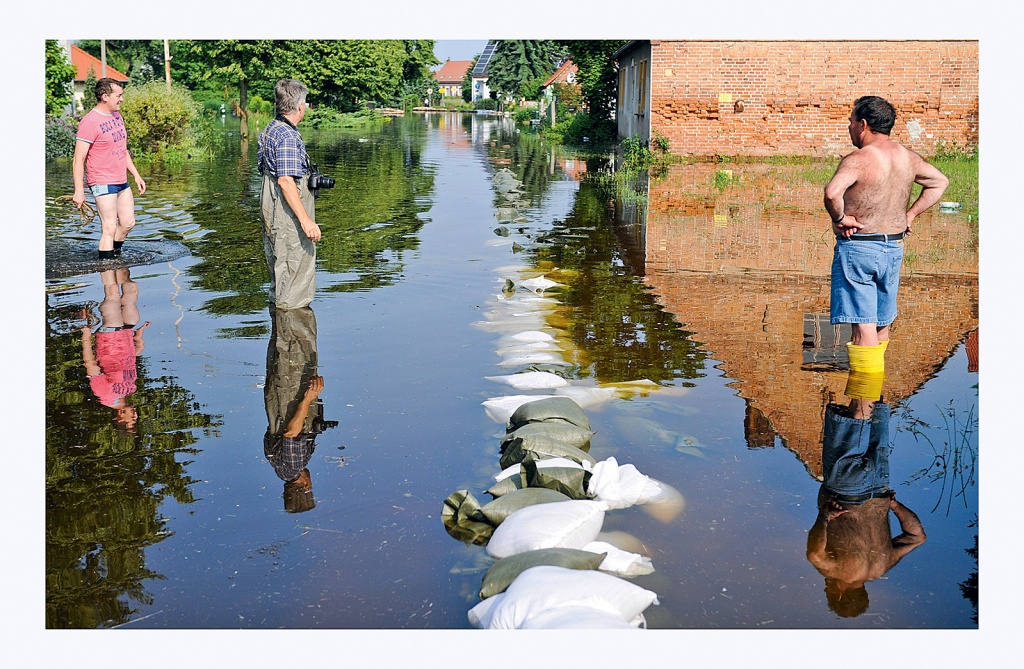
Sand bags did not save the inhabitants of Voust from flooding
Flaws of federalism
When the dam broke through in Magdeburg, 23,500 people were urgently taken out of the surroundings of the city. In total, more than 100 thousand inhabitants are evacuated in the land of Saxony-Anhalt. According to Professor Dresden Technical University, Jurgen Strack, such consequences in Magdeburg could be avoided if it were possible to coordinate efforts to confront natural disasters at the general German level.
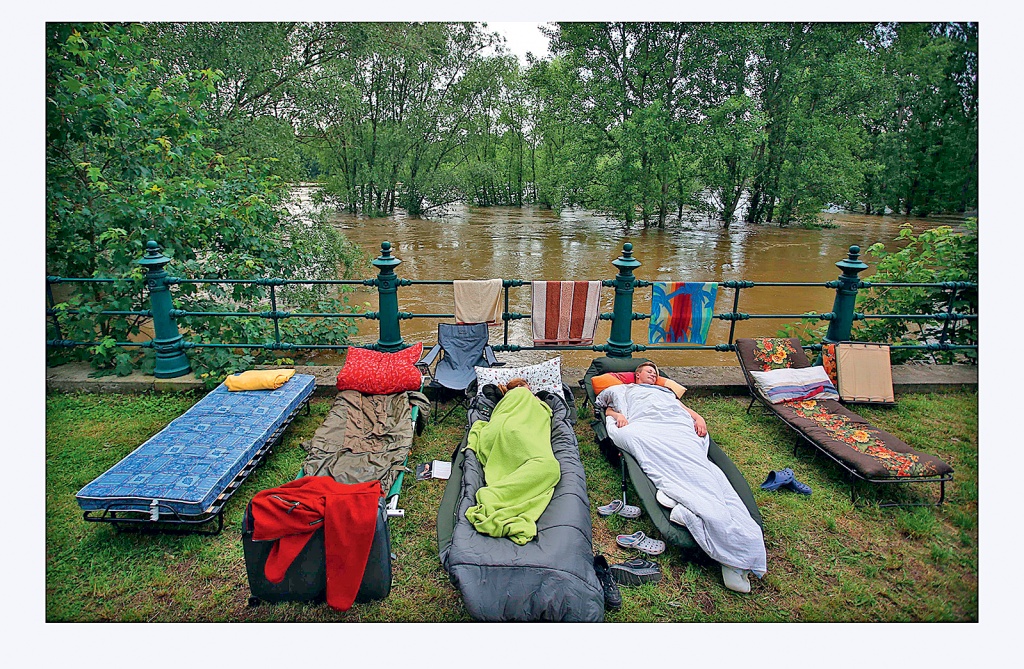
Volunteers are resting in the unstable part of Magdeburg
“After the flood of 2002,” says Professor Stamm, “47 concepts of protection from the consequences of the floods were developed in Saxony, more than a thousand different measures were taken. This is the strengthening of dams, and the transfer of some of them away from the river, and the reconstruction of bridges so that their supports do not turn into dams. ” The total investment in anti -flood measures exceeded € 1.3 billion.At the same time, the expert believes in the field, attach too much importance to the extension of the dams - instead of giving the rivers a place for the spill. And therefore, a too large water shaft reached Magdeburg: it was not extinguished upstream, in Saxony.
Flood protection in Germany is the competence of federal lands. Although they coordinate the measures taken, they are far from acting together. The expert of the German Environment and Nature Union (Bund) Vinfried Luky gives an example the situation in Wittenberg, which recently also flooded. “There on the eastern side of the river - Brandenburg dams. They are 80 centimeters higher than on the western one, where they were built by the authorities of the Saxony-Anhalet. “So you can easily imagine where the water flows.” And she poured ...
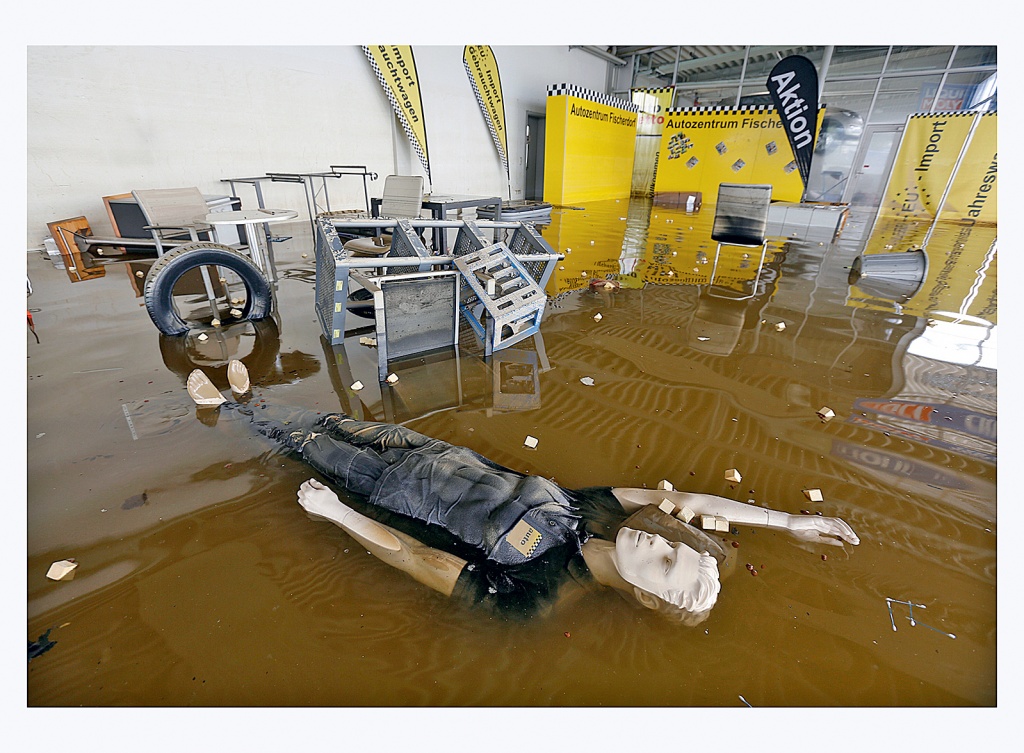
Flooded car salon in Fischerdorf
"We live by the river"
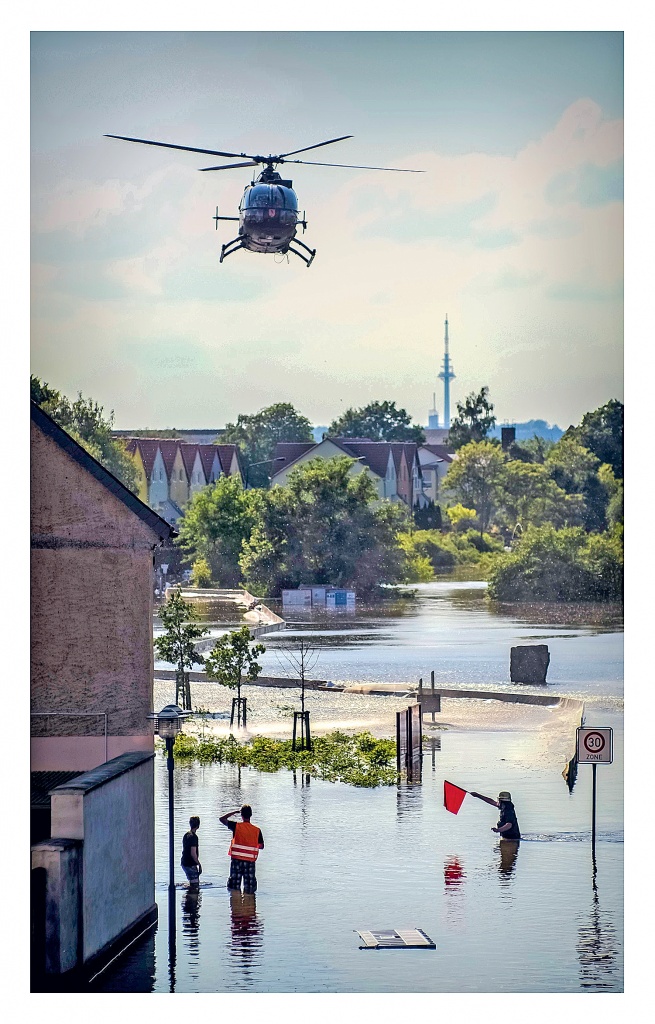 |
| From areas inaccessible to boats, residents were taken out on helicopters |
Over 70 thousand firefighters, about 11 thousand military personnel, as well as more than 200 thousand volunteers took part in the fight against the June flood. The country has not seen such unity for a long time. Even the U31 submarine crew took part: the fleet command allocated trucks and materials. And the sailors declared themselves the twin of Wittenberg.
Nevertheless, it was not possible to avoid victims: at least eight people died. Several thousand were injured.
According to preliminary estimates, the damage caused by the elements is about € 12 billion. In economically, agriculture was especially affected - Germany is forced to reckon with the loss of crop and inevitable increase in food prices.
Federal and land governments of the Federal Republic of Germany agreed to create a national fund of € 8 billion to restore the injuries from the floods of the districts. It is assumed that the federal government and land will take part in financing in equal shares, but in exactly the way it has not yet been decided. According to the Prime Minister of the Earth, Tyouringia Kristina Liberknecht, one of the options involves the release of federal bonds. In any case, the creation of this fund is obviously associated with the accumulation of a new debt, which is not very much in place in the midst of the economic crisis and strict control over state expenses.
The Minister of Internal Affairs of Germany Hans-Peter Friedrich concluded four contracts with the lands injured by the lands, ensuring the immediate receipt of urgent assistance. The federal government has already allocated the injured regions by urgent assistance in the amount of € 100 million. Urgent assistance went through land channels. For example, Bavaria has already begun to pay money from a fund of € 150 million.
The complete elimination of the consequences of the flood will cost Germany a lot of effort and means. But, as the author from Grimma Ines Boden told the author: “What to do? After all, we live by the river. And the rivers are like people: sometimes they are evil. ”
Photos: AFP/East News, Reuters, Action Press/East News