
Translated material
"It is already difficult for me to imagine the possibility of liberation: ten years of prison is not a joke"
Interview with Mikhail Khodorkovsky. Part 1.
On June 26, the once rich man of the country, and now one of the most famous prisoners of the world, Mikhail Khodorkovsky, is 50 years old. Of these, he spent almost ten in prison. Over the years, he lost the company Yukos, which he created, lost his fortune, his children are growing without him, his parents are sick. The authorities thought that Khodorkovsky would be forgotten - as many were forgotten, all the more successful and not too careful about the reputation at a time when the percentage of profit was at the forefront. Khodorkovsky went through humiliation, hooting, rejection, condemnation: "So he needs." He withstood. Thought. He wrote. I rethought a lot. And public opinion unfolded - the MBH, as his name is familiar, has become moral authority for many. And not only because the prisoners in Russia are traditionally pity - he proved that he cannot be put on his knees. His choice is either standing or in the Savan. From the camp, IK-7, in Segezh (Karelia) Mikhail Khodorkovsky answered the questions of The New Times
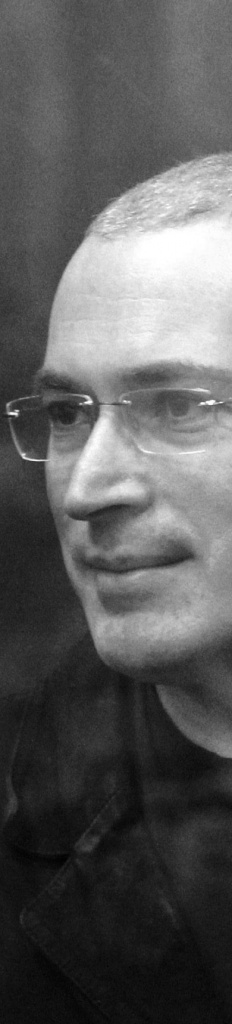
50 years-the age when people “scroll the film back”, watch the past and say: if you could return a quarter of a century ago, I would have acted here differently, then the decision would make another, I would not have made these stupid things and mistakes. It is clear that history, like the past of each of us, has no subjunctive mood, and nothing can be redone in the past. But to analyze - you can. So, if you drawn a sheet of paper in half, on the left - “right”, on the right - “was wrong”, what would have been in each of the speakers?
At 50, you can really summarize some results, and in my conditions it is even necessary. There is a risk not to have time. Actually, I did this in the book.
Speaking of the most important:
- I have a wonderful family: four children, granddaughter, parents, beloved for a quarter century wife ... - plus;
- I gave a little time to them - minus;
- The first, student marriage was unsuccessful - minus;
- We have kept a good relationship - plus.
From the rest:
- He managed a large enterprise and achieved good results (it’s ridiculous to remember - this was written by V. Putin in his congratulations) - plus;
- spent for his desire to increase the volume of production (as in the sentence!) Ten years in prison - minus;
-the first in Russia to create a system of mass retraining of school teachers to work with the Internet (the Federation of Internet Education), it will also be surprised, received the presidential premium in the field of education-plus;
- They received this award when I was already in prison - minus ...
There was a lot of things - and what I am proud of, and what I am ashamed of. Over time, the views change: the important ceases to be important, and vice versa ... The main thing is that life was not empty. There is something to remember.
How many years do you feel yourself?
I can't believe that I am already 50! Maximum - 40! Alas, doctors do not share my optimism.
How are you going - if you are going to - celebrate the anniversary in the camp?
I hope I can treat my colleagues in unfortunate tea with sweets, and on June 27 I will go on a date with my wife and children. The last time we saw in March.
"
- Imagine that you are again in the plane where you were arrested. Imagine that you will find out that the next 10 years will happen to you. How would you dispose of your fate?
- Then? I'm afraid I would shoot myself. For me then my current experience would be a shock
"
Fate
| * On October 25, 2003, at the Novosibirsk Airport Tolmachevo, the FSB special forces stormed the Khodorkovsky plane. |
Imagine that you are again in the plane in which you flew to Novosibirsk, where you were arrested*. Imagine that, sitting on that plane, you will somehow find out that the next ten years will happen to you-two vessels, terms, prisons, camps, boys grow without you. How would you dispose of your fate?
Then? I'm afraid I would shoot myself. For me then, my current experience would be a shock.
What has been more for these ten years with people from your pre -mumper environment - betrayal or, on the contrary, devotion?
I repent, I thought about people worse than they are. Someone showed himself only a little better, and someone, like Vasily Aleksanyan, at an inaccessible height. Some I knew too poorly to make an impression, and the person turned out to be real, like Alexei Pichugin.
| ** The article by Mikhail Khodorkovsky “Left Turn” was published in the newspaper Vedomosti on August 1, 2005 |
Over the years, you wrote a number of articles. One - “left turn” - at one time very surprised **. Do you still think that the left idea will dominate the Russian political stage in the coming years? In general, what ideology - nationalist, liberal, left, fascist - can I get the upper hand in the coming years?
Then I predicted the “left turn” as an objective and not only Russian, trend. He happened. Today, the paternalist request has not gone anywhere, but gradually it transforms into a request to the honest rules of the game for everyone. Hence, only a small step until people are aware of themselves by citizens and the construction of a national democratic state. This component of ideology will soon become dominant, other shades - left/right, conservatives/modernizers, etc. - They will take their niches. To jump this stage of building a civilian nation and preserving the country, I think, will not work.
In the West, they write a lot that the Russians - thanks to their non -liberal history and political culture, the habit of a strong hand, inability to self -organization, etc. - Not predisposed to democracy. And what do you think - after all, camps and prisons allowed you to see a variety of people, including, as they say, from the Earth?
Yes, today in our society there is a great lack of mutual trust and the ability to self -organization. But this was not always the case, and this experience was preserved. To awaken it, it is necessary to move the center of gravity of public administration to municipal authorities, returning them the necessary sources of resources and powers.
The value of freedom - how is it realized and is realized by people in prison?
The bulk of the prisoners seeks to get out of the gates of the prison even “nowhere”, without housing, work, family. And only a few are ready to voluntarily return to the warm satiety of lack of freedom. However, after five to ten years, many break and are already afraid of freedom.
Jail
What kind of people are sitting in the camps? In Russia there is some idealization of prisoners. And what really?
Basically, people sit for theft, robberies (taken phones) and drugs. All the rest are much less. A lot of falsifications on drugs and rape cases. The drugs are planted by “consumers” who refused to hand over sellers, falsely accusing of sales. The accusations of rape have generally become a business for prostitutes and their personalities. The vast majority of the prison population are absolutely normal - in sober state - people. Drunk or under the “foolish” - a disaster. There are approximately as many “professionals” “finished scumbags” and “professionals” as completely innocent: 10-15%. Many those who, in addition to a really perfect crime, were “weighed” by something else for “reporting”, covering, in fact, a real criminal.
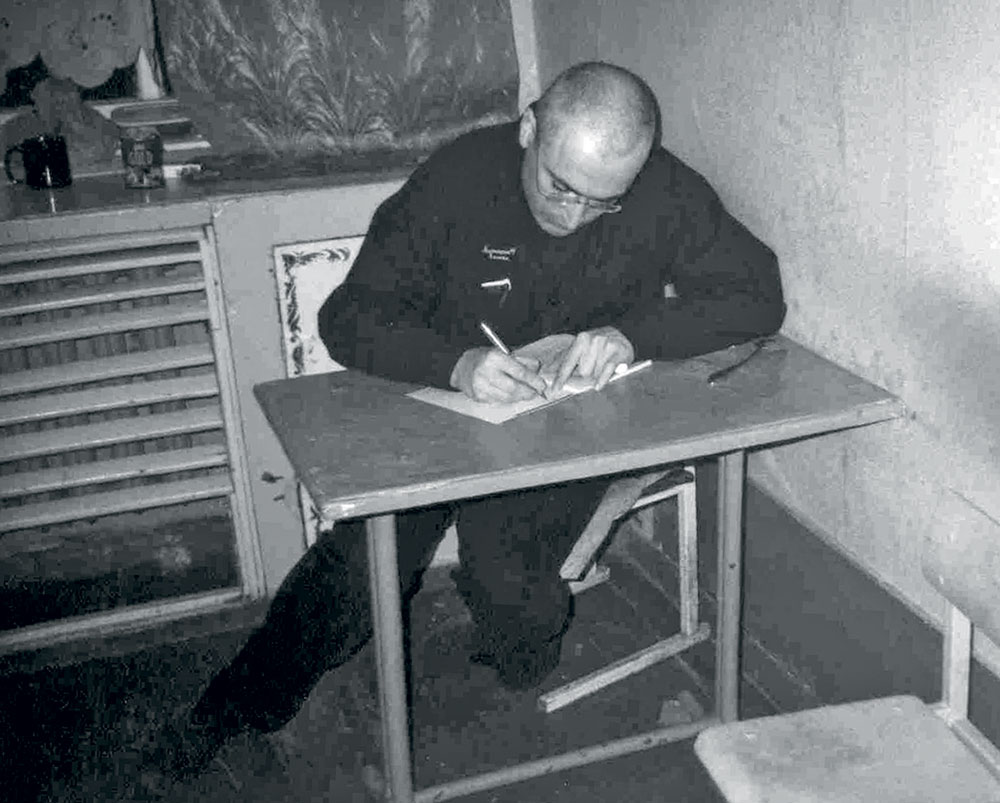
| *** Mikhail Khodorkovsky, Natalia Gevorkyan. Prison and Volya, Moscow, 2012 |
Ten years in prison - how can this be carried out? Now the process in the “swamp business” is just beginning. It is already clear that many will go in stages. How to prepare for this to young people and not very young - yesterday's students, employees of computer companies, businessmen, journalists, scientists? And is it possible to prepare for a prison? What tips would you give them based on your experience? How to build relationships with criminals? And how - with the camp authorities? What should be avoided? For example, you write in your book *** that it is impossible to allow that in the event of threats from the side of the Namerek lesson to be placed in a separate camera or insulator. Why?
There is no need to be afraid of prisons, the vast majority here live “normally” - without hunger and beatings.
It is important to correctly put and maintain your style of behavior. “Correctly” means as a person is acceptable. The interval is quite large: from working for the administration to a tough confrontation - in a human rights regime or the “denial” regime (“thieves”). Most choose one of the middle lines of behavior - "dissolve in order." So easier. The presence of support from will is of great importance. If relatives come to a person, a lawyer - they try not to hurt him without necessity: no one needs scandals.
A big mistake is to try to get some local “benefits” and at the same time demand everything that is “supposed to”. You will have to pay for this. But you need to know the laws.
Cameras, “safe places” - a great risk. Anything can happen to a person. Being to be the best is the best protection.
There are no secrets in prison. To share is accepted. Excessive kindness, generosity are perceived as weakness and fraught with consequences. Politability, accuracy in words is welcome. The imposition of your rules of conduct is a difficult and dangerous task. It is better not to try to try without much need.
Constant friendship ("family") in the group of three to five people in domestic plan is useful, but the selection of "family" requires great caution. We must understand - this is not friendship, but cooperation. There are no friends in prison trying to "be friends" - be afraid.
The camp, as I understand it, is built on concepts. What are these concepts? How different are they from those that exist in the wild? What concepts have you accepted? What are the most difficult for you?
Now the old "concepts" have become much smaller. Especially among first -time. Natives of colonies for minors are trying to impose something, but adults laugh at this. Money, connections - in the criminal world they play the same role as in our usual.
The only thing left is the distance with the "informals". Among them you can get both for non-compliance with the distance, and simply because of the extra frankness in the story of their family relationships. The rest, including the confrontation between the “red” and “blacks”, is based not on the concepts, but on the usual commandment: do not do what you do not want to do to you.
Unfortunately, the rule that I liked is gradually lubricated - “concept” - it is necessary to answer for the words said, swearing, promises, obligations. As they say here: now the “bazaar is not filtered”, and they are less responsible for it. As, however, in the wild. "
There are no friends in prison trying to "be friends" - be afraid
“ What was the most difficult thing for you to get used to the camp? And what things in the prison system did you categorically refuse to accept?
It’s hardest for me without relatives, without a family. Someone gets out of the hard routine, someone-the local "cuisine", someone-clothes. All this personally does not hurt me at all, but only mutual lies and universal distrust are nervous. I don't accept this. I try not to lie myself and try to believe people. With my character, it turns out more often than not.
In your series “ Prison People ”, you write a lot about the injustice of the judicial system in Russia. After ten years of acquaintance with hundreds, if not thousands of those who are in the camps, what do our court see on the other side of the “thorns”? What are the principles of our judicial system? What are the goals?
I am convinced that the judicial system as an independent branch of power than it should be according to the constitution, we do not have. It was turned into a piece of the vertical of the executive branch, performing the functions of analyzing disputes between citizens and sentencing.
The executive branch requires the adoption of specific decisions quite rarely - when this affects the interests of the authorities. Unfortunately, these rare, but high -profile cases corrupt and smoke the entire system.
Self -censorship operates at the level of the chairmen of the courts and the judges themselves, which does not allow to step over non -public rules. The “disobers” are certainly punished, although experienced chairmen simply do not give potential “disobey” controversial affairs.
In general, the system is oriented to draw up documents and sentences, without questioning the conclusions of the investigator, a police officer (if we are talking about a criminal or administrative case). And of course, if there are no “special instructions”.
The court, as I once wrote, is now nothing more than a link in the “law enforcement” conveyor. So he feels himself. You write that 10-15% of those who sit in camps and prisons are victims of Russian justice. What groups of people are in these percentage? On what cases? What should they do in the wild to protect themselves from arbitrariness? And is it possible in principle?
In addition to the main groups that I wrote about earlier (drug bosses, pseudo -wisers and pseudo -drugs), among innocent - victims of various campaigns: pseudo -pseudo -pipids and, of course, the favorite “feed” of our law enforcement system - pseudo -mesh. There are few of them, but it is on them that the system makes the main money. Here, help in frankly criminal raider seizures, and participation on the side of one of the business entities on a regular civil dispute, and help banks in “knocking out” debts, and much more (including politics).
I think here is the main reason for the failed amnesty - it would have deprived our “support of the regime” of the main part of the usual production for a year (since, among other things, it would take time to accumulate a new “material”).
However, there are real fraudsters and, most importantly, a bunch of corruption cases, where our law enforcement officers, not wanting to “dig up”, replaced the article “Bribka” with the article “Fraud”, since then it is not necessary to “open” the final recipient, stopping on the intermediary.
To protect yourself from an undeserved prison, you need to either have a reliable “roof” or not to be in Russia. The second is most reliable.
What habits have you had for these ten years to prisons and camps, which were not there before?
| **** The attempt on Mikhail Khodorkovsky occurred during his first term, in a colony in Krasnokamensk on the night of April 13 to 14, 2006: one of the prisoners cut the Khodorkovsky face with a boot knife when he was sleeping. |
I wake up if they look at me. This is the result of a night blow with a knife ****. I do not save papers, letters, photographs - otherwise the searches continue endlessly, and letters of people dear to me, the records are thoroughly research. At breakfast, I eat bread with porridge. Probably, I don’t notice much of myself.
What is the most unbearable for you in prison? What was experienced especially acutely at the beginning of the deadline? What - then? What is constantly unbearable?
At first it was the most unbearable to read and listen to what you are called a fraudster, how Yukos is ruffled, how people were pursued, it was painful to look at the experiences of relatives.
Later, the accusations ceased to cause rage, rather laughter, the company was destroyed, but people, the family ... I would like to abstract - it does not work.
In an interview, you said that in the fourth year you get used to not free. What does it mean to "get used to not free"? And what is impossible to get used to?
The habit of non -freedom is the lack of experiences about the inability to remain alone, walk in the forest or along the streets of the city, the obligation to fulfill the wildest requirements (such as building for entering the hut), the understanding that all your personal items will be regularly searched, letters and photographs are visible, etc.
Food, clothes, the number of books, work - everything is regulated, but it is not difficult to get used to this at a sufficient level of self -discipline. Although many literally go crazy. I could not get used only to separation from my relatives. Three main myths that the prison destroyed?
1) that we have a court, 2) that the innocent do not sign the confessions, 3) that the “police” and the criminals are different.
What is in prison most often?
I do not remember dreams.
When you feel bad, what do you think about? Say, it happens that you read poetry? If so, what?
When bad, I do not read, but I write. Then I tear. I rarely like poetry, because I got used to speed reading and lose their rhythm. But Guberman and Vysotsky - I like it. The rest is one or two works of different poets, from Pushkin to Galich and Okudzhava.
You are in prison - both by way of wild, and by the significance of the name, and in terms of time - authority. What tips do you go to you most often? How do you reassure people?
In prison, as well as free, I am rather a symbol. So they say. And the questions are rarely asked. Mostly they ask to comment on what they saw on TV. Although occasionally the conversations "for life" take place. There are few people with my life and prison experience.
Your strongest human discovery in prison?
Probably, nothing struck me as much as the inner decency, courage of people, the willingness to endure hardships in order to remain in the fret with their own conscience. I thought that these were unique features of the few, it turned out - on the contrary, there are few completely unscrupulous ones, even there are not enough bureaucratic positions. And sometimes people go to death. Why? Upbringing? And where is the upbringing? The families are different, the environment is different, the state ideology is different, and the majority of the main ethical norms are one, even if we do not adhere to them. Можно выстраивать много логических цепочек, но вопрос «почему так, а не иначе» в конце останется. Для меня ответом стала Вера.
К вам приезжают ваши близкие: родители, жена, дети. По каким вопросам труднее всего находить вам общий язык?
С младшими детьми трудно — они же были совсем маленькими, когда меня арестовали, а сейчас — подростки.
По каким вещам из прошлой жизни вы больше всего тоскуете?
Понятие «тоска к вещам» для меня неприменимо. Тосковать можно лишь по живым существам: людям, иногда животным. К вещам же я отношусь прагматично: мешает мне отсутствие компьютера, недоступность нормальной библиотеки (сетевой и даже обычной, бумажной).
Когда человек десять лет оторван от всех и вся, появляется ли страх перед внешним миром за колючей проволокой?
Мне проще многих — меня ждут любимые люди.
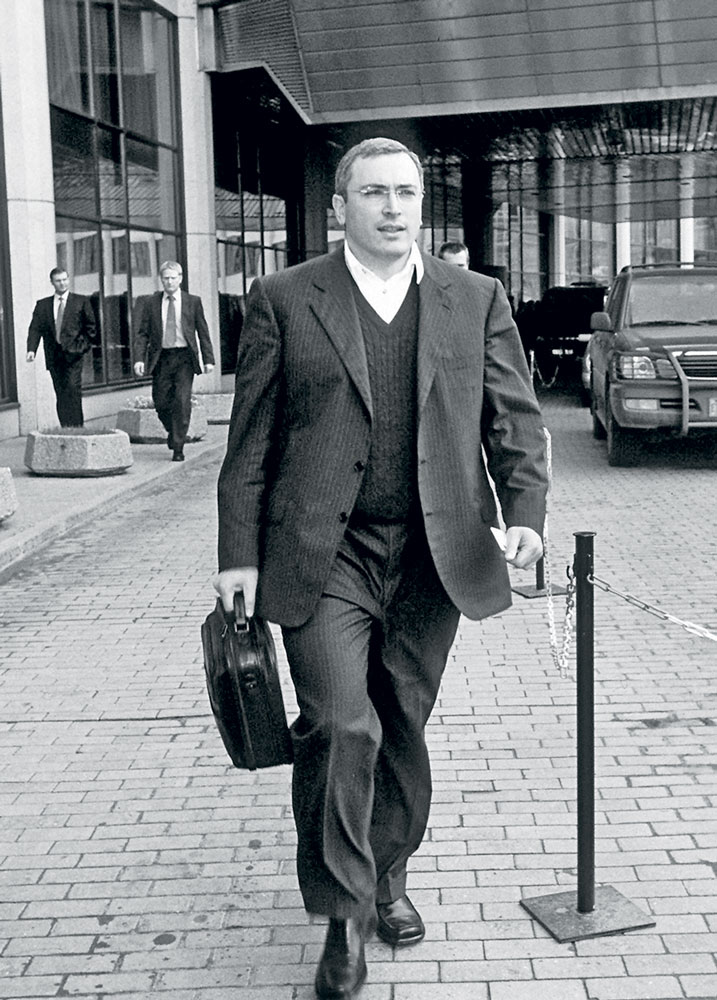 | 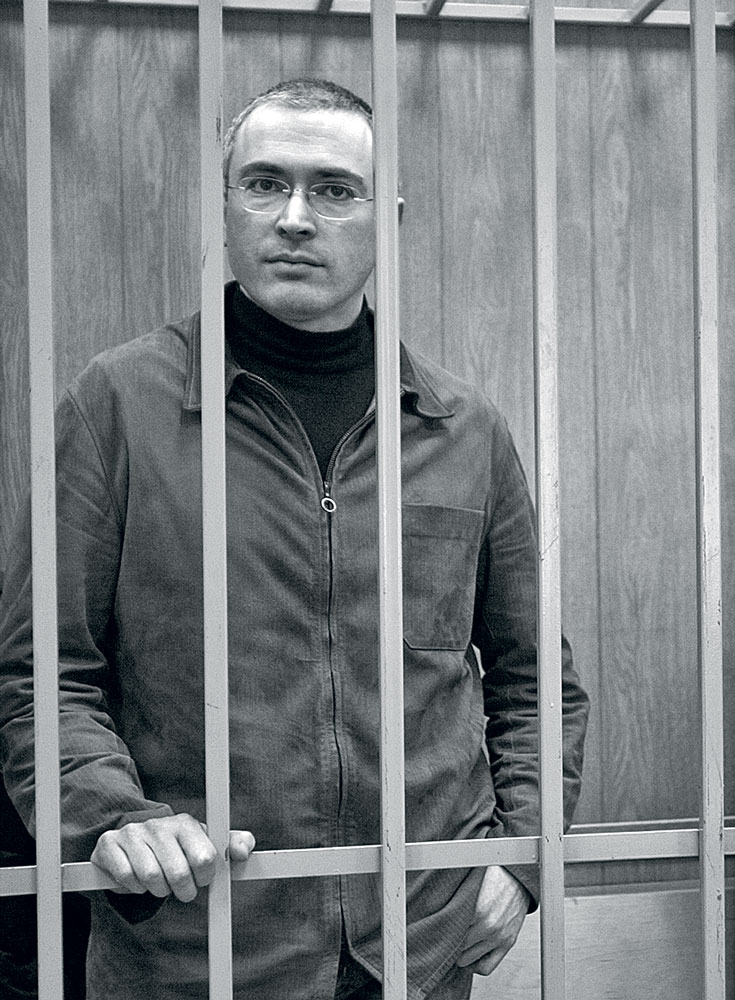 |
| Вот таким (слева) Ходорковский был в годы своего наивысшего взлета и могущества — это снимок мая 2001 года. А таким — стал: снимок справа сделан в декабре 2010 года, после 7 лет тюрьмы и за несколько дней до того, как он услышал срок по второму приговору: 14 лет колонии. |
Михаил Ходорковский родился 26 июня 1963 года в Москве, в семье инженеров. Его мама, Марина Филипповна, инженер-механик по холодной обработке металлов, и отец, Борис Моисеевич, всю жизнь проработали на заводе «Калибр» (The New Times публиковал интервью с родителями Михаила Ходорковского). После окончания школы, в 1981 году, Ходорковский поступил в Московский химико-технологический институт им. Д. Менделеева. В перестройку при райкомах и обкомах комсомола стали создаваться центры научно-технического творчества молодежи, где зарождались первые бизнесы. Один из таких центров Ходорковский создал и возглавил в 1987 году при Фрунзенском райкоме комсомола в Москве: заработанные в том числе и в этом центре деньги легли в основу созданного Ходорковским с друзьями банка МЕНАТЕП — одного из первых коммерческих банков в СССР. МЕНАТЕП активно участвовал в приватизации начала 1990-х, а потом в залоговых аукционах. Результатом чего в конечном итоге стало создание промышленной группы «Роспром» и нефтяной компании ЮКОС. К 2003 году ЮКОС стал крупнейшей компанией России с капитализацией больше $40 млрд, а Ходорковский — богатейшим человеком России и одним из богатейших людей мира: он занимал 16-е место в списке Forbes, а его состояние оценивалось в $15 млрд. К этому времени его отношения с президентом Владимиром Путиным становятся более чем напряженными.
25 октября 2003 года в Новосибирском аэропорту Толмачево, где личный самолет Ходорковского приземлился на дозаправку, его штурмом взял спецназ ФСБ. Ходорковского обвинили в нарушениях при приватизации ОАО «Апатит» в 1994 году и арестовали. Подельником Ходорковского стал в прошлом президент банка МЕНАТЕП Платон Лебедев. В 2005 году Ходорковский был признан российским судом виновным в мошенничестве, неуплате налогов и т.д. и приговорен к девяти годам заключения (кассационная инстанция снизила срок до восьми лет). Компания ЮКОС подверглась процедуре банкротства. В декабре 2004 года государство провело аукцион и продало одно из самых прибыльных подразделений ЮКОСа — нефтедобывающую компанию «Юганскнефтегаз» — в счет уплаты налоговой задолженности некой «Байкалфинансгруп», которая оказалась зарегистрирована в Твери, там же, где числилась распивочная «Лондон», за сумму, эквивалентную $9,3 млрд. Через три дня «Байкалфинансгруп» была приобретена государственной нефтяной компанией «Роснефть», которую ныне возглавляет один из ближайших сподвижников президента Путина Игорь Сечин. В 2006 году началось второе «дело ЮКОСА», которое завершилось 30 декабря 2010 года приговором — 14 лет (по совокупности приговоров и за вычетом отбытого). На свободу Ходорковский, если произойдет чудо, должен выйти 25 октября 2014 года.
Продолжение — 25 и 26 июня на сайте журнала
фотографии: РИА Новости, AP Photo, Григорий Тамбулов/Коммерсант