
Translated material
Home-video for 25 billion
Webcams in polling stations are recognized as legally void
The court of the city of the city of Dolgoprudny challenged Vladimir Putin himself: the president’s initiative to install webcams in polling stations, in fact, was recognized as legally insignificant. How could this happen and what will happen to the cameras now - the New Times found out
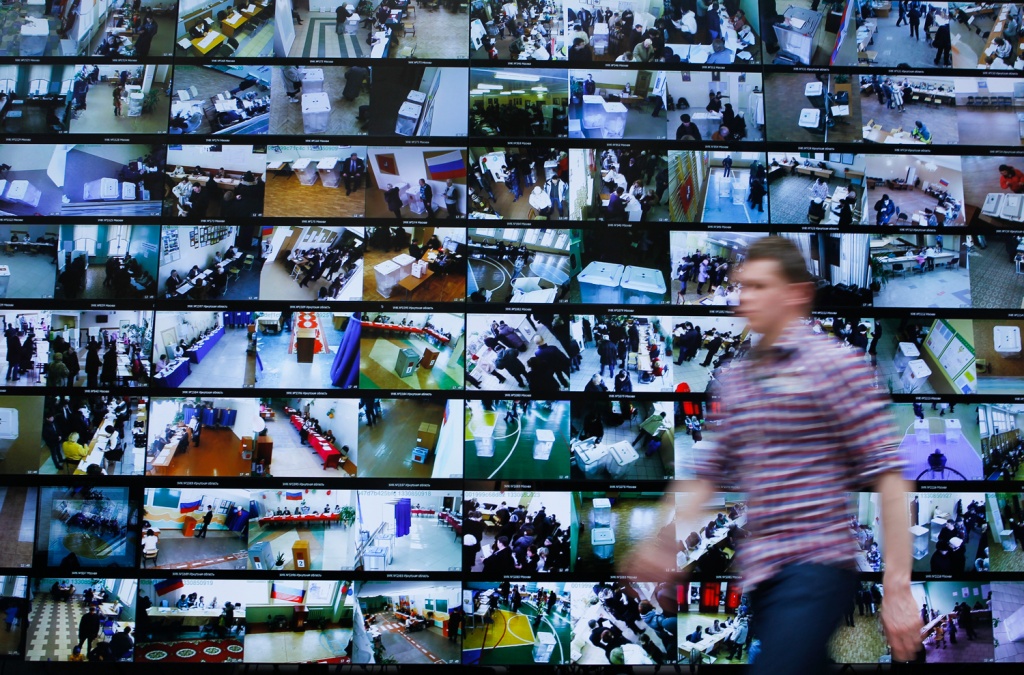
An expensive project with webcams (in the photo-online broadcasting from sites on the screen in the Central Election Commission) turned out to be legally useless
The presidential order was announced in December 2011 and was completed exactly by the March elections of 2012: webcams were installed on the vast majority of sections. They didn’t stand for the price - the total estimate, according to the Accounts Chamber of the Russian Federation, amounted to 25 billion rubles. It seems that the main function of the webcam is quite clear: to fix what is happening on the site, so that later all the participants in the elections, including voters, have the opportunity to turn to video recordings as a tool for proving any significant facts. However, the judge of the Dolgoprudnensky city court Zhanna Radchenko reasoned completely differently.
"Nightmare impressions"
The New Times has already told the story of an officer-consistent from Dolgoprudny Alexander Impressyev: having visited the observer in the 2012 presidential election, he tried to challenge their results in one, individual city. Why I decided to use, expressed in the military language, “means of objective control”, that is, notes with webcams.
Through the portal of the State Services, Impressyev received official videos from nine sections of Dolgoprudny and meticulously calculated how many voters approached the urns for voting. As a result, the data of his own counting and the final protocols of the precinct commissions came together only in one site. In the remaining eight cases, the number of ballots in the urns, according to the protocols, turned out to be tens and even hundreds of pieces more than the number of those who lowered them into these urns. For reliability, the signalman compiled a table in which he tied each voter to the world system time-to prove that there are no gaps or unnecessary fragments in the records of the webcam. And in early March 2013, he took all these materials to the Dolgoprudnensky City Court.
| *"On the basic guarantees of electoral rights and the right to participate in the referendum of citizens of the Russian Federation." |
In court, the emphasis was not easy: representatives of the territorial election commission and the prosecutor's office built a deeply embedded defense. They considered the plaintiff the recordings from the webcam “inaccurate evidence”, and the calculation of the video recorded was obviously “subjective assessment”. In addition, the law*, which describes the procedure for summing up the elections, on records with webcams, even if established according to the highest command, there is not a word-and therefore, and therefore, these data of the defendants, according to the defendants, are not obliged.
Judge Radchenko completely agreed with this opinion - on May 28, the court refused to emphasize the application. “Video recording of surveillance in voting rooms, received by the emphasis of A.S. At his request from the state portal, the video surveillance video itself cannot be regarded as reliable evidence of the illegality of the decisions of A.S. election commissions, ”the motivation part of the court decision says. But the “protocols of the vote counted by election commissions”, on the contrary, are characterized by the judge as “permissible and reliable”.
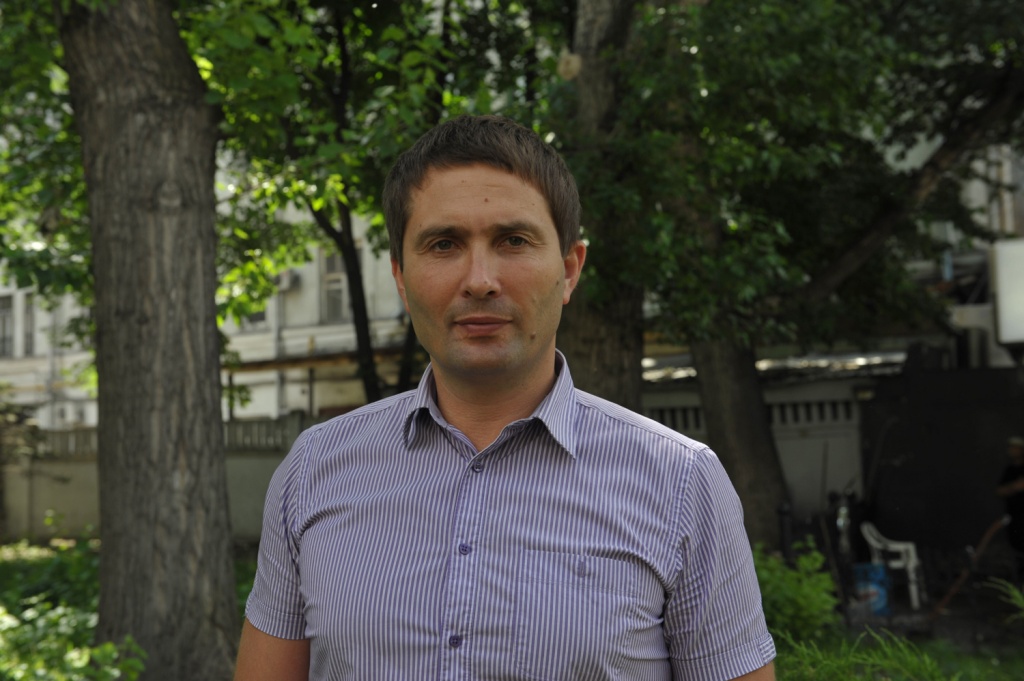
Alexander Impressyev could not convince the court that the official video is reliable evidence
“I have nightmares,” admitted the New Times, Alexander Impressyev, who filed an appeal to the Moscow Regional Council last week. - The judge behaved phenomenally: demonstrated undisguised anger, neglect of the applicant. Initially, I put questions in such a way as to convict me in something unlawful. For example, I asked what time I watched the video, wasn’t I in a working one? Or maybe at night? Or maybe "you are tired and looked inattentive"? "The assignment of actions and reasoning of Judge Radchenko also notes the representative of the Union of Russia's Union (Sonar ”by Mikhail Uspensky:“ It was a very typical process in which the court almost clearly took the side of the election commission: pressed on the plaintiff, removed his questions, helped the defendant with the formulations ... ”
Training cinema
So, webcams are not intended for the calculation of voters and cannot be used to obtain evidence in the case-this is the argument of the judge Zhanna Radchenko. The deputy executive director of the Voice Association Grigory Melkonants resolutely disagree with her: the video presented by the emphasev, “certainly unique evidence,” he said.
“A person did not regret his personal time to watch and analyze so many records ... And the fact that the court dismissed this shows that, unfortunately, the webcam institution in Russia is in every possible way sabotage by state bodies,” said Melkonian in a conversation with The New Times.
"
$ 800 million spent on webcams went to see the “movie” in Cyc in Cyc. The most expensive film “Pirates of the Caribbean: on the edge of the world” cost “only” $ 300 million
"The Central Election Commission of the Russian Federation, where the New Times addressed the question whether it was possible to use webcams to count the number of voters voted on the site, actually deduced from the answer." Using the webcam, which were used in the elections of the President of the Russian Federation, and then during the elections within the framework of a single voting day, it is difficult to accurately calculate the number of voters, the voters said, the voters said. A letter from the Tsik press service in the journal, webcams were installed on the polling station, so the voters who used their right to vote at the house, in the field of view of the webcam, by and large, is amazing: not otherwise the commission forgotten that, according to Art. At home, it is installed and entered into the protocol separately, so nothing prevents the reliability of the numbers in each line.
However, from a letter of the press service you can find out why an expensive operation with the installation of webcams was actually arranged: “Webcams were effectively used to fix the activities of participants in the electoral process and in order to prevent possible offenses. All information about possible violations in the federal level elections is carefully checked and analyzed, according to the results a collection “Green Book” is compiled, available on the official website of the CEC of Russia. ”
Member of the Central Election Commission of Maya Grishina in the commentary for The New Times actually confirmed that the video may be interesting only to CIC: “We use these records with webcam to see what shortages, weaknesses are. They even made a film-how to work as members of the commission, as it is not necessary ... And we need them, respectively, in order to strengthen our activities in terms of clarification of some things, the release of methodological guidelines for the election commission. ”
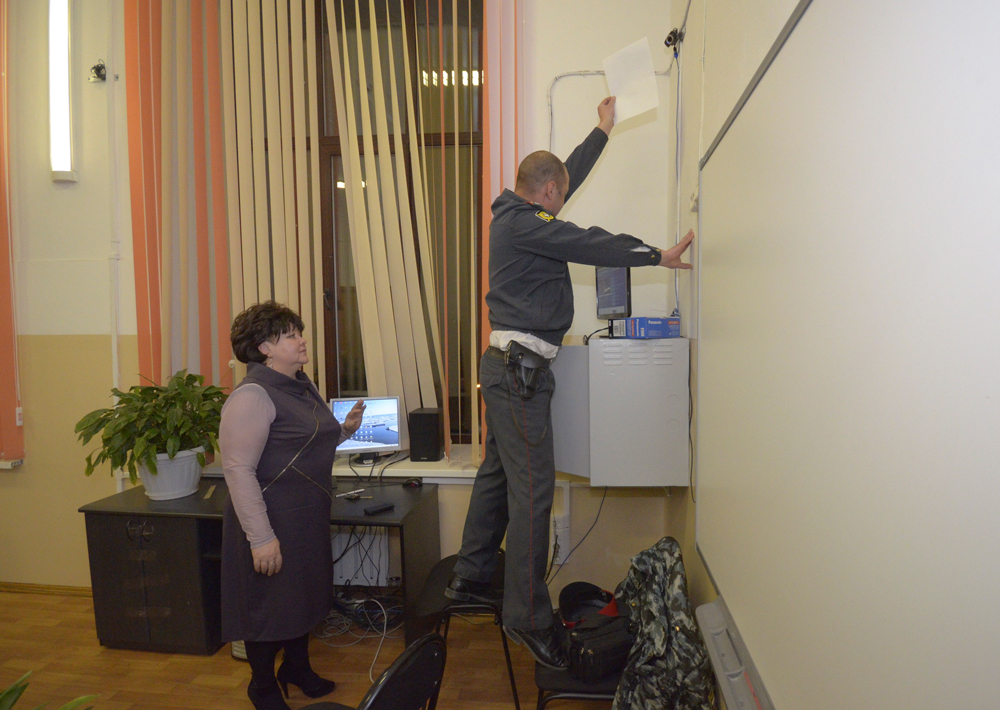
Webcams are not needed for the election commission of webcams to protect against falsifications, but only to teach members of the commissions
It turns out that almost $ 800 million spent on webcams went to see the “movie” in the CEC and put its best fragments on their website. What can I say, a good budget for such a “Home-video”-especially if you recall that the most expensive film “Pirates of the Caribbean: on the edge of the world” cost $ 300 million, and the legendary “avatar” was completely miserable $ 237 million.
And only a member of the CEC from the Communist Party, Evgeny Kolyushin, ventured to more detailed explanations: “The installation of a webcam was Putin’s political decision. Of course, they create some impression of openness, but in fact, these records have no status, it is not fixed in the legislation. Therefore, the courts are ignored. ”
Freudian slip
What next? According to Grigory Melkonian, on the webcams, in spite of everything, it is too early to put the cross: “Civil legislation should be made to the civil procedural legislation so that the webcams receive legislative status, and the videos would be equated with electoral documentation-along with ballots and protocols.” The initiatives of this kind, according to the interlocutor of the magazine, are already.
However, real opportunities for using webcam data as objective evidence are steadily narrowed. Let us recall, for example, what happened last spring, when the former candidate for mayor Astrakhan Oleg Shein, through a long hunger strike, achieved the video from all city sites. Personally watching this video, the chairman of the CEC Vladimir Churov admitted: the cameras recorded numerous violations of the vote counting procedure established by law. The courts began to study the videos. And although they chose to interpret what they saw at their own discretion (they say, there were violations, but they did not affect the general results of voting), with the fact that webcams really give an objective picture of voting, no one argued.
A year has passed, and what do we see in the Dolgoprudnensky court? In fact, the videos themselves are recognized as inaccurate, and the presidential initiative (formally aimed at increasing the transparency of the elections) is declared legally insignificant.
By the way, in the official decision of the Dolgoprudnensky court there is one wonderful passage: “ The will of the voters and the calculation of their votes in accordance with the Federal Law on Electoral Rights guarantees is carried out by members of the relevant polling station commission .”
If this is a reservation, then obviously on Freud.
Photos: Reuters, Ksenia Zhikharev