
Translated material
China lacks money?
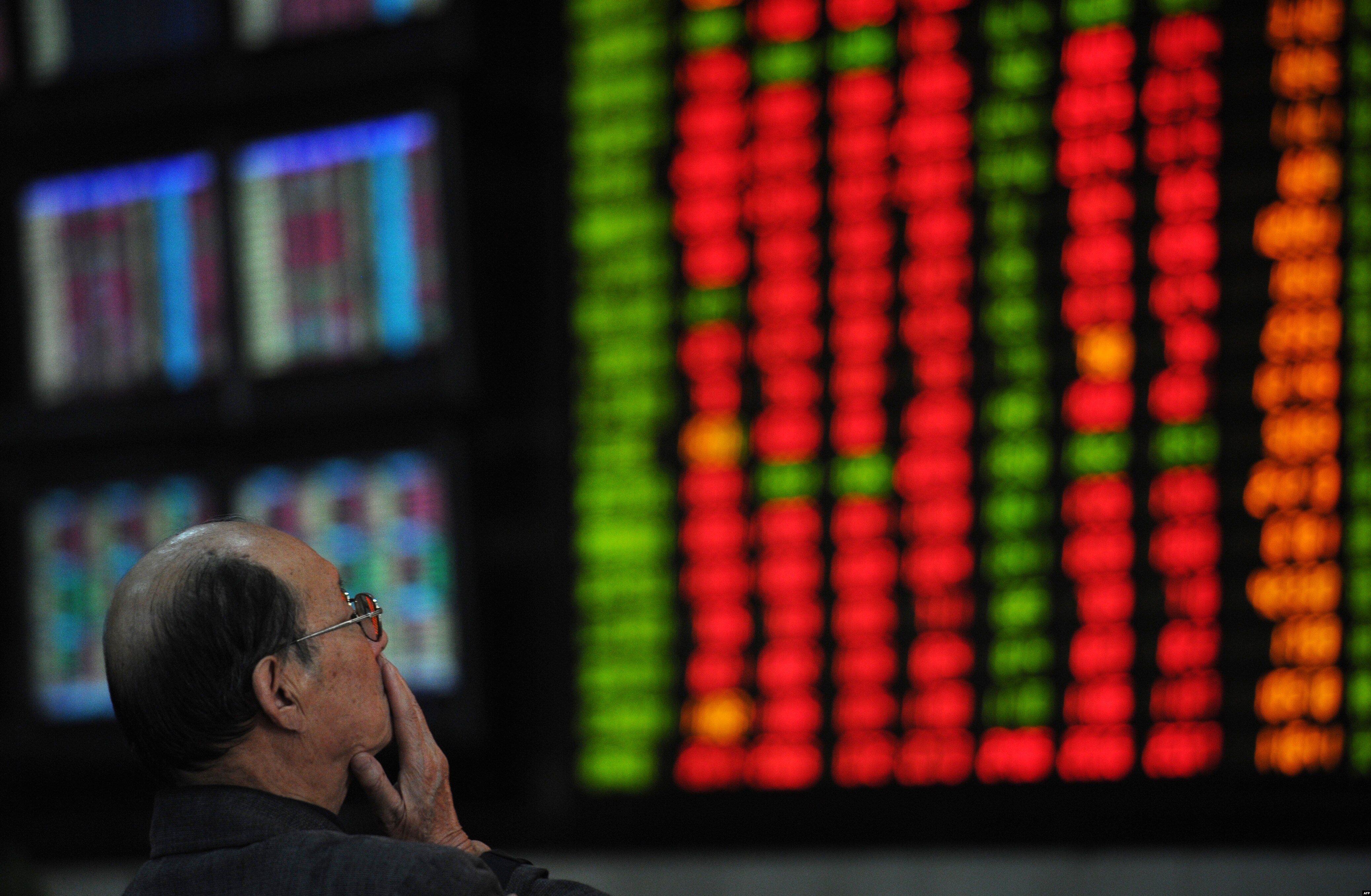
China's main stock indices have decreased this week to minimum levels over the past four and a half years, having lost more than 6%on Monday-Tuesday, and in general, from the beginning of June-about 15%.
The Central Bank of China significantly reduced liquidity volumes supplied by him to the interbank market. As a result of the bet on it, and even in the conditions of slowing the flow of currency to the country and amid the growth of demand for loans, from the usual 2-3% per annum climbed up to almost 30%. And only by Monday fell to 6.7%.
On Sunday, the official state news agency of China reported that the measures taken now by the Central Bank were aimed at preventing the further expansion of Nebankovsky, or “shadow”, lending in the country and that the focus of the bank’s monetary policy is now shifting from “quantity” to “quality”. The next day, the markets collapsed.
Traditional banks in China are usually controlled by the state and lend mainly by state companies and enterprises. Others - from construction to metallurgical - are more likely to apply for loans to the “non -banking” financial sector, which unites all kinds of investment or trust funds, insurance or leasing companies.
It has existed in the country for more than a quarter of a century, but began to grow especially violently after the financial crisis of 2008, when ordinary banks were forced to tighten lending, and the authorities sought to prevent a slowdown in economic growth. The total volume of loans provided by such financial companies, according to the American investment bank JPMorgan Chase, by the end of 2012 amounted to 69% of China GDP, the second in the world after the American. And the total mass of loans issued to Chinese companies and enterprises in 2013 exceeded 200% of the volume of the national economy - the same amount in the USA on the eve of the 2008 crisis.
The financing scheme used by China’s non -bank sector also resembles the “pre -crisis” American. These companies form their own funds, either occupying money from traditional banks, or widely attracting funds of private investors. For issued loans, these “non -banking” creditors release various financial instruments, which then sell to investors with a promise of high returns.
Without falling under standard banking regulation, such financial companies can provide a minimum of information about themselves. Therefore, it is difficult to evaluate which part of the loans they have issued is difficult. In addition, the state provided financial assistance to many borrowers, thus preventing their collapse. Now the authorities are tightening this practice. And the markets are afraid of the further slowdown in China’s general economic growth, which, in turn, will lead to a reduction in Chinese demand for imports from other countries.
On Tuesday, at a press conference in Shanghai, the representative of the Central Bank of China said that recent sharp fluctuations in betting in the interbank market is a temporary phenomenon and that the bank would take measures to stabilize them at acceptable levels. After that, Chinese stock indices, which in the morning on Tuesday fell even more than the day before, had almost all day losses by the end of trading.
Materials Wall Street Journal, Reuters, Associated Press.