
Translated material
WT: Russia violates the missile agreement with the USA with the help of Yars
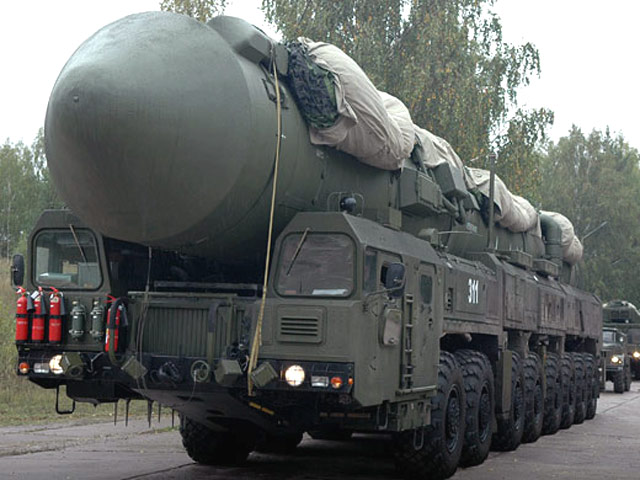
Russia grossly violates the liquidation of medium and smaller missiles (RSMD), concluded in 1987 with the United States, writes the American newspaper The Washington Times with reference to US intelligence. According to special services, Moscow creates a new Yars-M (RS-26) missile, the range of which is about 5500 kilometers.
The new model was tested at the beginning of this month. According to the Americans, its characteristics allow it to be attributed precisely to the category of medium -range missiles, despite the fact that Russia classified it as an intercontinental ballistic in order to avoid accusations of violation of the contract.
Moscow rejects all the accusations. “According to my information, Russia carefully monitors the fulfillment of the obligations related to the 1987 RSMD agreement and the new 2010 START Treaty,” the former chief of the chief headquarters of strategic missile forces, Viktor Yesin, told the American site.
He confirmed that the Yars-M missile has a flight range of about 5500 kilometers, which Russia notified the United States in August 2011. Meanwhile, intercontinental missiles with a range of more than 5,000 km, as well as an average (from 500 to 5000 km) and a smaller (from 150 to 500 km) range are subject to the action on the RSMD agreement.
The issue of compliance by Russia by the terms of the RSMD agreement was raised in Moscow on Monday, the head of the Presidential Administration of the Russian Federation Sergey Ivanov. In an interview with Russia-24, he called the “controversial” agreement concluded with the United States and said that Russia would not fulfill its conditions forever, especially since other countries can possess such weapons. “A logical question arises: on the one hand, we signed the Soviet -American agreement, and we honor it, but this cannot continue endlessly,” the head of the Kremlin administration said.
Earlier on June 19, Russian President Vladimir Putin said that while Russia complies with the terms of the contract to reduce the RSMD, some of its "neighbors" are developing such shock systems. “We cannot allow the balance of the strategic deterrence system to be violated to be reduced by the effectiveness of our nuclear forces. Therefore, the creation of East Kazakhstan region will continue to be one of the key areas of military construction,” the head of state emphasized.
This statement by Putin was on the same day that US President Barack Obama, while in Germany, proposed a third to reduce nuclear arsenals of the United States and Russia and called for a reduction in the number of tactical warheads in Europe.
It is worth noting that the skeptical statements of Russian leaders about the feasibility of compliance with the RSMD agreement are far from the first time. The same Putin and Ivanov raised this topic back in 2007.
Ivanov, who worked at that time by the first deputy prime minister, openly called the Soviet-American treaty “the Relarm of the Cold War”, indicating that Russia would not interfere with the acquisition of medium and short-range missiles, if only because India, Pakistan, Korea, China, Iran and Israel have them.
In turn, Putin stated that Moscow may have to abandon its obligations under the 1987 Russian-American agreement if its action is not extended to other countries that own missile weapons.