
Translated material
Human rights activists are asked to return the article "Fraud" to the decree on the amnesty
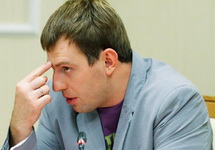
72 public figures sent a letter to the State Duma with a request to return to the draft decree on amnesty for entrepreneurs Article 159 of the Criminal Code (fraud). This was reported by Izvestia, at the disposal of which there is a copy of the document. "Without inclusion of this article, the amnesty will be a chicken," the appeal says.
A letter drawn up by an expert at a permanent commission on the reform of the penitentiary system in the Presidential Council of Human Rights Vladimir Osechkin was signed by the majority of members of the HRC, as well as members of the Public Chamber. Among the signatories are the head of the HRC Mikhail Fedotov, the doctor Elizabeth Glinka, the ex -head of the Institute of Modern Development Igor Jurgens, the judge of the retired Constitutional Court Tamara Morshchakova, politician Irina Khakamada.
Human rights activists recall that President Vladimir Putin at a meeting with entrepreneurs in Voronezh announced the need for amnesty in connection with a change in legislation. “And one of the important changes was the addition of new compositions, precisely for entrepreneurial activity, in the 159th article,” the document says. “It turns out that the project of the amnesty does not reflect the words of the president.”
The business ombudsman Boris Titov noted that without inclusion in the draft resolution of the 159th article, the amnesty loses its meaning. 90 percent of appeals from entrepreneurs relate to the persecution for fraud, he noted.
A member of the HRC Lawyer Yuri Kostanov added that Article 160 (assignment or embezzlement) and 201 of the Criminal Code (abuse of powers) should also be included in the project. “In fact, behind the list of articles of the Criminal Code in the draft resolution there is no sufficiently deep criminological analysis,” he said. “To force the courts to choose which convict to amnesty and which is not, it means to produce corruption reasons.”
State Duma deputies evaluate the initiative of social activists differently. Member of the Committee on Economic Policy and Entrepreneurship, Uneneros, Igor Igoshin, supported the appeal as a whole. Another deputy from United Russia, a member of the Committee on Civil and Criminal Law, Rafael Mardanshin, agreed with him.
Meanwhile, the Vice Speaker of the State Duma, a member of the LDPR Igor Lebedev opposed the proposal of human rights activists. "We have half the country for selling the last pants to pay taxes, and here we will produce scammers from prison who have not paid multi -million taxes. This is unfair," he said.
The final decision regarding the economic amnesty will be made on July 2, after the finalization of the project by deputies together with the state legal department of the presidential administration.
As Vedomosti previously wrote, in the current version of the document Article 159 is absent. At the same time, it includes articles with similar compositions - 159.1 (fraud in the field of lending) and 159.4 (fraud in the field of entrepreneurial activity).
On Tuesday, President Vladimir Putin introduced a draft decision on the economic amnesty of convicted entrepreneurs to consider the State Duma. Last week, he stated that he supports an amnesty and asks the State Duma to declare it before leaving for the summer holidays, that is, until July 14.
Then Putin emphasized that the amnesty will affect those who have committed crimes in the field of entrepreneurial activity, but were convicted for the first time, has already compensated or agree to compensate the damage and losses to the victims. “The criminal record will be removed from these citizens,” the president added.
Putin has already discussed the idea of economic amnesty with the business community. Representatives of the Russian Union of Industrialists and Entrepreneurs, the Chamber of Commerce and Industry and Business Russia met with Putin in Voronezh in late May. Then Putin did not approve the proposed version of the amnesty, calling it raw.
At the same time, the author of the idea of the amnesty of the business ombudsman Boris Titov, finalizing the project, reduced the list of falling for liberation eight times. Now no more than 13,600 people, and not 110 thousand, as previously expected, will be able to count on liberation. However, from this abbreviated list, according to Titov, not everyone will be able to release. “We assess that up to 10 thousand people can be released,” the Ombudsman said.
Initially, in the amnesty project, the conditions of liberation were less stringent: it was supposed to freely free entrepreneurs, regardless of the number of judgments. Thus, it would spread to Mikhail Khodorkovsky and Platon Lebedev, convicted twice. Now it is excluded.