
Translated material
How do people capture the city?
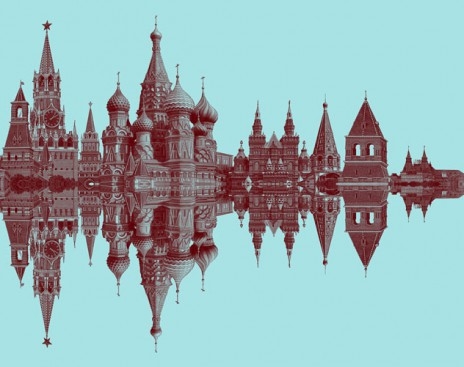
In June, Sergey Medvedev, a professor at the Department of Comparative Political Science of the Faculty of Applied Political Science of the Higher School of Economics, gave a public lecture “Politics in Squares” in the Gorky Park. Why are the processes that occur today in street politics? How do people conquer urban space in power and what does it lead to? Slon gives an abbreviated version of the lecture.
The main unit of the territory is the area. And at the same time, the word itself - the area - denotes a certain urban space and a certain type of interaction in this urban space. Looking at the political history of the square, I must say that this is generally one of the main institutions of modern society, politics.
Three historical purposes of the area can be distinguished:
Temple. After all, the primary institution in the human community was the temple and, accordingly, the square in front of the temple also arose quite early. Then the area earned as a trade unit, as a market. And, finally, already in the Greek policy, and after that in Rome, the square became the place of meetings, as Agora, as a Roman forum.
Since that time, historically, the square plays all three roles. Interestingly, these functions are very important in the West.Eastern cultures, civilizations quickly understood the destructive potential of the square and began to close them, therefore, in large eastern cities, for example, temple squares were fenced. |
The market square in the east is also often covered by a dome, a cap and turns into a string of small streets and galleries, that is, there is no large open mental space that we know in European cities.
And, of course, the absolutely European institution, from which the ancient, then European civilization was born first, is the open area as a place of communication. Because in the square, it is its function of market or purely communicative, the accumulation of that social capital, which then the new city class will contrast the royal power, the monarchy. Self -consciousness is born on the square, from which the European bourgeoisie, capitalism and gradually - democracy will grow in the future.
It is interesting to even see how the institution of the area is developed, how it is spelled out in the European consciousness. Italy is one of the ancestors of the modern city and in general modern. San Marko in Venice-in fact, the only area in the city, the Venetians were enough of it alone, everything else-narrow channels and streets. Or in Sienna - the famous Kampo, which turns into a theater several times a year. Or designed by the architect Bernini Square of St. Peter's Cathedral in the Vatican, a reflection of which is an attempt to create the Square of the Kazan Cathedral in St. Petersburg.
There are six words in Italian: Piazza, Piazzale, Piazzetta, Campo, Borgo, Largo. There is only one word in the Russian word. What can this tell us about? The fact that these institutions of urban life, different formats of squares, to a great extent formed life in Italy as it is now, but in Russia there was no similar influence.
Russia is a country without cities and squares
In our country, the problem is that by and large the cities are not quite a city. They are not such in the Western, European sense. Vyacheslav Glazychev wrote that there were no cities in Russia. Here is such a paradox. After all, the city is not only an accumulation of houses, it is a certain social structure, the sum of people's interactions, a certain independence, a city wall that encloses it and protects it from royal power. The city in this understanding is very poorly spelled out in Russia, because in Russia it was a function of power. There is a market and a fortress city. We have, as a rule, the city was a fortress.
What is Moscow? Moscow - Sloboda at the fortress. The main thing is the Big Kremlin. Around the Kremlin is the Posad, but Posad does not play any independent, independent role in relation to the Kremlin. |
He is completely subordinate. Actually, this Posad and all the surrounding lands are colonies of power sitting in the fortress. And the lack of independence did not allow the city to take place, which forms its own social and political institutions.
Take Kaluga Square. It is not even the area even: it was created to broadcast the ideas of power - in the center there is a huge Lenin, near which the square is defeated, and not to go properly; It is cut off from the main stream of people with transport highways. That is, initially it is a fairly empty, alienated space around which concrete cubes are standing. The second function is transport. The task of Kaluga Square is to ensure the fastest transit of cars. People on this plot of land are not even needed. Human flows are maximally inhibited, narrowed as much as possible. That's exactly the most Moscow squares are not squares.
The authorities represent the area only in a purely transit sense. Not in the sense of creating a space where people can stop and form some structures of everyday life that become political. We are actually deprived of the squares - one after another. From Moscow, a very pleasant place has been taken away from Moscow-the Square of the Belorussky station, where there was a kindergarten, a square, a little stupid monument to Gorky. Manezhnaya - absolutely not the area; She could hardly be considered such before, rather, it was such a more purge imperial space, a kind of application to Red Square.
So the centuries -old policy of our state to deny and prevent the creation of an open public space where people could gather, continues. That is, Russian cities still remain either with settlements in power or settlements in industrial enterprises. And in the full sense they are not in cities.
How people return the city for themselves
In the last at least 25 years on empty concrete power spaces, not intended for urban interactions, people suddenly begin to return and assign them.I said that the main argument of man, when the institutions of the authorities are silent, is the body that you bring to the square in contrasting this power. |
And and not even necessarily on the square. In Moscow, this is especially interesting to observe: how a city created with defensive functions begins to be assigned to people. Look at the history of Moscow protests of the last two years-the Boulevard Ring, starting with “Occupy Abay”, and then walks of writers in the boulevards, cafe “Jean-Jacques”, “John Donn”. Or, for example, a garden ring, when people almost completely closed the chain, holding hands. This is also a type of policy. Foot and cars begin to conquer in power this very space of the city.
What forms do public space still have?
- A cafe is an important unit, one of the most important institutions of the New Age, Revolution. The institution of cafes created for communications, where you do not need to justify your own existence with constant calculations. A person comes there to communicate or communicate with others, including communicating with views, visually contact.
- Museums. We see how many various public actions have been taking place in recent years, scandals related to museum exhibitions. Suddenly, their boring, passive function of just archives began to rethink, the museum also becomes part of the political space.
- The bridge also turns from a typical functional-city object in a political field. The occupation begins.
- Temple. Cathedral of Christ the Savior, Promotion Pussy Riot. It also enters this context of the development and assignment of space, because the temples are public, like museums. Pussy Riot has sharply politicized the context.
I think that here we are on the verge of some total capture of urban space-sometimes spontaneous, sometimes artistic. Perhaps universities, theaters await the same captures, such an assumption can be made by looking at European history. After all, they are also the space of politics, which people seem to revive their own bodies.
The park can be less considered political space. In it, of course, there is a huge number of small interactions, but of a different kind. This is a plot excluded from city life, an intermediate state between nature and civilization.
I associate very high hopes with the return of politics to the streets of the city. This is the trend of literally the last three to four years. And this is what gives me hope in the current political situation. I do not impose on the Russian big policy of hopes if everything continues as it continues. But on city life, on the emergence of a new living class, which will master and appropriate urban space, I lay, yes. Moscow is still a strongly clamped city, it is still a city in power, for power.