
Translated material
How the Supreme Court changed the life of same -sex couples in the United States

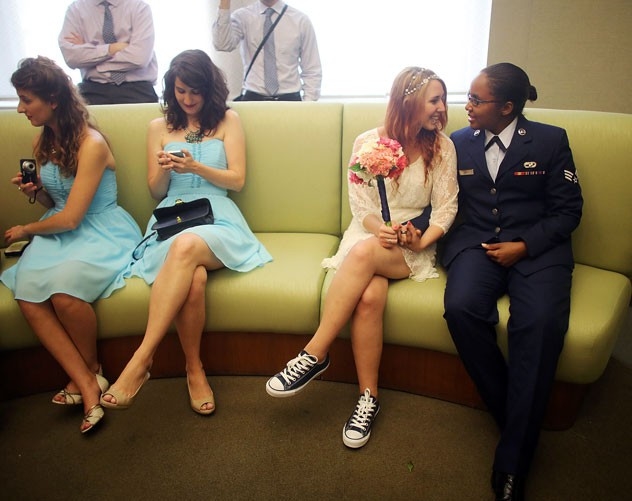
Once upon a time, when I was pregnant, one rabbi offered me to marry. I refused, or rather, we refused together with my beloved woman. For some long time we lived together and intended-to the extent that a modern person could intend-to live together always. We raised the adopted son, and after a couple of months I had to give birth to a daughter. We came to the rabbi, in fact, in order to conduct Giyur (a rite of accepting Judaism) for the son and, since we went, the “names” of the daughter. We did all this, and refused to marry, wrapping this topic in an interview with a rabbi, and saying to each other that we did not want to arrange a meaningless ceremony, because the presence of a ktuba (a Jewish testimony of marriage) would not have changed our life.
The religious rite of marriage in the United States is separated from the state as a whole, but not completely. Those who have legal force on marriage are issued exclusively by civil authorities - after this power (in the person, as a rule, the city office) will be convinced that two individuals have the right to marry: they have reached adulthood and are capable. Some states require that some time has passed from the moment the application is submitted to the certificate (week, month), somewhere we must submit a certificate of a negative analysis of syphilis. Well, in those ancient times, only heterosexual partners could marry, although marriages between representatives of different races, once also impossible in places, by that time they were already legalized throughout America.
Subscribe to read the whole
Make a subscription Redefine.media to read Republic
Subscribe [you can pay for a Russian or foreign card. The subscription is extended automatically. You can unsubscribe at any time.]
Where are the money subscribers going