
Translated material
Report from the Border of Syria: how they live here and what they think about Russia
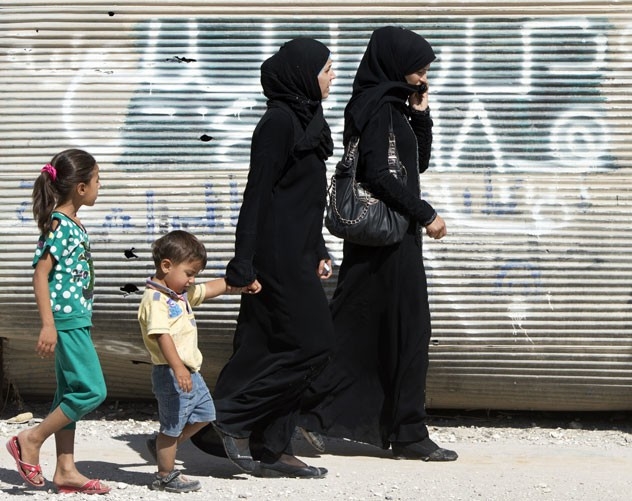
When I was going to go to the Hatai Turkish Province Border with Syria, all my friends, one way or another aware of the Turkish realities, immediately began to talk about food. Indeed, in Khatai they are very tasty prepared, and this attracts people here from different parts of the country. Recently, Hatai has become the center of attraction for foreigners, but the food has nothing to do with it. With the beginning of the Syrian crisis, this province became a refuge for the flows of Syrian refugees.
I don’t know what statistics say there, but the sensations from what they see are that there are more Syrians in Khatai than the locals themselves, by the way, are mainly also ethnic Arabs. On the streets of Reihanls, Antitlei or Iskanderun, almost most cars drive with Syrian numbers. The inhabitants of Hatai were traditionally bilingual, and now Arabic is heard more often here than the state Turkish.
Syrias are fleeing to Turkey almost exclusively Sunnis, although the ethnic composition of refugees is very colorful: among them, in addition to the Arabs, there are Kurds and Circassians. There are Syrian Christians in Antikiye. But regardless of nationality and religion, all refugees from Syria are united by one thing - hatred of the head of their country, Bashar Assad. After spending a week in Khatai, I have not yet met a single Syrians who spoke flattering about Assad.
In Sunni Syria, a genus is ruled, which attributes itself to the Alavites, representatives of one of the currents of Shiism. Rumor has it that Assades are controlled by Shiite Iran, who is now directly supporting Assad with the help of Hizballa, based in Lebanon. But Syrian refugees do not talk about the religious differences of the population and their ruler, they say that Assad is a dictator who shoots at his citizens. My interlocutor Muhammad-Nur, the Syrian refugee in the Reichanls, very emotionally explains: "Assad is the same dictator as your Putin." I admit that I did not expect such a comparison at all - it seems to me that the Syrian and Russian situations are different, respectively, Putin and Assad too.
“I worked in Idlib as a locksmith when Assad began to shoot at the Syrians who want to live like normal people, so that there was a law and order,” continues Muhammad-Nur. Another Syrian, Ahmad, apparently wanting to talk about the connection of the Syrian crisis with Russia, adds: “In Syria, both the authorities and the opposition are fighting with Russian weapons. Assad people sell weapons to the opposition. ” Unfortunately, I did not have the opportunity to check where they buy weapons, but the fact that the opposition are fighting with Russian machine guns is a fact.
War not without the world
Despite the hardships of the Civil War, the Syrians try to adapt and live on. The Hatayans continue to actively trade with Syria, although fights do not stop there. Sometimes it seems that the war is not at all a hindrance for trade. Trade ( Ticaret ) is a key concept here, everything else is strung on this rod. My interlocutor Muhammad explains: "We continue to go to Syria, carry goods, from there we return with fuel." To my question, how they spend them across the border, he replies that the border is controlled by the forces of the Syrian opposition, which does not prohibit the entry of Turkish citizens.
There are a lot of Syrians in the Reichanls, who quickly adapted to life in a new place. Someone has already opened their job, and someone married, many began to speak Turkish. A lot of advertising in Arabic appeared in the cities of Khatay: two years ago there was almost this, but now almost all local stores duplicate the inscriptions in Arabic.
At midnight I wanted to eat, and I went to the nearest cafe - it turned out that the Syrians rent it. I ask why the locals themselves will not do this business. The waiter replies that they were engaged, but then they decided that it is more profitable to lease. Indeed, Kebab is very tasty here, and the waiters are polite and good interlocutors.
The experience of communicating with the Syrians these days has always taught me how to add a region of origin to the name of my homeland, otherwise they stop talking - they do not trust. Even my desire to speak their native language does not help, although I am used to the fact that knowledge of their native language by a foreigner easily bribes and guarantees trusting relations among the eastern peoples.
Every day, along the broth of Recep Tayyip Erdogan, that on the outskirts of the Reihanls, almost along the Turkish-Syrian border with a howl, ambulance cars pass. They travel from the side of the checkpoint. Each time, the locals react to them the same way: "Again they carry the wounded from Syria." True, it is incomprehensible, civilian or representatives of the Syrian opposition. One thing can be said for sure: there are no Assadians among the wounded.
To my question, who is now helping the Syrian opposition, Syrian refugees say: “Türkiye and Qatar helps us, and other Arab countries in words, in fact, give nothing.” But no one can explain what exactly this help is. Although it is difficult to argue with the fact that Türkiye helps ordinary Syrians who have found refuge in this country. Only a tiny part of refugees live in tents under the Reichanls, the rest quickly joined the business life of the province. A Turkish saying that the one who throws a stone at you, throw a rose well, reflects the essence of the Turkish position on the Syrian issue.
It turns away and leaves
In the morning I stand in the yard, watching the next wedding motorcade in the city. A young man of clearly Syrian appearance is suitable - they are brighter than the Turks, sometimes even red. After the traditional Assalam Aleikum, he asks Arabic: "How much does you have to rent housing?" I also answer Arabic, which is not local, which is visiting here. He is interested in where I come from, is it from Syria? And having received the answer that I am from Russia, turns away and leaves.
But until recently, the attitude towards Russia in Syria was very warm - in Soviet times, many Syrians graduated from Russian universities. But the frank punctures of the Russian foreign policy , when Moscow openly contrasted itself with the population of Syria, sided with Assad (at least it looks in the eyes of ordinary Syrians), led to the fact that now the inhabitants of Syria consider us enemies. The vast majority of Syrians are Sunnis, and Russia protects the Alawit (Shiite) minority, the political elite of the authoritarian regime.
Russia has already used this approach in domestic policy - in relation to Dagestan. The case ended in the Dagestan crisis. Based on the elites, Moscow ignored the majority of the population of the republic. As a result, many Dagestanis radically revised their position on the issue of Russian loyalty, although back in 1999, Dagestan was ready to defend Russian interests with arms.