
Translated material
"Ugly swans" of the EU
Since July 1, 2013, 28 countries are already in the European Union - the community has been replenished at the expense of Croatia
In just 20 years, Croatia has gone from Titoism, War, the collapse of Yugoslavia to a full -fledged EU membership. However, did she find at the end of this path the desired and are the Croats ready today for the sake of introducing to abstract pan -European values to make well -being and prospects? The New Times tried to figure out the scrapings of those who live in this small country in the center of Europe.
To say that in the EU Croatia was expected with open arms is to sin strongly against the truth. As the President of the country of Ivo Yosipovich once said: "Croatia had to go through such an audit that no other state had yet been subjected to." In order to be accepted into the European Union, Croatia had to make concessions and fulfill a number of conditions that were very shared by the already not very developed and not distinguished by stability of the national economy: to restructure production, privatize enterprises, introduce a visa regime for citizens of Russia and Turkey. And this despite the fact that Zagreb’s entry into the Schengen zone is planned only after 2-3 years.
Economy in exchange for loyalty
Today, the most pessimistic experts predict: having joined the EU, Croatia will lose more than 50% of the national industry. And many people believe that these forecasts are not far from reality, because the situation in the country only worsens, the main economic indicators fall, the enterprises are lost day by day, on the eve of the EU in the country, real estate has risen in price, the prices of almost 40 % increased ... however, the most concern in ordinary citizens cause possible problems with the search for work, which will inevitably appear with the discovery labor market for all EU countries. Moreover, today the situation with employment is critical - unemployment in Croatia has reached a record level of 22%. An Abramovich, a graduate of the Faculty of Philosophy of Zagreb University, has not been able to find a job for the second year: “Today my main source of income is transfers from Russian to Croatian and occasionally - private lessons of the Russian language. The academic hour is transferred to Russian money 500 rubles, and the transfer page of 200-300 rubles. ” Of the entertainment, Anna can afford only once a month a trip to the cinema, where a ticket costs “only 150 rubles”.
Worse than 30 years ago
Naturally, the crisis could not but affect the attitude of the Croats to the EU. The former optimism today was replaced by undisguised irritation. Residents of the country are no longer so rosy perceived in membership in the European Union, on the contrary, they are increasingly recalling Yugoslavia. The journalist of the famous newspaper Vjesnik Bozhidar Radman says that he and his friends feel: now the Croats live much worse than 30 years ago: “If you have 200 kun (1000 rubles) in your pocket today - you are considered a rich person. Unemployment in the country reached a record 22%. For the state with a 4 millionth population, this is a lot! ”
Even those who owns their own business are not fully full of optimism. The owner of the Caza Garzotto family hotel in a resort rovin on the coast of the Adriatic Sea complains that all the Russians canceled the armor in her hotel. The reason is the reluctance to defend the queues and pay for the Croatian visa, which acts exclusively in the territory of Croatia and does not give the right to enter the rest of the EU. “This year we had only one married couple from Russia. Of course, Germans and Italians come from Europe, but the flow of European guests has not increased, ”the business woman complains.
“Honestly, Croatia needs Russian money. I had several customers from Russia, but they did not want to buy real estate after they learned that they would have to arrange an apartment for a legal entity, ”says 60 -year -old realtor Drago Price. Today, the share of Russian buyers among non -residents in the real estate market of Croatia is less than 5%. But in the neighboring Montenegro, where the process of buying real estate is simplified, there are many more Russians. “There are rumors that the Government of Croatia is now discussing the issue of simplifying the procedure for acquiring real estate by Russian buyers,” says Price.
Language as a means of division
However, serious economic problems are not the only thing that modern Croatia faces. The sick question is a violation of the rights of the Serbian minority. Today, relations between Serbs and Croats are still far from idyllic, despite the fact that the war in the Balkans ended almost 20 years ago. An example is April riots in Zagreb. It is worth recalling that Croatia in connection with the entry into the European Union must observe the rights of national minorities - they have the right to officially use their language and writing in those cities and areas where their number is over 33%. According to the latest census, the Serbs live compactly in the territory of 21 districts and in two cities - Vergovsko and Vukovar (nicknamed "Croatian Stalingrad" due to hard battles during the war for independence of 1991-1995). It was decided to duplicate on the Serbian inscriptions on road signs and on signs in state institutions - there were not enough local authorities for more competencies. And, nevertheless, the reaction of the Croatian population, judging by the number and aggressiveness of the rallies, was very stringent, not complying with the norms of the tolerance of the European Union. The rallies at which the protesters demanded to ban the Serbian Cyrillic letter in Vukovar collected more than 20 thousand (according to other sources - up to 40 thousand) aggressive people.
Scars in memory
Today, the youth of Belgrade, Zagreba and Saraev communicate with each other in the same language - however, in different dialects. But still, they perfectly understand each other - just as in those days when there was an officially common Serbian -horsing language. So it is possible to state the obvious: the Serbian-Croatian language has survived the war and today it is the most effective centripetal factor that brings people closer to the citizens of the same country. It remains to wait until the war in the souls and in the memory of these people ends ...
Young Croats
Philip Clansir 21 years old, student
I think that the relationship has not changed, it should take much more time. I have met many people who hate the Serbs. I have no friends from Serbia. I think that the Croats have no much desire to work in Serbia.
| | | | --- | --- | |  Nino Budanec 24 years old, the representative of the airline in Zagreb was lucky because my parents took me to Moscow at the beginning of the war. I think that the main problem is that the Croatian state “allows” to insult gypsies, Serbs and Albanians. You can even show your hatred in public places - you will not be punished for it. I have many Serbian friends, I can say that the Croats are hard to get used to the Serbian humor. |

Karl Popadar 28 years old, graduate student of the Faculty of Philosophy of Zagreb
I try not to remember the war. I remember it through the basement window, sound signals, grenades, months of exile and fear. My hometown is located in the eastern part of Croatia on the Sava River, it was always a natural border between Croatia and Bosnia, but after the war it changed overnight ... and we are with it. I have many Serbian friends, whom I know since the pre -war times, so I have nothing against the Serbs, they are the same as us, Croats.
Igor Bergam, 28 years old
When the war began, I was 6-7 years old, I just went to the first grade of primary school. After 2 weeks, the school was bombed, and we found ourselves in the shelter and listened to how bombs fall next to us. Today, the relationship between Croats and Serbs is already different, I remember the time when it was forbidden to mention everything related to Serbia. Sometimes I meet young people who do not like Serbs, but this is only because their parents taught so much. In such situations, I feel guilty ...
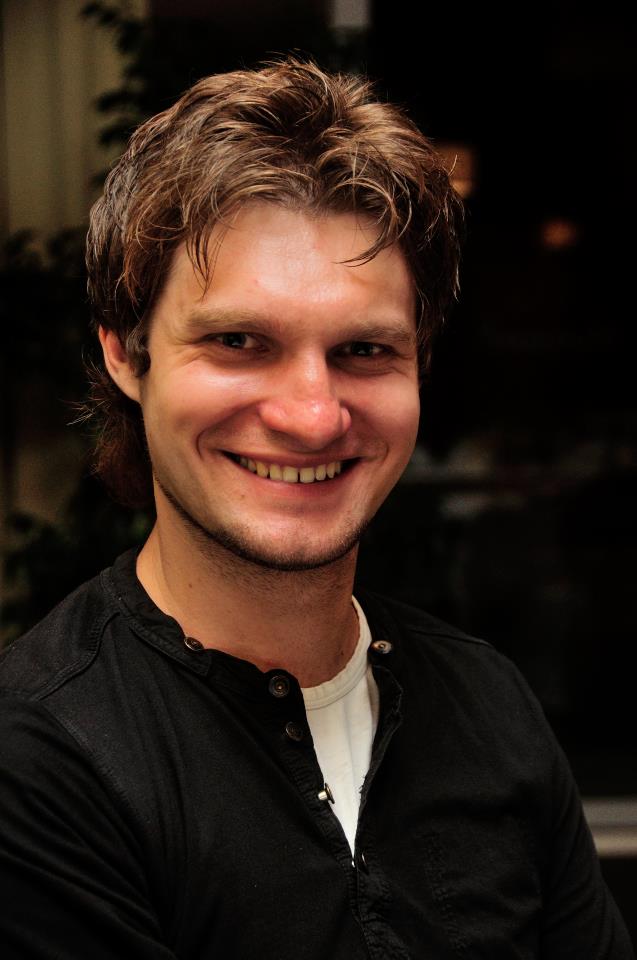 | Yuritsa Vogreg, a musician, 24 years old, from 10 years old, I began to realize how terrible this period was for our country. During the war, my father was called upon to participate in a large military operation “Storm”, I would never forget the screams and crying of my mother in one of the rooms of the house, fortunately, the dad returned safe and sound. I was really shocked when I listened to the stories of people from Vukovar, through which they had to go through! I must admit that I am very angry with people who, like the last underpants during the war, they robbed my country, while others died in the war! These same people today call themselves real Croats and patriots who should lead the country, and the country is falling apart before our eyes! I am proud of our veterans who created this country. |
Young Serbs
 |  |
| Elena Georgev, 25 years old, director of marketing at the hotel in the new garden, everything would be fine if it were not for the prejudices and people who still live in the past | Militsa Paukovich, 23 years old I think that everything is changing for the better, because I am an optimist. The main problem of the Serbs in Croatia is the remnants of ethnic hatred. Croats do not hire people of Serbian nationality. |

Anya Pantich, 22 years old, student at the University of Belgrade
I think that there is a small shift in a relationship. The media is most to blame for the fact that this process has slowed so much. The media constantly return us to the past, not allowing us to forget. I often meet people who hate our neighbors. These are mainly people who know very little about the war.
| Alexander Radovanovich, 23 years old I remember that in the early days of the war we had new neighbors - refugees from the Croatian city of Shibenik. My father was recruited, and we were hiding in a shelter in the early days of the war. Often I see the Croats on the streets of Belgrade, many Serbs spend summer in Croatia, but there are also those who hates all non -revolutionary ones. We, historians, are considered large nationalists. This is not entirely true, but most of my colleagues are hatred of our neighbors. I have friends from Bosnia and Croatia, I think that relations with the Serbs are quite tense. All kinds of disasters are expected from us, they consider us aggressors. | 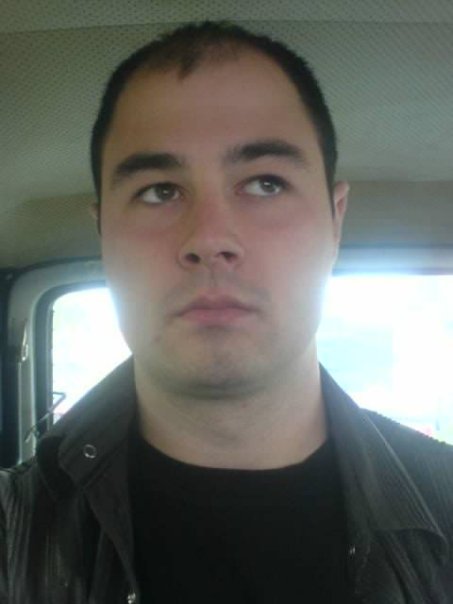 |
Alexandra Elich, student
 |
The first Croatian National Channel showed the dead, crippled and mutilated Serbs. Mother washed the dishes. I stood motionless in front of the TV and said: "Mom, this is dad!" The last thing I remember is the sound of fighting dishes. I vaguely remember other things: crisis, lack of money, grandmother, baskets with products from the village and fear. Inevitable fear. Given how much time has passed since the end of the war, changes in relations in the Balkans are insignificant. The most alarming is that the new generation is infected with the ideas of parents. The media, consciously or not, constantly incite hatred on national grounds. And politicians extract maximum profit from the Balkan conflict.
Alexander Kobilarov, Faculty of Medicine
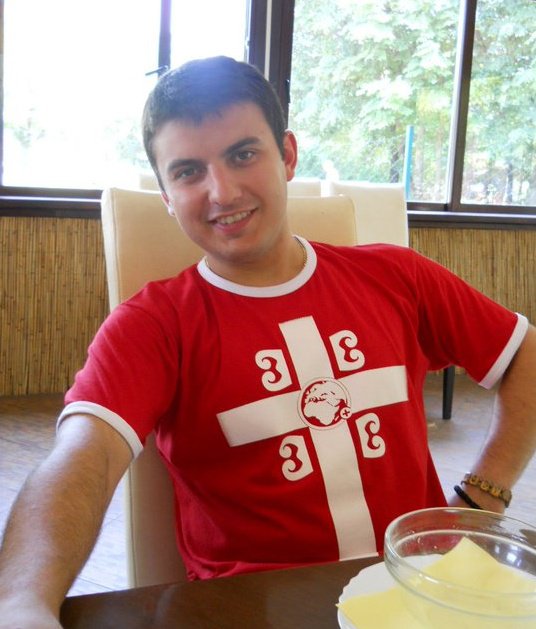 |
When the war began, I was in irony in the hospital, they had an operation. Soldiers were constantly brought to the hospital, so my earliest memories are connected with the desire to save lives around me. This is one of the reasons why I later entered the medical faculty.
As for the relationship between the Serbs and the Croats - it all depends on which side you look at. I think we are tolerant because the Serbs never wanted a national state. We built a supranational state - Yugoslavia. Some thought that this was the creation of Great Serbia, although most Serbs, to my regret, never supported this idea. Serbs and Croats do not know each other. I do not believe that the relationship will change. To do this, the Serbs will have to understand how to build a national state, but for now they still dream of Yugoslavia. The Croats built a national state in 1991. They dreamed about this for a very long time, maybe this is the problem, since for the sake of the goal they were ready for anything. Croatia was ready to destroy everything that would come across their way, how to explain Machva during the First World War, Yasenovats, Polish, Yasenovy, Yama during the Second World War, and at least the ethnic purges of the “Oluya” and “Shine” during the Civil War. For any of these crimes, they never answered that it gives them the right to think that they were right. This is a matter of time when they again decide to take similar actions.
Reconciliation between Serbs and Croats can occur only when both people begin to talk and stop running away from the truth.
The main problem of modernity is intolerance, because each Serb is considered as a potential aggressor. Otherwise, how to explain the conflict with Cyrillic in Vukovar, which has always been mainly a Serbian city. I must say that the decision to introduce the Cyrillic alphabet where the Serbs make up at least a third of the population, fully complies not only to EU norms, but also by the Croatian Constitution of 2002. I think I brought enough arguments.
Young Bosnians
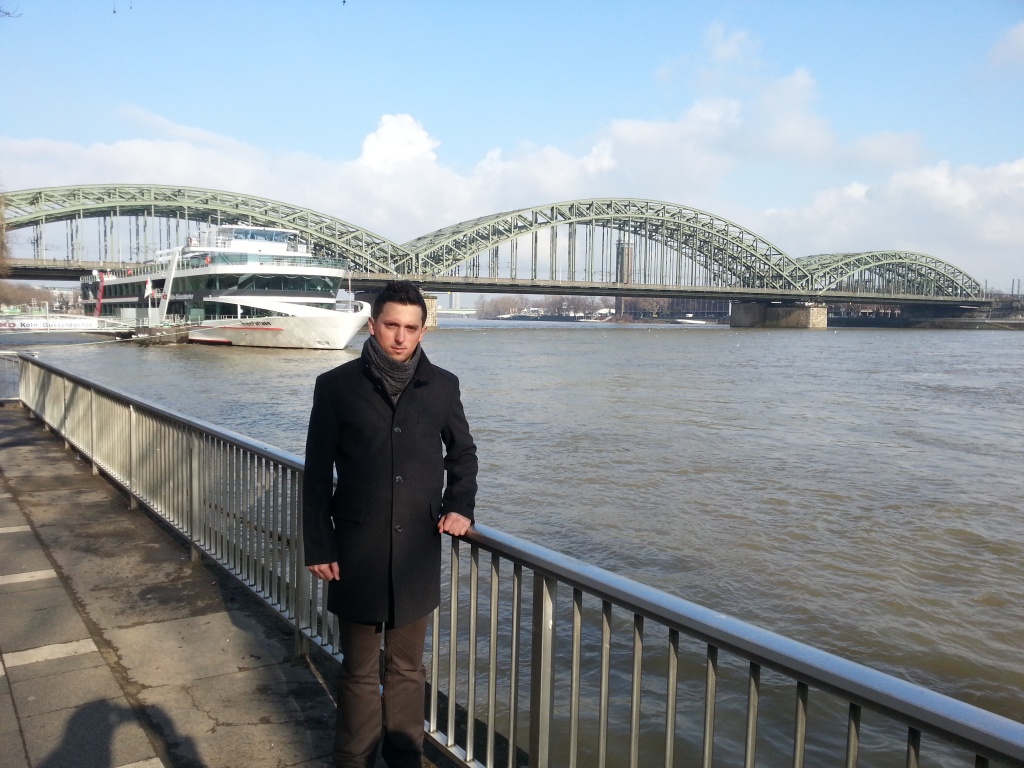 |  |
| Davor Perich, 24 years old, a programmer for such a state as Bosnia, where representatives of three nationalities live, it was very important to overcome ethnic differences. We are on the right track. Today, Bosnia and Herzegovin in Croatia are looked at as a wonderful country where there is no stress. I think we need to recognize each other through sports and students' exchange programs. | Vladimir Yovanovich, 27 years old, graduate student of the Faculty of Architecture in Bosnia. I remember that during the war in my city, Banna-Luk was neither electricity nor running water. In 1991, I moved to the city of niches. Only in 2000 I visited a bathhouse as a tourist. |
 | Khan Tabakovich, journalist relations in the Balkans are the same as during the war. Recently, the deputy of the European Parliament Rosa Tomashich said that all non -catholics are obliged to leave Croatia, because they are just guests and they have no place here |