
Translated material
The prefect gave, the prefect took
Why they demolished the market on Novoslobodskaya. And what will happen instead of the market
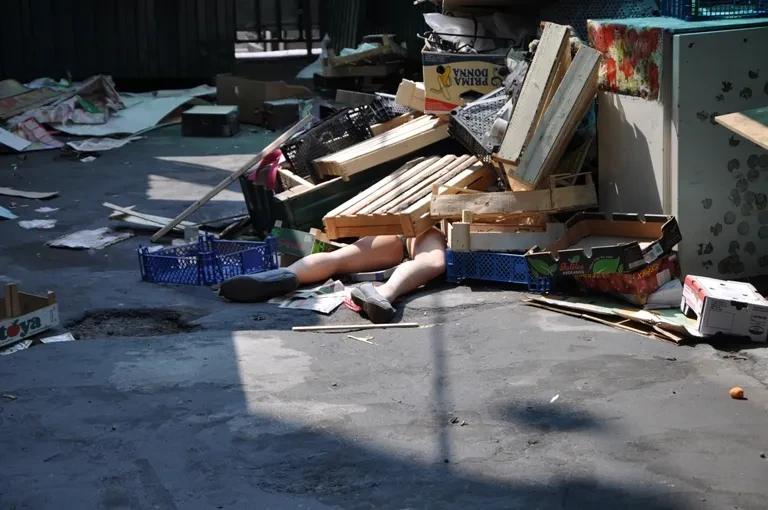
The Novoslobodsky grocery market was closed at the beginning of last week, June 25. The shopping rows on 24.05.2012 were excluded from the schemes for the placement of non -stationary trading facilities by the decision of the IMC on the consumer market under the government of Moscow. On June 19, 2013, a final death sentence was sentenced at a meeting in the Prefecture of CAO: the cessation of the functioning of the shopping rows and their demolition
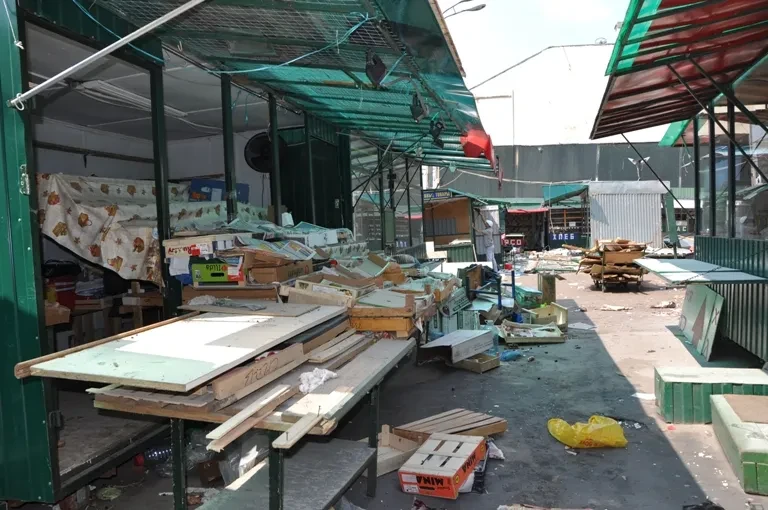
The trading ranks “on Novoslobodskaya”, or in other words, the Novoslobodsky grocery market was closed at the beginning of last week, June 25. The shopping rows on 24.05.2012 were excluded from the schemes for the placement of non -stationary trading facilities by the decision of the IMC on the consumer market under the government of Moscow. On June 7, 2013, the Commission for the Establishment of the National Construction “Novoslobodsky” shopping malls was recognized as unauthorizedly established and subject to dismantling. And already on June 19, 2013, a final death sentence was sentenced at a meeting in the Prefecture of the Central Bank: the cessation of the functioning of the trade ranks and their demolition.
Now at the address: st. Novoslobodskaya, 30, only a fence remained, and last week a lively trade was conducted here. For local residents, the market was enviable: located in a convenient place - not far from home and office, low prices, friendly sellers. There was even an employee who helped to convey purchases to the car and translated grandmothers-buyers with packages across the road. The assortment was wide: from the usual vegetables and fruits to electrical appliances and stationery; On the eve of the holidays, flowers also appeared; There was a bakery. On weekends, pensioners received discounts on coupons, which could be taken in the social support organs. The market participated in many social programs for the support of the population and charitable shares, for which the administration of shopping arcades received letters and letters of thanks.
However, there were shortcomings: not quite clean, not quite honest. It is not always known where the products were brought from, and about their expiration date and manufacturer can only be found out from the words of the seller.
The opinions of the residents of the district are ambiguous: someone says that the market is necessary, that neither a weekend fair or shops will replace it, and someone believes that the market was the kingdom of unsanitary conditions and crime.
“Go to the nearest store and go,” says the pensioner, a regular customer of the now closed market, “and it’s hard for me to walk, and they are foolish in these supermarkets: one thing is written on the price tag, and it comes out at the checkout three times more. They say that the grandmothers themselves are to blame, they looked at that price tag. And who will analyze it: where what? Sorry for the market. I came to say goodbye to Olya, I always bought sausages from her, but no Olya, closed. She constantly gave me a debt to retirement, then ham or sausages. Who will borrow me in the store? And in the store I will only buy cotton wool for 270 rubles/kg, not sausages. ”
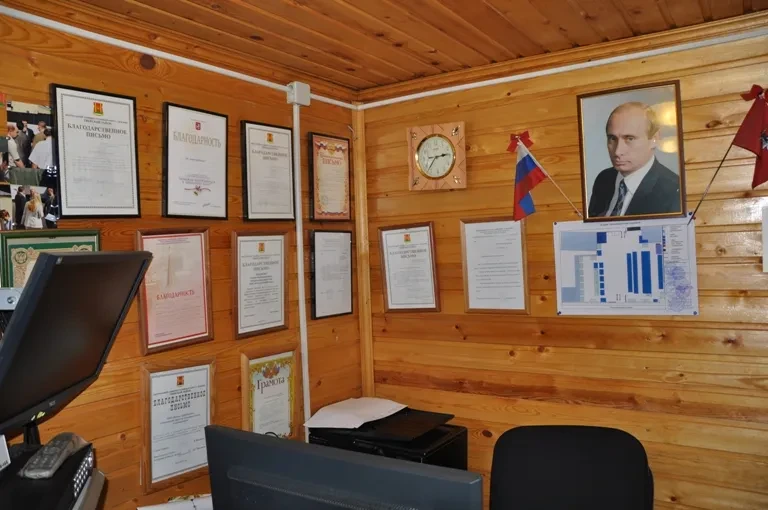
The entrepreneurs are unhappy with the closure of the market: “Putin said that you need to support a small business, and is this support? 35 families were left without business, 70 sellers without work! " It is worth noting that the tenants of retail space were not provided with any alternative territory, they were simply given time to take out the goods, and where to go with this product, this is obviously their personal business.
But there are those who say: “Well, finally! They covered this bench. Maybe what "Leroy Murlen" will be built. " True, there are few of them, perhaps, simply because near the just closed market for the most likely to meet those whom this market arranged.
One way or another, but there is no more market. No, because it was excluded from the placement scheme and recognized as unauthorizedly established. But this is rather the result. And the reason? Why such a wonderful outlet did not fall into the ill -fated placement scheme. There are two points of view on this score: the point of view of market leadership is the point of view of the prefecture.
To make it clearer, it should be said about where these shopping rows came from. In 2003, on the initiative of the prefect itself, then they were Sergey Lvovich Baydakov, it was decided to organize a fruit and vegetable and agricultural product fair at the site of the demolished emergency buildings. The investor of the construction of the Fair was Interpostroyfinance LLC. This organization delegated the authority to organize trade. Only the above points of view converge. But what happened next? Here one market has two stories.
Let's start with the first. According to Lukyanov S.A., the head of the Intertroyfinance, the shopping arcade had no problems with the law until 2013. All the necessary documents signed by the right people and with the necessary seals were. Every day, the veterinary service took a sample from the products, and in 2011 a prosecutor’s check was carried out, which did not reveal any violations. There were no complaints and complaints about the organization of trade and maintaining documentation, I repeat, until March 2013. It was in March that the new deputy prefect was appointed - Zubtsov I.A. Again, according to Lukyanov S.A., he, who has extensive experience in communicating with the executive branch, came to the appointment with the new deputy in order to discuss the future fate of the shopping series, their possible modernization, as well as to clarify the new procedure for conducting documentation in connection with 26-PP. (Decree of the Government “On the placement of non -stationary trading facilities located in the city of Moscow on land plots, buildings, buildings and structures located in state property.” This resolution says that the placement of non -stationary trade facilities, which were the tents of the Novoslobodsky market, should be carried out “in accordance with the layout of non -stationary trading facilities taking into account the necessity of the necessity of the necessity of the necessity Ensuring the sustainable development of territories, including the exclusion of the negative impact of objects on pedestrian and transport infrastructure, and the achievements of the standards of the minimum security of the population with the area of trading facilities in the city of Moscow. ”) It was because the prefecture did not answer the documents sent in any way to prolong the powers of the management organization. Every year the answer came, but in 2013 he did not come. Not that this documentation gives the right to continue functioning, nor about what does not give. No initiatives to conduct auctions for the right to place trading facilities from the prefecture. Lukyanov S.A. He repeatedly turned to the prefecture and personally to the deputy prefect to I. Zubtsov, but he did not receive any explanations and instructions, and once he, as if by mistake, was not allowed into the prefecture at all. In a nutshell: Zubtsov refused to cooperate with him. And also Zubtsov prevented Lukyanov from attending the meeting on June 19, at which the fate of the market was decided.
Hence the legs are growing at the announcement of the closure of the shopping rows, which stated that the functioning was terminated "on the initiative of the deputy prefect of TsAO Zabtsov Ivan Alexandrovich." Thus, the first point of view is that they closed the market because of the personal whim of Zubtsov, not documented on anything outside the legal field.
The second point of view. The press service of the prefecture reported: “On Novoslobodskaya Street (30) until November 2011, the Shirpotreb market officially worked. On an area of 1,500 square meters. m were installed 67 trading modules that did not enter the stationary dislocation of small -zero -trade objects. In accordance with the existing procedure, the market owner had to draw up all the necessary documentation, but for unknown reasons did not do this. ”
“In 2013, in the implementation of the Decree of the Government of Moscow dated 02.11.2012 No. 614-PP, the District Commission to suppress unauthorized construction decided to dismantle and withdraw these structures from the city territory.” Therefore, in May 2012, the shopping rows were excluded from the layout of non-stationary trading facilities, and in June 2013 they were recognized as unauthorizedly established and subject to dismantling.
“Repeatedly the issue of closing the illegal site was postponed only because residents expressed interest in maintaining it.”
Residents, however, are now interested in interest. On June 20, the Council of Veterans of the Tver district wrote to the acting The mayor of Moscow, in which he expressed a request to consider the issue of terminating the functioning of the shopping series, given that, firstly, there is no analogue to the market nearby, which could be reached, bypassing public transport, which is very important for the elderly. And secondly, that the shopping rows do not create transport interference and have a good external design. The signatures of the residents of the district on 37 sheets were attached to this letter.
On July 3 of this year, it was planned to hold an exit meeting on issues related to shopping rows on Novoslobodskaya. Unfortunately, due to official necessity, the prefect Tsao Fier V.S. Postponed a visit to the object. And the meeting did not take place, since the deputy prefect and the head of the council refused to answer questions until the prefect will come, which could explain the situation with the reason for the closure and tell about the plans to use the now empty territory. Therefore, the only result of the meeting was the next letter, now Fuer V.S., but with the same request - to preserve the shopping facilities, as well as with a warning: “Additional conflicts with Muscovites are fraught with the disruption of the election campaign of the acting Mayor of Moscow S.S. Sobyanin. " Under the letter signed: deputy of the Council of Deputies of Tver N.I. Kudryashov, First Deputy Chairman of the Council of Veterans of the Tver district K.F. Mikhailov, Deputy Chairman of the LLC of the Tikhvinskaya community LLC O.I. Ryzhikova, Chairman of the Municipal Assembly of the Council of Deputies of the Tver district I.A. Baikin, head of the municipality of the Tver district P.A. Malyshev, and manager of Interstroyfinance LLC V.V. Grinevich.
Since the prefect was not able to attend a visiting meeting, the press service of the prefecture answered the main questions (the reason for the closure and further fate of the territory). The reasons are mentioned above, and as for the use of territories, it is still unknown what will happen at the address: Novoslobodskaya, 30. “The functional purpose of the liberated territory will be determined after consultations with residents of the microdistrict and deputies of the municipal assembly of the Tver district. If the district of the district offers planar parking, there will be a parking if a weekend fair is a fair. ”
Those inhabitants who were unhappy with the presence of this market did not suit the conditions for the functioning of the shopping series “on Novoslobodskaya”, but not its existence in principle. Was it worth such cardinal measures to fight unauthorized tents? After all, the market was really necessary for many, and especially pensioners. The weekend fair, which the prefecture calls the replacement of “wild” markets, does not suit buyers: it works only on weekends, and the prices there are an order of magnitude higher. Was it really impossible to modernize the Novoslobodsky market: reorganize the management system, improve the quality of service due to the modernization of equipment and architectural structures. To arrange an auction on which would be a subject ready to do all this?
Help on the situation with markets in Moscow:
In 1998, there were 240 markets in Moscow, most of them were terrible. There was no need to talk about compliance with various norms and rules at all. Therefore, in 1999, an order of Moscow mayor No. 1210-rm “On measures to streamline the work of markets in the city of Moscow” appeared. As a result of the implementation of the order today, 51 markets remained in Moscow.
In 2006, the legal framework regulating the functioning of the markets was changed: the Federal Law of No. 271-ФЗ “On Retail Markets and Amendments to the Labor Code of the Russian Federation” was adopted, which established that from July 1, 2012, only capital buildings should be used to carry out trade and provide services. S/X markets will be prohibited from using temporary buildings from January 1, 2015. During 2011 - 2012 in Moscow, he changed the specialization from universal to agricultural 21 markets; 4 markets were transformed into shopping centers; 24 markets closed.
The Department of Trade and Services of Moscow in April of this year proposed the concept of the development of agricultural markets in Moscow. According to this concept, Moscow agricultural markets should become similar to their European counterparts.
It is worth saying that the Department of Trade focuses on the fact that the object in Novoslobod is not a market and has nothing to do with markets and laws regulating market trading. The market or an unauthorized object, closed it in the framework of compliance with the federal law or due to the inconsistency of the 26th Decree of the Government,-the inhabitants of Moscow are indifferent. Someone is glad of the disappearance of “wild” markets, someone, on the contrary, is upset, but the fact remains: trading objects are closed, and real alternatives appear only on paper, and without accurate implementation dates, without investors, without a legal framework.
Evgenia Mikhailenko, photo of the author