
Translated material
The border on the castle
Official London confirmed the introduction of the Magnitsky List
The Great Britain, according to local media, for the first time officially admitted that it was forbidden to enter the country with 60 Russians appearing in the Magnitsky list. 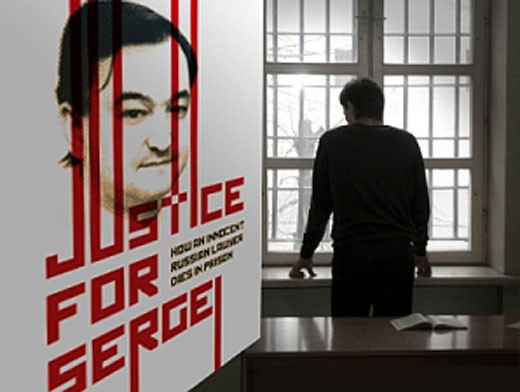
The fact that several dozens of Russian officials are prohibited from entering the UK, the London newspaper The Daily Telegraph, with reference to deputy of the House of Commons of Dominica Raaba, said on July 9. Last spring, the parliamentarian applied to the government with a request for whether the UK visited the UK for the List of Magnitsky, which was published in June 2012 by the American Commission on Security and Cooperation in Europe (the US Helsinki Commission). In April, Raab received an official answer from the Minister of Immigration Mark Harper, which has not yet been published anywhere: “The Director of the Ministry of Internal Affairs for special matters has already been aware of the persons from this list and took the necessary measures to prevent their visas for a trip to the UK.”
“The minister answered the minister unequivocally: yes, such restrictions have been introduced,” explained Mikhail Kasyanov, co-chairman of the RPR-Parnas, who has long lobbying the introduction of the Magnitsky List in Europe for a long time. - The internal laws of Britain give the Government the right to introduce in closed mode for such restrictions for persons suspected of various crimes. They did this before, but did not announce publicly, but now they were announced in connection with a special request from the parliamentary deputy. ”
Information on the introduction of Visary sanctions against employees of Russian law enforcement and tax authorities involved, according to the compilers of the list, in 2009 in the Sailor Silence of Lawyer Sergei Magnitsky, appeared earlier. So, in September last year, the British media reported that the Black List of 60 of the 60 defendants in the Magnitsky List was sent to the British Embassy in Moscow, who should be denied a visa. However, after a tough reaction from the Russian Foreign Ministry, British officials refuted information about the introduction of sanctions, saying that no political decisions were made on the Magnitsky List.
The British Embassy in Moscow announced on July 9 that "the position of Great Britain’s government did not change on the" list of Magnitsky "." Apparently, therefore, the first reaction of official Moscow was also quite restrained. Commenting at a press conference in Moscow, the publication of The Daily Telegraph, Russian Foreign Minister Sergei Lavrov said that “Moscow did not receive any official notifications on this score”. And since the authorities of the United Kingdom, according to the minister, “in the past repeatedly emphasized that they are not going to enter such lists,” Lavrov did not rule out that “we can talk about provocation”.
Recall that in the United States, the “Magnitsky Law”, introducing visa and financial sanctions against Russian citizens allegedly involved in the death of Sergei Magnitsky, was signed in December 2012 (18 people were included in the open list published in April 2013). In response, the State Duma adopted the so -called “Law of Dima Yakovlev”, which, in addition to imposing symmetrical sanctions against Americans, banned the adoption by US citizens of Russian orphans.