
Translated material
The tail wags a dog, or again about effective management
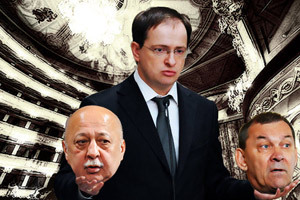
What can provoke the resignation of the head of the cultural institution of strategic significance - say, the theater, located exactly opposite the Kremlin and keeping the memories of those happy times when he was entrusted with the role of the cultural facade of the empire? According to the logic of things, the dismissal of the director of this theater should have been preceded by the gradual growth of dissatisfaction with the artistic policy he realized. And in fact, over the thirteen years that Anatoly Ixanov spent at the head of the Bolshoi Theater, the country's leadership had a lot of reasons to sincerely be horrified by what was happening on the metropolitan theater square: in the zero-the dominance of agents of the influence of the West (Elepensky, Wilson, Poundes) and the general enlightening liberal vector of the repertoire, at the beginning of the tenth of cynical abuse Above the domestic classic, from the "Golden Cockerel" Kirill Serebrennikov to the "Ruslan and Lyudmila" Dmitry Chernyakov. Meanwhile, even a cursory retrospective view of the latest history of the big is enough to understand: the true meanings of those compound processes that occurred on the scumbags of the country's main theater in the internally heterogeneous “era of Ixanov” (one thing - Sturm _ und__ Drang_ The first Ixanic five -year plan, a completely different reaction of recent years), it is likely that the authorities are never like Happiness - I was not particularly interested.
However, it cannot be said that in the Putin era the Kremlin at all showing interest in Gabtus - it's all about the specific focus of this attention. Pornoate of Spring 2011, aggravated in the fall of 2012, the protracted confrontation of Nikolai Tsiscaridze and the theater administration, the attempt on Sergey Filin in early 2013-these are the few events from the life of the big that were identified by the authorities as meaningful, requiring response. And the degree of truthfulness of the Apocryff about the infringed pride of the ex-deputy of the State Duma, a member of the United Russia party and part-time prima of a large, resourcefully used proximity to the guarantor of his own career problems, thereby becoming a free or involuntary culprit of the dismissal of Anatoly Iksanov, is not so important. S _e__ Non__ è Ben__ Trovato_: Not being able to evaluate the ups and downs of the cultural policy of the big (or, as an option, not having much desire), power - out of habit perceiving the sphere of artistic perfect marginalia - reads only the text of the clash of personal ambitions, the struggle of clans and the redistribution of the zone of influence.
The personnel permits in the large one is a characteristic example of state policy in the cultural segment, capable of saying a lot about the current state of affairs in the department of Vladimir Medinsky. In essence, the dismissal of Anatoly Ixanov and the appointment of Vladimir Urin were dictated mainly by one single desire for power-to get rid of the headache that the Gabt was delivered to her in recent years. This conflict, we can assume, is similar to the recent plot with the resignation of Irina Antonova: if there were no scandal around the project to restore the Museum of New Western Art, the ex-director of Pushkinsky would probably have to occupy his office to this day. The effectiveness of the activity of a cultural institution in modern Russia is assessed primarily by the number and quality of the problems that this institution gives the authorities. The war that did not fit into the guest of the sacred stability of the war caused understandable irritation - and the fire of this irritation should be urgently extinguished, without understanding either methods, nor causes, nor in the investigations.
Representing the new Director of Gabta, Vladimir Medinsky emphasized that the appointment of Vladimir Urin “is included in the concept of the Ministry of Culture to update”, noticing in an interview “Kommersant” that his department “does not make spontaneous or emotional decisions” - as if offering to perceive changes in the leadership of large as a sign of and strategically reasonable administrative achievement. Under the closest, however, consideration in this gesture, the presence of even the slightest fraction of managerial will is impossible even with all the desire: the need for a sudden resignation, apparently, was imposed on from above (otherwise why was the Ministry of Culture so hastily disavowed with Ixanov for two years in December 2012?), And the specific path of implementation of the task determined by the party and the government turned out to be It is dictated by the market of the personnel market. It is no secret that the number of sane theatrical managers in Russia is extremely small, and there are no figures that can take over such a burden as the leadership of the Big Theater-except, in fact, perfectly proven both the economic and cultural sides of the ex-director of Mamt, during whose reign in the theater there was not a single loud scandal in the theater.
The authorities read only the text of the clash of personal ambitions, the struggle of clans and the redistribution of the zones of influence.
The candidacy of Vladimir Urin for the post of new leader of the big was, as they say, non -alternative - and this is the plot with changes in Gabta clearly rhymes with another recent prescription of the Ministry of Culture. With external surprise and even the seeming eccentric stroke-where, it would seem, the Tovstonogovsky stronghold of academicism, and where the leader of the post-perestroika St. Petersburg avant-garde was equally forced and again non-adulternative was the arrival of Andrei Mogeliy: figures equivalent to the founder of the “formal theater” and the ideologist of Alexander (for this To accept the proposal of the Ministry of Culture, a powerful, like Urin, had to sacrifice his beloved brainchild, leaving his future fate of the foggy), not to find in the Russian theater landscape. Placing the ruler of the minds, the department of Vladimir Medinsky in his recent personnel decisions was forced to be content with not too adversely to authorize the meanings, with one degree of randomness that arose in addition to his administrative will - under the influence of the circumstances of the natural, so to speak, properties.