
Translated material
The number of victims of clashes in Egypt, according to the authorities, increased to 80 people
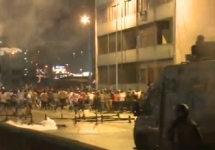
The number of demonstrators who died as a result of clashes with the police in Egypt, according to the country's Ministry of Health, reached 80 people, 792 people were injured. The riots in Cairo and various provinces of Egypt took place on the night of Friday to Saturday and the early morning of Saturday, RIA Novosti reports.
According to the head physician of the ambulance service of Egypt, Haled al-Khatyb, in the area of Rabia al-Adaviya in Cairo the dead are currently registered 72 people, 292 were injured. Another 8 people died as a result of riots in Alexandria, about 194 people were injured there. To date, according to al-Khatyba, 350 people were discharged from hospitals.
Previously, representatives of the Move-Swan Submary movement stated that at least 120 people were killed on Saturday night to Saturday in the Rabia Al-Adavi region. About 4,500 people were injured, according to these data. The movement called the "massive destruction of people." According to eyewitnesses, during clashes in the regions adjacent to the area, telephone communication was disabled, the Internet did not work, people could not get through to the ambulance and report what was happening.
The doctor also explained that the number of dead and injured in night events increased during the day, since the Ministry of Health constantly received new information from different hospitals where the victims of the riots were delivered.
The Ministry of Internal Affairs of Egypt assigned all the responsibility for the death of people on Islamic movements. At the same time, the ministry claims that police officers did not use firearms - only tear gas. The weapons, according to the police, used civilians.
The Prosecutor General instructed to investigate the events of last Friday. As part of the investigation, several dozen people were detained.
Islamists hold unlimited protests in the Rabia al-Adaviya area and on the Anga Nahda Square at the Cairo State University since July 3-the dates of the military removal from the power of the Islammian President Muhammad Mursi. On these squares, stands, tents and field hospitals are installed. The number of shares participants is tens of thousands of people, among the protesters there are many women and children. Demonstrators demand to return the power of Mursi and cancel all decisions adopted after its removal from power.
The aggravation of the domestic political situation in Egypt occurred on the day of the anniversary of the inauguration of Mursi - June 30. Several million opponents of the authorities entered the streets and squares of large Egyptian cities and demanded that Mursi lay off their powers and set a date for extraordinary presidential elections.
The leader of the secular opposition of Egypt, Mohammed El Baradei called these events a restart of the 2011 revolution. After this announcements in different cities of the country, clashes of opponents and supporters of the overthrown president began.
After Mursi was suspended by the military from the authorities, the head of the Constitutional Court of Egypt, Adley Mansur on July 4, 2013, took the oath as temporary president of Egypt.