
Translated material
The spiritual abuse of the righteous
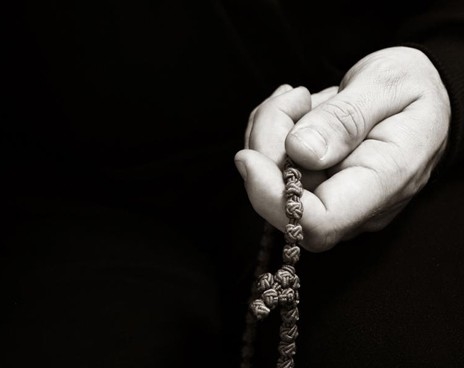
In early July, the religious scholar and historian Konstantin Mikhailov read the lecture “Ishihasm: the history of Orthodox mysticism” in the bookstore and reader “Reading”. In it, he spoke about the nature of hensiham, about what role he played in the development of Orthodox monasticism and how he showed himself in Russia. Slon gives an abbreviated version of the lecture.
Hesychasm in the simplest sense is a complex of psychophysical practices that are common in Orthodoxy in certain periods of its existence, united by a common theme. And this topic is the acquisition by a believing person of mystical experience. Like most of such practices, throughout its history, Isihamma was elitist. Elitarian Isihasm can be called because it was not very willingly allowed strangers, the experience was transferred to the Orthodox monasteries from the teacher to the student. Only in the 19th century did Isihamma leave the monastery limits and spread a little wider. On the other hand, hezihasm is something additional, superstructure in Orthodoxy, because in order to just be righteous, it is not necessary to become an isihast.
The features of neoplatonism are the key to understanding ishhamas
The formation and emergence of hesiham has influenced many different theories and currents, but special attention should be paid to neoplatonism. The name is quite understandable - an appeal to Plato. It is difficult in this case to talk about the border between the religious and philosophical worldview. Neoplatonists, of course, were philosophers, they developed a complex philosophical apparatus, relying on Plato, Aristotle, and Homeric texts. However, such a component as worship of the Higher Forces is also important for them. And it was in this part that neoplatonism greatly influenced the formation of the Isihastan tradition.
Neoplatonists suggested that there was some single - the highest power. It can be called a deity, but the deity is impersonal. One is not a recipient of prayers, this is only the creator of all being. In addition to the one , according to neoplatonists, there is a mind, soul and matter . Around this, of course, a lot of diverse and rather complex philosophy is wound, but the existence of this particular scheme is important to us: the world of neoplatonists has been built hierarchically, and each subsequent step, so to speak, further and further from the good. One is good as such. The farther from the one, the less good. We live in a world, the benefit of which is very far from. We are completely mired in matter. In order to be saved, we must go back to a single one. To do this, you will have to accept and study non -Platonic philosophy and lead a virtuous life, cleansed of sins and passions. The catch is that a single one cannot be comprehended by a person. Therefore, the only chance to get closer to understanding is to comprehend the one mystically, in the course of illumination, in a trance. For example, Plotin, the founder of neoplatonism, survived this state four times. The features of neoplatonism must be remembered, since they will serve as the key to understanding isihasm.
Spiritual abuse, Jesus prayer and deification as elements of the mosaic of ishham
In the early Christian traditions, we draw attention to the works of several authors: Evagria Pontic, Makariy of Egypt and John Cassian. What is important can be highlighted in the works of these three authors for today's topic? These are two ideas - the idea of spiritual battle and the idea of smart prayer.Spiritual abuse is an ongoing human struggle with evil, but not with external evil, but with evil in himself. At the same time, it is by no means talking about an ordinary sinner. The practice of spiritual battle is not intended for an ordinary layman, it will only be suitable for the leading righteous life. |
Spiritual abuse should help him get rid of darkness inside. What needs to be done for this? These authors offer a new idea of smart prayer. This, of course, is not about the mind in everyday understanding, but about the mind in the sense of philosophical. Evagriy writes about this: "Prayer is a conversation between the mind to God." We can say that smart prayer will subsequently become the most popular, most famous part of the Hesyhastan practices. In the most popular version, it will sound like this: "Lord Jesus Christ, the Son of God, have mercy on me, sinful." The idea is that this text must be repeated constantly. You should not spend a second of your life or a single sigh without remembering Jesus. Not about God in general, not about God's God, not about the Holy Trinity, but about Jesus. And this personal coloring of Jesus prayers will also then play a big role in the Hesyhast traditions. All of the above - the basic set formed at the turn of the V - VI centuries of our era.
Did Hesychasm existed at that time as a mystical tradition? No. This is not hensiham in the classical sense of the word. A few more extremely important principles should have appeared. The most important of them is probably “ladder”. In the Lygal, it is written about how a Christian should go if he wants to achieve serious spiritual heights. This path is a staircase, a Christian version of the way up. It is assumed that this staircase has a large number of steps. At the beginning of the stairs are quite understandable things - rejection of worldly being, asceticism, rejection of bad thoughts, lies, pride. So a person passes a step behind the step, until he finally gets to the very top. To the sacred silence, which the believer must accept, to God -trapelous impassivity. And the final step of this staircase is the need to join faith, hope and love.
The last necessary component of the Hesychast tradition is found in the later writings of the VII century figure Maxim the Confessor. This is the idea of deification. Collapse is a process of introducing a person to God. This is not about the fact that a person can see God, because the border between the Creator and the creature is absolutely irresistible. Only the righteous can see God after death, in paradise. Nevertheless, you can rise above yourself, you can get closer to this ideal, feel it. Collapse is the last element of the mosaic, from the component of the classic mystical ishhasm.
Three parts of psychophysical practices
So, now we can say that isihasm is a complex of techniques practicing by a person who, with their help, seeks to achieve deification, in a spiritual sense meaning spiritual self -improvement and approach to the deity. In a practical sense, this deeds consists in acquiring mystical experience.
Extremely coarsening, all psychophysical techniques can be reduced to three main components: the correct position of the body, the correct breathing and the search for the heart nerve.Contrary to widespread ideas, the Isihasts used a completely non -classical prayer pose. They did not kneel at all, but sat. |
Several authors of the early ISihast tradition write about this at once. It is necessary to sit, and, as some authors specify, in a low seat. In this case, you need to tilt your head: almost the embryo pose. A person bends, turns, and his head is next to his knees. An approximate landmark of the place where the look should be directed is the navel. Subsequently, this is precisely this mention of the navel will spoil a lot of blood to the Isihasts-due to the bullying of others. The pose is very uncomfortable, and Isihasts directly write about it. Regarding the breath, all Hesyhastan authors agree that it needs to be slowed down, it should become as slow and rare as possible for a person. At the same time, breathing is associated with Jesus prayers, which ishast constantly repeats. The last component is also connected with breathing - the search for heart nerve. A person must trace the path of his breathing and consciousness in his heart.
The man who popularized Hesychasm and is therefore considered his ancestor, was Gregory Palamas. At the end of the XIII century, Isikhanov was no more than 300-1000 people, and after the Palamas wrote his “triads”, Isihamma gained popularity as a powerful intellectual and social course.
The spread of isihasm in Russia
Mystical Isihasm gradually spread to Western states. He showed himself quite a large -scale among the southern Slavs, in Bulgaria and Serbia. All this plays a large role in the religious self -determination of peoples during their struggle with the Turks. It is generally accepted that the first Isihasts in Rus' were Neil Sorsky and his environment, that is, non -possessors. But this is only a theory, because we have no evidence that Neil Sorsky or one of the people close to him was practiced by Hesychasm. We only know that Neil Sorsky spoke of spiritual battle and the need for moral growth. The real heyday of Russian Isihazm as a full -fledged, powerful current begins in the XVIII century. Moreover, in the Russian tradition, Hesychasm was inextricably linked with the Institute of Elders. By the end of the 19th century, thanks to their activities, hensihasm becomes quite popular in Russia. This also happened in connection with the withdrawal of certain literature, including the "frank stories of the wanderer to his spiritual father." In this book, in very accessible expressions, the basics of hesiham were presented, and Jesus prayers were narrated.
How can we distinguish the actual mystical experience from “falling into charm”?
The main question that interests Isikhanov: how can we be sure that our mystical experience is actually mystical?Did we really see something, or it seemed to us that we saw it? Within the framework of the Isihastan concept, this idea is called a "falling into lovely." That is, it is assumed that a person can “fall into the charm”, and it will only seem to him that he has gained mystical experience and has adored. |
How can we distinguish the actual mystical experience from the “charms”? Only the teacher, the monk who has already passed this path and has adored this, will help us in this. This means that in fact we cannot say anything about Isihazm at all. Was it really? We cannot give any solid guarantees.