
Translated material
Weights of punitive psychiatry
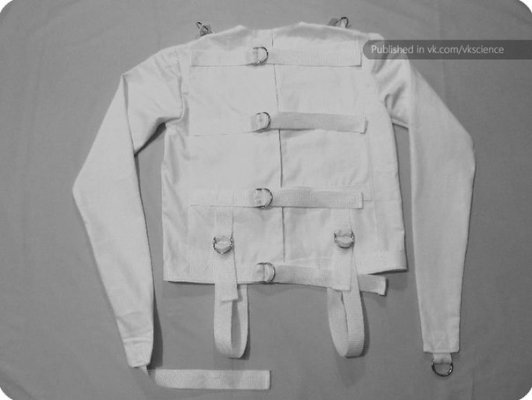
On the night of June 24, the civil activist Ildar Dadin went to the building, from which shortly before that they rudely evicted the movement “for human rights” - he wanted to join the activists who opposed the eviction that opposed the eviction.
When he went to Red Square, he found that the passage through it was closed. Dadin turned to the police with a question whether they were legitimately blocked, and began to shoot what was happening on a mobile phone. Instead of an answer, a policeman (as Dadin claims, Colonel) began to strangle him, hit his stomach and selected the phone. After that, Ildar was pushed into the car and taken to the Khiva Gorod police department. Ildar Dadin himself says about what happened in the police department and further:
Since my rights were violated, I began to demand that I be called the names and surnames of the employees who delivered me, since they grabbed me illegally and did not introduce themselves, as usual. This was not done, the police officers grinned and laughed in response. I began to demand that my right to call by phone is satisfied under the norm of the law on the police, and that I would be provided with a lawyer under the 48th article of the Constitution. In response, these comrades continued to laugh and simply went to their room, they didn’t listen to me. Then I began to make noise - I hit the wall with my foot so that I could hear me so simply could not sit there. They did not like it, and they chained me with handcuffs to the cage. Then I again announced my requirements and began to rattle the handcuffs, which were fastened. Among other things, I did not appear in protest. I said that until they call me the names and surnames of the police who delivered me and will not fulfill the norms that I referred to, I will not call myself. Apparently, they were also tired of it, they were smirked among themselves and called the orderlies with a doctor from a psychiatric hospital.
The doctor came and asked me why I did not call myself. I calmly, not in high colors, like a police officer, explained his motives, suggesting that this is a normal person. He called his demands and again began to make noise. The doctor looked at me for a minute and a half, and after that the orderlies grabbed me by the handcuffs and began to stretch my hands to me, crushing my wrists so that it was painful for me, and to twist the handcuffs. When I began to ask why they were doing this, they did not answer. Then, when I began to demand that they stop doing this, they went inside the cage and began to strangle me in turn. Then again they began to methodically stretch out my hands-they were pulled behind me, and the orderlies of them also raised them as high as possible-it turned out something like a draw. Finally, they tied my hands behind my back and legs and dragged me out into the street, saying: “Do you think that is all? Now we will beat you further. ” They carried, like a ram, carried upside down, laughed along the way and said that now they would drop me face down. They threw me into their car and continued to mock me there: “If you don’t introduce you, we will now take you to the crematorium for homeless people, so no one will know what happened to you.” They humiliated me all the way, insulted me, called nits, scum, chock.
They brought me to some institution, again carried me like a ram, dragging me by the ropes that I was connected, so that the ropes dug into the body, and carried upside down. It was some kind of medical facility, people went there in robes there, but I do not know what kind of place it was. But, as I understand it, it was here that they wrote a direction to me. In this institution they put me on a chair, some doctor came out and asked why I did not introduce myself. I again explained everything to him and said that the orderlies of the sadists are mocking people, and, of course, I will not introduce myself. I sat there for ten minutes, I was slightly weakened by the ropes in my arms, it became a little better. After that, the same orderlies again carried me to the car and were already taken to the psychiatric clinical hospital No. 4 named after Gannushkin.
There, in the residential, the doctor read the direction where it was written that I should first be attached. I was taken to the ward, where the patients lay, tied to the bed, stretched out hands and legs, so that I lay on my back and could not do anything. This lasted at least six hours - from about two in the morning to eight or nine in the morning. When the orderly asked what my name was, I still thought that there was no point in introducing himself further, and called myself. At six o’clock in the morning, when they had to do injections to the sick, I was preparing to say that during this time I did not behave inadequately and against the fact that I had something to prick me, and that they have no reason to tie me and prick me anything. Two nurse came with a syringe, and I began to calmly explain everything to them. They got nervous, but since I was connected and could not resist, they still injected something in my leg, and then I lay somewhere up to eight or nine.
In the morning the manager came and began to talk with me. With her, they untied me, took a blood test. After that, I began to fall asleep. After some time, the manager woke me up, and a commission of four people looked quite quickly, including her. Later, the manager told me that it seems that today they should let me out. She called my relatives and explained to me that by law it could only let me out if my parents arrive, so I had to give my mother’s phone. Then I fell asleep and slept until seven in the evening. When I woke up, I still wanted to sleep very much, as if I had not slept at all before. Almost immediately I was taken to the corridor and asked to sign the paper that I have no complaints. I signed it. At that moment, everything was indifferent to me. I remember that before that I wanted to express a lot to my friends, express indignation, and then it was empty in my head, and I only remembered that I used to have such a desire, but now I didn’t want anything. Friends later said that when I left the hospital, I was very inhibited and really did not look like myself. My sister arrived, and she was still allowed to pick me up, although she is not a father or a mother to me. We demanded an extract, but they did not give it to us. The nurse said that there was no manager and would not give anything, and escorted me.
Two days later, I went there with four friends at about seven o’clock in the evening. There was no manager again. But one of his friends had a press card, he introduced himself as a journalist, the other shot everything on the video. The orderly did not like it. I demanded an extract, because my friends explained to me that when a person is discharged from the hospital, he was obliged to give an extract. The nurses were nervous, at first they tried to take away the camera, then they called the guard and slammed the door. We went out with the protection. The next day, I had already come with nine people at about four o’clock, and when they saw this, they asked us to wait five minutes, after which they surprisingly very politely let me in. Here I was met by three doctors (the head was on vacation), put in a soft chair, asked what and how, they gave an extract (although at first they explained to me that they could only be given a certificate in the housing office). After I received an extract with a diagnosis and has already come out of there, my friends told me that the tests that I took from me should be named there and the drugs that pricked me. I went there again, they already finished me with my hand, supposedly from my piece of paper, but also very polite. I think they were scared of publicity. Naturally, I understand that it is far from a fact that it is precisely those drugs that pricked me. I was advised to do a blood test immediately to check, but I missed this opportunity.
I remember about about ten in the evening on the day when I was released from the hospital, leaving the metro, I felt like a veil, which before I was in front of me, suddenly took off, and I again became an ordinary person. After that, I wanted to sleep for several days, the rest I feel normal .
This is not the first time that the police calls the delayed transportation of psychiatric care. Indeed, the ATS officers are annoying when the detainee behaves too actively and especially when he refuses to call himself. Civil activist Vera Lavreshina caused transportation eight times. Twice she was brought to the Hannushkin hospital, but was released without any medical procedures-once even on the same day, without an overnight stay. The first such story occurred on February 21, 2012, when Lavreshin, along with another 24 people, was detained during the dispersal of the action "Stop dictatorship!" At the Central Election Commission. Speaks Vera Lavryshina:
I was especially lucky: since I did not allow myself to search, several police officers kept me. I fought back because it was ugly and rude. I was placed a punishment cell in a very cold camera, where it was not that it was impossible to sit down - you won’t lean against the wall. And since I sang songs in English there, as well as prayers-to the Virgin, to the Holy Spirit-my task was to hold out there somehow emotionally-it shocked them. Psychiatric transport was rescued to me. The orderlies also began to search me, because they did not find my documents, but I did not imagine, because I explained that I did not cooperate with the police occupation regime that was established in our country. The psychiatrist and his orderlies beat me, twisted and dragged me, without installing my name.
On the way I was beaten - those who take the psychiatric hospital, very rudely, can hit the table with their face to subside. Moreover, doctors also do this. They say: "We are not cops to you, we will calm you down at a time, you will not come out of us at all."
When I was brought to Gannushkin, there was a rude orderly, he took my things from me, poked me on my side several times. But the doctor on duty was extremely sane. She spread with me literally a few phrases and asked: "Who did you bring me?" They say: "She was a violent there, fought off the police, turned the chairs, shouted that they were invaders, and did not appear." The doctor said that soon they did not have enough space for ordinary patients. And they left me there for the night. I already behaved calmly, they didn’t do injections. The doctor talked with me, said: “I don’t think you are crazy and I’m not going to detain you here, but since such a story happened, you will spend it on us, since it’s too late, and in the morning we will let you go. The doctor will examine you, you will calm down because now you are inflated. ” I say: "It would not have been inflated - we were beaten." She says: "I understand everything, calm down, and go home tomorrow morning." It was clear that in the morning, of course, the commission would examine me. So it happened. The next day in the morning they gathered a commission, and the first thing I said when I appeared before them was that if they leave me here to be treated here now, then they will bring them in packs, dozens of triumph squares, from the Central Election Commission, and they will not deal with patients who are full in the reception of those who are not happy with those who are not satisfied with those who are not happy with the regime Putin. The conversation quickly acquired even some kind of ironic, playful character, they said that, of course, they did not want this, and after an hour I was released from me after this commission. I must say, there was information support from my friends outside, there were calls to this institution, one of the human rights activists even called. Maybe if everything was quietly, they would leave me there.
One more time I was taken in May (2013-“OVD-Info”). I don’t know if they understood that I had already been there once. But there I can’t imagine either. As a result, a mini-confusilium was held in the hospital on the same day, several doctors talked to me and let me go on the same day. In other cases, after a conversation with psychiatrists, I just stayed in the police station, and in most cases they let me go home, not knowing what to do with me .
The rudeness and even the cruelty of the orderlies, delivering to the Hannushkin hospital - all this is not news. However, in the history of Ildar Dadin there is a fundamental difference from the previous ones: drugs were injected without his consent. In the extract, a copy of which is at the disposal of the OVD-Info, Tiapal is also indicated by Sibazon. Tiapidal is a neuroleptic, it can be given with disorders of behavior (excitement, aggressiveness). Sibazon is a tranquilizer, it is given in neurosis, borderline states with stress phenomena, anxiety, anxiety, fear.
The discharge also indicates the diagnosis-“The accentuation of the personality of the mixed type (emotional-labile epileptoid)” (in the document itself the typo is written “epithetoid”). In other words, Ildar revealed some characteristics of character associated with the changeability of mood, excitability, tension, but located within the clinical norm. True, the “F 60.8” code is indicated nearby, which already means personality disorder, that is, the type of mental disorder, deviation from the norm. It is argued that in the emergency room Ildar "was excited, productive contact was not available, demanded to return it to" constitutional rights "(sic!)". The psychiatrist’s duty psychiatrist caused by the ATS made a “acute mental disorder”, he noted in the statements of the detainee “fragmentary ideas of the perculture” (that is, related to the persecution) and “lack of criticism”.
The document has a link to the protocol of the inspector of the ATS, from which it follows that Dadin “was obsessed with the constitutional system” (sic!), In the cell “fought with various parts of the body against the wall. Claimed that the President of the Russian Federation Putin V.V. It limits him in the right to move, that the president controls his every movement. ”
However, the commission already evaluates Ildar’s behavior more calmly - “fixed on the moments emotionally significant for him”, “thinking is affectively painted”, “the background of mood is not reduced”, “some emotional lability is revealed in the conversation”, “explains [its behavior in the ATS]“ nervous breakdown ”,“ agrees with the fact that it was irritated, excited ”. And - most importantly - "at the time of the inspection of the criteria of involuntary hospitalization does not detect."
As a result, the head of the 25th department and the attending physician T. A. Andrianova decided “due to the lack of criteria for involuntary hospitalization, as well as a written refusal of further treatment” to write out Ildar Dadin home, but recommended observation in the psychoneurological dispensary at the place of residence. The document also says that the patient did not receive treatment (recall that the names of the drugs were subscribed later by hand, only after Ildar specifically demanded to indicate them).
According to Article 29 of the Law on Psychiatric Assistance and Guarantees of the Rights of Citizens when providing it , hospitalization in a psychiatric hospital is in an unfobrusver order if a person suffers from a mental disorder, which is difficult and determines, in particular, the immediate danger of this person for himself and others. Apparently, the psychiatrist duty officer found that a person who does not seem to be a police officer and rattles handcuffs is a danger. It is not obvious whether it is possible to challenge his actions by law. But what can be said for sure is that, according to Article 40 of the same law, the patient’s extract hospitalized in a psychiatric hospital is carried out in an involuntary manner, is carried out by the conclusion of a commission of psychiatrists or a judge’s decision to refuse to extend such hospitalization, and according to Article 32, in the case when hospitalization is recognized as unreasonable and hospitalized does not express the desires to remain. In a psychiatric hospital, he is subject to an immediate extract. Nothing about the fact that an adult (Ildar Dadin is 31 years old) can be discharged only in the presence of parents is not said in the law. The law also states that within 24 hours from the moment the patient admitted to the psychiatric hospital, the administration and medical personnel are obliged to notify the relatives of the persons received to them (not only parents at all).
We know well how the police prevent control over the observance of the rights of detainees (the China-Gorod police department, by the way, is glorious by this). It is even more difficult to control what is happening with the involuntarily delivered to psychiatric hospitals. Here, apparently, they are not always striving to observe the law, and the duty psychiatrists that the police call are not always ready to listen to the detainee. Vera Lavreshina managed to convince psychiatrists six times that she was sane and simply in this way (refusing to be called and generally obeyed the authorities) expresses its protest. Dadin failed.
It should also be remembered that psychiatry has recently often, like a row, is a means of struggle of the authorities with dissenters. In 2007, in the city of Apatity, a member of the Murmansk branch of the United Civil Front Larisa Arap was forced to be in a psychiatric hospital. First of all, it was a clear revenge of the doctor for the article in the newspaper “Marsh of the Disagreements”, in which Arap spoke about abuse and mockery in this hospital. The court decision on hospitalization was made only after two weeks, and not within five days, as it should be by law. Arap was released only on the 46th day, after the events received wide publicity, including international. Activist of movement "F.A.K.E.-.-P.O.r.T. О.С." Юлия Приведенная, безосновательно обвиненная в создании незаконного вооруженного формирования, незаконном лишении свободы несовершеннолетних и в истязании детей, дважды на продолжительное время помещалась в Центр имени Сербского для проведения стационарной судебно-психиатрической экспертизы.
Карательная психиатрия присутствует и в«Болотном деле» . Прежде всего принудительное психиатрическое лечение грозит инвалиду II группы Михаилу Косенко, состоящему на учете в психоневрологическом диспансере. А Олег Архипенков , который в конце концов был освобожден под подписку о невыезде (но обвинение в участии в массовых беспорядках с него не сняли, хотя он даже на Болотной не был), прежде чем попасть в «Бутырку», был помещен в психиатрическую лечебницу. Администрация СИЗО утверждает, что по его собственной просьбе, однако в это слабо верится. На первой встрече с адвокатом после пребывания в лечебнице Архипенков не мог внятно общаться и с трудом передвигался. Что ему кололи, он не знает.