
Translated material
How to build a cozy metropolis
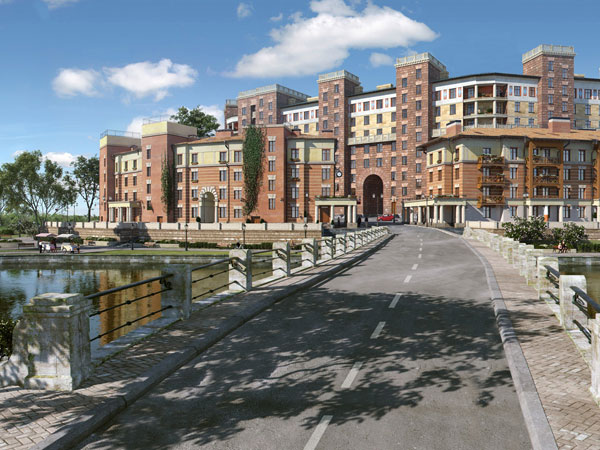
In modern urbanism there is a clear tendency to humanization. The ideal of the city as a business environment, flooded with cars and non-wrestling offices, is replaced by such urban planning concepts that are oriented, first of all, to make the city convenient and pleasant to humans. In a generalized form, this was expressed in the formation of the concept of the so -called “New Urbanism”, which involves the proportionality of the human body, the priority of pedestrian movement, the presence of convenient infrastructure, greenery and the regional planning of the regional planning.
In this process, urban competitions and bonuses that receive the most promising, from the point of view of the organizers of the award in the field of urban planning and real estate become a very indicative factor.
At the moment, there are a great many such awards - both local and international. Usually these are independent projects that receive funds from sponsors and funds and gain independent experts as a jury.
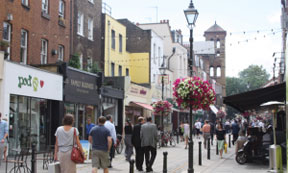 EXMOUTH Market (London) Academy of Urbanism Prize winner, 2011
For example, in 2006, the Academy of Urbanism was formed in the UK ( Academy of Urbanism )-in fact, a group of urban planning-artists who rally to promote their urban concept. In addition to discussions, master classes and conferences in the UK and Ireland, the Academy also established an annual international (rather pan-European) prize, which is awarded in the relevant nominations to the best city of the year, the best district, the best street, etc. Among the evaluation criteria is paid to such parameters as “convenience and pleasantness of pleasantness and pleasantness to the eye, commercial perspective, functionality and natural and social environmental friendliness. ”
Another example is the Toronto Urban Design Awards regularly awarded since 2000. This is a narrowly local bonus, which can be awarded individual buildings - private and municipal - architectural projects and even design elements. With all the differences between this project from the aforementioned, the criteria are largely similar. It is taken into account how well this or that element of the urban environment fits into the general context; novelty and effectiveness of engineering and architectural solutions; As well as environmental friendliness, which, in particular, involves focus on pedestrians and cyclists and the convenience of infrastructure.
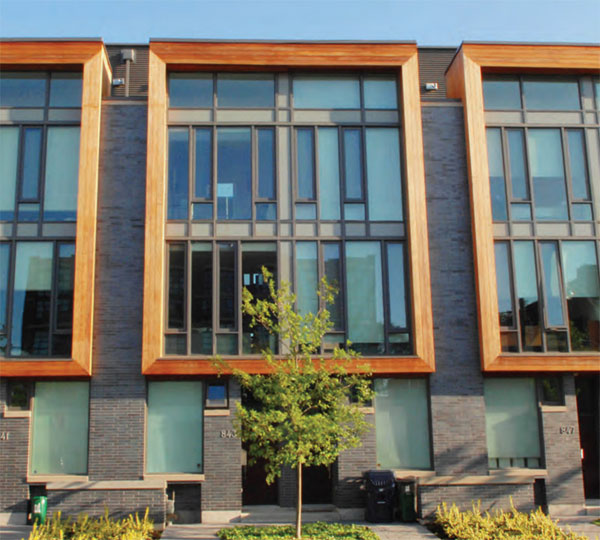 Town House Laureates in Toronto. Photo: Toronto.ca
Similar projects began to appear in Russia. One of the characteristic examples is the prestigious Urban Awards, which was established five years ago, which is designed to “promote the formation of Russian standards of construction in the residential real estate market” largely thanks to the agency of real estate Agapa-house ; and increase the investment attractiveness and transparency of the Russian housing market. Currently, projects of Moscow, the Moscow Region and St. Petersburg are participating in the competition. And again, among the evaluation criteria, a general trend is traced. In application, the buildings are taken into account, among other things, “energy efficiency, technologies for reducing negative environmental impact, safety and comfort for living and the environmental responsibility of the developer”. As for the housing complexes, the evaluation parameters are here: “The degree of complexity of the development of the territory, the level of social responsibility of the project, the level of urban planning value of the project and the level of social preparedness of the territory”.
If you look at the latest results of the competition ( for 2012 ; 2013 winners will be announced only in November), then the winners were distributed as follows. Most are business class projects and elite complexes. Not surprisingly: for obvious reasons, they have knowingly more funds to ensure compliance with high standards. Of these projects, almost everyone turned out to be winners in one nomination.
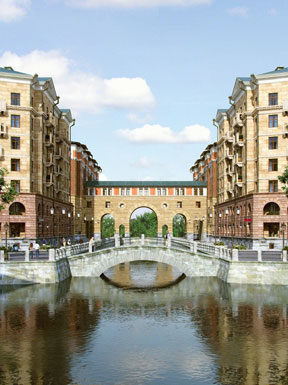 Project collage "City of Embankment". Photo: 2012.urbanwards.ru
But of the few winners from the category of economy class, two projects turned out to be winners in more than one nomination-a residential complex in St. Petersburg "New Okkerville" (in particular, by environmental indicators) and a residential complex in the near Moscow Region-the city of embankments. The City of Embankments was noted at once in five nominations. Among other things, as “Innovation of the Year”, as “Residential Complex of the Year with Best Architecture” and as the “Best Complex Development Project”. The specificity is that this project is, on the one hand, in line with the movement of new urbanism and has many features characteristic of business class housing: low-rise buildings, a picturesque organization of space, an unusual and diverse layout of apartments. And on the other hand, it is in the price category of economy class. The initiators of this project are the Urban Group company —the such an approach for the principle. In addition to the “city of embankments”, the laureate of the prize in the nomination “The best residential complex of the economy-class of the Moscow Region” was the residential complex of the same authors-the LCD “Opalikha O2”.
This example is indicative: how new approaches to the construction of economy-class housing are gradually penetrating the market. In practice, from the point of view of developers, the trend, in fact, is due to two points. Firstly, by the fact that modern urban planning technologies allow, with relatively small costs, to make construction more plastic and adapting to the needs of people. Panking, popular due to the cheapness, panel development does not allow a wide variety of forms. Monolithic construction is now gaining revolutions gives a space for great variability. Secondly, the fact that people are more willing to buy housing in beautiful areas. In other words, it becomes more profitable for the developer to pay more attention to the architectural organization and the aesthetic side of the matter, to invest in this and thereby get a competitive advantage.
The pattern contributes to the strengthening of this trend: economy-class projects, aimed at the requests of a growing middle class, including aesthetic and social, are often more promising in commercial than standard budget sleeping areas.