
Translated material
DEARSED Sochi
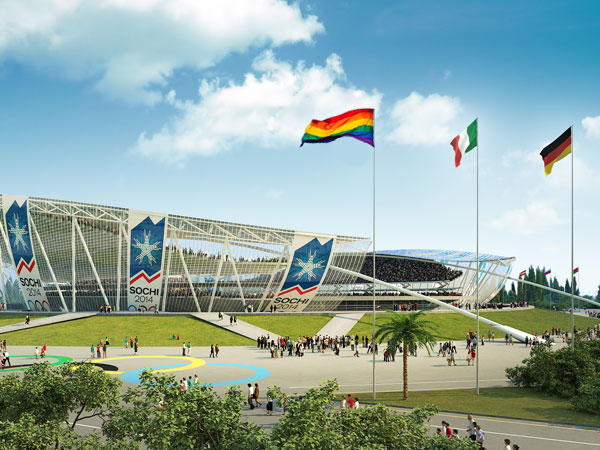
The news, at first glance, is insignificant: Interfax transmitted the words of the chairman of the State Duma Committee on Physical Culture, Sports and Youth Affairs Igor Anansky, as if the law on the prohibition of homosexual propaganda will not be applied to the participants and guests of the Sochi Olympiad in 2014. Later, the Anansky recovered and specified that nevertheless, the law cannot be violated and the guests of the Olympiad could not be agitated.
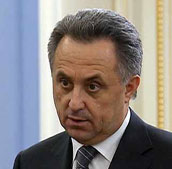 Vitaly Mutko
Earlier, the Russian Minister of Sports Vitaly Mutko assured: “No one forbids the athlete with non -traditional sexual orientation, but if he goes outside and begins to promote it, then, of course, he will be held accountable. Although he is an athlete, he must, coming to the country, respect its laws. ” And further in the text: “Here are swimmers, for example, are now in Barcelona - they cannot go outside and begin to violate local laws? So here. Come, but do not involve young people, do not promote - that’s what we are talking about. ” Dura Lex Sed Lex, the law is harsh, but this is the law - in other words.
The statement of the minister can be considered, perhaps, fair, but extremely reckless. Indeed, literally the day before, the International Olympic Committee made a statement that the adoption of the law on the prohibition of propaganda of non-traditional sexual relations among minors will not lead to any discrimination of athletes, officials, spectators and journalists at the Olympiad. But for Mutko, this position seems unthinkable - after all, the law must be respected.
The keyword in this story seems to be not propaganda and not even homosexuality. With propaganda, everything is clear - it is not. It is also clear with gays - the topic is the priority of anyone - far from the first ten. And if one of the foreign athletes will really be fined according to the frankly stupid Russian law-it will rise, which will reset any results of the Olympic Games.
And along the way, any efforts to turn Sochi into a certain “world -class resort”. There is no world -class resort, where almost everything cannot be done. By the way, the Krasnodar and the federal authorities are noted-there is no world-class resort a) with such prices, b) without specialization (drugs, dancing, sex tourism, free alcohol, cheapness (including flights), and so on). If Europe and a significant part of the United States believe that homosexuality is normal, and you scream all over the world, that no, then do not think that someone will go to you. At least that a solvent client will go. The prices in Sochi are such - and the service is still “Sochi” - that the solvent client will prefer Rome, Venice, Paris, Nice and any other place.
However, “Sochi” is not a keyword here, there will still be a lot of reasons to talk about Sochi. The keyword in the history of these three conflicting reactions is “law”. Mutko is absolutely right: the law must be respected. Although all countries of the world make some relief for large sports competitions, but the laws acting in the country, in principle, are higher than the messages, even if temporary.
It is more important here. In Russia, the zones of special legislation multiplied and multiply under specific tasks. Let's say it is necessary to develop science, and the government immediately comes up with the special economic zones “for science”, in which the preferential tax regime. It doesn’t matter that in practice, “Mercedes” for the elite or tobacco are carried through them for some “special lists” there, the principle is important-science as it was in an unpleasant position, and remains. But the universal, it would seem, the law does not work, and by the will of the government.
The same story with Skolkovo. The main problem is not in money, architecture or innovation, but in the fact that both money, architecture, and innovations promised, say, to create a special police, tax regime, and transport. If it succeeds, then again we get a “special zone” - the reservation of civilization.
Or here is the final of the Champions League that took place in Moscow in 2008. There were also problems there (then, however, the topic of gays did not sound in the Russian political context in any way - that is, in general, there is a reason to think). The first problem is that the tournament has one of the title sponsors - a beer company, and advertising beer on TV until late in the evening and in stadiums is prohibited. They discussed for a long time how to get around the ban and even made amendments that allowed beer to advertise. In the end, however, in UEFA they went towards and refused to advertise beer in the final. The second feature of that final is the police police, capable of connecting a couple of phrases in English (it is unclear, however, whether this helped Italian fans, because on the Apennins English is not the language of international communication).
In 2008, by the way, supporters of amendments to advertise beer were appealed to the Olympic Games in Sochi. The State Duma then replied that all the formalities have already been taken into account in the special Sochi legislation and another brewing company - the sponsor of the Olympic movement - would not suffer. Another special regime for Sochi (and now for the World Cup in 2018) concerned de facto cancellation of the Private Property principle-the land under the objects was seized as a short time at a rather arbitrarily established price, which the authorities considered the “fair”.
And for sure, gay propaganda in Sochi, if they don’t legalize, will look at it exactly through the fingers. Here the question, of course, is of extremely specific attitude to the law of both the Russian government and the population. The population on the laws that are incomprehensible or harmful to him, do not give a damn - it tries to bypass them or simply not to observe them. The authorities demonstrate fidelity to the laws, but at any opportunity, they ignores or rules them under a specific situation. It does not matter that they are initially bad and/or impossible for execution - we will fix them, and they will be better. The inviolability of the constitution was violated under the early Dmitry Medvedev (one must think, it was not only his initiative), what can we say about the rest of the laws.
This is called how the mentioned former president liked to say, “legal nihilism”. It comes from the highest cabinets. The authorities refuse to realize that its laws are stupid and even that in Russia it is not the same as in other countries, a legal culture, which must be explored and understood before the adoption of completely inadequate laws. And it turns out that Russia still calmly and confidently replies that the Latin “Fool Lex Sed Lex”, “The Law, that it was drawn, where it turned, it turned out there.”