
Translated material
Putin loses weight
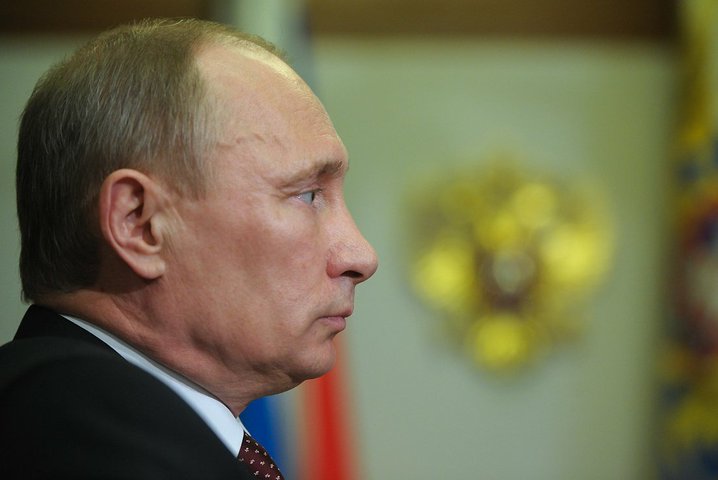
For all, for all, a rather powerful (still) support for Vladimir Putin, they begin to get tired of him slowly. And this fatigue has only intensified in the last couple of years. Such conclusions can be drawn from the fresh survey of the Levada Center, which throughout the reign of Vladimir Putin was interested in the opinion of Russians about the activities and strong qualities of the Russian president and (sometimes) the prime minister.
When the Russians were asked to evaluate Putin’s work on a ten -point scale, almost always, with the exception of the very beginning of the political career of the president (then the Russians generally evaluated politicians skeptically and did not manage to believe in Putin) the average grades prevailed. However, the president also slightly handed over: if in July 2008 he was 7.21 average score, and in April 2011 - 6.30, now only 5.81. This is the level of 2002 and 2005. The reason is fewer Russians than two and five years ago, the president put the highest points. The percentage of the president assessed the ten -rate - the lowest during measurements since 1999 - 5 percent (in the summer of 2005 it was 9, and in the summer of 2008 it was 24). Nine is also less than two and five years ago: 6 percent versus 14 and 12 in 2008 and 2011.
This does not mean that Putin’s work is evaluated very poorly, by no means. The number of eight activity that assessed its activity was stable, and the number of seeds has grown up compared to 2008 and 2011: from 10 and 13 percent to 18. That is: many assess the initiatives and statements of Putin above the average, but the number of enthusiastic activities have been made. Maybe they are just used to it.
The number of citizens who adhere to Putin of the same views (no matter what it means to them) is also in constant dynamics. And here, too, a descending trend is noticeable. The number of completely dividing these views at a minimum since 2001 (then even there were more) - 14 percent versus 27 in May 2007. The number of supporters of the version of “Putin Reformer”: as long as he will carry out “democratic and liberal reforms (again-no matter what it means), fell to 16 percent, meanwhile, meanwhile, meanwhile, while previously held around 25-30 percent.
The number of disappointed has grown up (the answer option “I used to like it used to, but now I was disappointed in it”): from 9 percent in May 2007 to 19 percent in 2011 and 22 percent now. It is also a maximum of May 2001.
The positions of adhering neutrality are stable: Putin does not like it, but they hope that it will be better-6 percent (something like this with fluctuations in the 2000s), they support Putin, because there are no others, 18 percent.
But the opponent camp grew slightly: the number of those who declared that they were not Putin’s supporters was 15 percent (this is a little more than in 2005, when the benefits were monetization). And another sign position - 5 percent believe that it is necessary to support anyone, but not Putin. This answer has never gone beyond the years of Putin's rule: in 2005, supporters of this version were 2 percent. As in 2011, in 2007 they were not at all.
The dynamics of assessing the personal qualities of Vladimir Putin is also not unless. The Russians almost stably evaluate the ability of the Russian leader to clearly state thoughts: now there are 30 percent of them, in 2003 there were 35, in 2007 - 34. A little on the decline was estimated by the strongest qualities of Putin, but insignificantly: 23 percent noted, in 2007 - 25, ten years ago - 29. The ideas of Russians about Putin as a cultural and educated person are almost stable. In 2003, it was said that this feature is most characteristic of Putin (the question was formulated) 24 percent, now - 18, as in 2000. The ability to compromises as a characteristic feature of Putin throughout the 2000s stably noted a little more than 10 percent, now there are 12 of them. The open person of the Russian president is 5 percent, but only 8 were the maximum value-not the most important feature. Putin is active and energetic: as it thinks 24 percent, six years ago there were 25 of them.
But further for Vladimir Putin, an unpleasant fall on a number of points is again found. The state approach to problems is half, compared with 2007 from 30 to 15 percent. Since then, professional qualities have ceased to celebrate 14 percent (falling from 39 to 25 percent). The sequence of the political line ceased to notice 29 percent (from 35 to 16). The president’s restraint in the mass representation of Russians doubled - from 40 to 21 percent, honesty - more than three times, from 22 to 6 percent. The desire for order and legality now notes only 10 percent against 16 during the 2000s and 22 in 2000. Unpleasant, in general, picture.
This does not mean that Russians do not consider Putin honest or restrained, they simply do not believe that these qualities characterize the president. Then which characterizes? We have listed almost all stable, but there are those that in the eyes of Russians have become more significant than before. Namely, a large economic one (from 4 percent in 2000 to 13 now) and managerial experience. The last Russians are revered beyond the main line of Vladimir Putin - this is how 35 percent of the respondents answered.
The numbers in general, of course, should not plow the president and his team horror. The ratings are high, the political situation of the Russian leader seems to be strong, but there is a reason to think and seriously. The fact is that the three most popular options for the answer to the question, whose interests are expressed by Putin, are: security officials, oligarchs and officials. And only then the “middle class”, and then with an even more significant margin, workers, the intelligentsia, the cultural and scientific elite (the number of those who answered three to four times below three most popular answers). The Russians will agree to the direct thought that Putin is not and the president, but the head of the power and financial bureaucracy, ruling Russia in his own interests. And this should already not be alarming, but to terrify the Putin's environment.
One thing should be reassured: the number of active and passive supporters is more than 50 percent. As mentioned above, Putin is unconditionally supported by 14 percent, under the condition of some “reforms” and 18, they simply do not see alternatives. Plus 6 percent of “optimists” who hope Putin will “correct”. And there are 22 more “disappointed recently” - you never know what they said to sociologists, but when they come to the elections, the picture may be another.
Those who do not see alternatives, by the way, the Kremlin will have to be held in order to maintain a stable majority if the Putin team wants to continue in power. So on the emergence of a real competitor to Vladimir Putin, and, therefore, on the appearance of a real competitive policy, is unlikely to count on the near future. Which, in turn, increases the likelihood of an “orange” or, God forbid, the “Arabic” scenario. ”