
Translated material
Money over the wind
People invest in opposition candidate
By the middle of last week, more than 5.5 thousand people transferred more than 35 million rubles to the opposition leader. Who, like and under what conditions investing in Navalny’s candidate, understand The Newtimes
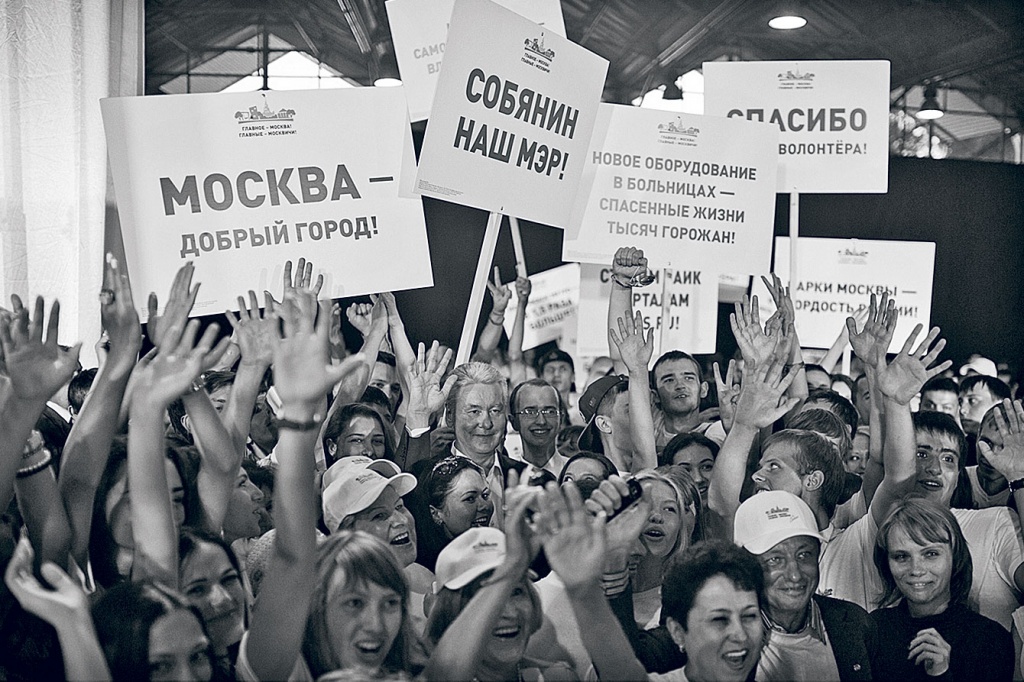 | 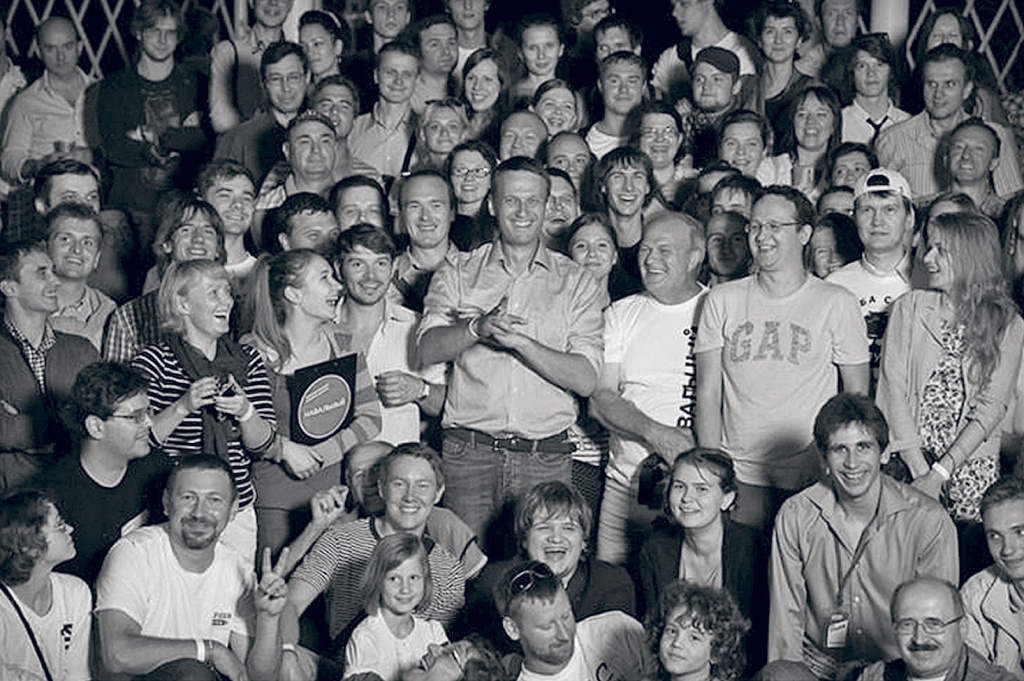 |
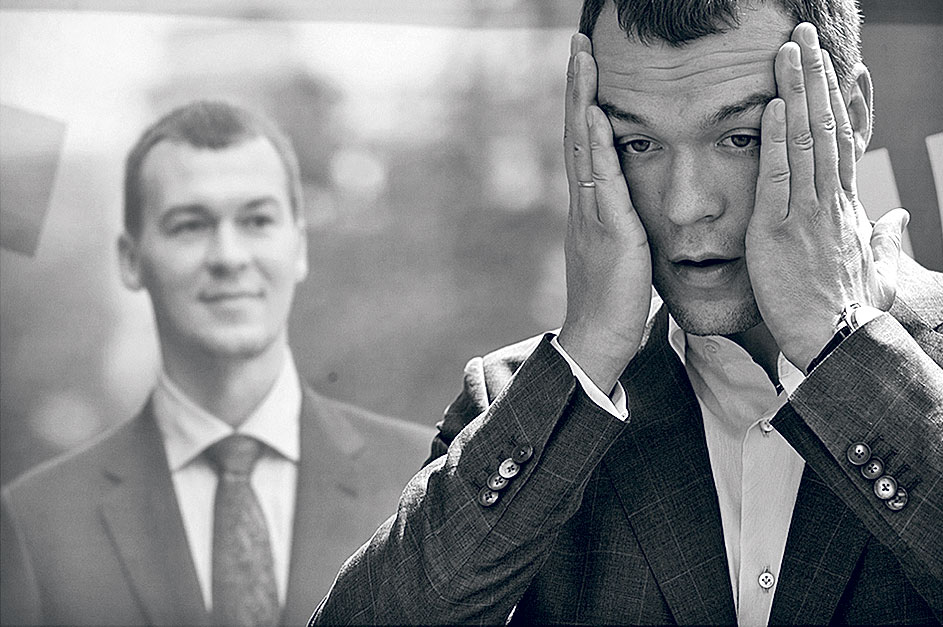
Those who want to vote for Alexei Navalny (photo on the right) are ready to help him and financially. Sergei Sobyanin (photo on the left) support some, but others pay for his campaign
“I understand that VE. VE. Zhirinovsky is terribly worried that there is hardly at least one person of 61 years throughout the country who will give one penny to his “party”, and such people make the largest donations to us - so Alexei Navalny commented on the proposal of the leader of the LDPR in his living magazine “to figure out who he (Navalny) translates the money - Washington or Chukotka.” “However, he and the Prosecutor General Chaika, Sobyanin, and Putin will have to come to terms.” This is Chukotka, not Washington. ”
From 20 to 82
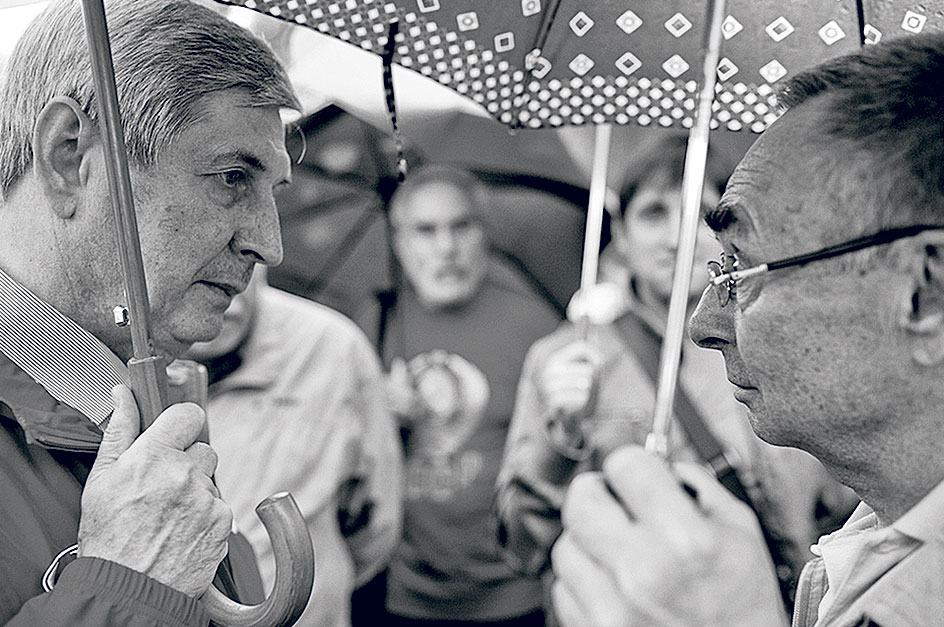 |
| Communist Party Candidate Ivan Melnikov (left) counts on the support of the older generation of Muscovites |
In fact, the personal data of citizens who transfer donations to election funds are not subject to disclosure, but nothing prevents the candidate’s headquarters to analyze the overall statistics of revenues. The pre -election headquarters of Navalny did such a work, summarizing the data on the beginning of August, and received very curious results to see for whom this political product is attractive.
"
The ratio of donors from Moscow and regions - 45 % by 45 %. That is, the current election campaign of Navalny, in fact, is federal
"
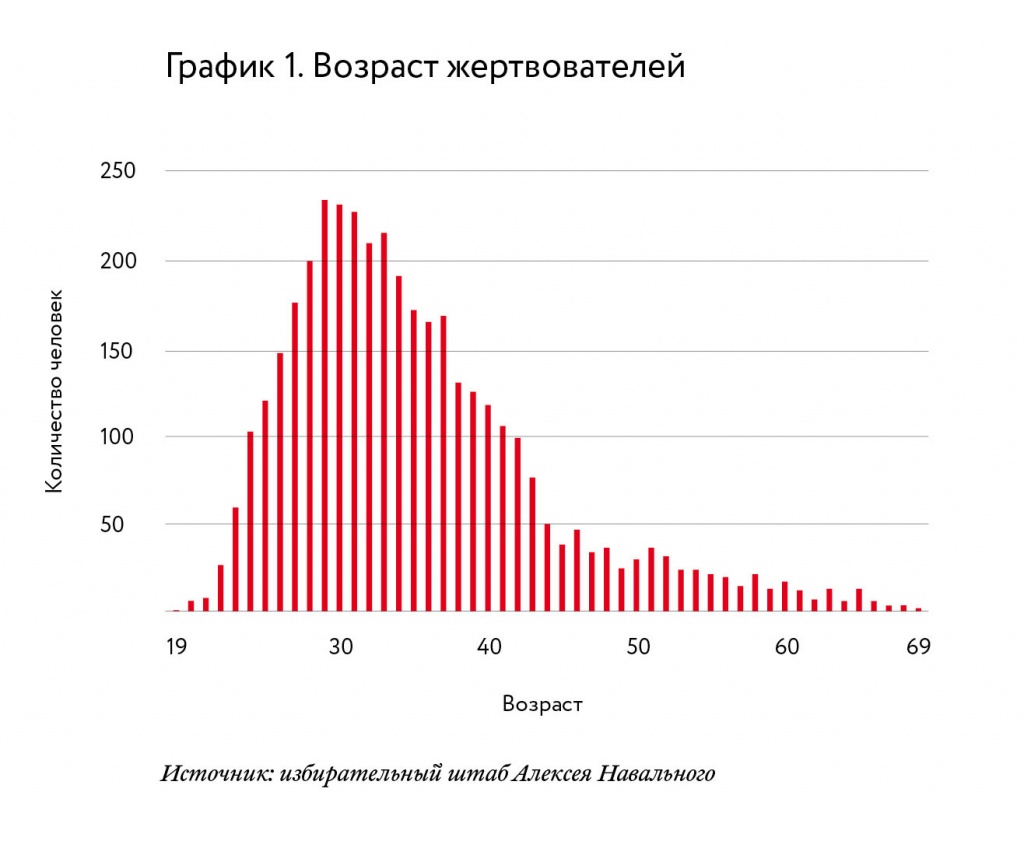
The age of those who are ready to invest in Navalny was predictable: the vast majority of donors - from 25 to 37 years old, and people aged 28 to 33 years most actively contribute money (schedule No. 1). Representatives of this particular age category prevail among those who, after December 2011, were called “angry townspeople” or “creative class” and who are ready to support Navalny, if not as an ideologically close politician, then at least as a symbol of the desired changes.

Now who and how much transfer money (schedule No. 2). People aged 28 to 42 donate approximately the same, except that the younger fewer are inferior to forty -year -olds who have transferred almost 700 thousand rubles in the amount of almost 700 thousand rubles (in the last days, several contributions for the maximum possible amount of 1 million rubles were received in the Navalny fund, but they did not enter this report). But those who are more than 45 are noticeably lagging behind: they have the total amount of donations for each age rarely exceeds 100 thousand rubles.
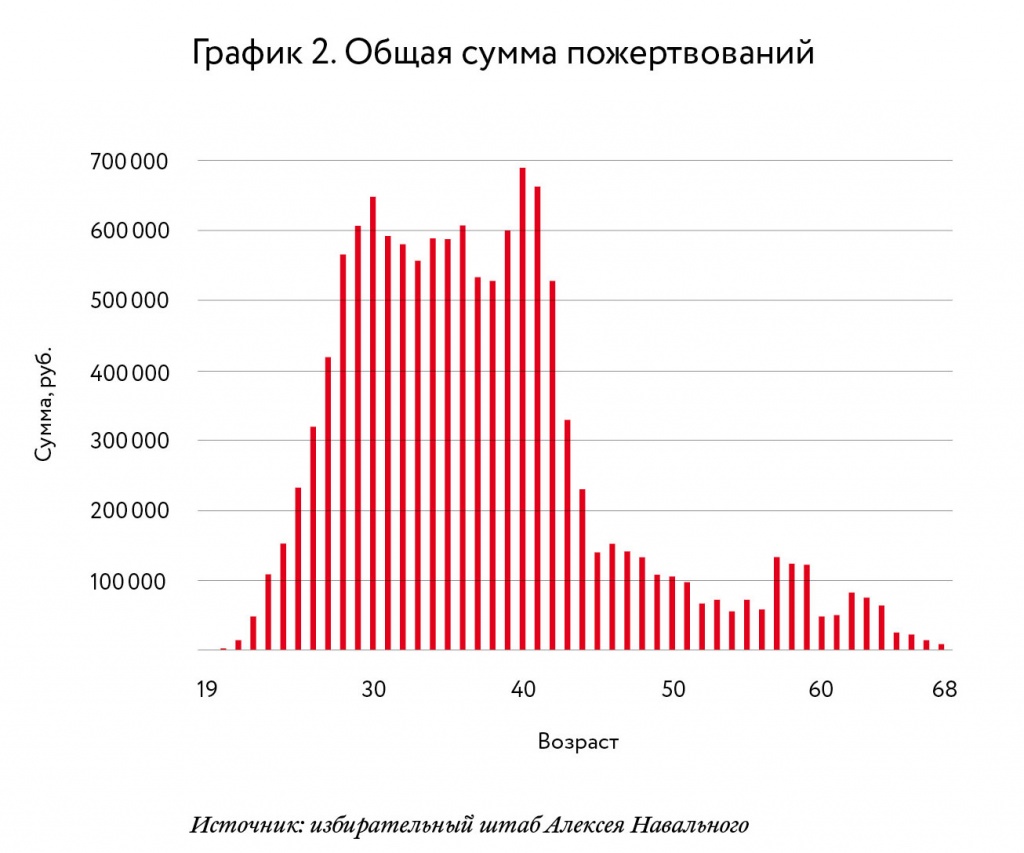

“There are no special revelations for us,” commented by these figures the executive director of the corruption Fund Vladimir Ashurkov, who was responsible at Navalny’s headquarters for raising funds. “Naturally, the most solvent population is people in the range from 29 to 40 years old, and it is from them that the largest amount of donations was received.”
But the third schedule published by the headquarters, showing the average amount of donations from different age groups, became almost a sensation. Two peaks are clearly visible on the graph, and if the first (41-42 years, about 5.5 thousand rubles) seems quite logical, then the absolute record set by donors aged 60 to 64 years (their average transfer-from 6 to 7 thousand rubles) looks completely unexpected. 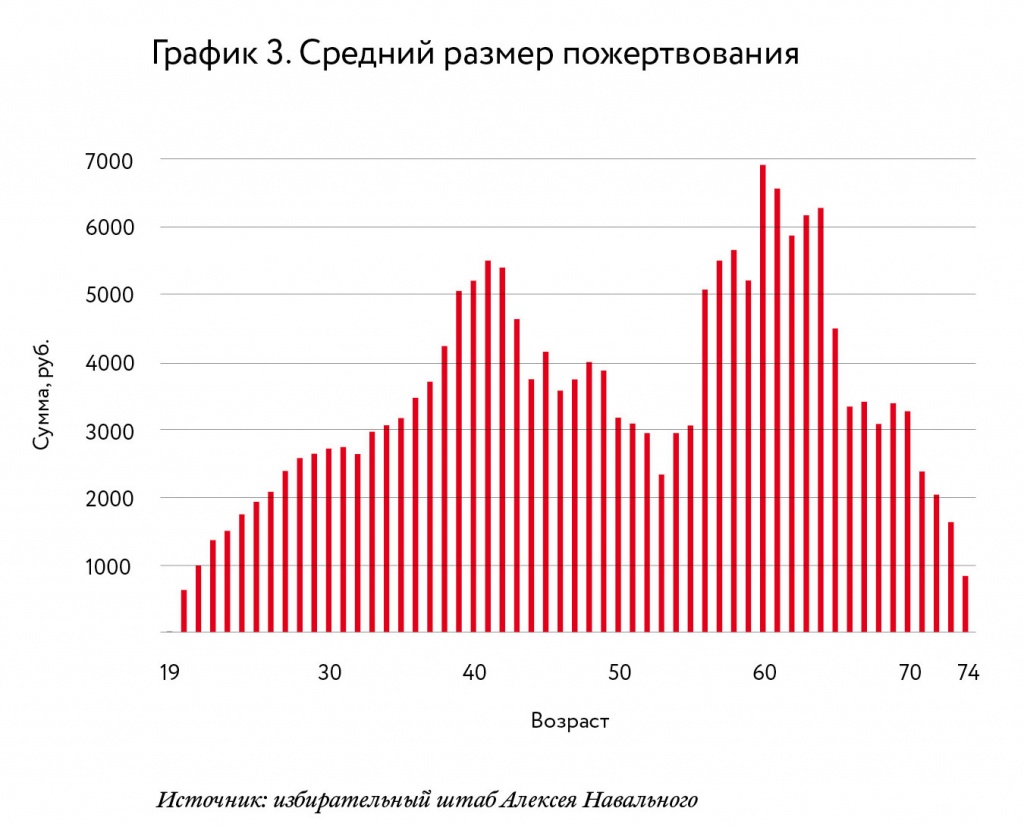

True, Ashurkov and this statistics are calmly: “I would not develop any special theory in this connection. There are not so many donors over the age of 50 years, in principle. And I think here just several large payments could have such an effect. ” By the way, the most “age” donor, according to the chief financier of the headquarters, is a kind of 82-year-old Muscovite, which transferred 4 thousand rubles to Navalny.
Physical against legal
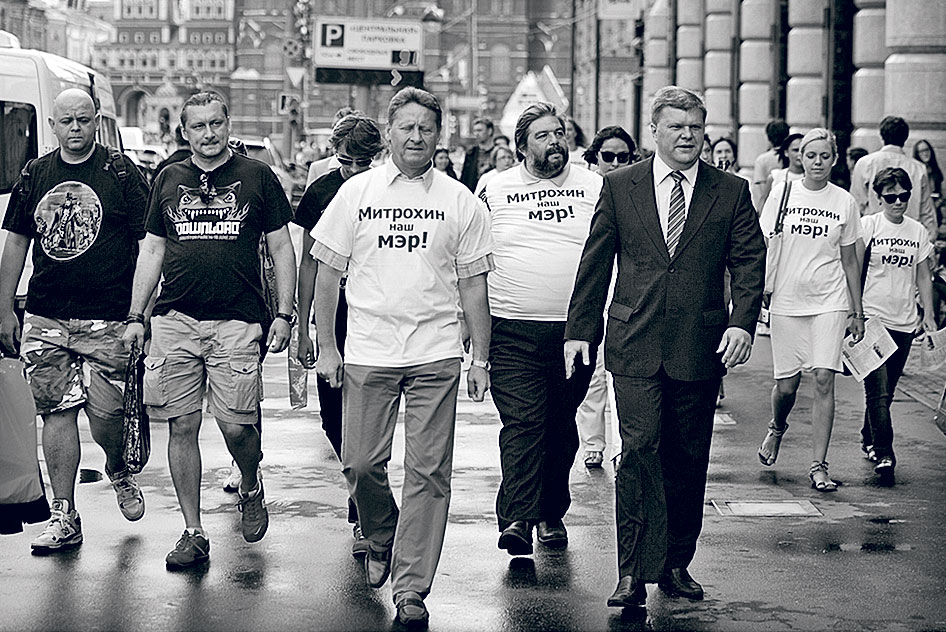 |
| Sergei Mitrokhin (right) hopes that voters will appreciate the merits of Yabloko in the struggle for the rights of citizens |
In general, large payments are rare. The average donation is 3.5 thousand rubles, but most of the translations are about 1 thousand rubles. At the same time, as Ashurkov emphasizes, there were only two contributions from legal entities for the entire campaign, and both were sent back due to errors in the design. “This means that our election campaign is really financed by residents of Russia,” Ashurkov states.
And finally, another very remarkable detail: the ratio of donors from Moscow and regions is 45 % by 45 % (10 % of the donors are residents of the Moscow Region). That is, the current election campaign of Alexei Navalny, formally limited by the capital, in fact, is a federal one - or at least this is how many politically active residents of the Russian province perceive it.
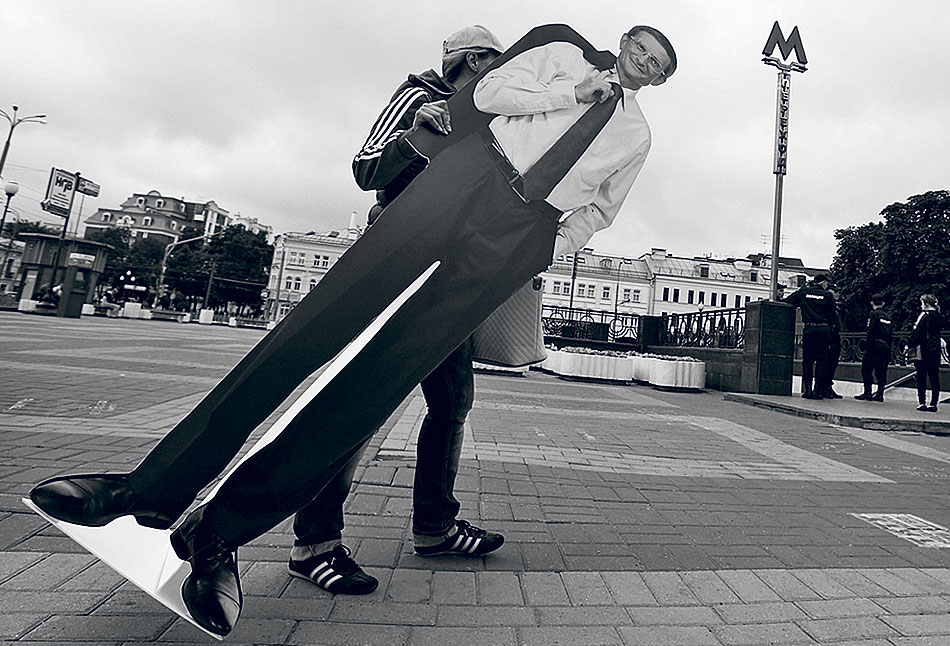 |
| For the reference of Nikolai Levichv on the streets of Moscow, his cardboard double is often blown |
Of course, it would be interesting to compare the statistics of Navalny’s headquarters with similar donations, for example, to the election fund of the acting Mayor Sergei Sobyanin, who positions himself in these elections as the “mayor of all Muscovites”. But his New Times reported that they were not conducting such statistics, and offered to get acquainted with the financial report of Sobyanin, posted on the website of the Moscow City Wharus. However, in this document, of course, there is no such details as Navalny - only the total amount of donations to a candidate from citizens, legal entities and parties.
However, even from this report it is clear that the money of ordinary citizens for the acting The mayor does not play a special role. As of mid -July, more than 29 million of 36 million rubles received by Sobyanin’s election fund transferred legal entities and only 6.7 million - individuals. By the way, the rest of the candidates, according to mid -July (candidates will submit the next report after September 8), there were no money transfers from citizens at all - only their own or party funds. And judging by the intermediate report of Sberbank, published by the Horizburkom on August 12, this situation has not changed.
Investments in grandchildren
Information about who and how much donates to the Navalny election campaign is interesting not only in itself, but also as a rare example of conscious political investment for Russia. It is not news that in the West the number of invested dollars or pounds is the most accurate indicator of the attractiveness of the candidate: people do not like to part with the bloody earned and if they are invested, they obviously expect to get something from this investment. Why is the Russian investor ready to pay? “Probably, each specific donor should talk about motivation individually,” says Ashurkov. - I think that the election of Navalny mayor of Moscow can be the beginning of long -term changes in Russia and the gradual dismantling of an authoritarian corrupt system of power. And the beneficiaries of this process will be very wide groups of the population. Therefore, if people have the opportunity to support our campaign, then this is certainly a logical and reasonable investment. ”

The same, according to Vladimir Ashurkov, applies to older people. After all, surveys show that more and more young people want to leave Russia: according to the latest data from the Levada Center, among respondents younger than 25 there are 39 %, and among students and students-45 %. “Of course, for grandparents, this situation is not comfortable: both in the social aspect - in the sense of communicating with children and grandchildren - from a financial point of view,” Ashurkov argues. “And if life in Russia will improve and become more comfortable for young people, grandmothers will also be better.”
Venture campaign
In the investment, the chief financier of Navalny’s headquarters, of course, is a large specialist-after all, he had been dealing with these issues in Alfa Groups for six years. But what about specific Russian realities? This is somewhere in America a candidate can either win or lose. And we have much larger fork, and in the case of Navalny, the options “either sits down or will remain free” are added. And how, for example, the “investors” of Navalny will react if he receives good interest, but he will lose the elections anyway - even in the second round?
 |
| Mikhail Degtyarev was instructed to show Muscovites a new person LDPR |
“Of course, we count on victory and believe that it is possible. But this question is not binary: they say, if victory, then success, and if Sobyanin becomes the mayor, then this is a complete defeat, ”Ashurkov explains. - The second round will mean that a serious political force has appeared in Russia, which can achieve gradual liberalization of the regime. For a person who considers this process from an investment point of view, financing of our campaign is a very understandable way to invest funds and efforts to bring these changes closer. ” Therefore, donations to the Navalny Foundation, according to the financier, can be compared with venture investments: you should not expect an ambulance here, you can make it very likely to lose, but if successful, your investments will grow several times.
True, sociologists are not so optimistic: they believe that there is no question of involving “wide groups” in the political investment.
 |  |
 |  |


“For most citizens, an election campaign is an absolutely alien sphere, they don’t know anything about it and are unlikely to give money for it,” says independent sociologist Boris Dubin. -This initiative has some response in about the environment that went to Bolotnaya Square and Sakharov Avenue. But not Moscow comes out on the square, but a very definite layer of Muscovites - a few and quite narrow. ”
Another reason why such crowdfunding cannot become mass, according to the expert, is the lack of investment in Russia in Russia.
“Our people do not invest in the future, they generally imagine it badly and do not think about it,” explains Dubin. - Therefore, this kind of initiatives cover the relatively secured layer of the population of large cities - educated, quite successful, having money that can be invested in the future, including in a political future. And mainly in the next five, ten, and maybe forty years, these investments can be associated exclusively with this layer. I do not think that this can be extended to the majority of the population living away from Moscow and from the oil pipe. ”
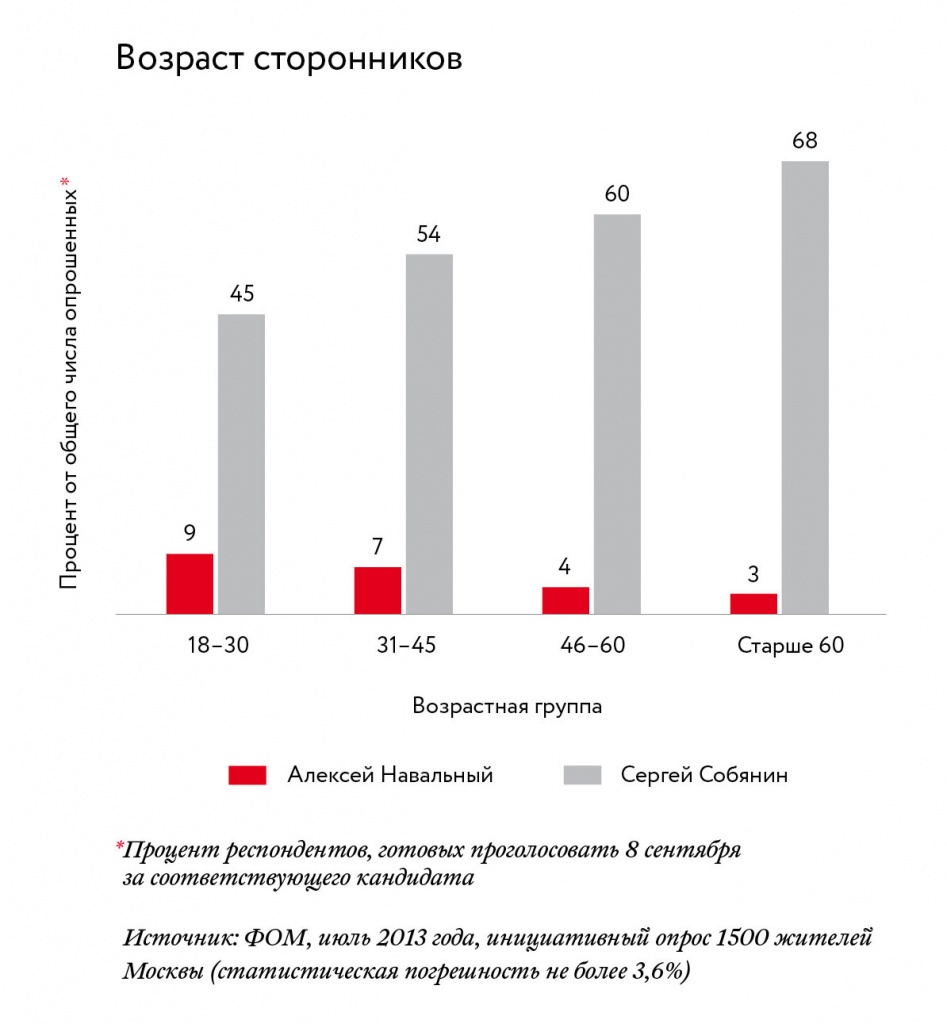
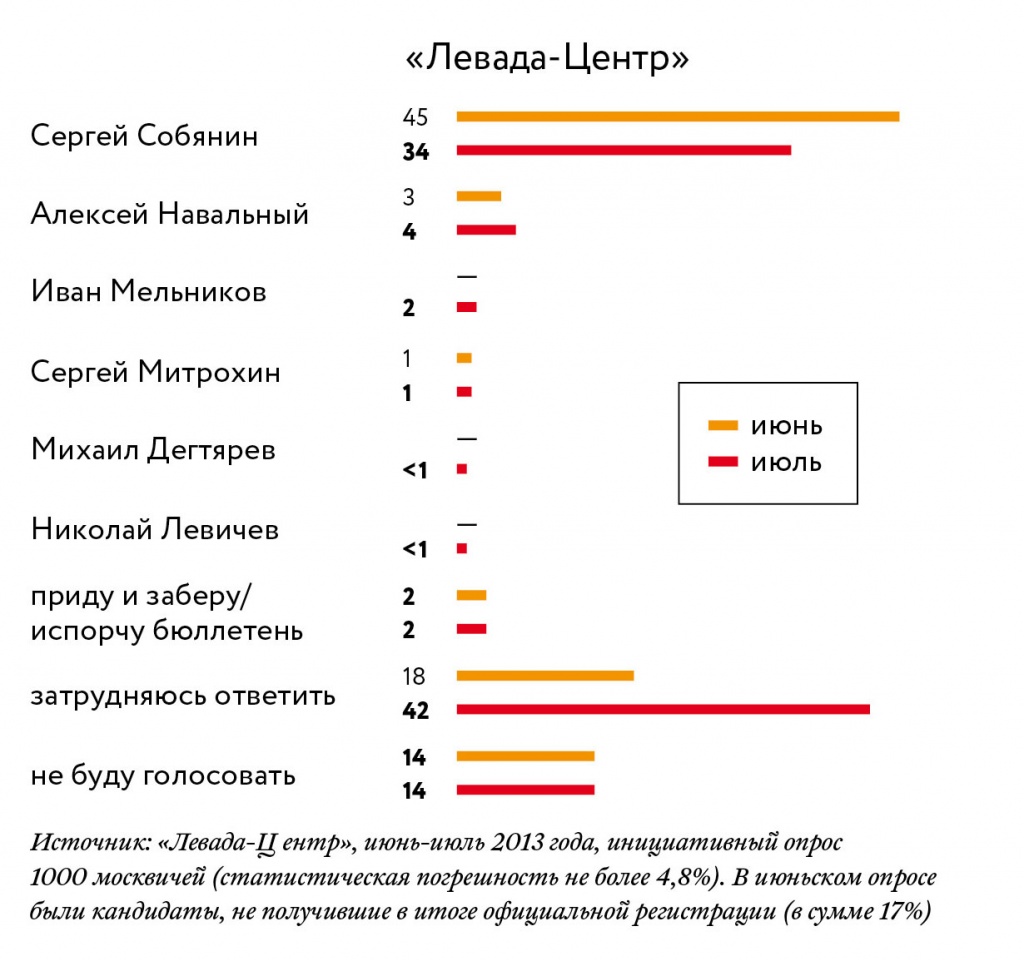
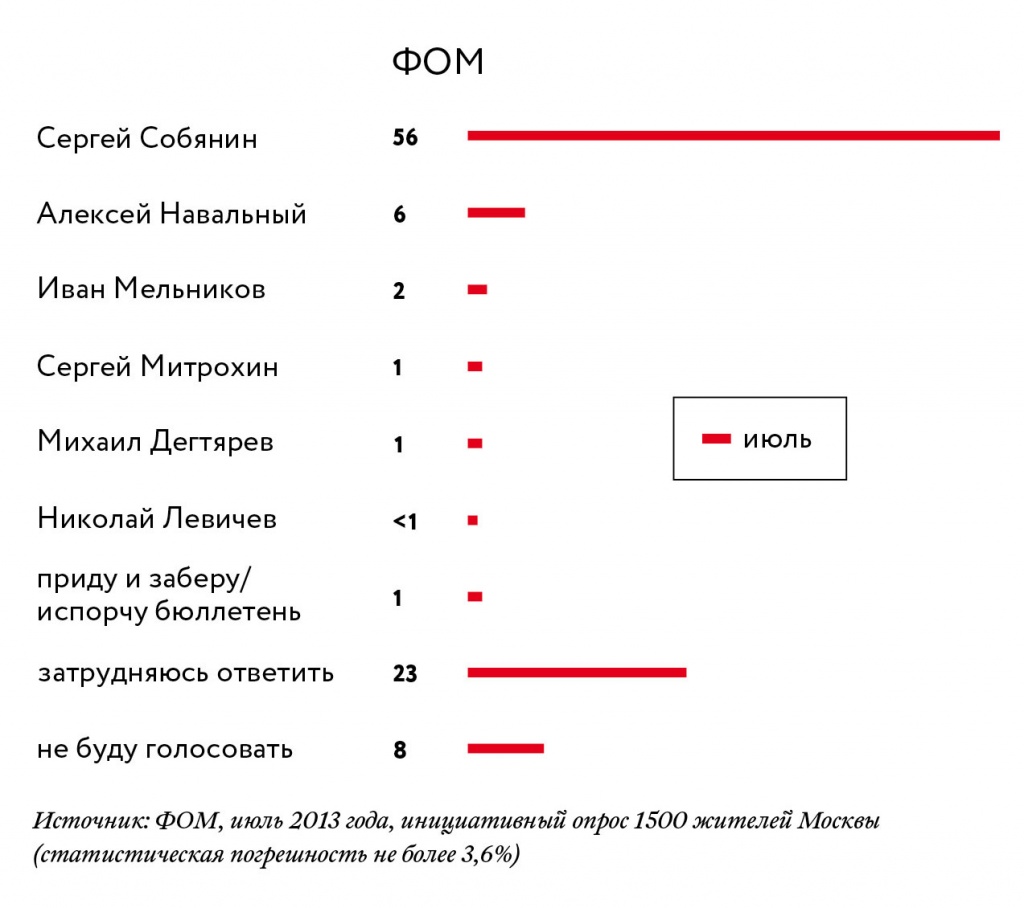
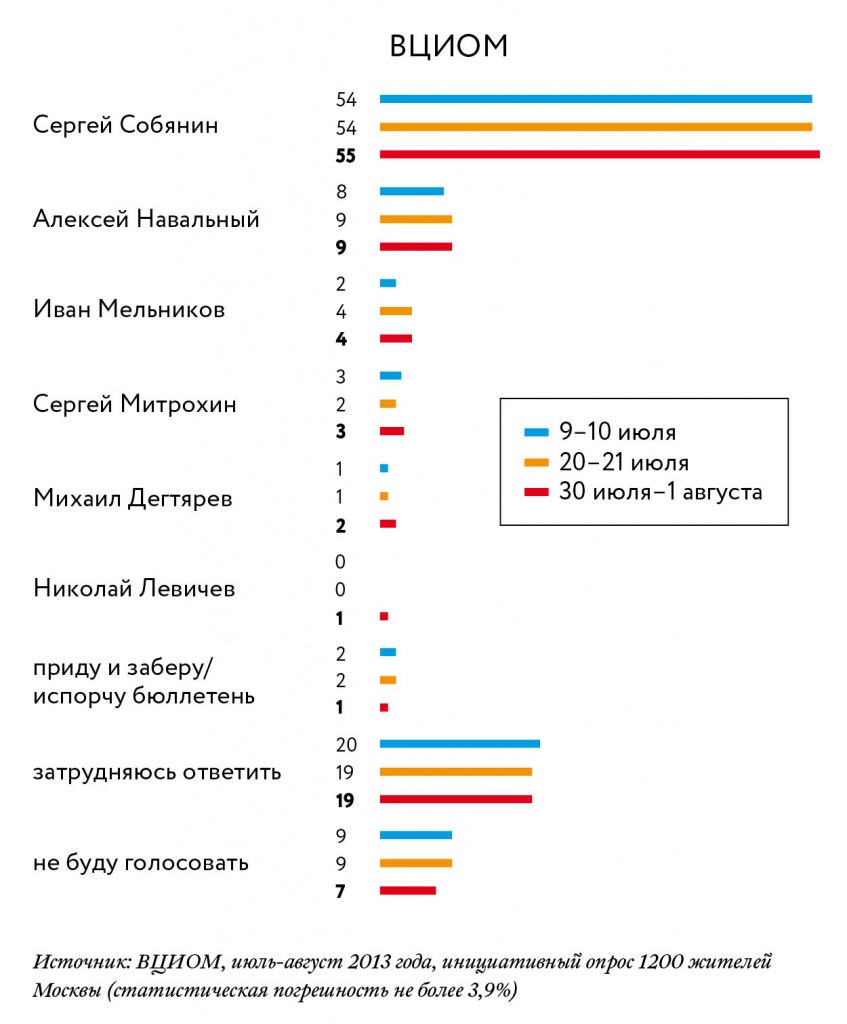
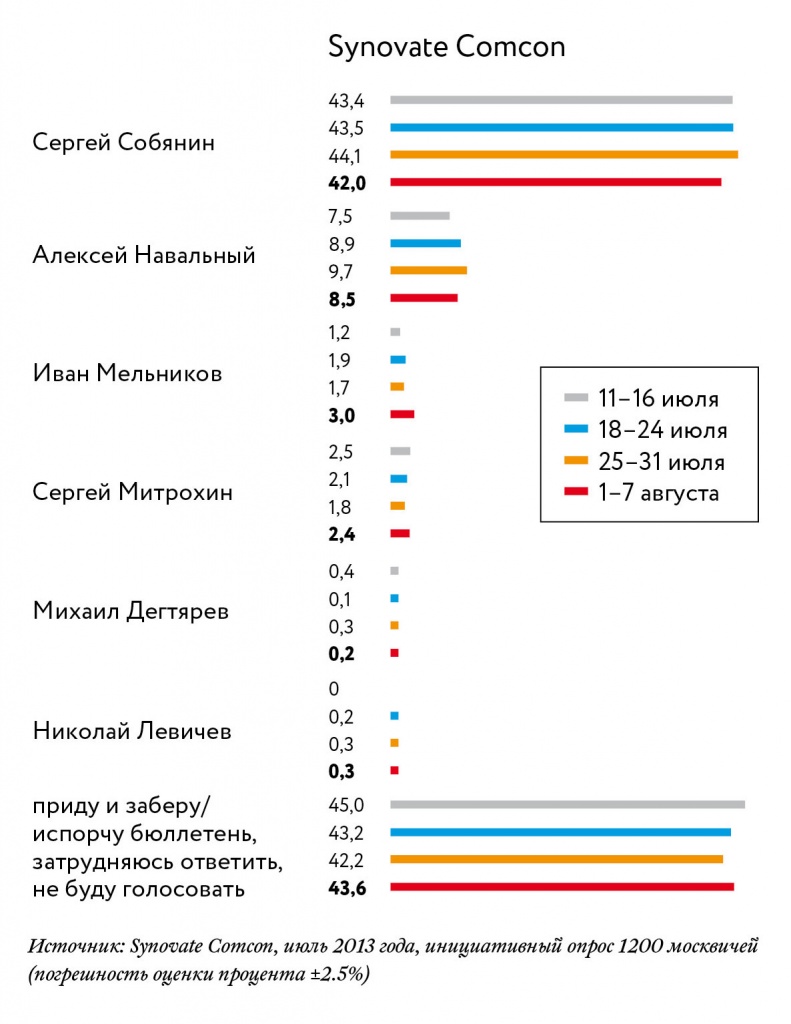
However, the fact that during the first month of the election campaign, the rating of Navalny, even according to official sociological services, will grow from 1-2 % to 9-10 %, also few believed.
Photos: Evgeny Feldman/New Gazeta, Zurab Javahadze/ITAR-TASS, Andrey Zhilin, Artem Geodakyan/ITAR-TASS, Maxim Blinov/RIA Novosti