
Translated material
The price of a veto
Simple Syrians do not understand Moscow policy
The Russian Foreign Minister Sergei Lavrov called on the UN Security Council to condemn the massacre to Tal-Abjad. But for some reason, Moscow itself refused to support the draft UN resolution in favor of the creation of a humanitarian corridor to withdraw refugees from the city of El-ukera, captured by the troops of Bashar al-Assad. As a result, dozens of civilians died there 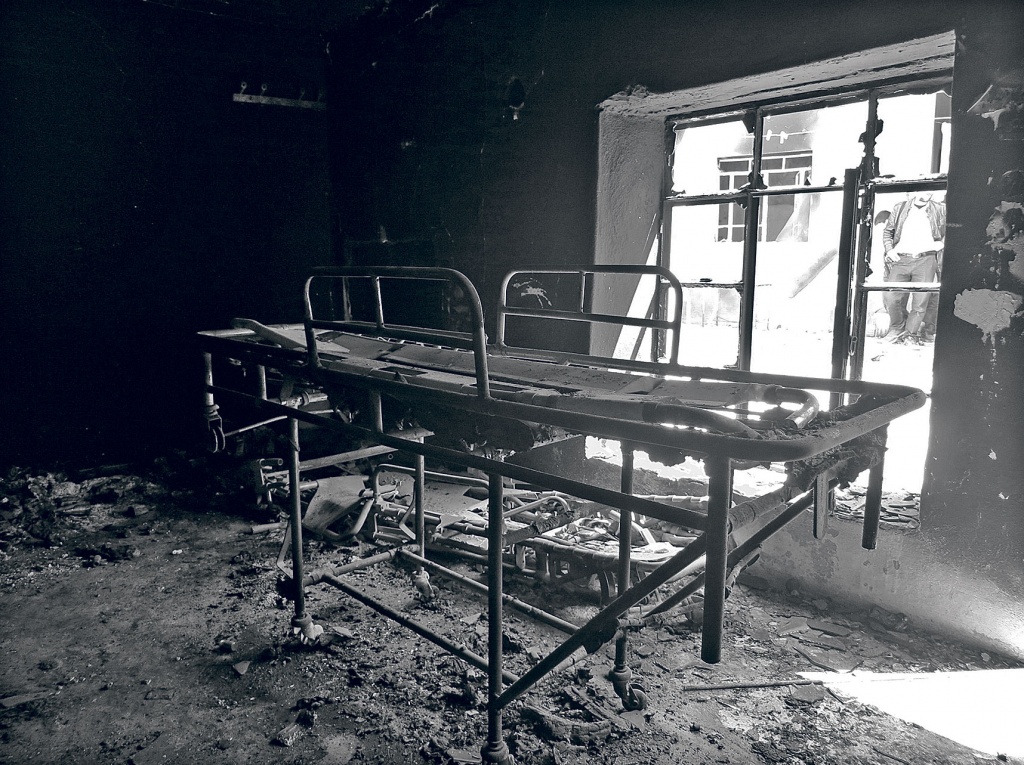
“It was terrible. They attacked continuously: artillery, mortars, aviation, missiles of the Earth - Earth class. One day I counted 27 air raids, ”-the Syrian doctor Kassem Al-Zayn, whom we met in the hospital in the Eastern Lebanon, talks about the assault on the oppositionly-minded El-ukera with the support of the Hezbollah Shiite group. “In May, 30 thousand inhabitants lived in the city, how many now - I don’t know.”
"People shouted in pain"
Cassem looks like any other doctor: in a dark blue shirt and black trousers, with a stethoscope on his neck-he just finished the morning bypass of patients in the hospital. The last month has become a real nightmare for him and for those to whom he tried to help.
A lot of people died in El Ukera, including civilians. The database conducted by opposition activists contains the names of more than 200 people killed during a two -week battle outside the city, of which civilians are almost half.
Those who had happened in detail about the battles testified: government aircraft and artillery were deliberately struck by hospitals and field hospitals several times. The building of one of the city clinics collapsed from the air from the air, Assad’s Air Force bombed the hospital in nearby Yabruda, where many wounded from El-Suer underwent treatment. Moreover, in both cases, hospitals and members of the local Civil Council said that they received warnings or notifications of attacks in advance.
For the inhabitants of El-Suer, artillery and air strikes were not the only problem. Government forces also prevented the provision of humanitarian assistance, including the transfer to the city of medicines. Dr. Kassem says that there were not enough antibiotics, oxygen pillows, painkillers: “Sometimes they had to operate patients without anesthesia. People screamed in pain. "
Night escape
At the very height of the battle for El-ukeer, Great Britain invited other members of the UN Security Council to accept a statement calling for the warring parties to make everything possible to prevent victims among the civilians and ensure "unhindered access of neutral humanitarian organizations, including the UN agencies, to civilians located in the city." However, the draft application was blocked by Russia.
After two weeks of resistance, the armed opposition groups were forced to leave the city. In the course of this random evacuation, dozens of fighters, civilians and wounded died from shelling of government troops and lack of medical care.
The most dramatic, according to Dr. Kassem, was an episode when people running from the city, including himself, accumulated, absolutely defenseless, on a wide highway: “Government troops opened fire on us. Time later, in the darkness nothing is visible except flashes from shots and explosions ... How many people died that night - you can only guess. ” 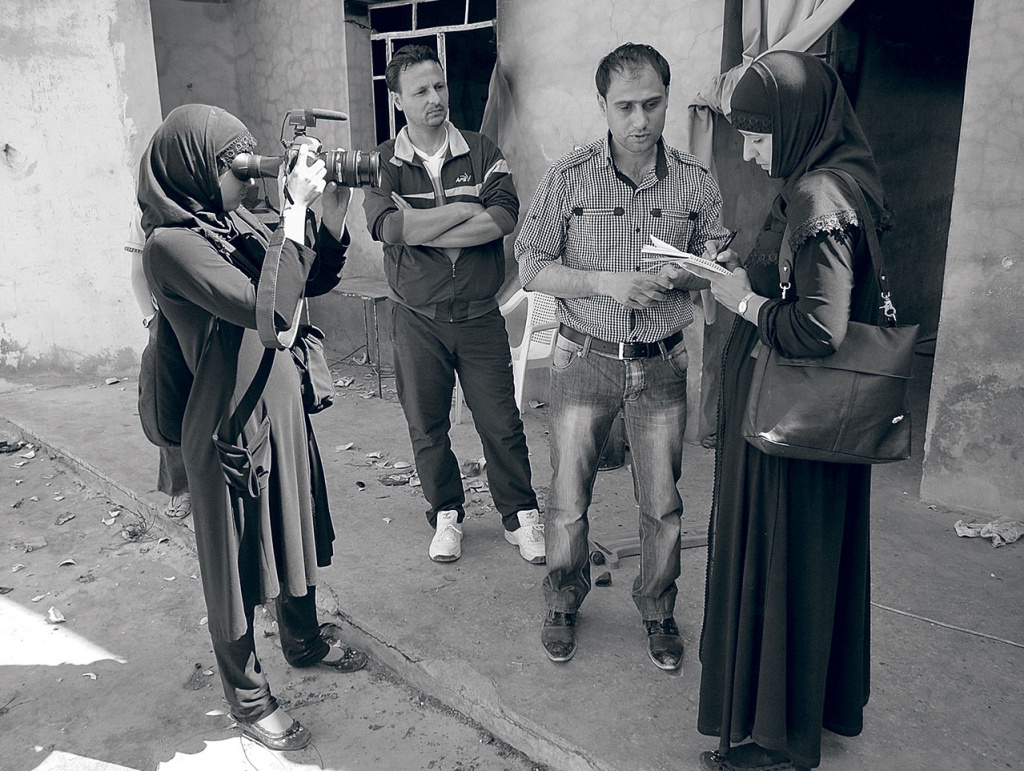
However, Dr. Kassem is convinced: the opposition forces are also carrying their share of responsibility for the tragedy of El-Suer. “They took upon themselves the evacuation of civilians, decided that it was better to break through the city together, supposedly from the point of view of security. But at the same time, they did not even think through the elementary plan of evacuation, not to mention the fact that Assad’s soldiers will not disassemble the targets. They eventually fell in a row. ”
However, Cassem agrees: there would be fewer victims if Russia joined other Councils of Security and Council and demanded that the humanitarian organizations evacuate civilians and wounded from El Tuzera.
The abyss of misunderstanding
Dr. Kassem himself miraculously got out of the besieged El-Uli and fled to Lebanon. For all the time of our conversation, he smiled only once-when he found out that the author says in Russian: “Oh, now we don’t need a translator!” The fact that the Syrian doctor speaks in Russian, to be honest, was not surprised. Over the past two years, during trips to areas controlled by the Syrian opposition, the Russian -speaking Syrians had a chance to meet almost everywhere. They always rejoiced at the opportunity to talk in the language learned many years ago, to recall the education obtained in the former USSR. However, the warm memories are now overshadowed by a sense of betrayal on the part of Russia, which continues to support the government of Bashar al -Assad, despite the crimes committed by him against his own people.
By the way, two more doctors were evacuated to Lebanon with Dr. Cassema, who also speak Russian. And from previous trips to Syria, meetings with other Russian -speaking Syrians are recalled. A doctor from Sarakeb, who studied in Russia, told how the Syrian government troops broke into the city and burned his field hospital; The pharmacist from the suburbs Aleppo said that he sent his Russian wife and children to Russia, and secretly took medications to field hospitals; A young doctor with a Russian diploma worked for days and nights in a self -plating hospital near the border with Turkey; The humanitarian coordinator in the north of the province of Aleppo says that he once owned a network of restaurants of oriental cuisine in Russia; There were others.
All these people are infinitely grateful for the educational and commercial opportunities provided to them by Russia. Most of them talked about their love for Russian literature and the Russian people. But they cannot understand why the Russian government continues to protect the regime that commits such terrifying crimes against its own people.
The conclusions made from these trips are unequivocal: it is high time for Russia to stop accusing the opposition exclusively and pay attention to gross violations of human rights committed by the Assad government. Russia should support the transfer of the Syrian dossier to the International Criminal Court in The Hague, which will investigate violations committed by both parties to the Syrian conflict. Russia should stop the supply of weapons to Damascus, which is used to commit war crimes, as well as crimes against humanity.
The long -planned peace negotiations in Geneva should not be used by Moscow as an excuse for the silence of gross violations committed by the Syria government.
“I am flying people from wounds inflicted by Russian -made bombs,” says Dr. Kassem in a good, albeit partially forgotten Russian. - Why does Russia defend the government that kills so many civilians? “And he adds with sadness:“ Russia was a friend to us, but now, it seems, other times have come. ”
Photos: Ole Solvang/ Human Rights Watch