
Translated material
"It was doomed to martyrdom"
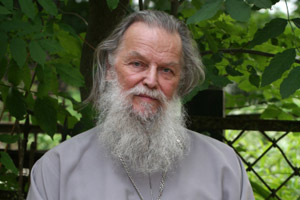
“A man with the eyes of an angel is killed” - in a kiosk on the station square of Pskov, the newspaper Plastan on the glass, and the heading about the eyes of the angel and the eyes themselves can be seen immediately as soon as you leave the train. Here, like everywhere in Pskov these days, they do not ask to whom the flowers - the saleswoman counts the even number of cloves herself. Early morning, newspaper kiosks open. The eyes of the Angel accompany me all the way from the station to the Miro -Bonus Church.
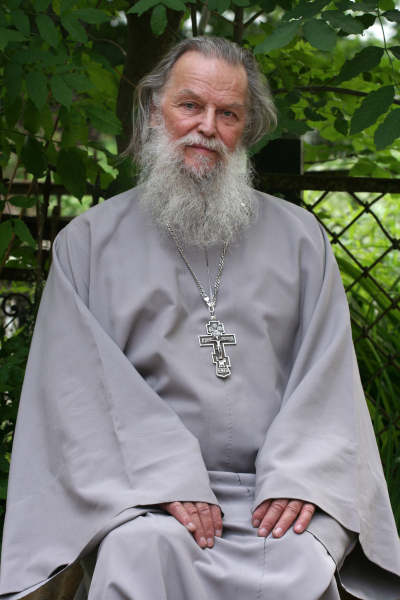 © RIA "News"
Hundreds of people are already on the way to the cemetery. So much - I judge from photographs and stories - it was only once here, in May 1989, when Father Pavel served the first liturgy in this temple. It was his idea-to take the dilapidated old (XVI century) Church, in which no one has served from the 1920s, and return life to it. At the very end of the 1980s, it became possible, and he was the first priest in Pskov and one of the first in the country to take it up. He was generally constantly the first: he was the first to create a children's shelter and made out guardianship of children with mental disorders - those who have the least chances to be adopted; The first to teach healthy children at a church school. Then, after the funeral service, there will be a long sermon, and his merits (created, built, opened) will be listed as a priest who came from St. Petersburg. And for each “created” and “opened” the parishioners standing around the coffin will answer one short “took it away”. They took away the shelter, the school of regents, the candle factory (he came up with it so that shelter children could earn something for themselves). The Miroositsky temple was taken away, in which, since 2008, he has ceased to be a rector with an order of the metropolitan. They wanted, and more than once, to take away life - first in a Soviet prison, then in the new Russian Church . For those who knew him, it sounds ridiculous. As if he could take something from him.
Crowds of those who came to say goodbye and very little, almost no one, in cassors. “The appearance there was undesirable,” the elderly local priest will then tell me, from whom I will be so in the way. Everyone knows about the protracted conflict of Father Paul with Eusebius, Metropolitan of Pskov and Velikoluksky, this city knows - this twenty -year conflict has no other reason, except for the fact that a free and talented person cannot but annoy the unfree and unwanted. Eusebia is waiting for the cemetery - he has the last opportunity on this day to ask for forgiveness from a person whom he so desperately did not like . Eusebius does not come and sends a short letter, the letter here, in the service, and read - it is so formal that his words are forgotten immediately as soon as they stop sounding. Almost none of those who cannot be here come here: at one time, under the decision of the diocesan council, only three refused to subscribe to the priest of Pavel Adelheim from the diocese from the Pskov priests. The operator of the local television channel tells me that in the two thousandth crowd he counted twelve people in cassoons, and those, it seems, almost all from St. Petersburg and from Moscow. I know what to answer him: Father Pavel wrote two books about the demoniary of the priesthood in the Russian Orthodox Church.
Crowds of those who came to say goodbye and very little, almost no one, in cassors. “The appearance there was undesirable,” the elderly local priest will then tell me.
A very long, four -hour service - in the temple, near the walls of the temple, above the opened grave. People, crosses, monuments, trees, we are all standing together, in this small provincial cemetery it’s impossible otherwise, and the death that came so scary, according to Dostoevsky, ends in Pasternak - when the “eternal memory” singing votes, crumbling leaves and clicks of cameras. The words sounding and ridiculous over the coffin-that Father Paul was misunderstood, and also opened the door of the house for the graduate of VGIK, whose hands died. Will this preacher now turn from VGIK to the liberal intelligentsia, from which the Fatherland has all troubles? I don’t listen, I knew Paul's father and I remember what an intelligent he was, not without reason these thousands of ordinary women cry over him. Offective words, but Father Paul, a man with the eyes of an angel, was not one of those who can be insulted in words .
This service, which began as a memorial, is more and more like a large festive one. They sing Easter troparia, kiss and smile at the exit from the cemetery. At the gate there is a shining Vera Mikhailovna - three days ago she found her husband, stabbed in her own kitchen, and today she says that she forgives the killer, because her husband would have forgiven the first. At the stone of the victims of repression, I will find the head of the Pskov Memorial Yuri Dzev, and while we are going to the wake, he tells how this stone was put near the church where Father Pavel served, and how the local administration did not have 50 thousand rubles to bring the other, from Solovki. And as with Father Pavel, they began to travel to the Levashov wasteland near St. Petersburg as far as Paul - there are Pskovichi among other dead during the years of terror. At the table, we will talk about the grandfather of Adeleheim, an engineer who died in 1938, and about another grandfather, the officer of the tsarist army, who also died, and about the father-actor, the Vakhtangov student, repressed and perished very young, and about the mother exiled after the prison in North Kazakhstan. Father Paul knew how to talk about all this and another thing about his own prison of the late 1960s-he said when they asked, but softly made it clear that this was not the main thing. He probably would like that at his wake parishioners, whom he taught to love to Akhmatov and Vyacheslav Ivanov, read the poems of Krivulin. Just because he also loved good verses.
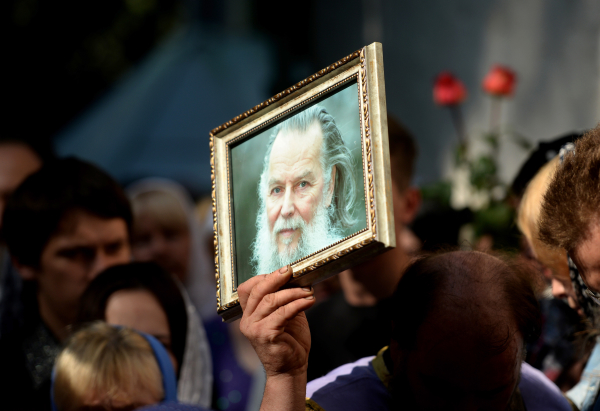 © RIA "News"
O. Vladimir Popov, priest of the Pskov and Velikoluki diocese
Now I understand that about. Pavel has always been a tragic personality. You know, many were sitting in the camps. My friend from Barnaul father Mikhail Kapranov served in the 1960s, transferred to the believer-Soviet camps were then the best place where Christians came out of, in this regard, they must pay tribute to the KGB. But Father Mikhail was an optimist of the highest degree, sparkling and inspired. Not at all inspiration that Father Paul has, without this tragic note. It was easy with Father Paul, but he himself was not a slight person ... After all, he really had some kind of doom of martyrdom.
And the bishop needs to be honorable and respect. The lack of bureaucratic reverence causes anger and rage. Obedience is understood in the false sense: obedience to the Holy Principle should be unconditional and unquestioning, that's all. What to do, this is the level of our clergy. I think it was always the case, and in the pre -revolutionary church too. Maybe the Orthodox Greek Church or the Russian foreign and knows something else. And ours - no, does not know.
Lev Schlosberg, deputy of the Pskov Regional Assembly, leader of the regional branch of the Yabloko party
Father Pavel Adelheim arrived in Pskov in 1976, after a significant part of his titanic path passed. But he turned out to be a surprisingly Pskov person: strong, stubborn, smart, strong -willed, uncompromising. Real Pskovich. Although he got here by the will of circumstances: Pskov, after all, a long -standing place of exile for many who left prison. A man with the 190th article of the Criminal Code of the RSFSR (slander for the Soviet system) could not be in Moscow or in Leningrad, he would definitely not have been allowed to serve there.
By the way, Pskov has their own long -standing relations with ethnic Germans. After the loss of the status of a military city until the First World War (and partially even before the second), the German community was an important part of the city life: there was a Lutheran church, many public figures, governors, entrepreneurs, architects, and merchants were from the Germans. And thanks to Father Pavla, such a renaissance of relations happened in the twentieth century, although the question of blood here has no significance. It is clear that many considered him a Jew, and it was impossible to convince some. Very, you know, it is difficult with Orthodox Christians, for whom ethnicity is strongly important.
It was easy with Father Paul, but he himself was not a slight person. It really was doomed to martyrdom.
Metropolitan Eusebius gets down in history with two monstrous persecutions: on the icon painter of Father Zinon , who was deprived of the dignity, and on the father of Paul. It was he who committed the murder of Zinonov iconostasis in the Serafimov chapel of the Trinity Cathedral, conscious - increased humidity, blocked the air flow, and then the local prayer was torn off and smeared with dampness. Savva Yamshchikov then shouted in his voice and knocked with a stick: “What are you doing? What are your icon painters? " - "Proper." - "You are not appropriate for me, you will be real!"
The story of the struggle of Father Paul is known, I will not retell it. We all understand how the church system in Russia is now not free - and such a free person turned out to be in it. He depended on him on the church chiefs in everything, and at the same time they could not do anything with him, he was completely non -beating.
The Ministry of Justice has long refused to register the new charter of the Russian Orthodox Church, because this charter introduces the church vertical, moreover, fierce, peremptory. Previously, the community itself wrote the charter, registered it in the regional department of the Ministry of Justice, elected the parish council, could actually choose the abbot and only then ask for the blessings from Vladyka. According to the new charter of the Russian Orthodox Church, the community of these rights is completely devoid of. The parish council is formed and dissolved by the bishop, the Council itself does not affect the appointment and removal of the abbot. Father Pavel challenged all decisions regarding the parish council of the community of the Church of the Holy Miroan wives. First disputed in the church court. I have the protocols of this court, I hope the time will come when they become a book. People are sitting in the dignity of rectors, understand how absurd everything that is happening, but at the same time recognize Father Paul and his parish council not right. He reached the Supreme Court, and everyone refused him. He wrote a brief complaint to the European Court of Human Rights - he was confirmed by the permissibility of a complete complaint. A month before his death, he sent a full complaint to Strasbourg - it was a violation of the constitutional right to freedom of conscience, freedom of beliefs and the form of their expression. I think what is there, I have no doubt that we still have to hear about this case.
Alexander Kropyovsky, scientist secretary of the Holy Filaret Institute
Thinking about the father of Paul, the confessor of faith, you need to understand that the matter is not only in the personal experience of Soviet torment. The matter is in personal experience of communication with the saints. You see, he is a pupil of Sevastian Karaganda, the heir to the senile tradition of Optina Desert. And not only him. In his youth, in the 1960s, Father Pavel served in Tashkent, Archbishop Ermogen (Golubev) invited him there. And what was this archbishop? In 1961, he was the only one against the changes in the charter of the Church, which actually completely subordinated it to the state. According to this charter, for example, the abbot could not be the headman of the parish, they sent Starrot from the district executive committee. All bishops supported this charter, realizing that this did not need to be done. The patriarch sighed, everyone gasped. And the Ermogen alone said: no. Naturally, he was immediately deprived of the ministry, driven into the monastery. And this is a close friend of Paul's father. It is clear why he later said: I don’t understand what a bishop is, who spreads his own diocese, I saw others.
Such priests are not born now, because the soil is not bad. Although, you know, the approach begins to return in our era, let’s say, early Christian. He who tries to stylized under early Christians, he suffers a fiasco. But there is an opportunity to find the path that you later find in the Gospels, in the epistles of the apostles, among the saints of the early Church, who spoke things because of which they were beaten. Look, it turns out. This is just now, before our eyes, it is manifested and can take place.
Yes, what happened to Father Paul is a tragedy and a crime, but this is only a part of what we must say. Let's re -read the words of Patriarch Kirill. He said that this man died at a military post. Failed the victim of the performance of his pastoral duty. This is the formula of canonization, in fact.