
Translated material
India: devaluation, accelerated by deficit
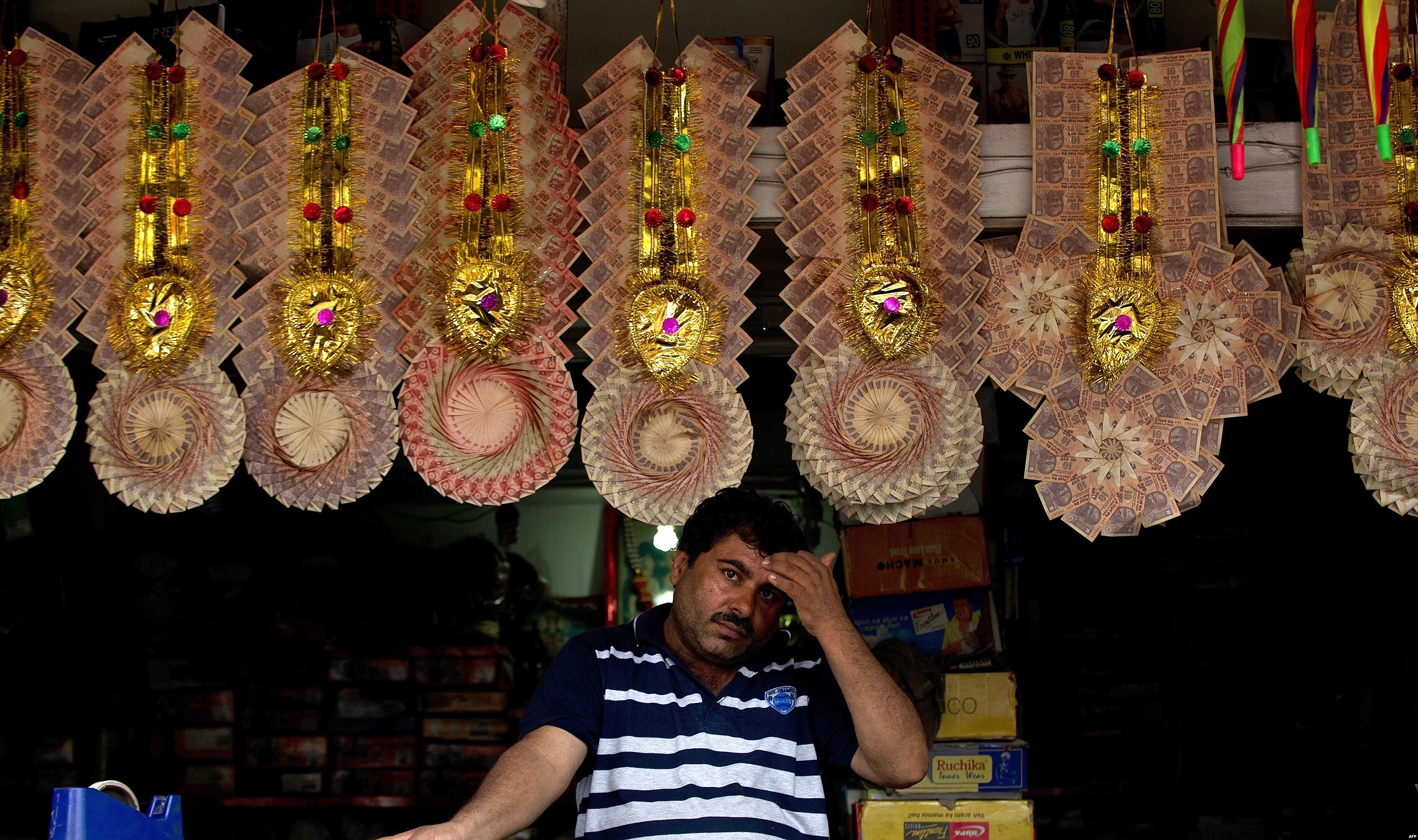
The Indian currency course decreased on Monday to the next record minimum in almost seven decades after the country of independence gained in 1947 - 62.5 rupees in one US dollar. The fall already at the beginning of the auction amounted to 1.3% - as in the last week.
Experts call a new occasion for its acceleration a new time on Friday to another statistics on the US economy (in particular, from labor and retail markets), which turned out to be better than forecasts. Participants in financial markets with such statistics associate the expectations of toughening by the federal reserve system (Fed) , The Central Bank of the United States, its monetary policy.
During the period from May 22, when the Fed The Fed for the first time announced the possibility of starting to reduce the financial support of the American economy this year, the Indian Rupia rate for the dollar fell by more than 13%.
High risk currency
Analysts of the American Investment Bank of Morgan Stanley , whose estimates are given by the British newspaper Financial Times , are distinguished by five currencies of developing countries, which, in their opinion, can most likely affect the change in the policy of the US Federal Reserve: Brazilian Real, Indian Rupe, as well as the Turkish lira and the South African random. The decrease in the dollar in the last three months than the Indian Rupia was only in the Brazilian Real Madrid-15%-to the next 4-year minimum.
Since the fall of last year, within the framework of the third post -crisis program for stimulating the American economy, it buys every month in the US government bonds for $ 45 billion and another $ 40 billion - mortgage bonds, and at minimal rates, thus holding their level. In general, in terms of the calendar year - more than $ 1 trillion.
A significant part of this money is used by investors, in particular, to purchase assets in developing countries, where higher interest rates can provide, respectively, a greater return on investments. However, the plans for the Fed’s, announced by the folding of their financial incentives (as the growth of the American economy accelerated), these financial flows, in fact, unfold. American assets are already more interesting for investors, which is also reflected in the dynamics of the dollar in recent months.
As a result, a recent influx of foreign investments in developing countries is replaced by their outflow. In particular, in India, in the first five months of the year, according to the Government Commission on the securities market , the flow of such funds only in the shares of Indian companies amounted to $ 15.3 billion. Of these, since June, that is, after the May statement of the Fed’s leadership, $ 2.6 billion from the country left.
Scarce balance
Such fluctuations are especially sensitive to countries with a negative payment balance, which is generated mainly by significant excess of imports over export. The influx of foreign investments, while they are, can cover this shortage or at least most of it.
The foreign trade of India has been scarce since 1977. Last year, according to Euromonitor , her negative balance exceeded 10% of GDP, mainly due to expensive energy carriers. For example, the country imports 75% of all oil consumed, and in general, energy carriers account for 34% of Indian imports.
For comparison, in Russia, on the contrary, the export exceeded in 2012 imports by an amount equal to 9.9% of GDP. In China, a positive balance of foreign trade amounted to 2.9% of GDP, in Brazil - 0.9% of GDP.
On the other hand, export accounts for no more than 15%of the total volume of India’s economy (in China in 2012 - 25%, in Russia - 27%, in Brazil - 11%), so even a significant increase in this sector in recent years has been affected by the general trade balance of the country. Moreover, its pace over the past five years as a whole (+103%) turned out to be smaller than import growth (+123%).
In fact, notes the American newspaper Wall Street Journal , India finds himself in a situation similar to the Crisis for the countries of Southeast Asia in 1997 , when the mass outflow of foreign investors from them paralyzed national economies and led to the landslide devaluation of currencies.
Currency restrictions
In the period from 2004 to 2011, the growth of GDP India on average exceeded 8%, the country began to be called the new “Asian tiger”. However, in 2011-2012, the financial year (in India ends on March 31), economic growth amounted to 6.5%. The forecast for the current year is not more than 5%.
To straighten the payment balance, the government last year, in particular, significantly reduced the previous subsidies for gasoline and other types of fuel. The state budget deficit decreased from 5.2% of GDP to 4.9%.
For the first time, foreign competitors were allowed to purchase up to 51% of the shares of Indian retail companies. However, neither the American Wall-Mart, nor the French Carrefour, nor the British Tesco to India have come due to the lack of intelligible rules. For example, what share on the shelves of their supermarkets should be products and goods of local manufacturers?
Already this year, trying to slow down the accelerated devaluation of Rupia, the government increased import taxes, in particular, gold and silver. India is the world's largest gold consumer. And last week, the reserve bank of India, the Central Bank of the country, introduced new restrictions on foreign investments and purchases - both companies and private individuals. The Indians were banned, for example, to purchase real estate abroad. However, these and other measures could not change the dynamics of the national currency.
On August 6, India Prime Minister Manmokhan Singh approved the candidacy of the new head of the Central Bank. Since September 5, he will be 50-year-old Ragura Rajan, one of the most famous Indian economists in the world.
Having completed education in the United States, in 2003 he became the youngest in the history of the IMF by the head of the Research Department of the Fund, having worked in this position for three years. Back in 2005, in one of the publications, which then caused a rather sharp criticism, Rajan actually expressed fears that three years later materialized in the form of a global financial crisis.
In another, last year’s article, Ragura Rajan noted: “The heads of central banks today gain the popularity of rock stars and deservedly: their actions in conditions of unpredictability during and after the financial crisis were, in fact, impeccable. But they should be able to recognize this when their possibilities are at the end. After all, to turn from a hero to zero (from. easily".