
Translated material
Mozart Triumph on the water
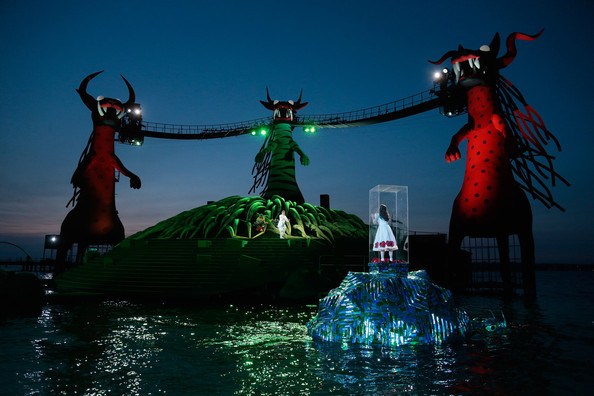
Three huge, standing on the hind legs of a dragon with dog heads surrounded a green turtle frozen on the water. A hanging bridges are thrown between the pushy heads at the height of the nine -story building - they run along them, they sing on them. On the turtle - its length is 43 meters, sometimes its shell turns into an impassable forest from grass - and the main action of the “magic flute” occurs. Boats, fire, spider-man and acrobats flying high in the sky-all the usual attributes of “Opera on the lake” can be seen in the new production of Mozart in Bregenza. The opera was not shown here for almost 30 years. Now the flute has become a cash hit - and the farewell gesture of director David Pauntney, who has led the local festival for the past 10 years. Since 2015, he will lead the National opera of Scotland, the upcoming season for him is the last in Bregen.
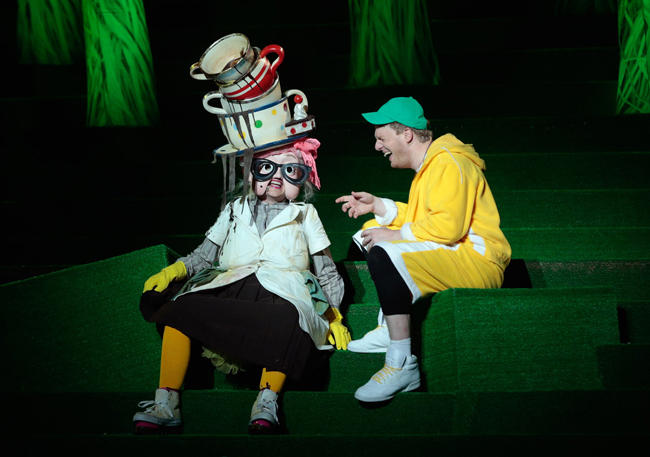
This is a real fairy tale, played taking into account a huge amphitheater, where far from all 7,000 spectators are sitting directly opposite the scene. Some characters are represented by dolls with fantastic dimensions with their heads. And three fairies from the retinue of the queen of the night, and the three geniuses of the temple sing next door in the hall, where the orchestra plays, on stage they are depicted by statists in huge masks. Sound, as usual, is transmitted using complex and expensive equipment to the shore.
“Opera on the lake” continues to evolve towards the separation of sound and picture. Probably, for the artist Johan Engels, the permanent co -author of Poundtney (together they did, for example, the world premiere of the “passenger” Mecchalwa Vainberg in Bregenz, conducted theodore Krentzis), such evolution will seem natural. The size of the scene determines the meanings and changes the accents, the visual begins to push the musical. It remains only to guess how far you can go here, will it end once by a performance in which all the singers will sing in the hall, and the sound from there will be transmitted to the shore and lake scene where pantomime will go?
At least it will be safe for the singers. On one of the views, the queen of the night, Pamina and Zarastroy fell on the boat fell into the water. No one was injured, only the performance had to be delayed for half an hour.
Fabio Louisi, who initially worked at the festival with the Vienna Symphony Orchestra headed by him (he has performed at the festival since its founding in 1946), this time did not go to Bregenz, transferring control to the chief conductor Houston Grand Opera to the American Patrick Summers. He plays accurately and reasonably, perhaps too calm - but it is difficult to burn with emotions when the singers see you only on TV.
 © Bregenz Festival
“Magic Flute” likes Poundtney by the fact that this is an opera of the Enlightenment, which is so convenient to consider under the motto “Towards the Sun” - it was chosen for the current festival. The phrase of Zarastro is that Tamino is a prince, but moreover, he is a man, it seems to the director with a key to the whole work. It’s not very, however, it is clear where to put the entire Masonic component of the Shicaeder libretto with such a human center. It is unlikely that the story of testing the prince comes down to a love intrigue. And certainly it is not exhausted by the installation in the water around the scene of the three dragon-dog, symbolizing three temples-nature, mind and wisdom. Sometimes they publish a warning roar intended for papageno (this is the best role of the performance, its performer is Bas-Bariton Daniel Shmutkhard, and Albert Pesendorfer are good as Zarastro and Rainer Trost as Tamino).
The sculpture of the mysterious creature of a dragon-pebble of a breed weighing 24 tons is a good move for advertising in a situation where you are dealing with the most played opera in the world. Is this enough for a modern performance, from which you expect some kind of interpretation? Is it possible to reduce the “magic flute” almost to pure fantasy, inhabiting it with huge dolls and fantastic animals? A matter of taste and confidence in the genre: “Flute” is a fairy tale, this is enough for someone. Yes, and no one will judge the winners - the queue at the cashier for unsuccessful tickets during the festival lined up for tens of meters. There were still no tickets, but many asked to write them down "just in case." A fairy tale, devoid of subtexts, likes the public.
On one of the views, the queen of the night, Pamina and Zarastroy fell on the boat fell into the water. No one was injured, only the performance had to be delayed for half an hour.
The financial results are impressive: 259,000 spectators, of which 200,000 on the “lake scene”, which is comparable to the general results of Salzburg. According to statistical indicators, the success of the “flute” is compared with the recent success of the “lake” “Aida”. Only one result in the history of the Bregen could not be surpassed - the “Wesides history”, set here in 2003.
So the consequences of last year’s financial horror are smoothed out as much as possible: Andre Chenier Umberto Jordano barely collected 75% of possible spectators. The fall in festivals usually affects a year later, and the abbreviations in the poster of this year are obvious. Operetta and dramatic performances disappeared (usually leading German theaters come to the Bregenz), the program “Art from time” dedicated to modernity also looks trimmed. But the project for children and youth Crossculture has been preserved (Bernstein and Shtokhausen sound here), another opera prime minister in the FestSpilhaus - this time is worldwide. Showed the "Venetian merchant" of the Anglo-Polish composer Andrzej Tchaikovsky (1935-1982). The score has been published for a long time, Tchaikovsky - a rather famous pianist and composer (his piano concert is often played today), but it took more than 30 years to be seen by the audience. On this occasion, a symposium with the participation of experts and the public was held in Bragery - just three years ago, when Winberg was honored here.
The world premiere is scheduled for next year: HC Gruber (the name of the Austrian composer is written without points in the initials) will present his new opera “Tales of the Vienna Forest”. It is based on the tragic play of the classic of Austrian literature Eden von Horvat (1901-1938). The tale of Mozart is once again balance the prose of life, its cruelty, rudeness and immutability.