
Translated material
Shooting to plug
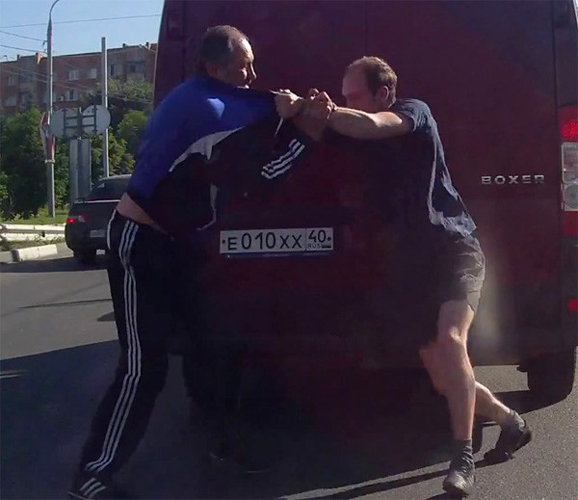
About a month or two ago, I came across a post in which a Russian tourist reported on a collective trip to Africa. The culmination of the post was a description of how, having drunk with Darmov whiskey (in fact, the whiskey was not Darmov, he was simply “cunningly” recorded at the expense of anything that had not known the guest from another number), the whole company in the middle of the night with noise and a hooded poured out into the street to catch either a hippo or a rhino, who, according to the negligence of the tourbalism, wandered into the tourist territory. Fortunately, all participants in this event, including the hippo, remained intact. But the impression on other animals and guests this story, it must be assumed, made a fair way.
The post enjoyed the well -deserved popularity of readers and received more than one approving commentary. The author, by the way, was not of Caucasian origin.
It was this story that first of all I remembered when reading the article “On the Forge of Surveilla” . Or, more precisely, that part of it, which says “real, growing and tangible irritation is associated with the aggressive reluctance of new residents of old Russian cities to notice local traditions. <...> Traditions - <...> This is the lack of a habit of solving any problem by force. Nepodal ideas about honor and dignity. The lack of a habit of grabbing a knife or trauma in response to an inaccurately spoken word. ”
I read this, remembered the story with a hunt for the rhino and thought about the city traditions of the inhabitants of Central Russia. Lack of habit of solving any problem by force? And what is usually solved in Russia any problems? Is it really a mutually beneficial compromise achieved as a result of a substantial discussion of all interested parties?
Why then grab? Maybe for a volume of Kant?
Nepodal ideas about honor and dignity? And what ideas about honor and dignity are prevailing now in Russian society? Perhaps camp, but, in principle, this is also a variation on the theme of feudal, albeit deprived of a noble gloss.
Lack of habit to grab a knife or injury in response to an inaccurately said word? Why then grab? Maybe for a volume of Kant? It seems to be not, judging by what you read in the newspapers and, it happens, you see on the street. For a knife, maybe not, but for the mount for sure. Not to mention the injury.
Having written this, I thought that I may have exaggerated. I looked into the news. And then he saw one in which the city unwillingness to solve the problem came together by force, and the non -feudal ideas about honor, and the lack of habit of grabbing the injury: “It was established that the man on November 14, 2012 quarreled with a young man passing by. Despite the fact that there were many people around, he shot three times from his traumatic pistol to the offender. ” Well, all this would be in Moscow, which, as you know, is a large village, but Petersburg is definitely a city. And the name of this story is Nikolai Kalyagin. Not Chechen seem to be the name-familia.
What happens in Central Russia? A policeman, a bribe, walk.
It seems that in that paragraph not Russian, but some British traditions of mutual politeness and restrained dignity are described. However, everyone who observed near drunken English tourists knows that not everything is perfect in Britain with local traditions.
It would be foolish to argue that the current Caucasus is a forge of wildness. In this part, the diagnosis in the article was made correct. You just need to think about why this imported wildness feels so well in Russian cities. Why is it developing and flourishing them in them. Why these cities have become for her such an excellent nutrient medium. Obviously, because central Russia, all this wildness is close and understandable.
In Russia, all institutions are arranged so that it is conveniently strong.
What would happen to the Caucasian who grabbed the knife - or not the Caucasian, it doesn’t matter - in a country where problems are solved not by force, but by law? Police, arrest, prison. If not a citizen, then the expulsion. What happens in Central Russia? A policeman, a bribe, walk. And not the Caucasians came up with this scheme, they did not corrupt the police. All this existed long before them. If in Russia everything were different, if such behavior were not encouraged by the structure of society, then the problem would be much less sharp. And do not nod to France and say "they have too." Yes, they also have, and also for a similar reason. If in Russia the state encourages those who solve problems with a bribe, then in France it encourages those who do not want to work and are used to sitting on someone else's neck. But there and here the problems are not ethnic, but systemic ones.
In a scientific one, this is called fashionable in the recent word "institutions". That is, formal and informal rules of society. Laws and practice of their (not) application. In Russia, all institutions are arranged so that it is conveniently strong. So that he could not agree with anyone, but just take himself what he liked. And it is good to punish someone who dares to disagree. The strong should agree only with the one who is stronger than him. Not so much to negotiate as to pay him a tribute. And so - from the bottom itself to the very top. From the Grandmas-Vakhtershi to the Minister with the Miga. So you can, of course, separate the wall from the Caucasus and introduce visas. But this will not solve problems. The place of the Caucasian boor will be occupied by Russian boor. Yes, they still live next to us all this time. Unfortunately, the forge of savagery is not the Caucasus. Or, or rather, not only the Caucasus. All of Russia today is a forge of savagery. If we want to be calm and safe on the streets, we must not look for the guilty on the side, but to understand how this forge works and how to stop it. To understand where the air comes from her furnace, and finally plugged.