
Translated material
Operation "Fugitive"
Edward Snowden and the theater of absurdity
The epic of Edward Snowden is increasingly reminiscent of the theater of absurdity, in which the main roles are played by special services. Russian-provide the 30-year-old kidnapper of American secrets with a reliable “temporary asylum” (including from journalists), even at the cost of relations with the United States. British - in a vnagoye press those who publish the revelations they have obtained, even if this is one of the most respected newspapers in the world. How such performances usually pass and how usually end - both in Russia and the UK - found out The New Times
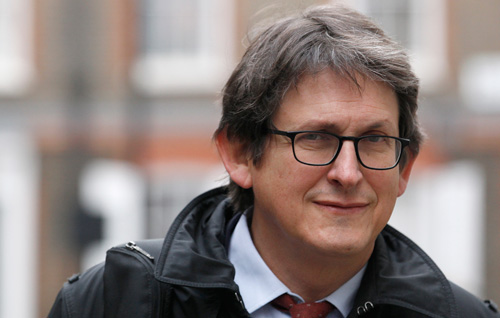
The Guardian editor -in -chief Alan Zabrizer kept silence for a long time
On August 19, the editor -in -chief of the British newspaper The Guardian Alan Zabrizer published a column in which Urbi et Orbi said: “It was the most strange episode for the entire long history of The Guardian: in the editorial of the editors there was a destruction of hard drives, which were observed by two agents of the government center (GCHQ) - they desired - they wanted it To make sure that there was nothing left in the wreckage of the rewinded metal that could be of interest to Chinese intelligence. “Well, now, perhaps, you can call“ Black Helicopters ”(Black Helicopters),” one of them joked when we began to sweep what was left of the MacBook Pro. ”
"You have fun"
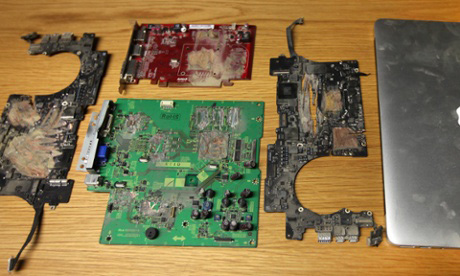 |
| The remains of The Guardian hard drives after the visit of the British intelligence agents |
Agents of the British intelligence services entered the checer back in mid-June: the scandal with the Snowden who escaped to Hong Kong was in full swing, and The Guardian did not cease to publish all new revelations about the total control of the Internet space and mobile communications from the American special services, which, to the word to say, in European countries, in the word. including with Britain. And then the Secretary of the Cabinet of Ministers Jeremy Haywood, saying that he was acting on the behalf of Prime Minister Cameron, met with a kneeber and politely, but resolutely demanded that the British intelligence services be all available to the newspaper or destroy them. The refusal followed. Then - a second attempt. The knifeer was made to understand that they would not stop in front of more decisive steps. After several barren meetings, the chief credit once again rang the phone: “You have fun. It's time to give us all this garbage. ”
The Knighter tried to object that the destruction of the hard drives would not lead to anything, they say, there are copies of materials in America and in Brazil, where the journalist-investigator Glen Grinuold lives: it was to him in Hong Kong that Snowden handed over all the materials. But the agents were adamant: "Either you will meet us, or we will cut off the materials through the court." At the same time, the main argument of the special services in favor of the seizure was not that secret information should not appear on the pages of one of the most read newspapers in the world (The Guardian Internet audience-18 million people), but that state secrets, God forbid, will fall into the hands of Chinese or Russian intelligence.
The Guardian's leadership was in response to explain that computers with secret information were not even connected to the Internet. "So what? - the agents retorted. “Using modern equipment, you can configure an invisible laser beam in such a way that it, according to the vibrations of window glass or, say, a plastic cup on the table, will be able to fix conversations in the room where the equipment is located.”
The prospect of an expensive judicial claim, which, moreover, could stop resonance publications based on Snowden's materials, did not delight editors at all. The knifeer gave up. With the help of an IT specialist and “grinder”, hard drives were destroyed. The editors, however, at first decided not to give a pogrom public: either according to an agreement with the special services, or frightened by possible problems with advertisers.
Boyfrand-terrorist
The silence of the journalists was forced by another egregious fact: on August 18, the boyfriend of Glen Greenolet Brazilian David Miranda was detained for nine hours at the Khitrovo London Airport. Miranda was returning from Berlin, where he met with another person involved in the Snowden case, documentaryist Laura Poiatra. Despite the fact that David does not work in The Guardian and is not even a journalist, he helps Greenland in his work - this trip to London was also paid by the newspaper.
All electronic devices were seized from a young man, including a laptop, phones, a removable hard drive and even a game console. Agents were interested, first of all, the details of the meeting with Poitra and the cherished passwords for information carriers. For all nine hours of interrogation, Miranda did not allow Greenwood to call and did not provide a translator, although the Brazilian complained several times that he was not too comfortable to talk with investigators in a non -native language.
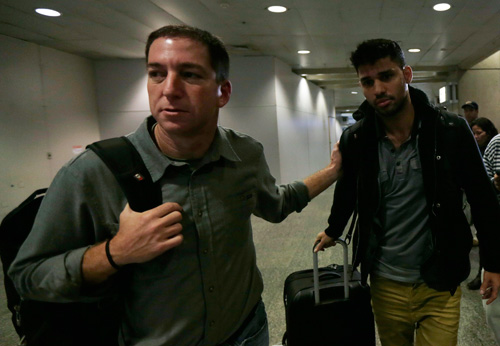
Glen Greenwoland meets his boyfriend David Miranda at Rio de Janeiro Airport after a 9-hour interrogation in London Hitro
| *This article allows you to detain any person suspected of involvement in terrorism, including a journalist, as well as confiscate electronic devices for up to seven days. |
After three hours of interrogation, the representative of the Safety Service Hitro himself called Rio de Janeiro and told Greenwood that Miranda was detained in accordance with Article 7 of the Act on Terrorism*. Greenoold was not allowed to talk with her boyfriend, moreover, they announced that David was not supposed to be a lawyer and that after nine hours he would either be released or arrested. The lawyers of The Guardian immediately arrived at the airport, the Brazilian ambassador to London was in the fame, but they could not influence the course of interrogation.
The usual thing?
Washington immediately disowned the actions of the British special services. Representatives of the White House said that in no way they asked to detain David Miranda at the airport or “influence” The Guardian. Moreover, the latter could not occur in America, where the first amendment to the Constitution guarantees complete freedom of speech and freedom of the media. In England itself, in the Labor camp itself, calls were heard to carefully investigate what had happened, and the former Minister of Justice, Lord Charles Falconer, one of the developers of the act of terrorism, considered it necessary to clarify: the 7th article gives the police right to detain possible terrorists only in order to understand the terrorists or not, and then act in accordance with the laws of Great Britain, implying a normal legal procedure with the arrest and the provision of a lawyer. According to Lord Falconner, since it was clear to everyone in advance that Miranda was not a terrorist at all, his detention, and even more so a nine -hour interrogation “completely illegal”. Cameron's government had to make excuses. In the commander of the Deputy Prime Minister Nick Klegg dated August 22, the danger of the materials of The Guardian “in bad hands” was again said. As for the detention of Miranda, the independent government expert in anti -terrorism legislation David Anderson must investigate the legality of the actions of the English police.
However, the scandal around Grinuold and The Guardian is by no means the first case of pressure on journalists by the authorities of the United Kingdom. In the late 80s, the government of Margaret Thatcher tried with all his might to interfere with the air of the BBC documentary series “Secret Society”, the first series of which talked about omnipotent “secret communities” within the British elite. In the house of the film by journalist Duncan Campbell, searches were carried out, cassettes with the film were seized, against Campbell himself tried to start a criminal case on charges of espionage and violation of the act of state secrets. However, the court did not find a corpus delicti, the cassettes were returned, and the film was broadcast a year later than planned.
So the current reaction of the British special services to the exposure of Snowden Mr. Campbell is very reminiscent of what happened to him himself 25 years ago. “This is the absurd arbitrariness of bureaucrats from special services, designed to intimidate journalists and prevent them from doing their work,” Campbell remarked in a conversation with The New Times, “but they do not understand that the reaction will be directly opposite: the more they will press, the more information will be released.”
New Motherland
Meanwhile, the main person involved in the scandal is still in Russia. In the photographs of Life News made in Sheremetyevo on August 1, when Edward Snowden was provided with a temporary political asylum in Russia, the fugitive looks happy: the American prison was avoided. However, it seems, having gone to from the States, whose special services, as follows from the revelations, elementarily violate the right of citizens to the inviolability of private life, Snowden did not fully understand where he had fallen.
| ** Five Cambridge students recruited in the 30s by the Soviet intelligence officer Arnold Dechch: Kim Filby, Donald McClin, Anthony Blant, Guy Burzes and John Kerkross. |
In the end, he is not the first fugitive from the West to find a refuge in Moscow. George Blake, Kim Filby, Glen Souther, Guy Burdes, Donald McClin ... A list of military, scouts, diplomats on the other side of the “Iron Curtain” who collaborated with the Soviet intelligence services and later fled to the USSR. Most of them, with rare exceptions, were waiting for a very tragic fate. So, the Briton Gai Burdes, one of the members of the famous Cambridge Five **, journalist of the BBC, diplomat, second secretary of the British Embassy in Washington, an MI-5 employee, fled to Russia in 1951 with Donald Maclina due to the threat of disclosure. To homosexual Burzes in Moscow, even accommodation with his lover was lowered with his hands. (However, there is a version that the lover was also an agent of the KGB.) But Burzes was clearly not happy in the country of the Soviets: he lived poorly and under constant supervision, and after 12 years he died of alcoholism at the age of 52.
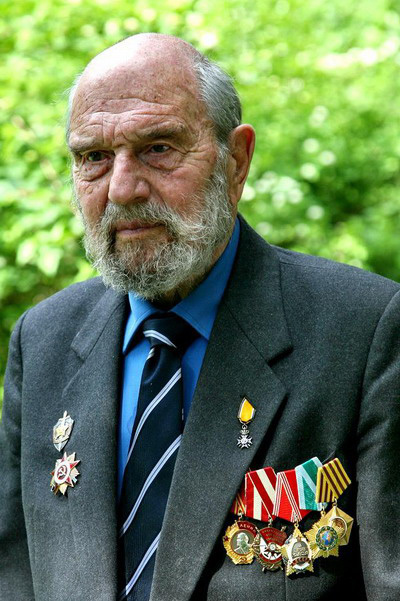 |
| In 2012, President Putin congratulated the former British intelligence officer George Blake, who escaped from the English prison |
|Another famous member of the “Cambridge five” Kim Filby, locked in the walls of his apartment, the entrances to which were specially difficult: in the USSR they were afraid that Philby could be stolen. At first, Donald Maklin drank a lot, but he managed to cope with this addiction. The US Navy intelligence officer Glen Souther, who transferred secret data to Soviet agents regarding weapons, movements, composition of the American fleet, fled to the USSR in 1986, when they began to interrogate him on suspicion of espionage. In the Soviet Union, he received the title of Major of the KGB, married (his wife also remained in America), but in 1989, at the age of 32, he committed suicide at the cottage provided by the KGB - closed the garage doors and started the engine engine.
And only to this day, George Blake, sentenced to 42 years in prison in his native Great Britain, but fled in 1965 in the USSR, had been teaching for a long time, and last year he was even congratulated by President Putin on the 90th birthday.
In the Soviet Union, fugitive scouts advised the KGB, worked in universities, sometimes engaged in vague “scientific activity”, and lived on registered pensions. Retired Major General Alexei Kondaurov, in a conversation with The New Times, recalled the old joke when the Soviet intelligence officer Rudolf Abel met a long-standing acquaintance in the United States, Ernst Krenkel, a polar explorer. He asked him: “What are you doing now?”, To which Abel, pointing to the Lubyanka building, replied: “I work with an exhibit.”
New exhibit
According to Alexei Kondaurov, everything that could be taken away from Snowden, employees of the Russian special services have already received. Kondaurov does not doubt that all this time Snowden did not sit at Sheremetyevo at all, but was transferred to one of the FSB objects and only returned to the airport for a few hours to act as a model for Life News. This opinion is also held by the Major General of the RF Foreign Intelligence Service Yuri Kobaladze, who declared The New Times that Snowden immediately began to “work” and this was certainly not in Sheremetievo. At the same time, both retired generals are absolutely sure that Snowden handed over all the information he had for Russian special services. “He is in a trap,” says Alexei Kondaurov. - The conversation may be different: either tell or go to the USA. It would be funny if they started working with him and would not use light blackmail. ”
But as soon as the interest in the fugitive disappears, it is unlikely that it can be expected that he will be allowed to take some significant place in the hierarchy of special services. “Given his past, he will definitely not allow him to any secrets: neither in large business, nor in government structures,” Kondaurov believes. -Maybe they will find some work in the specialty, he is a programmer. They will call some Kaspersky and recommend that they take it to the state. Or maybe it will serve as an “exhibit” at various conferences or in the commissions. ”
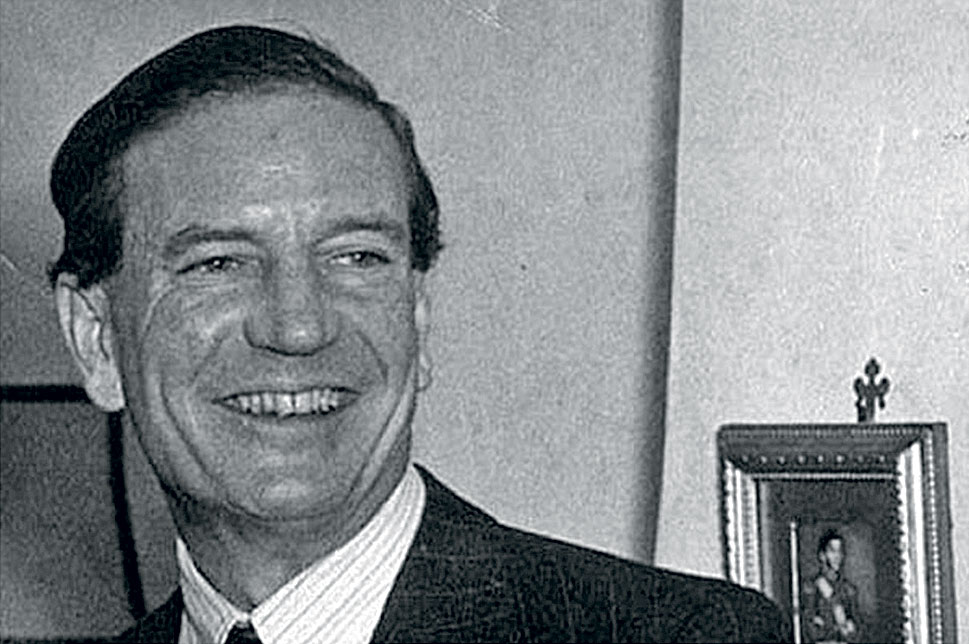 |
| Another British intelligence officer Kim Filby escaped from the capitalist oppression, but in the Soviet free state only found alcohol |
Confirmation of the probability of developing events according to such a scenario did not force itself to wait long. Even before Snowden was provided asylum, a member of the Federation Council, a member of United Russia, Ruslan Gattarov proposed to create an international commission to comply with the rights of citizens to confidentiality of information on the Internet and include Snowden. In a conversation with The New Times, the senator assured that he does not want to fight the American government, but wants to get undeniable evidence that Internet companies like Google or Facebook provided information to American intelligence services. “In Russia, special services have no direct access to the servers of our Internet companies,” Ruslan Gattarov is sure, “they can only receive it by court decision in the framework of operational-search activities.”
And shortly after the provision of asylum to Snowden about his readiness to employ a mastic programmer from the NSA was announced by the founder of the VKontakte social network Pavel Durov.
"Operational Psychology"
It is difficult to say to whom and how the Internet companies in Russia provide information in Russia: the Russian Snowden has not yet appeared. One thing is clear: a fighter with the arbitrariness of American special services will now live under the cap of Russian special services. The correspondent of the same The Guardian Luke Harding described in detail in his book Mafia State (“Mafia state”) about how they get out with foreigners. When he worked in Russia, no one threatened him directly, but the FSB used the methods of the so -called “operational psychology”, the main task of which is to unsubscribe, to deprive of a sense of security. Harding’s apartment was constantly visited in his absence, making it clear that his house is not a fortress at all.
“At first, everything seems ordinary. Children's clothing on the floor in the corridor, books in the living room, ordinary traces of family life. But then I see it. Strange detail. My son’s bedroom window is wide open, ”he writes in his book. Luke is sure that the window was closed five hours ago when he left with the children. To open modern frames on the 10th floor of a multi-storey building, you need to turn two pens, you can do this only from the inside. "Robbery?" - asks the six -year -old son of Luke. "Maybe Spider-Man?" - The journalist The Guardian suggests. Further - more. A cassette is spinning in the music center in the living room, which none of the family members could not insert, and a few hours later in one of the rooms it begins to twist the alarm clock at 4.10 in the morning.
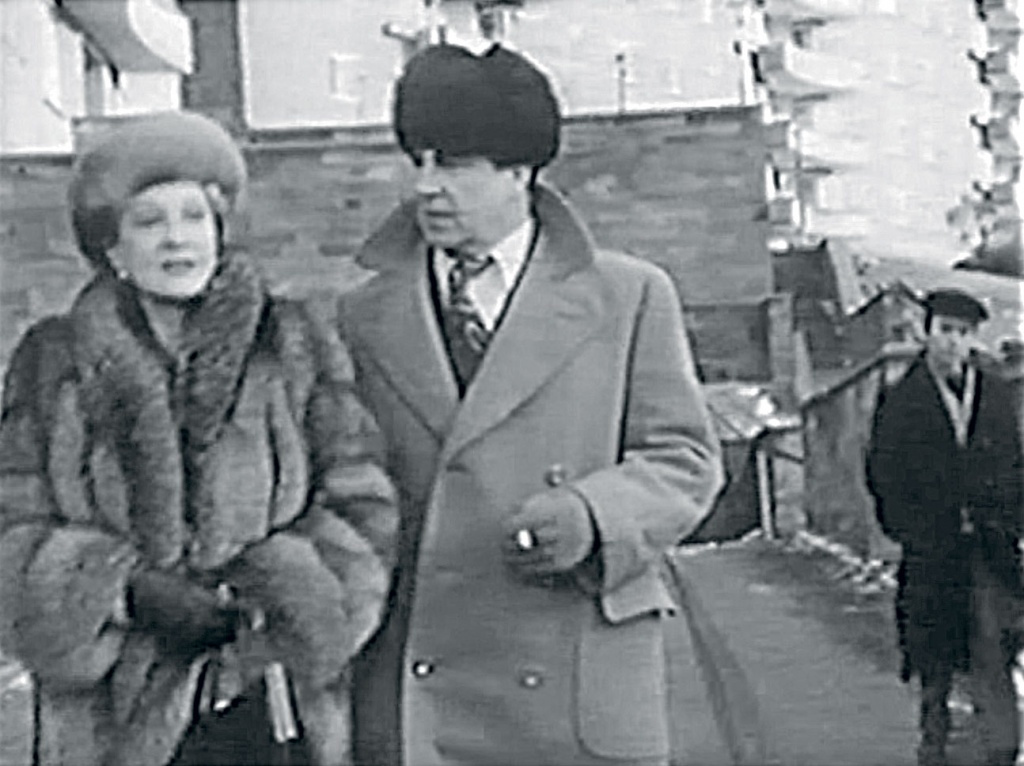 |
| The frame from the film “Englishman abroad”, 1983, telling about the random meeting of the fugitive Briton Guy Burzes and who came to Moscow with the tour of actress Coral Braun. She was shocked by the living conditions of the former diplomat |
“The obsessive external observation was constantly carried out for me,” said Luke Harding in an interview with The New Times. - In restaurants at neighboring tables, people in leather jackets were sitting all the time. My email was perlustrated, the phone was listened. When I pronounced the words “Litvinenko, corruption, Putin”, even if I just joked about Putin, the connection immediately broke off. ” At the same time, they visited the house constantly, leaving traces all the time: either they will transfer things to an unusual place, then they will leave a book about sex with a bookmark on a page about orgasm: cute jokes of people in uniform.
Of course, Harding was not the only foreigner to whom they tried to poison life in Russia. In one of the telegrams of WikiLeaks, sent to Washington from the US Embassy on Novinsky Boulevard in 2009, it was said: “The persecution of all the employees of the embassy has grown sharply in recent years (...) Cases of penetrations into the homes and generally became commonplace, activities against our Russian personnel have reached a record level. We have no doubt that the FSB is behind all this. ”
For Harding, it all ended on February 5, 2011, when, after the next return from vacation, he was simply not allowed to the country, canceling the visa and sending him back to London with the same flight that he flew in.
The story of another foreign journalist - German Boris Wright Shuster, the author of several books about the Putin regime who has been living in Russia for more than 16 years, looks like. Травля, слежка, те же визиты домой, прослушка телефонов и перлюстрация почты. Тяжело было даже с близкими людьми. «Когда тебе 20 раз за вечеринку говорят в шутку, что ты американский или немецкий шпион, это начинает действовать на нервы, — рассказывал Борис The New Times. — А иногда некоторые друзья журналисты, с которыми мы достаточно плотно общались, вдруг пропадали. Наверное, им или объясняли, что со мной нельзя дружить, или они просто не хотели стучать на меня, не знаю».
Не выдержав давления, в 2011 году Борис принимает решение уехать: «Я не боялся, что кто-то сверху даст приказ со мной расквитаться. Но когда твой адрес вывешивают в интернете и пишут, что ты жид, Геббельс и русофоб, нельзя исключать вероятность того, что кто-то решит с тобой расправиться самостоятельно». Борис Райтшустер и Люк Хардинг, впрочем, смогли покинуть пределы России. У Сноудена такой возможности не будет.
«Сноуден, наверное, еще на адреналине из-за того, что ему удалось избежать американской тюрьмы, но он не понимает, куда попал. Если в США спецслужбы следят за всеми и это всех удивляет, то в России это норма. Если бы в России появился свой Сноуден, на него показывали бы пальцем, как на сумасшедшего», — смеется Борис Райтшустер. По его мнению, для американца будет тяжелым открытием, когда он поймет, что служит инструментом для пропаганды мировоззрения Путина, выходца из спецслужб: «Каждый раз, когда надо будет помахать Сноуденом перед носом США, его, как куколку, будут доставать из ящика. Потом помирятся, снова уберут. Не знаю, насколько у него получится сопротивляться этому. А так — будет в Анапу в отпуск ездить…»
And what? Go bad.
фотографии: Roger Tooth/The Guardian, Suzanne Plunkett/Reuters, фотография: Ricardo Moraes/Reuters