
Translated material
Invisible | Colta.ru
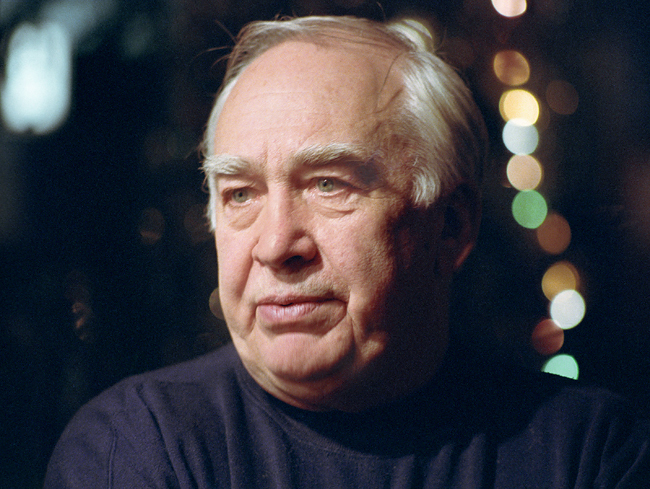
Vadim Yusov was not like a man who shot Andrei Rublev. The newborn students who were waiting for the first meeting with the master, or journalists who came to the classic for the interview, were ready to see an eccentric-anutist, a frantic giant, an old-regime poser-anyone. The most eccentric of the tribes inhabiting cinema, silence and alchemists, operators, as a rule, are exemplary things-in-sebe, nurtured in secret laboratories, where they are trained to see a system of reflectors in the girl’s face, and non-tested boards always, no matter what happened, prefer with chicken. But Vadim Yusov, who for many and many years in charge of the VGIKOV department of operator skill, had to be the master of these laboratories. Those who check the temperature in incubators. Here we need another vigilance: calm, balanced, without charm, but full of common sense. Neither the Fanabury of Urusevsky, nor the Escapad of Rerberg: dense, rounded, in Kepochka, Yusov was, on the naked eye, almost inconspicuous. But what is the matter to the naked views.
In this inconsistency and this sanity, it is customary to see the main feature of the Yusov’s operator genius - so unusual that in a different alignment of it and for the compliment it would not be easy to give out: the absolute absence of its own handwriting, which allows to fully mimic for one or another director. In his interviews (and Yusov, unlike most colleagues, he knew how to speak), he himself insisted on this principle of non -interference, seeing his mission only in the subordination of the whole variety of technical means of the director's task, translated by human tragedies and historical dramas into the language of lenses and travling, literally translation and therefore sophisticated. Most of the great operators in history, from Frond to Straro, had at least a manner, at least a technique, well, at least a curl in the fields, which they mixed with a spicy with a pinch in a brew of the author’s intention and which gave their presence better than any titers; So in the 90s, colleagues unmistakably identified Rerberg’s hand in Telekeklam, which he, already deadly ill, was laid to remove from hopelessness.
You do not recognize Yusov. “I am walking around Moscow”, “Solaris”, “Red Bells” and “Black Monk” - here the most advisable conceptualist will save before the search for community. There is no one here, no; Four completely autonomous worlds that are dissimilar to either logic or emotion. Working exclusively with the masters of the first row, having an accurate, powerful, completed vision - that is, such that can not be added to - he did not make further differences between them. Expanding the Mandelstam "" do not compare, living incomparable, "he understood that the full -fledged, full -blooded copyright worlds could not be better or worse than another. There were no more irreconcilable in Soviet cinema than Bondarchuk and Tarkovsky - both creatively and humanly; And when the first with all his party regulations mercilessly smashed the second from the high stands, providing him with a halo of the martyr, both then went to work on the set, where Vadim Yusov waited for them, geniuses. And he provided one - frantic apocalyptic heroics with helicopters, the other - unbearable silence of God -state with the cosmos taken into the basin. It was this strange talent, which would have suitable for a real lawsuit, and allowed Yusov to grow several generations of the domestic operator school: the most vulnerable place of any outstanding master who has become a teacher is to educate his own, to be a supplier of his own reduced copies. Yusov taught students skill, not himself. He did not have and could not have imitators. Only students.
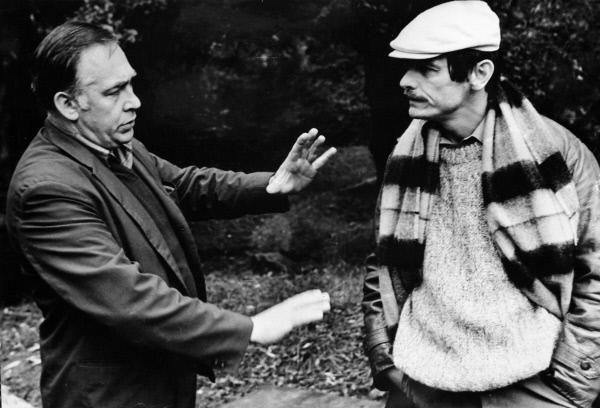 © RIA Novosti Vadim Yusov and Andrey Tarkovsky during filming
…And yet. This selection, the very exactingness of the very independence and autonomy of each of the screen worlds created by Yusov, determined something. “I am walking around Moscow”-of course, these are sixties, young and free, but above all, Moscow itself with its rains and sunny dust, asphalt and air. “Andrei Rublev” is a story about the artist-frauditer with his vows and torment, but first of all-about the earth of unrest and raids, blood and birch, and the monk in a black hood here is only a silent witness that overwhelms his genius into the image. In “They fought for their homeland,” the earth, stolen by trenches, the hellish fire of the mill and the crimson heavenly battles of the angelic army in the whole of the excitement of the soldier paralyzed by the fear of the stellar acting, and in the “black monk” the mysterious gloomy garden with the stairs and apples speaks of the spiritual abbreviation of the main hero earlier and the thoroughly and is the other way text and facial expressions. In other words, even in these films, the names of which seem to be obliged to put a person in the center, Yusov primarily creates the world as a whole: a huge general plan, with his character and spirit, disposition and fate. A person is inscribed in this world or contrasted, dominates him, or redeems him, or dies under his heaviness - but the world here is more huge and inexperienced than man. Each of these films ends when the plot story scheduled by the screenwriter and expanded by the director is coming to an end. But the world around her, seen by Yusov, continues in its entirety. “TA” Moscow, “that” Rus', the “those” fields of the battles and the “that” garden still exist somewhere and are still still drunk by all the same-enduring happiness, or pain, or horror, or longing. Reviewing and experiencing their heroes, their era, their directors - and even now their operator. Vadim Yusov, an artist without handwriting, a genius without a style, did not create his own, copyright worlds. He only visibly embodied strangers. And made them eternal.