
Translated material
Indians around the world note the phenomenon of Sri Krishna
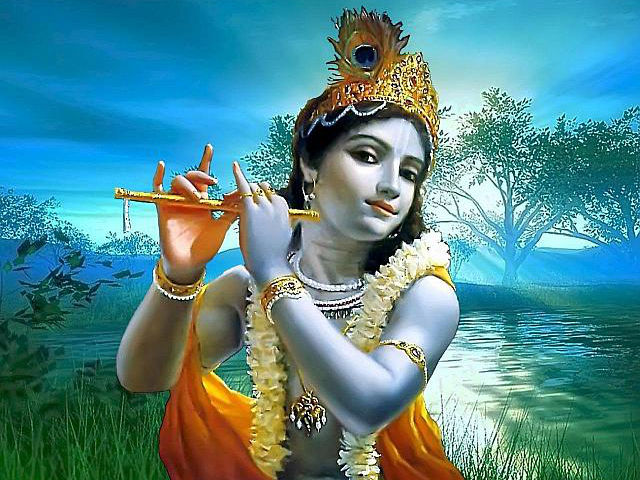
In India and other countries of the world, the Indians celebrate on Wednesday one of the most popular religious and cultural holidays-Sri Krishna-Dzhanmashtam. Dzhanmashtam is also considered one of the most ancient holidays not only in India, but also in the world. Krishna’s phenomenon tells, in particular, the tenth song by Srimad Bhagavatam (Bhagavatapurans), composed by the legendary sage Vyasa, according to legend, more than 50 centuries ago. Exactly the year of the descent of Krishna to the Earth, however, is absent, and different researchers give different dates.
"Dzhanmashtam" means in Sanskrit "birth (phenomenon) on the 8th day of the waning moon [Bhadra's month]". The popularity of Dzhanmashts is associated with the name of the culprit of the celebration - Krishna, the favorite character of the Hindus. The unusualness of this person who committed superhuman exploits, as well as the testimonies of the ancient sages and sacred texts of the Vedic era convince the Indians of the divinity of Krishna. Opinions are separated only in the fact that some consider Krishna an avatar of the Almighty Vishnu, while others - just on the contrary, the primary source of creation and all divine avatars.
Krishna is considered the Supreme Divine person, first of all, in the northern regions of India. With special splendor, the Janmashts are celebrated, for example, in Jaipur (Rajasthan). But in Vrindavan, a small sacred town between Delhi and Agra, the holiday flows in a very simple, almost homely atmosphere. Vrindavan, as well as the entire historical area of the leader, is associated with the childhood of Krishna. The deities of Krishna and Radhi are available here in almost every house, and each house is actually a small temple.
The image of Krishna found its vivid expression in traditional Indian culture and art, becoming a classic of the genre.
For most people, however, the main image of Krishna also has a philosophical meaning. This is due to the origin of the famous sacred text of Bhagavadgit (song of God), which Krishna sang to the warrior Arjuna 5 thousand years ago in front of the grandiose battle between the pandavas and kauravs in order to dispel his doubts and inspire the fulfillment of the debt to protect justice. Bhagavadgita is a single poetic work, conditionally divided into chapters (khanda), according to topics and sections (karma yoga, Giana Yoga and Bhakti Yoga). Bhagavadgita occupies the central part of the Mahabharata epic, and Orthodox Indians perceive Gita as the main reason to tell the rest of Mahabharata. Krishna convinced Arjun to fulfill his duty, telling him about the nature of living beings, eternity and indestructibility of the soul and consciousness, about the meaning of any activity and devotion to the service of God as the highest understanding of absolute truth. Therefore, often Bhagavadgit is called "the art of activity."
As modern Russian indologists note, the importance of understanding the meaning of the message of Krishna and the depth of the philosophical truths of the Gita completely depends not so much on the original Sanskrit slobs, but on the accuracy of the intelligence of the GITA by an authoritative theologian. Ignorance of this classical, in general, the features of Hinduism led, according to famous scientists, to the absurd trial, which took place in Tomsk in 2011 - 2012, when the local prosecutor’s office tried to question the authority of the Hita's interpretations by the famous Indian religious figure, the founder of the International Society of Consciousness Krishna A.ch. Bhaktivanta Swami Prabhupada (1896 - 1977), although many Indian and foreign scientists are sure that it was Prabhupad who managed to convey the mood of Krishna as accurately as possible, which made the publication of Prabhupada by the most popular presentation of an ancient book in the whole world.
However, there is another explanation of the highest divine nature of Krishna. The playful, arrogant and cheerful lifestyle of Krishna at the time of childhood and adolescence brought foreigners, first of all, the British who occupied India at one time, to the idea that it is such carefree and God should be, because he himself never has to worry about anything. As a rule, the Indians try to adhere to such a joyful mood, noting the Janmashts, who is a day off in India. In the Dzhanmashts, it is customary to have fun, praise Krishna, give each other gifts, visit temples to participate in spectacular rites and fast until midnight, then enjoy the festive treat of 108 different dishes (108 - a sacred number in Hinduism).
For more than a quarter of a century, Dzhanmashts have been widely celebrated in Russia. Today, celebrations are in more than 100 cities of the country. In Moscow, the celebration takes place on the territory of the Krishna temple on Leningradsky Prospekt (possession 39). The program of events: Kirtans and Bhajani (chants), bathing murti (figures) Krishna in honey and milk, dancing, reciting of favorable Vedic hymns and mantras, the press service of the Center for Society of Consciousness of Krishna in Russia reports.