
Translated material
986 days behind bars
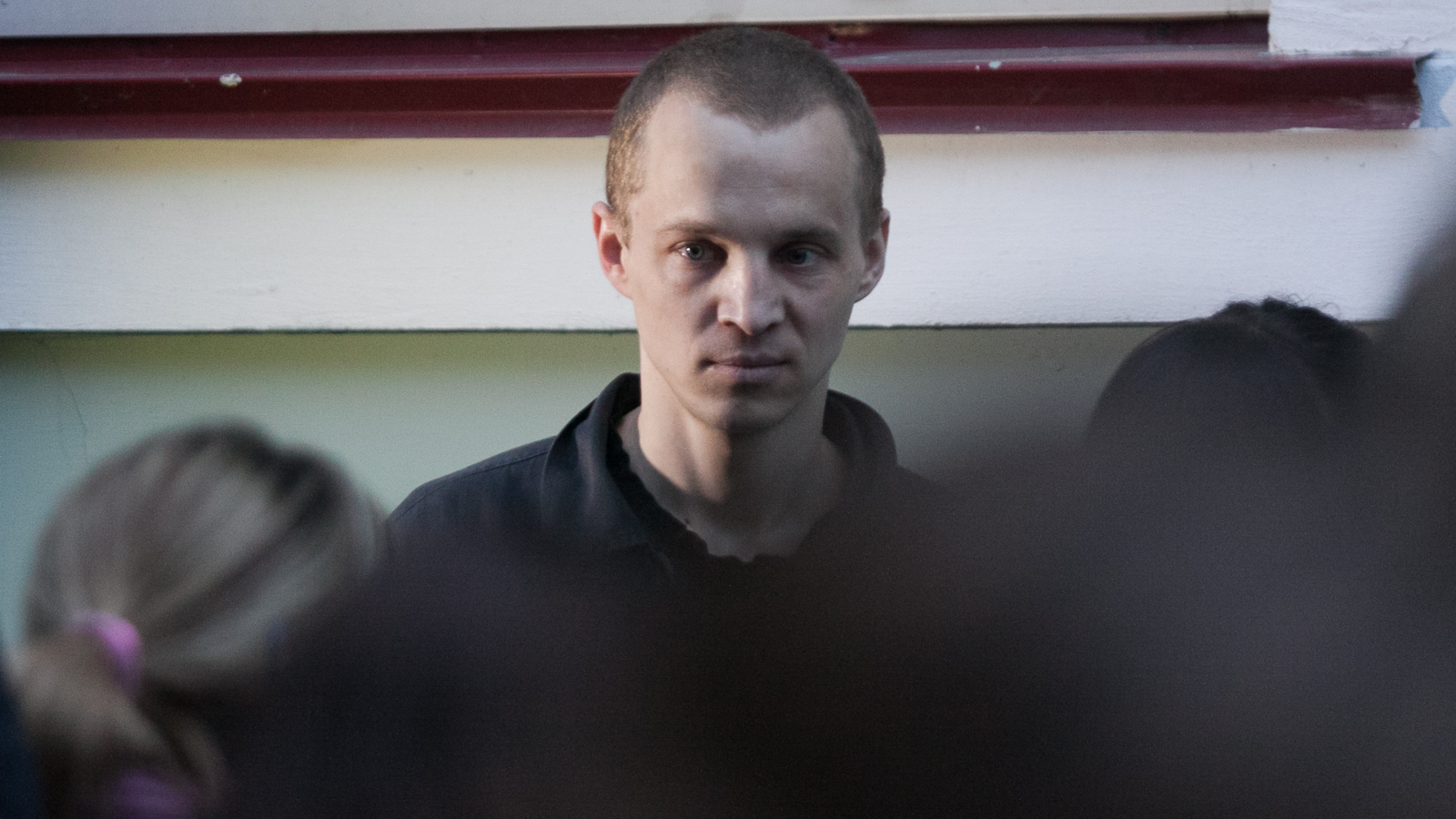
For 986 days, 32-year-old Dmitry Dashkevich spent the bars. Moreover, most of the deadline passed in single chambers.
Initially, the politician served a sentence in colony No. 13 of the city of Glubokoye, then there were stages in Vitebsk, Mozyr, Gorki. On August 28, 2012, the court found the activist guilty of "malicious disobedience to the requirements of the administration of the correctional institution" and sentenced to an additional year in prison. After the sentence, he was transferred to Grodno.
The opposition policy has been repeatedly offered to write a petition for pardon in the name of President Alexander Lukashenko, but he invariably responded. For which he was periodically brought to the penalty area.
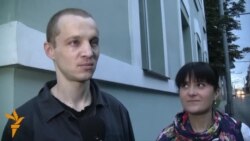
On August 29, the Minsk office of the Belarusian Popular Front party will host a large press conference of Dmitry Dashkevich, but for now the young politician looks back at long isolation and shares the first impressions of freedom. First of all, does he feel herself exhausted by b det or a bid? At least one third -party gaze was enough to understand: Dima had to go in full:
- Well, so it is necessary that people look and then say how really I have changed - I cannot adequately evaluate myself (laughs) . But everything is fine, thanks.
- Is it possible to consider the mercy of the state that you were released a couple of months before the end of the deadline?
-Of course, I do not perceive my liberation as some kind of mercy on the part of the state. Because we have as if in the order of things: today - tomorrow there. By the way, this is once again evidenced by the example of my colleague Vladimir Eremenko, who is forced to sit again. Nevertheless, in the future, I plan to do the same as I did in recent years before the prison.
- Wasn't they afraid that the information about the impending release could be another provocation? Was there any confidence that they would really release?
- You know, I didn’t particularly strain about this. Even if the “feeder” opened and said: “Happy New Year, sign it,” I would not be particularly surprised. In our country, anything can be expected.

Width PX Height PX
The url has been copied to your clipboard
No Media Source Currently Available
0:00 0:02:29 Download the media file- How was the last night before the release?
- Yes, calmly: lay down and slept. This system has already grown us, that we don’t need to strain for any reason: we live only today, because everyone is still enough for their dashing.
- That is, they said goodbye to you quite everyday?
- I was raised earlier than usual: at 5.30 they already brought the last helmet of the cuts, I erased it, and at 6 in the morning they took it out. They still gave something to sign, they say, I have to register in some district department of the Minsk police, register, but I don’t even know where and when I will look for it. Otherwise, everything went calmly.
- What can you say regarding the conditions of content?
- Normal, acceptable conditions - as for prison. Here I was generally sitting alone. On the path, the administration’s employees even said: if that, Dashkevich, the camera will always wait for you ... But today I would like to be free and, first of all, to thank everyone for the support, for letters, for prayers. This is the most important for a person who is on the other side of our common prison. Because it is extremely necessary to realize that you are supported somewhere, they continue to engage in the activities that you were engaged in. And everything else is overcome as much as possible.
- Dmitry, how hard is it to sit alone?
- This is very relative - hard, not hard. Of course, it is not so that it is simple, but also, you know, not Kolyma still. Therefore, all glory to God. And to reason - they broke, did not break - this is also an ungrateful business. I stated that I would do the same as before, I will do the same thing that I did all this time in politics.
- How did other arrested relate to you - are you political?
- All prisoners almost always and everywhere supported very much. Only in some places there were attempts by administrations of different prisons to use those arrested to solve their problems with their hands. It is no secret that in prison there is always a person who is ready to earn a parole or something else. In principle, these people can be understood: if a person is 20-25 years old, then he will do everything that the administration will tell him.
- And the administration employees? Were there sympathizing?
- By and large, absolutely normal. Indeed, not only convicted, but also representatives of the administration supported. I know that they all read independent media, so there are absolutely adequate people. And I would like to thank both journalists and those people with whom I had a rare opportunity to cross in the Grodno prison, in other institutions. I am grateful to the employees: someone could support in a word, someone brought the household when there was nothing to brew tea, someone treated it to an apple. Of course, I can’t say where it was and who it was. These people know all themselves, and I am deeply grateful to them. The time will come, and I will be able to personally say "thank you."
- Dmitry, can you say what moments were the most difficult?
- What are the most difficult? Hard moments are when you pull the two chats by the stage. And so, in principle, when you get used to it, everything is quite simple ...
During the serving of the sentence, Dmitry Dashkevich died. His speedy liberation was waiting for his father, living in the city of old roads, and his wife Anastasia. In December 2012, after several refusals, Dmitry was still allowed to register a marriage - his wife became an ally on the "young front" Anastasia Polozhanka. The wedding ceremony in the Grodno prison took no more than 10 minutes, and now the newlyweds are going to get married.
Anastasia herself spent several months in the KGB investigative insulator on charges of organizing riots on the day of the presidential election on December 19, 2010 and is now happy to see a loved one free - two years and nine months after separation:
- Super sensations, what else can they be today? The best! Naturally, I am very glad to see him and am pleased that he was all right. As for me, it looks wonderful, so we are doing well ...
In the next six months, Dmitry Dashkevich will be under preventive supervision. In particular, he is forbidden to leave their place of residence from 20.00 each evening to 6 a.m.
However, this is not the first prison experience of a young politician. On September 15, 2006, he was arrested and accused of activities from the "name of an unregistered organization" under the article of the Criminal Code, adopted on the eve of the 2006 presidential election. In November of the same year, he was convicted of 1.5 years of imprisonment. In September 2007, for refusing to testify against the activist of the “Young Front” by Ivan Shilo, a new criminal case was instituted on Dashkevich, which he threatened with another 6 months of arrest in addition to the deadline. However, under the pressure of the international public, everything cost a major fine. Dmitry was released in January 2008, continuing his political activity.