
Translated material
Without supports, the system will not stand
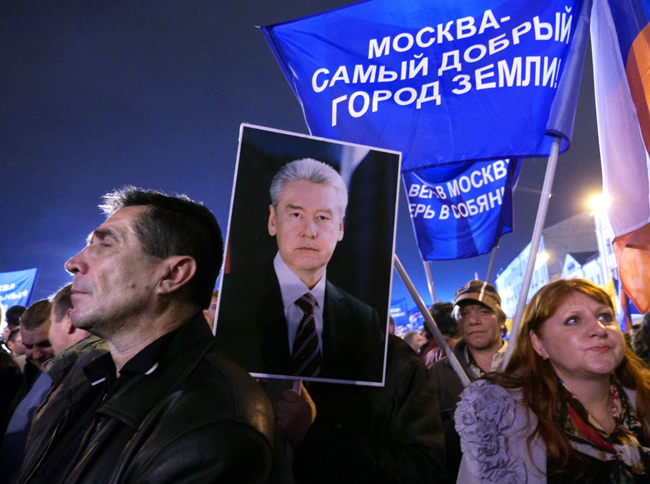
The new political situation is already reality. The results of campaigns in Moscow, Yekaterinburg, Krasnoyarsk and Petrozavodsk are a large event. Now there is a lot of talk about what those who have not come to the polls are to blame. Yes, they could, of course, come. But in Russia there is no compulsory vote yet, as in Australia, so not going to the polling station is also a choice.
It’s good when the one who understands why he does it votes. And now those who really wanted to vote and knew why they were doing this, came to the sites and voted. So it was in the past.
It’s just earlier among those who knew why they vote were mainly state employees, pensioners and other people dependent on the state. They went to support the source of their well -being (or, more precisely, dysfunction). Now they are confused. Maybe they began to understand that this is a source of dysfunction. Among the voters, there are much more those who depend less or want to depend less on the state. This is my assumption. In any case, there is one clarity: an automatic “pensioner” vote for the authorities remained in the past. And the TV can no longer be considered a serious resource of power in big cities.
Apparently, now - in a new situation - a sluggish vote helped new candidates, and not to those who already hold positions. It is possible that the opposition won (or the authorities lost) not only in Yekaterinburg, Krasnoyarsk and Petrozavodsk, but also in Moscow. It is possible that in a new situation, a lot helps new, not old.
The TV can no longer be considered a serious resource of power in big cities.
It turned out that in the confrontation of old and new names, new ones now win faster than the organizers could expect. A striking result of an elected campaign is the weakness of the administrative-party system, built by the Kremlin under those who hold positions (under Incumbent S , for those who “perform duties”, or simply under the “old”). This weakness of the system is more reminiscent of its absence.
The past campaign clearly had some supernatuality set by people who consider themselves authors and managers of Russian politics. In public, they formulated it as a task to ensure “political competition, transparency and legitimacy of electoral procedures” (the words of Vyacheslav Volodin in the transfer of Konstantin Kostin in an article published by the latter in Vedomosti). How they sold this super -task to Vladimir Putin, we do not know. Why it was decided to release Navalny - we do not know. Perhaps they really wanted to twist Sergey Sobyanin with his supposedly gigantic potential support and long -term plans.
A sluggish vote helped new candidates.
Whatever the idea was really behind this idea, the experiment showed the authors themselves that there was no working institutional structure on which they could rely on. And what is even sadder for the Kremlin, his candidates also do not have substantial voluntary support. As soon as the coolest backs are removed - the uncertain of candidates, large -scale falsifications, bribery - support is collapsed. New people begin to win. Those who simply think and act, and do not eat the budget, win.
As soon as the playing field becomes at least a little suitable for the game, modern thinking people win from those who are used to the backups. Navalny campaign - even by world standards - innovative, active and effective. If Leonid Volkov, his teams had more time, the elections to Moscow would be won by bulk without any stretch. Still, the campaign of Sobyanin and Navalny-as from different centuries. In the open struggle, the Iron Age could not but win the stone.
It is important to make a reservation that we have a competition of generations and technologies. We are talking about politics in the sense of power struggle ( Politics ) . And so far we have not talked about the content, about Policy .
The weakness of the system is more reminiscent of its absence.
And here it makes sense to say two words in support of Sergei Sobyanin. He is not quite an ordinary official. He tries to think and act. But he focused on the city and urbanism (no matter how he understands them), and not on politics. That is, as he probably reasoned, on Policy , not Politics . Then for some reason he decided to try to take place as a political player. But this was done in some incredible hurry. This fever did not benefit him. And despite the fact that in his team there are many people of the “Iron” century, it operates in the old system of landmarks and values. It turned out that the struggle for power is a more significant history than a substantial policy. However, the second without the first is impossible.
The whole experience of the elections in Moscow (and Yekaterinburg, of course) is extremely important and will be sure to be studied in detail, so no next serious campaign in Russian big cities will be the same. New rules are already in force.