
Translated material
To whom is the Stalin's nose terrible?

On September 2, a short list of the fourth season of the All -Russian contest for the best literary work for children and youth “Bookra” was announced. So far, the children's reader jury is determined with the choice of a laureate, Colta. RU decided to see how things are in children's literature today. Over the next few weeks, we will publish materials on modern Russian children's literature. The conversation between Asonova and Olga Bukhina about the perception of the book “Stalin's nose” begins the cycle.
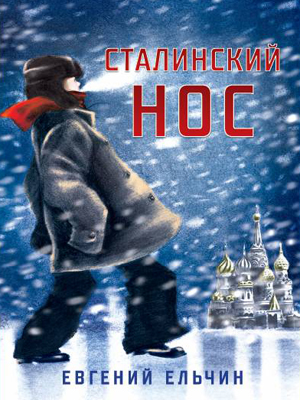
Children and big politics are a topic that is practically not affected by literature for children, except for a certain part of it - children and war. And here, with rare exceptions like such books as the “cloud regiment” of Eduard Verkin, the book regiments are still occupied by Soviet hagiography-the lives of the fascists tortured by fascist heroes. An attempt to plunge headlong into the atmosphere of the Stalinist repressions is not only a large terror of 1937-1938, but also the entire Stalinist period from the late 1920s until the early 1950s-and look at this situation through the eyes of the Book of Evgeny Yelchin, Stalin's nose. The child himself cannot see the “wide” picture, he only knows what is happening directly around him, that he is told at home both at school, and is inclined to believe what the adults say to him. But if the words of adults whom he loves and whom he is used to trust contradict what he sees with his own eyes? The world is turning over, and big politics is included in a children's cozy world, brutally stomping the life of this very child. The book of Evgeny Yelchin, written on behalf of a boy with a ridiculous name Sasha Zaychik, and especially her expressive, disturbing illustrations made by the author, is about this.
 © Publishing house "Pink Giraffe"
The book was published in the spring of this year, its appearance in the light was noted by a number of reviews, events and presentations ( presentation in the memorial ), it is actively discussed in the book community ( conversation with N. Kruchenitsky on the “Papmambuk” , recording Sofia Sapozhnikova in the blog “Lessons of history”, interviews with E. Yelchin ), and in the reader (reader ( Reviews in Labyrinth ; on the website of the Pink Giraffe publishing house, there is a page on this book).
This publication is a continuation of the conversation that began during one of such events that took place as part of the June Book Festival. There was not enough time for discussion, and therefore our conversation (Ekaterina Assonova, specialist in children's literature and reading, and Olga Bukhina, translator of the book “Stalinsky Nose” and observer of children's literature) grew into correspondence.
Ekaterina Asova: The first (and the main) question: how “Stalin’s nose” is a children's book. I have no doubt that her addressee is children. The question is rather not about that, but about the inscription of the book into the general process and the trend of the development of literature for children. It seems to me that it is very important to talk about the traditions of the XIX and XX centuries, which suggested that children should read about difficult social phenomena, about death, suffering and injustice, cruelty of this world.
Olga Bukhina: The book is, of course, children's, but, like any good children's book, it “speaks” with adults. I have already talked a lot to me how it is read by modern grandmothers, that is, those who are now about 60. This does not change the fact that its main addressee is children. The child’s awareness of history, in my opinion, is completely impossible without reading many books in which other children live in history. It is through this children's experience, through empathy and the awareness of the past occurs. At the discussion on the last day of the summer book fair in Moscow, someone quoted a girl who wrote a review on this book on the Papmambuk website ( a review of the participant of the CHXI Century Expert contest) and who sees the present excellent compared to the past described in the book. This is perceived by many as the wrong effect of the book - so it does not see bad today, but it seems to me that this is a very useful stage: first learn to “read” the past and its problems, and then move on to the present.
ASONOVA: The second question is about the final of the book: there is neither a lesson, nor a way out of the situation. The main character seems to find a shelter and understanding of a woman from the queue, but for the reader this is hardly the opportunity to breathe a sigh of relief.
Bukhina: This is just a conversation about the traditions of the XX century. The 21st century again “allowed” the authors of sad endings. In the 19th century, the children died at the end of the book, and this taught the reader to empathize and compassionate. The twentieth century turned out to be much more major - in children's literature, but, alas, not in life. The fact that Eugene is trying to convey to his ending is the proposal of at least some catharsis in the situation is categorically not catharsical. The alternative is simple - an orphanage. I conducted an informal survey - an optimistic or pessimistic ending of the book. The answers are about half a half. But if there was another ending, everyone would say - unrealistic and implausible. Most of all I like the interpretation that the end is optimistic, because Sasha first begins to speak human language, and his feelings appear human. Of course, he stands in the cold in line to receive a meeting with his arrested father, but his heart is defrosting. And this is the "happy" end. This is Nadia Kruchenitskaya, the book editor, formulated very well.
ASONOVA: The book was written in the USA and first came out there. Tell us about the reaction to the book in America. What did you write? Who wrote? With which children and why do they read such a book? And with what books she turned out to be in one row (she seemed to me close to Gary Schmidt's battles on Wednesdays ).
The reader should become terribly.
Bukhina: Well, first of all, she still got a Newbury medal. There are special manuals for teachers - how to read a book and what a historical background it has. Eugene helped to make one of these benefits , but there are others ( 1 , 2 ). Regarding a number - in the United States there are many historical prose for children, mainly in American history, but not only; It seems to me that for an American reader this book is naturally embedded in a number of books about America of the thirties, great depression, consequences of slavery, war in Vietnam.
ASONOVA: The afterword of Evgeny Yelchin is called “On Fear”, about fear writes in his commentary to the book historian B. Belenkin, and her publishers speak of fear. It seems to me that the book is not about how scary to live a boy, but that fear is just what a person should have if this happens around. The world of Stalinist life is represented as commonplace (this is what they try to convey museum complexes dedicated to the horrors of the Nazi ghetto, concentration camp). It is the feeling of fear that awoke in Sasha that becomes his human salvation.
I’m a little distracted from the topic: after reading the “Stalin’s nose”, I was marked-I would have to do something on the site of the mausoleum and the memorial complex near the Kremlin wall, which would help to awaken in people such a necessary fear, or rather, a sense of danger before the everyday life of evil, cruelty, hypocrisy, and visuality .
Bukhina: There is a site and a number of works dedicated to the communal services of that period and their everyday life. Sasha, of course, is completely not scary to live in this world at first, it is his world, understandable and simple for him. And not all adults, as we know, were scary, for fear we must have the opportunity to see the situation from the side, which Sasha, of course, is at first inaccessible. Only when the situation is destroyed, Sasha is able to see what is happening, and this is really scary. The everyday life of evil, according to Hannah Arendt, is the patron father, a neighbor-donor, a school-teacher, aunt-trusikh. All this is scary. The main thing is that the reader should become scary. Then the book really becomes a monument to the victims. Now I have a question - maybe really needs a manual for the book, as to the “wave” of Tod Strasser? Maybe this time is already so far from a modern child, and from his parents and young teachers that they themselves cannot understand?
ASONOVA: A manual, I think, is needed. The experience of presenting a book in schools suggests that teachers do not understand the value of empathy, catharsis-so great the desire to “historically explain” and not leave the child with the experiences of one, with the birth of a desire to learn more, with a delayed opportunity to learn something for himself. We need materials that will help parents read this book.
Bukhina: It seems to me that you really need to create a double text - for teachers and parents. But no less important is a historical certificate, telling, without simply scaring to half a death, the history of Stalin's time. After all, at school, children go (if they pass) when to read about Sasha Bunny is no longer very interesting. Teachers and parents are the main "players" in this story. The child himself will not buy such a book and even from the shelf in the library is unlikely to take, if the librarian does not advise. This book is a good start of conversation with the child not only about the Stalin era, but also about totalitarianism in general and about why and why it is so important to know the story.
ASONOVA: Materials for parents and teachers about complex, ambiguous books - the question is very complicated. I would like to highlight a number of moments in this topic. 1. It is very important to derive the topic of discussion of historical trauma from the private zone - it turns out that injuries are recognized as homemade, family, a little secret even. And the history of repressions, camps, Beslan tragedy - all this is not a private life. This is the life of the country, its people. Society. She does not fit into a private story. 2. The methodology for working with a book about Stalinist repressions is methods, techniques (formulations, revolutions and moves) that will allow those who believe that to say, write and read about it, that knowledge of repression cannot “undermine the authority of Russia”, talk with those who are categorically against. Who is scared to know about it. It is scary to see the manifestations of totalitarianism in today's life.
And the discussion, which unfolded around the book, suggests that the topic requires its discussion language. We need not only to learn to “talk about politics and politicians” ; We need to learn to talk about the socio-political history of Russia. Simply, of course, not frightening each other, but supporting. Otherwise, we are destined to live in a world where there is a “people”, “someone in power” and a narrow circle of acquaintances, accommodating in the small hall of the “memorial” on Sadovaya.
Prepared by Ekaterina Asonova
The editors thanks the All -Russian competition for the best literary work for children and youth "Booker" for support when working on this material.