
Translated material
"And I was beaten and others beat"
Mordovian camps: experience of the dawn of Murtazalieva
“The judge of the Moscow City Court Marina Komarova, who condemned me for 9 years, would ask one question:“ How did you sleep after the sentence? ” - Says Zara Murtazalieva, who has retired from the call to the call by the verdict, which human rights activists consider unfinitely. She was released on September 3. At the gate of the Mordovian IK-13, the correspondent of The New Times met her. What is a female zone, how to survive and not lose itself - The New Times asked Zar Murtazaliev
Zaru Murtazaliev was imprisoned in 2004 - then she was 20 years old and she was a student of a linguistic university in Pyatigorsk. They planted when the Second Chechen War was still going on, suicide bombers exploded in Russia and in Moscow they announced a "hunt for people of Caucasian nationality." She was accused of preparing an explosion in the "Okhotny Ryad" shopping center on Manezhnaya Square. The evidence of guilt was the testimony of two Russian girls who accepted Islam, who abandoned them, announcing the pressure on them from the special services. This did not affect the verdict. 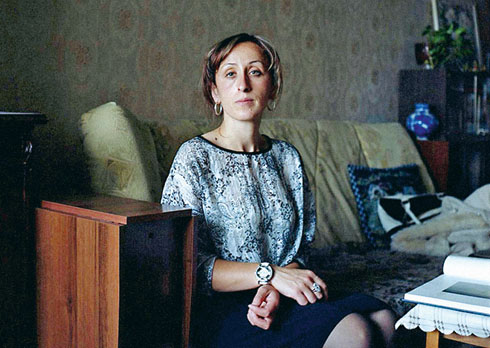
How did your last day in the colony began?
On September 3, two were released - I and Natasha Dolgacheva. She generally has an absurd business. They gave two years for non -payment of alimony for the children who lived with her. Before you release, we were searched three times - they usually search only once. Divide the naked in a special room under video camera. Then they led to the gynecologist and examined there on a gynecological chair.
What can be forbidden to take out a convoy from a colony?
Some complaint written by the convict, someone’s phones, addresses. The administration is afraid of any information that you can carry out of the zone to the will. There are almost no mobile communications in female zones: women are more trumped than men. It is also dangerous to say a lot on a date to tell relatives: after all, then you will return to the zone again. There are wiretaps in the giving rooms. Naturally, when someone is released, everyone immediately gives the phones of their relatives.
You were allowed to make records, letters?
The deputy head of the colony for the regime Tatyana Beznubova pulled out almost half of the pages with all the phones and addresses from my notebook. And this despite the fact that the day before, the censor checked all my notes, read and sealed it in an envelope. In the morning, girls from my detachment came up to me to say goodbye. The employees drove them: “What were gathered? Come out of here! " - Pretty rude. Many people cried. Firstly, I sat with many for a long time, someone sincerely regretted that I was leaving, someone was happy for me. Two Chechens remained there, they generally arranged mourning: “Now you will come now, you will see Chechnya, you will see the mountains, but we don’t know when we see ...”
Start
Let's unscrew the time ago-April 2005. You come to the colony. You have the 205th article of the Criminal Code-terrorism, storage of explosives, and you are a Chechen, and the war in Chechnya is not over yet. How did you treat you?
I was immediately put on a professional science (preventive accounting): "Prone to escape." Behind such convicts special control. For a year and a half, I went to the duty unit every day, and the employees were not shy in the expressions: "Such as you had to be killed in the womb, you had to be destroyed!" I have never heard from the prisoners like this. But still, I tried not to converge with anyone closely: I talked with three or four girls. I chose those with whom it is similar in nature, in my way, with whom I worked. "
The first half of the term I fought, believed that I could change something. Then I realized that everything is useless that the system is impenetrable
" Why were you planted in a schizo?
Especially at first, when everything boils in you, everything plays, you defend your rights, fight for justice, try to prove something to the colony administration. The first half of the term I fought, believed that I could change something. Then I was just tired and realized that everything was useless, I realized that the system was impenetrable. After all, if you complain about the administration of the colony, they come to you from the department, they say to you, and after that you will find yourself in a schizo one hundred percent. For 10-15 days. After a conversation with the convicts, the inspectors go into the office of the colony head, drink tea and leave. They are all interconnected: there is certainly someone’s matchmaker, brother, son-in-law, mother, father, in a word, all relatives. At first, I complained about life, about low salaries, about what they beat.
Beat?
And they beat me, and others beat me. It is tough. I didn’t work out the norm-they beat you, if I broke something, they beat. Call, beat with a club. It hurts and humiliating. But you can’t prove anything, because at a medical unit the doctor will not fix beatings. Doctors will never go against the administration of the colony with which they work.
And how much did it last?
In the summer of 2005, they came to us from the committee against the torture of the Council of Europe. It was very hot, and the administration planned to put on the 43rd sizes on us. Everyone who was going to complain was hidden in the offices, threatened: "God forbid you will reveal." In general, this is a widespread practice when a commission arrives with verification, foremen * * convicts who cooperate with the administration. They announce: "If the convicts complain, you will have problems." For a meeting with the auditors, those who definitely will not complain - who are not suitable for a meeting with the auditors or who will definitely not quarrel with the administration.
They hid the most active, but those who remained in the zone realized that this was a foreign commission, and even accompanied by the head of the Federal Penitentiary Service of Yuri Kalinin * * Yuri Kalinin was dismissed from his post in August 2009, and began to show the Kirsis boots, said that they were beaten, that they could find a rat or a mouse in food. They also talked about small salaries. Foreigners recorded all this in their notebooks. The administration realized that we had no sense to hide us. We were released into the zone, and we talked about vocational school. We explained that such as us “terrorists” does not shine either parole or encouragement. When they left, two or three convicts were put in a schizo. But then other checkers from Moscow and the local department of the FSIN were frequent in the zone. And after a while, the vocational school was canceled, we began to beat us less often.
But in another Mordovian colony, IK-2, women are still beaten. When I was on the hospital, I saw the beaten women who were brought from there. They come with broken buds, with a broken head, with broken hands. They have one employee there who just kills them. They say that recently there were two women hanged. And no one will complain there. No one needs these convicts. This is not the first time they are sitting. Among them are few those who come to, to whom they can send a lawyer. And they themselves do not complain, because they are afraid: the commission will leave, and it will only become worse.
Not by concepts
A lot in the zone of those who resist lawlessness?
Three months ago, the head of the FSIN Alexander Reimer arrived in Mordovia with the inspection. He did not reach our zone: they called from Moscow, and he turned back *** Alexander Reimer fired on June 25, 2012. Instead he sent one of his deputies. The girls complained to him about the domestic conditions, about dampness, about the lack of hot water: it is given only twice a day, for an hour in the morning and evening. They talked about the fact that after work it was necessary to work late in the gardens. 40 people signed a complaint. When the commission left, many were put in a schizo. But still there are those who are not afraid to complain: here, for example, Ulyana Balashova, she writes complaints day and night. She also believes that she will achieve justice.
They say that in the female zone it is harder to sit than in the male. Why?
When I went to jail, I realized what my punishment was. When I saw 40 women in the cell in SIZO-6, and I never had close friends, I was horrified. In the male zone, as they say, everything is clear and clear. They have certain rules and concepts, a kind of hierarchy, laws. Everyone clearly knows their place. This is not in the female zone. There are, of course, strong brigadies *** in factories in the industrial zone, all prisoners are divided into brigades, headed by the brigades .. Women are weaker around them, they hope that they will protect them from squabbles, gossip, and intrigues. But if a showdown begins between the convicts, then this is scary. They draw everyone into these showdowns, and they go, as they say, on the heads. If in your eyes the women fight, carry one another by the hair, of course, the same foreman or foreman will distinguish them. But in the female zones there are no such authorities that everyone would obey implicitly. "
I think in the zone of 80% of women the punishment does not correspond to what they did
" Cossacks and victims
The administration has many assistants?
So many. Freaches, foremen and an orderly who take the convict to work. There are those who sign a contract with the administration. They do not allow the rest to breathe. They report everything: “I went to bed at an wrong time”, “hides sharpening in bed”, “cuts the sharpening of bread”. They can stipulate you: de you are going to write a complaint, even if this did not come to mind. These are the conditions of their contract with the administration. They do not hide their cooperation with the administration: if they are foreclosed to you, then it is they who write to you first of all. Even if they were not witnessed your violation. And after that you will be sent to a schizo.
And how do they relate to them?
Almost no one communicates with them. They cook in their own juice, communicate with their own kind.
Who did you have to sit with?
When I just arrived, there were 800 women in the colony, we have 150–160 in the detachment. And now, in connection with the implementation of the reform, we have only first -time. Those who were previously convicted were transferred to other colonies. And the people became half as much. And the most diverse women are sitting. And you see how their families are collapsing over the years, parents die, children are taken to an orphanage. You look at this general picture and think: how is it possible to give such long time for such ridiculous crimes? To many, when they come out, there is simply nowhere to go. I think there are 80% of women in the zone whose punishment does not correspond to what they have done. Someone exchanged a fake bill in the store-it sat for five years, and in another city they give two years for the same crime. She stole potatoes from a neighbor - received six years, stole the chicken - the same period. And next to you sits a woman according to the 105th article (“Murder”), who killed, dismembered, almost ate her victim, pleaded guilty and received six years.
How do the Chechens in the zone relate?
It seems that the administration has an attitude against persons of Caucasian nationality. For example, all convicted women are made encouragement, but not to Chechens. Last week, we had a Chechen woman on parole. The whole colony was in shock: this is the first such case in eight and a half years! She sat for the sale of drugs. In general, they constantly remind you of your nationality whether you are serving at UDO or on lightweight conditions of detention.
Day after day
How does the day go in the colony?
24 hours a day you are under surveillance: neither sit down, nor lie down, nor relax. A year ago, in the sections where we sleep, the video cameras installed. And in the colony there are many adult women and women of different nationalities, and for them this is excess humiliation.
In the morning without five six - rise. Music is turned on, the first shift goes to exercises. Everyone goes to a duffel cap - they include pajamas, a towel. At seven o'clock divorce - who goes to the industrial zone, some for breakfast. Now they work on the weekend: they work for two weeks, one is a day off. They sew a lot: form for builders, camouflage for the military, cotton jackets. I had the largest salary - 700-800 rubles. Basically 200-300 rubles. I sew well: it was not difficult for me to fulfill the development rate. After work - dinner, washing.
And when did you manage, say, answer letters?
You do all this in fits and storage. I was still doing yoga there. But all the free time that you are supposed to be at the schedule of the day is profanity. Because in the hours where you should have “personal time”, you will definitely have a thematic conversation: the chief of the detachment, for example, will tell about the dangers of alcoholism. Everyone will gather in the rest room and you will have to listen to all this nonsense.
How has the household situation changed over the years that you were sitting in the zone?
If we compare, for example, what was fed eight years ago, and what is fed now, then there is, of course,. What is fed now is quite tolerant. But in the kitchen, in the dining room dirty, there is unsanitary conditions. When the commission arrives, everything is covered with gluens, breadwomen are placed, mustard put on the table, cucumbers cut salted. But in general, there is poverty, they do not even provide detergents, you yourself have to go to the stall (a store for a colony) to buy it all.
Rules of survival
 |
What would you advise women who have to come to the colony?
When I was convicted, I realized that I would never show anyone my weakness. And when I was very bad, I never showed my weakness to anyone. I could sob at night, buried in a pillow. Even when you are very bad, you need to tell yourself that they are waiting for you in the wild, they love you there, you need to find meaning, positive, be distracted from this dirt, from what is happening in the zone. Just fight.
Is there something positive in your prison experience?
The zone is a school of life, which is probably better to pass in absentia. The zone breaks weak people. With me, people went crazy, opened the veins. They put pressure on you from all sides, 24 hours a day you see the same people. And this is hard, even if you have a good relationship with them. You see them at work, in the hut, at dinner, lunch, in the bath.
And what do you think you need to change in prison?
Nutrition, life, the attitude of the administration to convicts. I believe that if prisoners are in the colony, it does not matter what nationality they are and what religion they are. It is necessary to execute the verdict. Be kind to them the same. Do not infringe on some, put pressure on others.
Are all books, magazines, parcels that were sent, gave you?
My letters often did not reach, and I did not receive all letters and barders from the will. When I was released, the New Times and the Big City were given to me from the warehouse. They sent them from Moscow, but the head of the opera Sergey Kostyaev told me that they could not be taken into the zone. “There are articles in these magazines against the constitutional system that has developed in Russia,” he said. And it was useless to argue that magazines were published and sold in Moscow. These arguments for senior lieutenant Kostyaev did not work.
You did not plead guilty, you were specified by the girls you were friends with. Do you keep evil on them?
No. I have never had a desire to be in my place. You can’t even wish this to the enemy. If I met with a judge or prosecutor, I would only ask these women one question: how did they sleep after the sentence? How did they come home to the family, to the children? How did they live, knowing that eight and a half years ago they crossed out the life of a 20-year-old girl? For nothing. Without guilt.
Is it possible to forget these eight and a half years?
I would like to wake up in the morning and decide that everything that was with me was a terrible dream. I think that I can never forget this. And when I was released, it seemed to me that this was not happening to me-as if I were watching a dream, but about someone else. Many times I imagined how I would be released. What will be dressed in, who will meet me. And today it seems to me that everything that happened is this station, station, mother, brother, you who came to meet me, all this is not about me ...
What will you do next?
I’ll go home - to Chechnya, I have a mother there, she is going to arrange a holiday, everyone will come - about 200 people. And then I will think where to live, what to do. Maybe I’ll go to study - for legal or journalism. But so far I have not decided anything.
Eight and a half years old for conversations
A 20-year-old 3rd year student of the correspondence department of the Linguistic University of Pyatigorsk, Zara Murtazalieva, was detained in Moscow on March 4, 2004. In September 2003, in the Moscow mosque, she met Anya Kulikova and Dasha Voronova, who received Islam. Said Akhmaev employee Said Akhmaev invited them to live for free in a hostel, where he secretly installed video equipment from them. Overheard conversations formed the basis of the prosecution: de Murtazalieva recruited her neighbors to commit a terrorist act. During the detention from Murtazalieva, 196 TNT was discovered: the defense claimed that the police officers threw up TNTS. She was accused of attempting to prepare an explosion at the Okhotny Ryad shopping center. Soon after the arrest of Zara, Valentin Kulikova, who told the human rights organization, came to the human rights organization, who told: her daughter Anya was forced to testify against Murtazalieva that she allegedly involved her and her friend in terrorist activities. On January 17, 2005, the Moscow City Court sentenced Murtazaliev to 9 years in prison (the prosecutor demanded 12 years). The Supreme Court has gone for this period for six months. In October 2008, the Zubovo-Polyansky court refused the convicted person in the right to Udo. In February 2012, the opposition submitted to the President of Medvedev a list with names of 34 political prisoners: among them was the surname of Zara Murtazalieva (The New Times No. 3 of January 30, 2012 “Politza of our time” and No. 5 of February 13, 2012 “My Politzek”).