
Translated material
Mondrian line
For the first time in Moscow, an exhibition of one of the largest painters of the twentieth century was opened
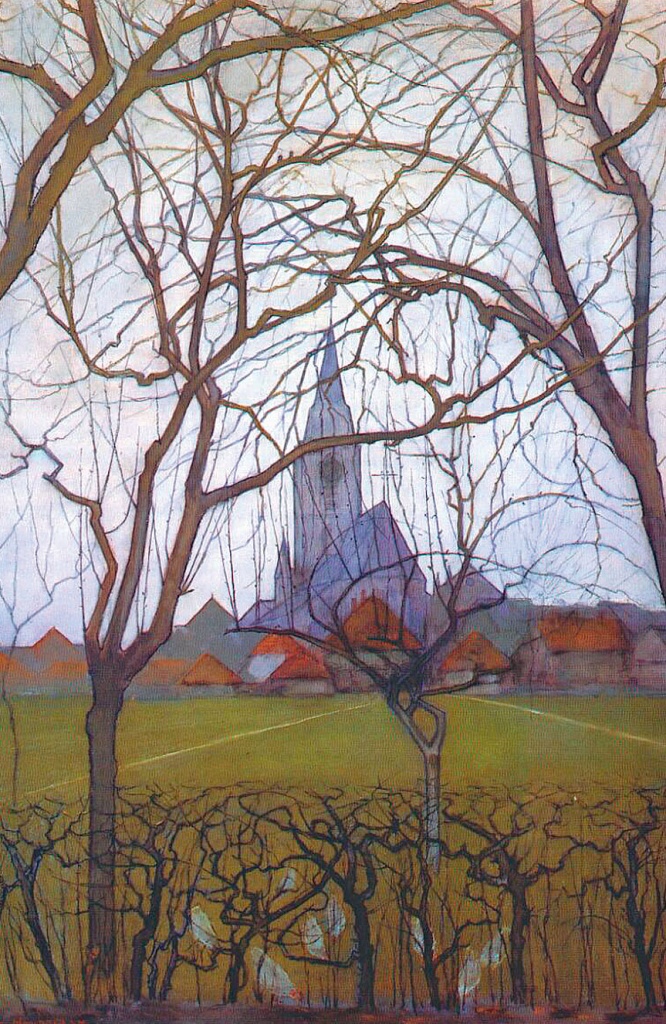 | 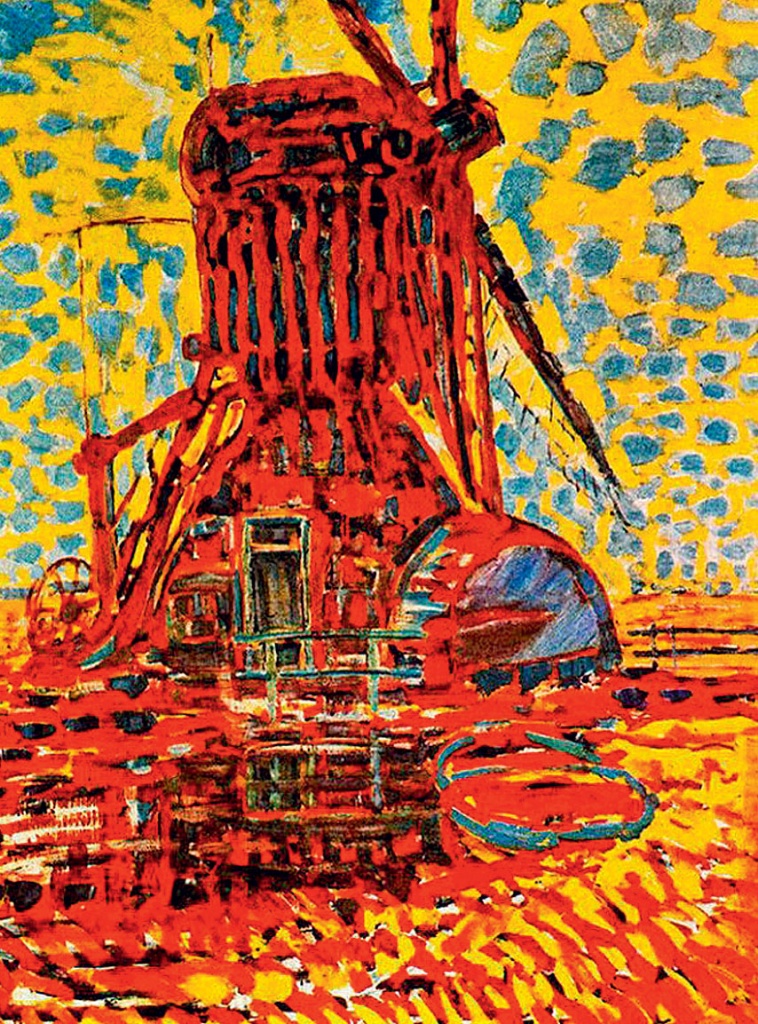 |
| "Village Church." 1898 | "Mill in the sunlight." 1908 |
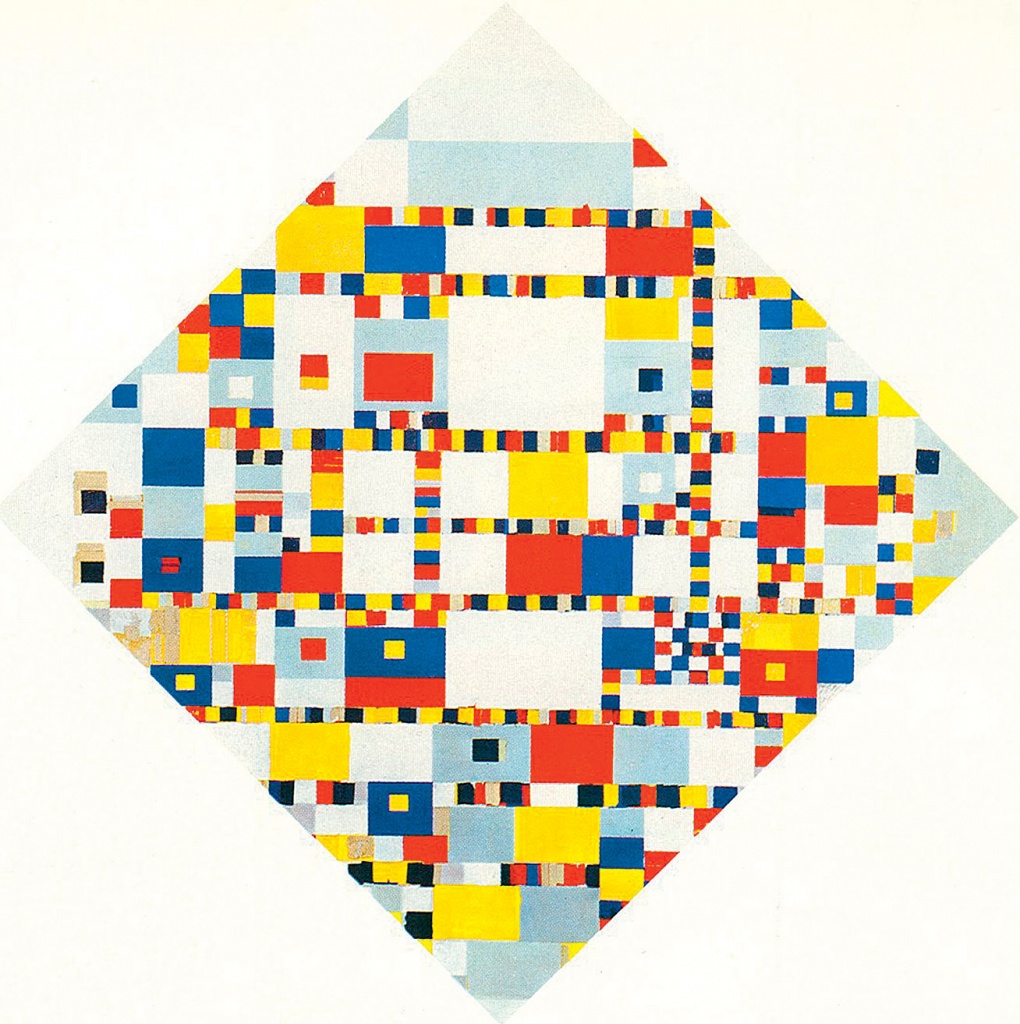 |
| "The victory of the Bugi-Wui." 1942-1944 |
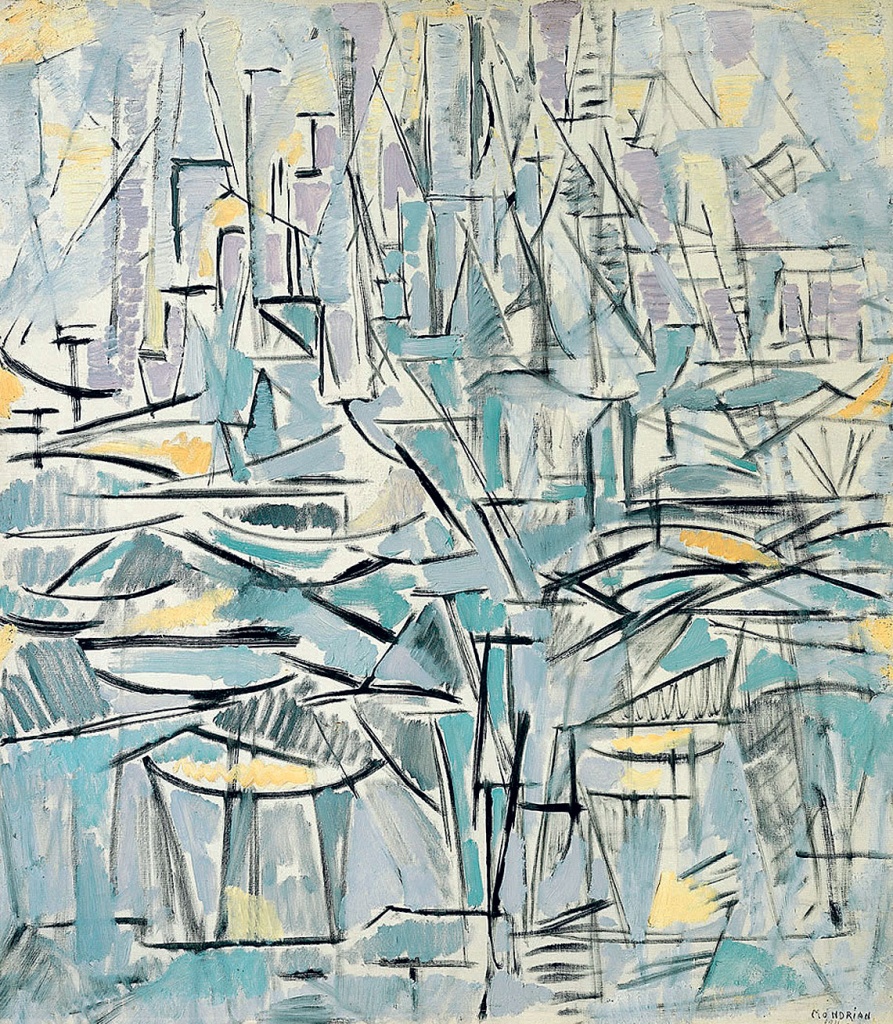 |
| "Composition No. XVI, composition 1 (trees)." 1912-1913 |
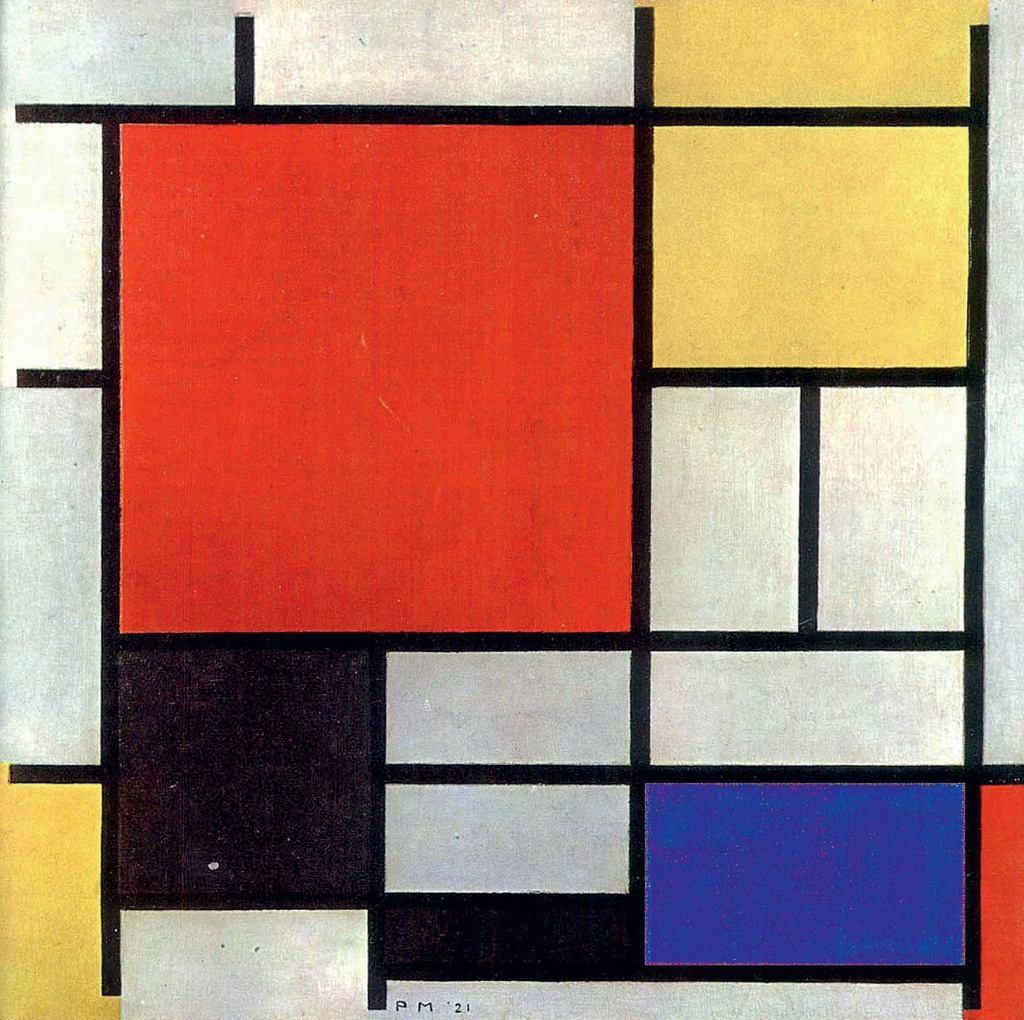 |
| "The composition with red, yellow, blue and black." 1921 |
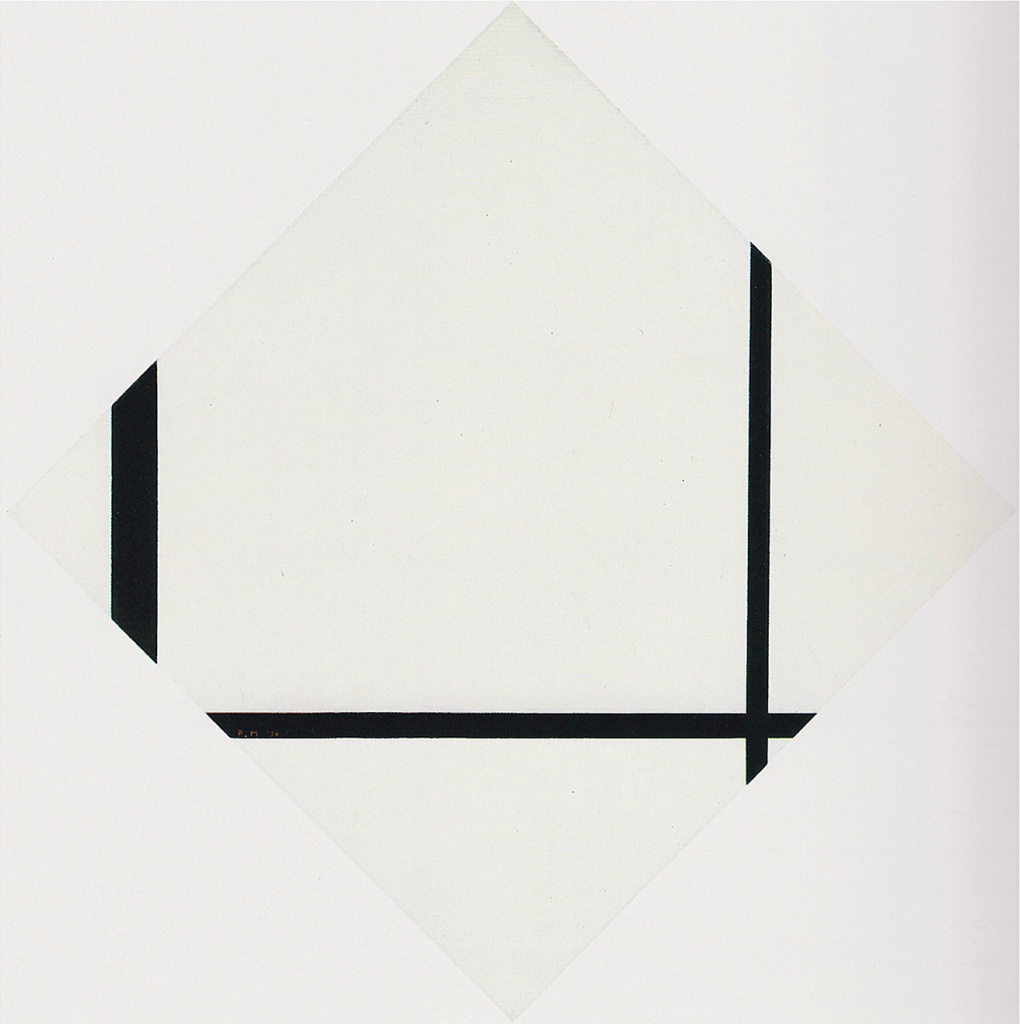 |
| "Foxtrot. Rhombic composition with three black lines. " 1929 |
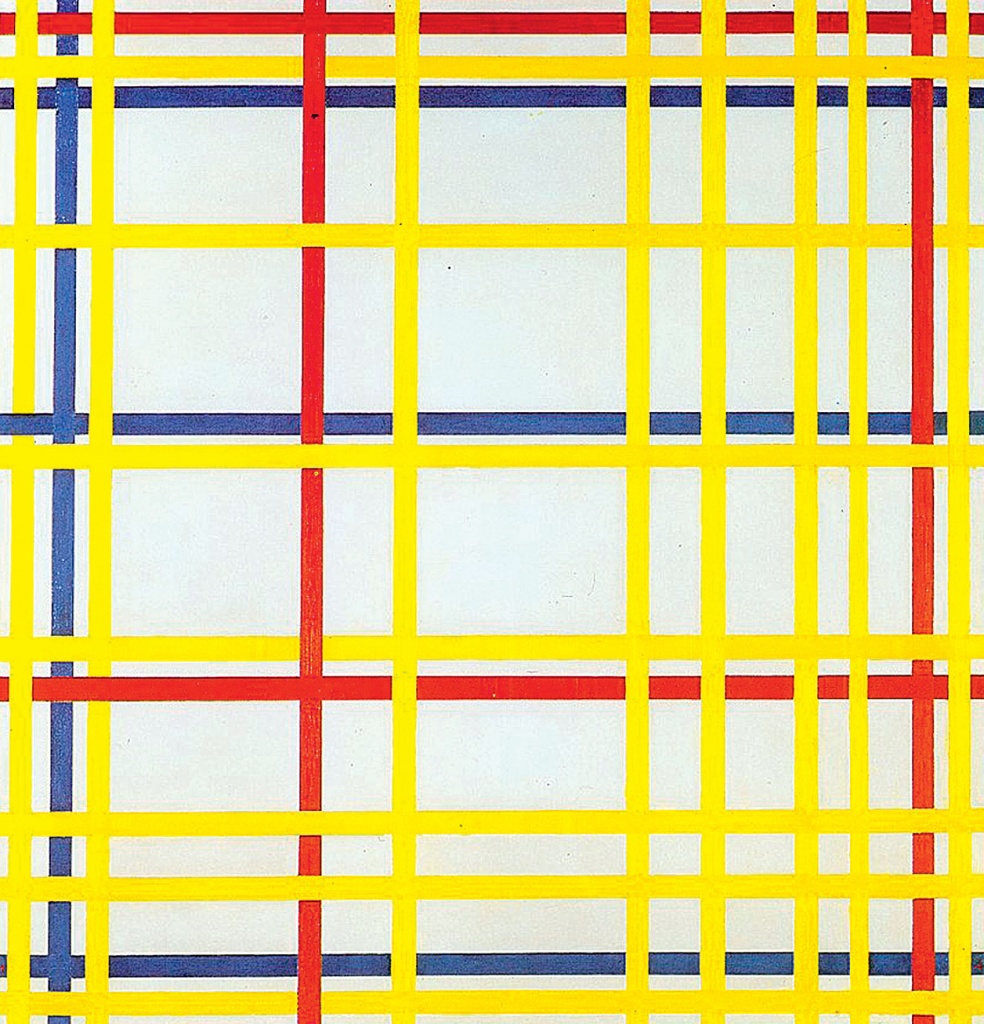 |
| "New York, I." 1942 |
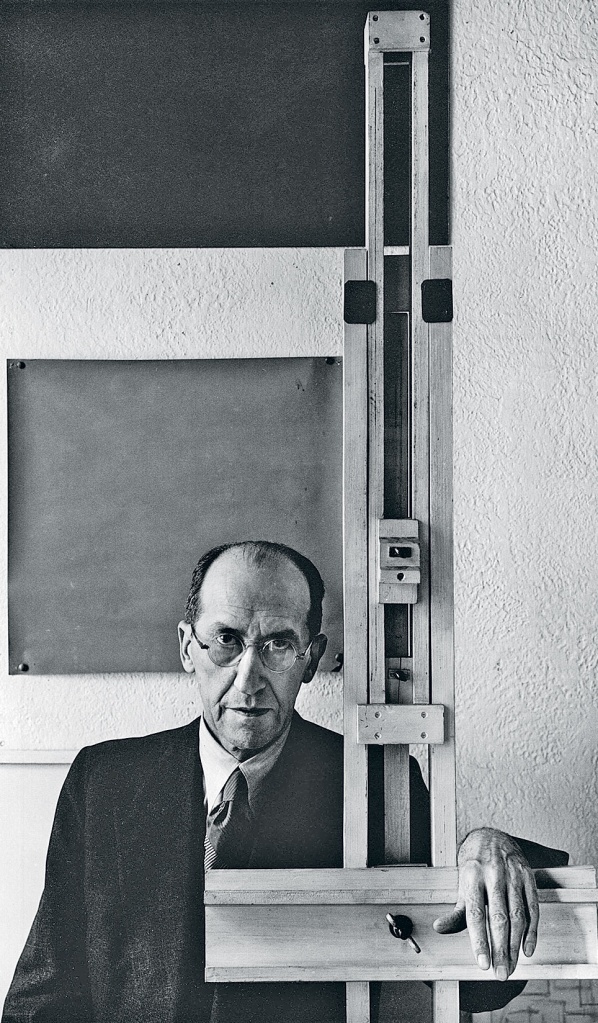 |
| Peter Mondrian in New York. January 1942 |
Exhibitions of modern Western artists have practically stopped bringing to us in recent years. The “Way to the abstraction” of Peter Mondrian (1872–1944) took place thanks to the year of Holland in Russia - 40 works of an outstanding Dutch artist were presented in the Tretyakov Gallery. The name of the exposition in the context of today's Russian cultural policy looks quite straightforward, if we keep in mind that the Ministry of Culture does not tire of appealing to the tastes of Nikita Khrushchev in the spirit of his replicas in 1962 in the arena at the Avangardist exhibition - about “abstractionism” and “damned fagots”. Mondrian is the founder of world abstractionism along with two Russians - Malevich and Kandinsky. In the encyclopedia, these three authors are listed one after another through a comma. But if we know Malevich and Kandinsky, then Mondrian is still unfamiliar to the mass viewer.
Scotch tape and paints
Once Peter Mondrian admitted: "The only ingenious discovery of the 20th century is adhesive tape." Scotch tape was invented in 1925, and this really changed a lot in the artist’s life. Its proportionate and harmonious rectangles have become possible thanks to this invention: it became easier to take lines, connecting the planes, the compositions became more complicated, improved. However, by that time, Mondrian had already determined his direction in painting, which was preceded by many purely everyday difficulties.
Peter was born in the Dutch city of Amersford in a strict Protestant family, his father was the director of the elementary school and often visited. Mondrian recalled that their house was in a deplorable state, the mother was often ill, and the entire economy was led by the older sister of Joanna Christina.
The first drawing lessons gave him father and uncle, a professional landscape painter. For a couple with his father, he did even religious lithography for the church. However, he did not want his son to become an artist, and insisted that he learn from a drawing teacher. Peter went to meet him, but a few years later he decided to continue his studies at the Academy of Arts. Upon learning of this, his father flatly refused to pay his studies. Uncle helped with money. But Peter carried the offense against his father until the end of his life. Even when his father died in 1921, Mondrian did not go to his funeral. “My old gentleman died,” he wrote to his friend, “but it sadden me little, and you know why.”
His early works differ little from the landscapes made by other local artists - genre peasant scenes, sea coast, dams, distant lighthouses. But soon the artist became interested in theosophical theories of Rudolf Steiner and Elena Blavatsky. They were based on the idea of the synthesis of science, religion and philosophy, faith in the Absolute, that the Universe exists in itself, it does not have a creator, it is the essence of the disclosure of the supersensible forces of a person ...
Male and female
All these Theosophical ideas attracted young Mondrian. He then set himself the task of “understanding and embodiment of Anima Mundi” (lat. “World Soul”). He develops his own theory of relations between the vertical (male) and horizontal (female) volume, the ideal ratio of which will, in his opinion, will become the harmony that will be able to change a person and transform the world: “A purely plastic vision of the real world should form a society of a new type - in the same way as it now forms a new art. This will be a society based on the balance of material and spiritual, and peaceful harmonious relations will dominate it. ”
"
Mondrian set himself the task - understanding and embodiment of the world soul, dreaming of forming a new type of society with the help of painting
"
The path to abstraction
In the spring of 1912, Mondrian went to Paris to study “pure cubism”, meets Picasso and marriage, puts up his works and even deserves the praise of Guillaume Apolliner. But soon he is disappointed in cubism: “Cubism did not draw logical conclusions from his own discoveries, did not bring abstraction to its highest goal. I felt that genuine reality could be expressed only through pure plasticity. ” It was quite difficult for him in Paris. He was not bought by work, and he earned a living by copying paintings by old masters in the Louvre.
Returning to Amsterdam, Mondrian formulated the ideas and laws of his own invention - non -plasticism. With visual means, he declared planes of primary colors (red, blue, yellow) in their interaction with the planes of “non -flowers” (white, black and gray). The composition should be built on the principle of opposition from which balance and harmony are born. So his picturesque system arose, the main elements of which were crossing the line and color plane intersecting at right angles.
Mondrian went to the abstraction for a long time and consciously, justifying his path theoretically (published the magazine “Style” - De Stijl) and practically - developing these ideas in painting. He wrote in his diary: “To express the spiritual in art, you need to turn to reality as little as possible, since it is the opposite of the spiritual. Therefore, the use of elementary forms is logical and the only true. ”
Blue stocking
Mondrian grew up in a strict Calvinist family. Everyone finds that outwardly he looked like a rural pastor - a strict deaf jacket, round glasses. Friends called him a monk among themselves, which was not entirely true. Like any artist, he was a man who was fascinated and even almost married once. Even before a trip to Paris, he was engaged to a certain Greta Hiberuk, but the wedding did not take place. “You obviously heard,” he later wrote to his friend, “that I almost married in the fall. Fortunately, I realized in time that all this beauty is nothing more than an illusion. ” At the same time, he was not at all a male version of the “blue stocking”. At 50, he learned to dance Charleston, which was a lot of proud, was fond of jazz, even devoted a special article to him. In 1920, a correspondent of one of the newspapers visited Mondrian in his Parisian apartment. “Then I drew attention to the artist’s last work,” the journalist writes, “a flat geometric composition was depicted on the canvas stretched on the easel. Neither in the colors nor in the lines I noticed the slightest sequence or pattern, but some elusive sense of harmony, calm, confidence came from them. “The picture is called“ Foxtrot, ”said Mondrian,“ feel light rhythmic movements in it? ” No, I did not feel anything like that, but such a will, confidence, the consciousness of my innocence, and possibly fanaticism came from my interlocutor, that I involuntarily began to look at the picture with different eyes. Did the artist put all these feelings into it? Isn't that what was her mission? "
Once he did not go to the customer from Paris to Dresden, because he was afraid of the train. That is how he explained the reason for his refusal. He did not like green, never used it in his works and always tried to sit in space so that no trees would “loom” before his eyes.
***
When the Nazis came to power in Germany, they arranged the famous exhibition “Debit art” (1937), at which the works of “degenerating”, in their opinion, artists were demonstrated. Among those who were put on it, Peter Mondrian was also. He was not scared by the Nazis, but still in 1940 he moved to New York, where he was called "one of the greatest refugees from Europe" and arranged the first personal exhibition.
The artist died in New York on February 1, 1944 from pneumonia. He did not live a little until the day when the allies landed in Normandy.
Photo: Arnold Newman