
Translated material
What is good (bad) "Upstream Color"?
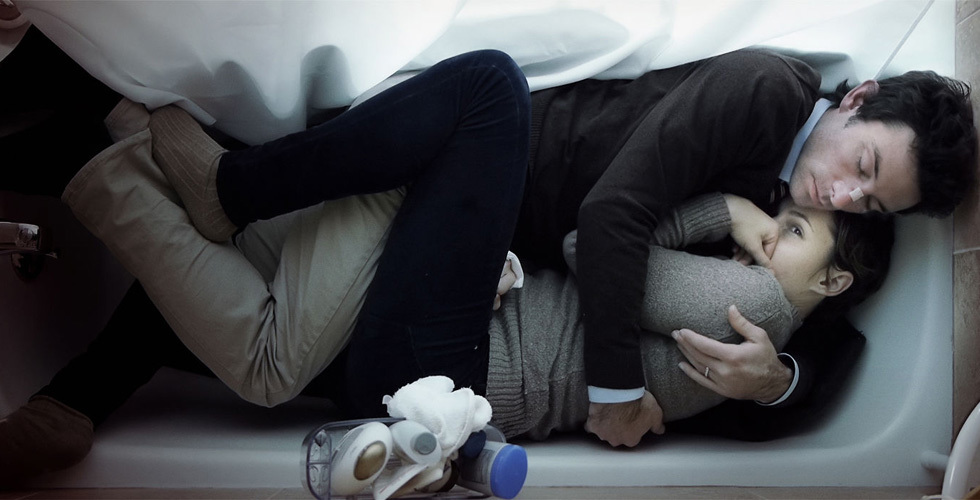
It was hardly any other film that was discussed this year so fiercely as the “admixture” of Shane Carrut, who received a special prize of the jury at Sandensa. To start with the fact that the film tells about what ( here is an example of an amateur explanation of the plot of “upstream color”, and here is an explanation of the director himself, why everything is in the film and not otherwise). Orchids, parasitic worms, piglets, a man, a woman and a pig farm from the farm are tied to a rather cunning (or thoughtless) narrative knot. Riddle without clue? Imitation of a new language? Visioner breakthrough? New generation poetic cinema? Opponents and opponents of Shane Carruta explain.
Dmitry Volchek
This year, I have yet seen only two impeccable films - Upstream Color and STEMPLE PASS . They are even connected - the book "Walden, or life in the forest." It was read by Unabber, the hero of Benning, and in the film Carruta, the Uldena copies receive the chosen and doomed by mail. The mechanic Karut laid out his film, how the tools are laid out on the rug, and in time lifts either a shining wrench or a gray screwdriver. I like everything in this film, but the most numerous piglets are most of all, because it is in them that demons usually instill. Well, worms, of course: such, they say, lived under the skin of Maria Stuart in prison. This film itself looks like a worm - it crawls inside and from time to time anxiously declares itself. Some innocent escalator in the subway or a handrail recalls the pork blood that the conspirators are going to pour you. Yesterday I watched in the Sinematok “Dead Forest”: there the heroine made love with a pot of macaron, and of course, I immediately thought about an exhausted girl from the “impurity” and her worms. If you show this film to Unabobert - after all, he was also a shameless pigster - the circle of transformations will be closed.
Inna Kushnareva
I began to watch Upstream Color after a hype, raised not so much in the Sinefilian press as in the Wired magazine. Quite relying on their taste in terms of science fiction, I expected some compounded Gikovsky thing, and as a result I got anything, but not science fiction. Perhaps if the Frame was different, the rejection reaction would not be so sharp.
The main problem of the Upstream Color is that you wonder why watch a movie, the plot of which you can understand, only after reading the interview with the director. Yes, the puzzle is collected if, for example, to see the well -known material on the site Slate.com . But when you look for the first time, you don’t see anything of this. The story itself is completely external to the work of knowledge. You can recall some analogues of kinematographic puzzles. The first to come to mind, of course, will come to Lynch. But the Linchev puzzles are hypnotized, they are self -sufficient and without interpretation. And when, after the film, you immediately climb to look for it not even an interpretation, but a decoding, this is abnormal. In Lynch, the puzzles are ontological in nature, they are puzzles for the author himself, and the Upstream Color is a puzzle only for the audience. And the mystery is completely reduced to unraveling, it is exhausted by it.
Since the film was filmed for some completely funny money, it is very noticeable how the carp is constantly recycling the same shot material in order to save and catch the desired volume, and not because it is necessary to reveal the plan. This is the poverty that remains poverty, not turning into something else. Fantastic is a road genre, you need to come to terms with this and calm down.
 © ERBP
Boris is ridiculous
Who is Shane Carrut? A person who, while writing the script of his science fiction debut “Detonator” in parallel-just like that, to himself-proved that time travels are impossible (before becoming a director, a carrier received a physical education). What did not prevent him from making a wonderful film about them. This is a person with very clear thinking, a harmonious picture of the world and a clear understanding of what he is doing. He does not preach and does not engage in philosophy. He does not make a transcendental movie. He understands the purely material, physical foundations of our world, but he is happy to fantasize about its hidden, not yet described, features and secrets.
I love courageous directors who are not afraid to take risk, and Shane is a carut of such. His cinema is intriguing, surprising, setting his own rules of the game. Of course, annoying. The “admixture” can hardly succumb to genre identification: what is fantasy, thriller, horror, melodrama? All together - and yes, only a love line, terrible and accurate, it would have been enough to recognize this film outstanding. I read many smart texts about why the “admixture” is not a movie at all; Well - personally, I personally did not have a feeling of such freedom and freshness in the cinema as when watching the "impurity". As for any cultural associations that the film causes the audience (whether it is the Terrens Malik or David Lynch movie), they, in my opinion, are only confusing; This is the generation of stereotypes. Carruts with these authors are a thousand times less than differences. “The admixture” is one of a kind, for this I am reviewing it with great pleasure.
Mikhail Ratgauz
The most accurate thing I would say about the film “Upstream Color” , my colleague Anton Dolin said already. So I will allow myself to speak in the cozy role of the retranstlator - a medium for someone else's utterance (besides, we remember that the medium is a message). We rode with Anton in a festival minibus, which rolled along a gloomy road-somewhere it was not far from the Sea of Okhotsk, it was on Sakhalin. We are talking about Upstream Color . “This is a movie,” Anton told me, “reminds me of a certain moment when my children grew. When the child is just trying to speak, but does not know enough words, he simply pronounces something inarticulate that he passes for speech. That is, he is busy with her imitation. So “upstream color” is a movie that it seems that it speaks is smart and difficult, but in fact it is only important and randomly imitates the speech of adults. ” That is the great (retelling of free). Poor Shane Carrut, to whom it seems that he had removed something big. But still, we are even poorer, who listen to infant Glossolalia and convince each other and the baby himself of its significance.
This is about pigs. It is unlikely that there is a more important topic.
Vladimir Lyashchenko
For almost ten years that have passed from the debut film “Primer” , the carrith has changed noticeably, visual redundancy has changed visual redundancy, now it is compared with Terrence Malik’s sample of the “Tree of Life” and “Miracle” - and this is not praise. But the line between an interesting statement about the nature of man/world and a slyly decorated banality of thin. In Upstream Color, the carp does not illustrate philosophical theses, but tries to transfer to the screen and to the auditorium the state of a person who is forcibly removed from the usual cycle of things. His heroes are people with a zeroled personality, washed off, as washed off the image from the films, memory. Something comes from the past, but what is unclear, but in the present new contact with reality is established: tactile, audial, semantic. The surfaces need touch, each sound is fixed on the film (the clearly bewildered jury “Sandens” handed the Karruta special prize “for sound design”), machine -fixed lines from “Walden, or life in the forest” of Henry David Toro are accurately metaphor of self -organization, the construction of his own world, on the side and inside of the torn social and natural ties. The carp is composing the film, how Toro erected the house. So far, the most vivid impression of the year.
Igor Gulin
This film is hard to watch. Not the first half an hour where the worms are just interesting, but the rest: people are pigs, people - pigs, life - music, man - nature, people - pigs. It seems that this series of merciless, sad, sad and pompous bicarry parallelisms you tolerate for the sake of a large metaphor. But this game, if it is conducted, is not worth the candle: “Love is a disease” - seriously? “If you are not free, you can free yourself” is important news. However, it seems that the carrier does not mean all this in mind, at least does not bring any thought to the end, which, with its rare assertiveness in the presentation of images, is quite strange. This is another problem: it seems to be a “admixture” - the most free movie, without linear narration, with elusive words and personnel, but this freedom is ghostly. The Carruta film is like a prison or a lecture for sales managers: you can’t run away from his images if you missed some thoughtful turn by relaxation, it will happen again in two minutes, as if reproaching you for a lack of attention. Terrence Malik, who is remembered here more than once, never suffered such an obsession. However, he had no reason to be afraid that freedom will turn into chaos, his films are built on confidence in the existence of the meaning that connects all the things of the world (it is impossible to cover it, but any combination of fragments is inscribed in the general invisible composition). Carrut does not have this faith at all: his world is atomic and needs a violent organization, against which the freedom of narration looks an unpleasant hypocrisy. It is for this coordination between formal freedom and the inner lattice that the director’s effort goes away. It turns out quite deftly, but why is it necessary - it is unclear. “The admixture” is a smart movie, but a completely single mind.
 © ERBP
Inna Denisova
“Upstream Color” is the case when the director managed to become a god: in 96 minutes a model of his own world with his own mythology was created.
There is also a fabulous plot: the heroes, Jeff and Chris, in order to win, need to go through three levels of “worms -svigni -orchids”, controlled by sorcerers of varying degrees of insidiousness. And a psychological drama with a study of borderline states caused by addiction. And the detective who holds the viewer in incredible tension: the heroes deprive the villain of power, finding him according to unobvious signs - sounds from the pipe and the name of the musical label.
But for me personally, the main value of this film is in its subtlest, overflowing texture: it is woven from sunny glare, which the director catches a camera, like fireflies with a clock; This is a movie that you are not so much watching as you feel. A hand squeezing a dry leaf, the crack of this sheet, its cringing between the fingers. Wooden and metal surfaces to the touch, which constantly touch the hands of the heroes. The jelly -like body of a worm, sliding along a solid smooth table. Upstream Color is an encyclopedia of tactile sensations. What today's film industry spends on millions, creating special effects, carriers are making a regular camera - and better.
Focus on sensations: for his sake, Toro went into the forest, describing the Walden, felt in the novel; For his sake, Chris, which we meet in the crowd in the beginning, makes the path to ourselves; For his sake, Shane Karut made a hypnotic and completely magical film.
Tatyana Aleshicheva
Carrut's film is a cunning kunshtyuk, but it seems that he attracts the overturned Sinefils with his complexity - and nothing more. This movie opposes attempts to subtract some intelligible message in it, but seduces the opportunity to hang a bunch of interpretations. Here you have the murder of Demiurge (a bald man who expels the demons-shirts of people and places them in pigs). And the idea of unity with nature (in the frame too often and annoyingly, Walden Toro sticks out, I hoped that the characters of Carrut would at least resist quoting - but no, could not resist). And the idea of a single world consciousness (lovers, united, find the general memories of childhood, some common past). But all this is just a cold and rather boring construct, difficulty for the sake of complexity.
This is a movie that it seems to be saying.
They say that the carp is interesting in that he supposedly invents a new cinema language - they say, before, no one shot like that; This is nonsense, of course, just a lot of things here. At first, in the first part, which can be conditionally designated as “unpleasant physiological thriller”, nervous, oral installation; If you calculate the number of installation joints per minute, you will get something about thirty, that is, every two seconds, but there is no special revolutionary here. Then the parallel installation in the scenes, when the heroine feels a connection with the bearer of her demon or when the Pigovod catches the piglet, and the newly -minted lover of the heroine at the same time runs away from the pursuers; There are also no innovations since Griffith. The heads were repulsed by darkening - so what? Numerous images-metaphors, all these worms crawling inside, as well as all this love “Solaris” out of the open place with a run on the door-in this case with the beating of the glass with bare hands-well, this is all frankly secondary. There is an interesting technique at the end, which reproduces the design of sleep: in the same scene, performing the same action, the heroine is either inside the room or somewhere on the street. In a dream, consciousness also projects the images: the connectedness is broken, but a certain logic of actions is preserved-this, of course, is an entertaining technique, but some kind of unwinded, or he is drowning in the general stream of this stupid associative letter.
The music is curiously imposed, yes, but Nikita Mikhalkov also loved to use Artemyev’s music with meaning before, in scenes where time hangs and travels consciousness, and, it seems, no one praised him separately for this. And the main question for the film - why is it all? It seems to me that it is better for lovers to compose interpretations to do this with a similar film by James Gann “Sluggling” (2006) - also about internal worms. At least he has a sense of humor.
Ksenia Rozhdestvenskaya
Firstly, this is almost the best film about love, about this feeling, as if they opened the gate and you blindly rushing into the corral through the mud. This sensation, as if your life is subordinated to something higher, although there, “upstairs”, just sits some horseradish and collects sounds or other horseradish packs the worms into capsules to subordinate your will. About this wildest dependence, biochemistry.
Secondly, this is a stream of consciousness, an amazing example of indirect speech without the use of verbs itself: there is no “he thought”, “she remembered”, everything happens at the same time and many times, the memories are mixed and dissolved, everything you think about immediately shining, and no one is surprised at this. Yes, I understand that in the retelling it sounds like an early Gondry or late Malik, but Gondry just breaks his and other people's toys, and Malika is interested in the soul-ah-ah-ah. Carrut does not play, he does not fantasize, he puts a laboratory experiment. The soul here is a small error and is not taken into account.
I am delighted with the fact that the motivation of the heroes are carried into a separate pen. And from the fact that the carp mixes the inner and external spaces, sounds and actions, people and pigs. Well, yes, in all this there is something from the pig psychedram, with which the director treats the psychological trauma of the heroes, but, to the honor of Carrut, the film rests on much more subtle connections.
And, well, thirdly, this is about pigs. It is unlikely that there is a more important topic.
 © ERBP
Alexey Artamonov
The main problem of Upstream Color , in my opinion, is not in a confusing and speculative plot and not even in a helpless appeal to Toro as an authoritative older brother. Fatal here is the mismatch of the style of content - it is this gap that does not allow the film to be organic. And here neither the steel threads of the concept, nor the installation in the spirit of Terrence Malik, connecting the scattered fragments of action into a single duration, save. If Malik (especially in the last film) poetry in each frame made it possible to draw associative ties between them and it was impossible to completely catch and bend it, then Carrut was extremely utilitarian: the installation here is hard and semantic, and the frame is almost equal to the sign and that means exactly what is happening in it. Such an engineering approach worked perfectly in his debut “Detonator”, similar to an autonomous technical object. But now, after all, they are trying to reveal the secrets of the universe to us-and to them they can’t break through the thickness of the gloss and the rescue pillow of the orders of the embezzle.
Natalya Serebryakova
There are several things for which you can love Upstream Color . Firstly, this film is about love and responsibility. Jeff loves Chris and remains with her to the end, despite all her oddities. Secondly, this is a fantastic story about the mental and psychological connection of a person with an animal (specifically with a pig). Nowadays, there is very little humanism, and here people free animals from the slave factory, thereby freeing themselves. Thirdly, this is a God-finding film. The main characters, Jeff and Chris, are opposed by the S-Fire Man, Sandler, who practically took over the functions of God and tries to manage their lives. Fourth, the film has very beautiful blue orchids. Fifthly, it has an elegant ring at the end that fully explains the complex structure of the film, as well as its name- “upstream color” . Sixth, it has a very successful operator work, a lot of Malikovsky personnel against light, but how can you not love Terrens Malik? In-seventh, Shane Carrut and Ami Seimitz, performing the main roles, are just beautiful people. It's nice to look at them.