
Translated material
Autumn of Russia
The Autumn events of 1993 in Moscow - the culmination of the "War without Rules", which for many months in both sides of the conflict. The bet in this struggle was high: who will determine the path of further development of the country? Both sides possessed equal legitimacy: both the Yeltsin and the parliament "stood" voting voters. In a referendum in April 1993, the majority of those who took part in the vote approved the President and the Government, refused to remove both the president and the Congress with the Supreme Council. A path situation arose: passions were heated, each of the sides led its line, destroying the state order.
Responsibility for this lay on both sides. The way out could be found in the early approval of the new Constitution and the implementation of re -election of both the president and parliament. But the draft Constitution, which was developed by the Constitutional Commission of the Congress, did not suit deputies. More precisely, not one of the options for the project, which the commission, subjected to attacks from different sides, was finalized for three years in search of a compromise of various forces (and by May 1993 the 11th version was prepared), could not collect the necessary two-thirds of the votes. The constitutional exit from the political crisis was not visible.
The chance of a legitimate resolution of the conflict based on a constitutional project, in which the prerogatives of the branches of the authorities were much better balanced,
The Autumn events of 1993 in Moscow - the culmination of "War without Rules", which for many months have been conducted by both sides of the conflictthan in the Constitution, which we eventually came to, was missed. And with it - a compromise on the basis of early elections, which on a legitimate basis would allow us to stop the "war of laws" and return the life of the state into a normal direction. The president’s exit from the impasse, when his attempts to persuade the deputies were not given the result, found in a unilateral act: the dissolution of the parliament and the appointment of the date of his re -election. The decision was illegal, and the deputies did not fail to use this to remove the president. But they were offered a non-mainstrophic way out: the deputy corps was not sent to the knockout and in the announced elections by the opponents of the president who retained their political infrastructure, there were good chances. But they overestimated their own forces and imagined that they could achieve, taking advantage of the wrong step of the president, a complete victory. And the president’s illegal action was responded with a whole series of no less illegal actions. Which led to a tragedy, the consequences of which have not yet been obsolete.
At first, the Supreme Council was completely illegally deprived of a hundred deputies of their status. Thus, the appearance of the legitimacy of the meeting was depicted, which called itself the "X Congress", but on which there was never a quorum, and the number of participants melted every day. At least that’s why the cool decisions he made were illegitimate from the very beginning. But in September it was still possible to avoid a tragic turn of events. Not by means of a “zero option” - a return to the original state - and even more not by fulfilling illegal decisions about the displacement of the president, but oncoming steps: an agreement on the simultaneous re -election of the president and parliament, for which Yeltsin was ready to consent. At the negotiations in the Holy Danilov Monastery on October 1-3, steps were outlined to achieve a compromise. But they were rejected by the White House, where the junta from the power "ministers" presented the ultimatum to the temperate elements of the deputy corps. The negotiators from the White House were replaced, an irreconcilable position was approved.
In this position, the "irreconcilable" strengthened the events that unfolded on the streets of Moscow on October 2-3: the rebellion and helplessness in front of him of the law enforcement. Those who did not obey the dispersal of the parliament and political
The rebellion is depressed. But the lessons from tragic events are not extractedBy means (also, I repeat, illegitimately) they tried to change the conditions presented by him, one can still understand. But when the tone in the White House began to set the most aggressive elements, when the leaders of the confrontation called on their supporters to storm the Kremlin, when one gang captured the neighboring building of the city hall and began to repair reprisals there, and the other volunteers, led by the fierce reactionary Makashov, tried to take the Ostankino in storm when the residence of the parliament became the inhabitant of such "defenders Riga riot police and fighters from Transnistria, the only answer to all these actions could only be the power suppression of the rebellion. To this on television, Echo of Moscow, not only Yeltsin's supporters, but also many other politicians and leaders of public opinion called on. Gorbachev, Yakovlev, Yavlinsky, Gaidar, Adamovich, Okudzhava, Smoktunovsky, Akhedzhakov and others came to the microphone ... They all insisted on decisive measures: to stop the threat of civil war.
The rebellion was suppressed. But the lessons from tragic events were never extracted. As a result, everyone lost: winners, defeated, our whole society. The coalition of the new bureaucracy and democrats, supporting the president, defeated the coalition in which communist fundamentalists, nationalists and sovereigns rallied around the leaders of the Supreme Council. The coalitions were soon reformatted, and the dominance of the executive branch over the representative secured and brought bitter fruits. Among the long -term consequences of the events of October 1993 - the infringement of parliamentarism, which still took incorrect steps after a historical break, neglect of the right, which was never a national value, rooting a long -standing Russian tradition not on the path of compromise, but in the "fist battle", the revival of the authoritarian regime and the weakness of domestic democracy.
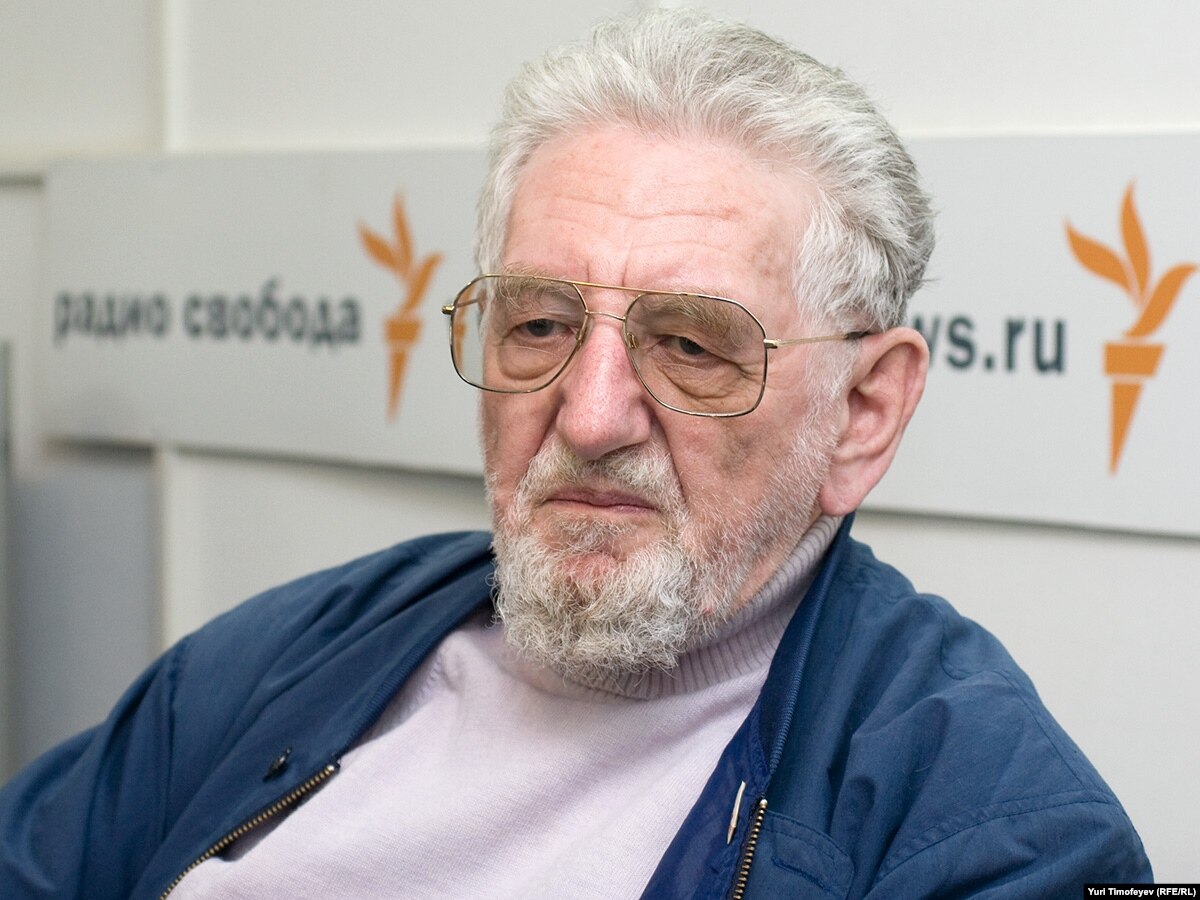
Victor Sheinis is a Russian politician, member of the Political Committee of the Yabloko party. In 1993, he was a deputy of the Supreme Council of Russia, deputy responsible secretary of the Constitutional Commission of the Supreme Council.