
Translated material
Airlines CO2
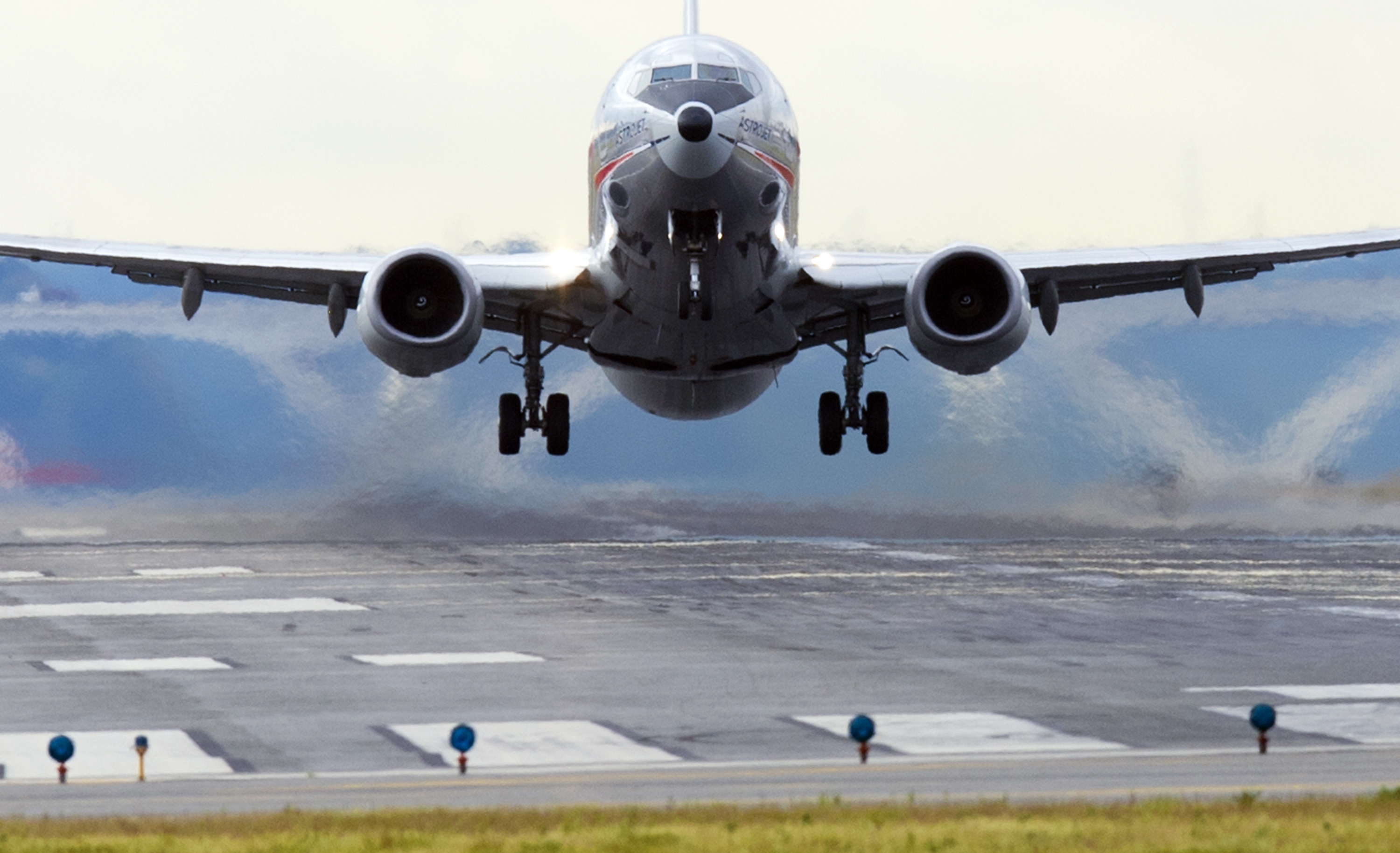
In Montreal, on Tuesday, the next (it is held once every three years) a session of the International Civil Aviation Organization (ICAO) . As a UN structure, uniting more than 190 countries of the world, it is responsible for the development of standards in force in international civil aviation.
The session will last until October 4, and one of the main issues of its agenda will be, as expected, the coordination of the general principles of the future market mechanism to reduce the release of “greenhouse” gases into the atmosphere , which, for the first time in the world, would act within the framework of a separate industry.
Civil aviation accounts for approximately 2% of the global emissions of these gases. The project strategy, which seems to be participants in the ICAO session for discussion, suggests - for the period until 2020 - the annual reduction in the volume of current emissions by airliners by about 1.5%. In the future, at least it is provided for their zero growth - so that by 2050 the volume of these emissions is halved by the level of 2005.
The center of the project finds a mechanism for market trade quotas for the release of “greenhouse” gases, similar to today in a number of regions of the world for industrial enterprises of various industries. The largest of these markets is in the European Union. It accounts for about 80% of global trade in these quotas.
The proposals developed by the International Association of Air Transport ( IATA - unites 240 leading airlines in the world) are based on the following scheme. Airlines, the liners of which the total volume of emissions is more than a specific limit, will have to buy quotas missing them on the market.
Quotes, in turn, can be issued centrally, and also arise as a result of the implementation of individual industrial projects in different regions of the world, aimed at a significant reduction in emissions into the atmosphere.
Finally, airlines, the emissions of the liners of which will be less than the limit will be able to sell “excess” quotas to their competitors.
From the opening session, ICAO expects the approval of only the most general principles of the future mechanism. In this case, its details will be agreed on the next session of the organization - in 2016. And it is planned to introduce new measures since 2020.
In the European Union, the emergence of such a mechanism within the framework of the global air industry is considered the main argument in favor of the abandonment of the “ecological tax” scheme, obliging any airlines that make flights through European airports to buy quotas for emissions into the atmosphere with their lainers.
Formally, the decision entered into force in the EU in January 2012 , moreover, with respect to the total length of these flights, and not just their part, which runs over the territory of European countries.
However, in November - against the backdrop of intensifying protests from many countries of the world, including the United States, China, Brazil and Russia - its introduction was delayed for a year . That is, as emphasized then in Brussels, to the nearest ICAO session, at which it was supposed to discuss a new international project.
More than 80 thousand flights are performed in the world daily. The total turnover of the world aircraft industry, according to IATA forecasts, in 2013 will amount to $ 708 billion (of which net profit - 11.7 billion) , and in 2014, due to the expected acceleration of the growth of the world economy, $ 743 billion (profit - 16.4 billion) .