
Translated material
Big Book
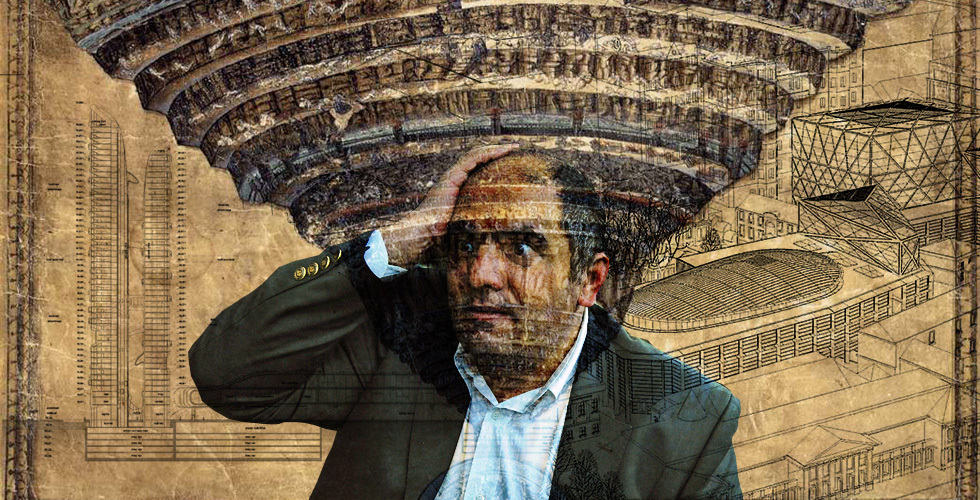
Grigory Revzin's book “Russian Architecture of the Rubezh of the XX -XXI centuries” was published. - One of the most important not only art history, but also the historical works of the new Russia, in particular, because other areas of culture and art in this territory did not gain such a systematic and gifted researcher, which became the architectural observer of the Kommersant newspaper. Although it is important to mention Tatyana Kuznetsova’s “chronicles of the big ballet” - the first journalistic attempt to see the intrigue and logic in the development of a largely random and even chaotic cultural process in many respects: the life of the ballet troupe is seen as the uninitiated - and the architectural development of Luzhkovskaya Moscow.
Moscow, Moscow architecture of the indicated temporary line, and is the subject of the Revzin study. Neither suburban construction, nor the architecture of St. Petersburg and other cities are practically not seen by the author, and in this sense, it is Moscow architecture that turns out to be all -Russian in terms of systematics and the genesis of its capabilities and troubles.
The formal structure of the book is simple and has already met us in the mentioned Tatyana Kuznetsova, for example. As the main text, Revzin uses a huge corps of its articles, reviews, interviews, published mainly in Kommersant and in the “Classic project” for the past 20 years, but it is not chronologically, but guided by today's idea of the role of certain characters and events, for which it inserts significant in volume and sometimes even more striking considerations today Texts written specifically for the book, and a lot of illustrations, obviously not published in periodicals. From this, the book (and so similar to the building in which the circumstances of our life are horizontals, strategies - stairs, concepts - outbuilding, and heroes, depending on the scale - who is a column, some balusters, some other decor) begins to resemble a medieval cathedral, when creating which were used along with heterogeneous bricks, marble antique fragments. Sometimes it seems that the balance is disturbed and only ironic intonation holds this design by weight, but in each new chapter there is a new supporting emotion - from professional rage to human admiration, which enhance the author’s voice to the necessary severity of judgment.
This is a classic book about Russia - not a single living soul, only dead.
The author defines his work as a “book about defeat” and tells in it the stories of many private failures or inadicated victories. But the main defeat that Revzin openly formulates is general. Moscow, and with it, the country, possessing over the past twenty years of experience, talents, resources and will to build itself again, become one of the cultural (architectural, economic, political) centers of Europe, remained a collection of not random, but meaningless chapters and tower. Observing this defeat, Revzin believes that in it you can find a plot and actors.
The heroes of the narrative are architects, and the buildings built and not built by them are just a way to describe their creative methods, hardware and human qualities. But it was the buildings that were given a calm and attentive narrative, and Revzin speaks about one or gathered in invented groups about one or gathered in fictitious groups, interrupting himself and interspersing the narrative with quotes and jokes, which are the more closer to the bureaucratic circle of the described hero. Here is an architect who steals other people's works, a sculptor, imposing his everywhere, here is the developer, who was concerned with color, and the official, like his schemes, is gray. Here is a project that has changed to complete opposite, but the Foster's wheel, which has not reached Moscow. Here are the Manilov landscapes of City, but the suffering of Nozdrev about the loss of old masters. This is a classic book about Russia - not a single living soul, only dead.
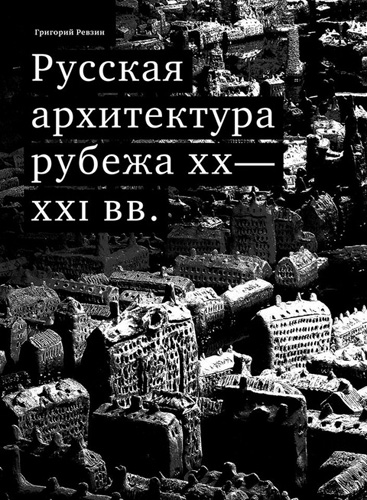 © New Publishing House
The book about the building is always a guidebook, the author is always in motion, and this also sees the resemblance to the Gogol Tom, but even more direct - with its original source, the "divine comedy." Moscow architecture - Hell, populated by the dead souls of power, arrears, crooks and thieves. Here, even a magazine dedicated to architecture is published here.
In the end, Revzin makes almost impossible (for Virgil): he tries to come into the light and write about paradise - his voice becomes so high and solemn when he begins to talk about Avvakumov, Brodsky and Kutzurbaev. But the very name "Paper Architects" admitted to them allows the possibility of paradise only on paper. In the volume of the book, this chapter occupies the same (if not large) share, like everything that these three on Luzhkovskaya land, that is, literally 30 pages of a 500-page black volume.
Apparently, under the influence of the text and sponsors, the publishers also tried, as they could, to bring the book closer to the object of description - Luzhkovsky architecture. Imagine a folio size larger than A4, with embossing and a case, heavy, coated, coated, coated with silk thread. Imagine, because it is better not to buy it - it is impossible to use it, how it is impossible to trade in the new Voentorg. The scope of pages does not allow you to read it in transport, in bed, in the toilet, the height does not allow you to put it in a bag, put on a shelf, read under a desk. The font of the main set is small, which does not allow using the book as a Table-book : a book lying on a console, unreadable, footnotes and signatures are indistinguishable. The book, mandatory to read by journalists, architects, culturalists, anthropologists, but the main thing is students of these specialties will be completely inaccessible to them, because publishing delights, and in themselves interfering with the reader, also raised the retail price of a copy of up to $ 170. Elena Nikolaevna Baturina will appreciate in her distant Kitsbuel.
Of course, the book of Revzin needs a reprint - it must be published without Panegyriks Filippov and Belov, in electronic form, with the possibility of copying, quoting, increasing photographs, searching and so on. Written in general from modern positions, it should be also published and then can be recommended by a wide circle of readers. From the first circle to the ninth inclusive.
Grigory Revzin. Russian architecture of the turn of the XX -XXI centuries. - M., New Publishing House, 2013. 532 p.