
Translated material
Cinema like macro shooting
Within the framework of the festival “Message to a Man” in St. Petersburg, they showed the program of the new documentary cinema of Switzerland “Personal space” .
All four films that have fallen into the program of the St. Petersburg festival united one way or another - they are about family ties that are extremely close. About their appearance or decay, strengthening or complication. This is either a look from the inside (family chronicles), or the study of these connections by an extraneous look. Chamber optics - it seems that among the Swiss directors she is sharpened under the tightness of the birth of birth. They even remove the overpopulated India so that it looks like a tiny fragmentation with a pile of machines, ricks, people and houses.
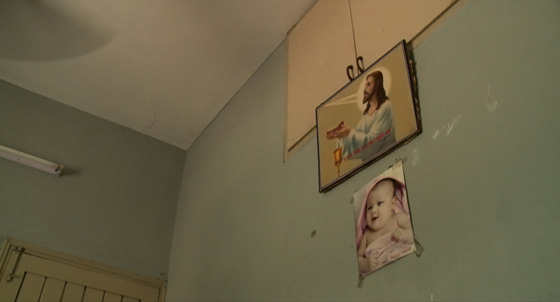 © Film Festival "Message to Man" Frame from the movie "Mother's Dream"
The debutant Valerie Gudenus in the “Mother's Dream” is taken for a stable and self -fighting plot for a documentary: a woman’s life in a dirty and hot oriental world. He goes to India to monitor the surrogate mothers there, who undertake to bear children for wealthy couples (I must say, not European, but local) - and realize their small dream. Buy a separate house and settle there with existing kids. To purchase a ricksha to your beloved husband is a beautiful one, you can even make an order to order. The plot of the film Gudenus moves along the understandable trajectory: it is looking for an agent for the search for surrogate mothers, she agrees, goes to the hospital, gives birth in agony. Until the real parents showed up, manages to realize the child as his own. Then it is injured by separation from the child - and the agent again rides a moped along the noisy Indian streets in search of another surrogate mother. From triviality, the film is saved by the fact that Gudenus is not afraid to approach his heroines too close. They are not considered at a distance, as in the zoo-the distance at some point completely disappears: and when the heroine is in a hospital bed, and when she is worried because there is no milk, and when she lies under anesthesia on the operating table, while they do a cesarean. So the movie about exotic turns into a family chronicle, even if a family is understood as a single person.
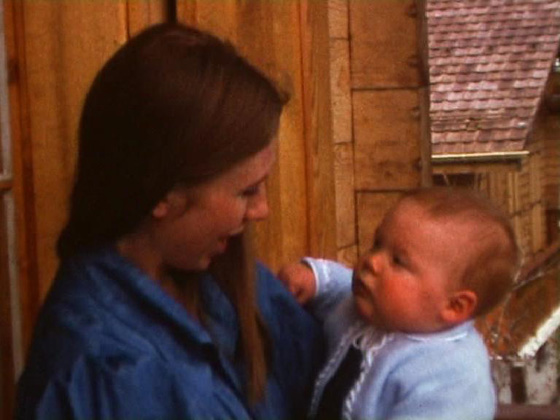 © Film Festival "Message to Man" Frame from the film "Forest - My mother's name"
Comfortable on the contrary, the optics switch in the film Rachelle Noel "Forest is the name of my mother." The director here sessions of someone else's video archive - his father, careful documentation of his family life: meeting with his future wife, wedding, birth and growing up for children. He looks and comments. But the main acting person is the mother Noel - Dutchwoman, born in a boring and flat country (not in the Holland where prostitution and light drugs are legalized, but in a remote village with Puritan morals). Running from this monotony, the sneakers with the earth to the country of mountains and fresh air, literally changing the landscape of the environment. And the world who fell into a stranger to her. Here in the family chronicle the outlines of a completely different story begin to appear: the relationship of man and place, attempts to adapt, become like everyone else. A fiery-red cheerful young lady is trying to preserve itself-among the diapers and diapers, unfriendly relatives, an eternally occupied husband. At first he admires her, shooting her on camera. Then these shootings are the only method of communication with each other. In the final, the amateur movie camera is replaced by an iPhone in the hands of his daughter. The death of her husband seems to be reconciled by Mother Rachelle with an eternally alien space for her-she finally finds her place: in a dense forest, which joyfully, childishly rushes on a bicycle.
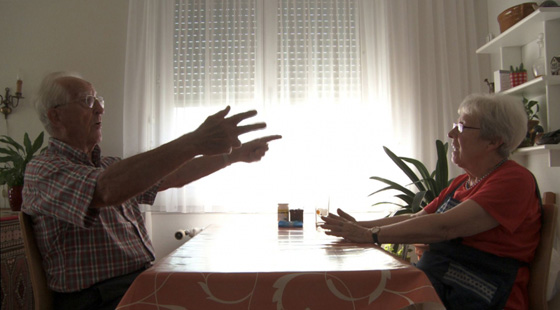 © Film Festival "Message to Man" Frame from the film "Father Garden - Love of my parents"
If Noel is trying to restore the family history of the post -fact, peering into amateur shootings and trying to decipher them, then Peter Lickes in the film “Father Garden - Love of my parents” is exactly the same here and now. The past life of his parents was not removed, not recorded - and the director pulls it out of the present, from conversations with his old people. And then something else comes to the fore: how the protective shell, surrounding parents, removes the layer by a layer of their habits that have accumulated during the life of a lifetime, breaks the formatted communication with him. In order to finally get to the main thing-to see in front of themselves, albeit for a short while, those man and a woman who have just met, who still have all a life together ahead. To Lickety, a heart -hearted conversation with parents is a time machine, the opportunity to become a witness to the fact that he never saw what happened before his birth.
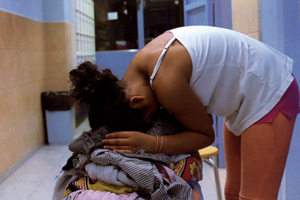
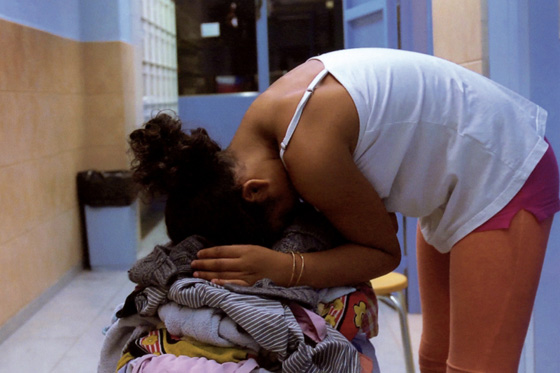 © Film Festival "Message to Man" Frame from the movie "Key to the Laundry"
Finally, Frederick Flery and Florian Devin in the "Keeping from the Laundry" work with a private space. A public laundry of an apartment building is a model of society of a small European country. All social processes are reproduced in it. Lucky was lucky - a place for washing huddles next to a brothel. In the cramped space, clogged with washing machines, both native Swiss and migrant workers, those who have and poor are found. It equates everyone.
In all these films, the camera acts as a close friend, as an inquisitive witness, from the near distance. And this approach to individual people reveals you many things that run strongly beyond the boundaries of the frame.