
Translated material
Pensions: Reform will hit young
About why the Government of the Russian Federation again changed the formula for the calculation of pensions and what awaits the Russian citizens in old age, Evgeny Gontmamer, Doctor of Economics, Head of the Department of Social Development of the Government of the Russian Federation in 1997-2003. - In an interview with The New Times
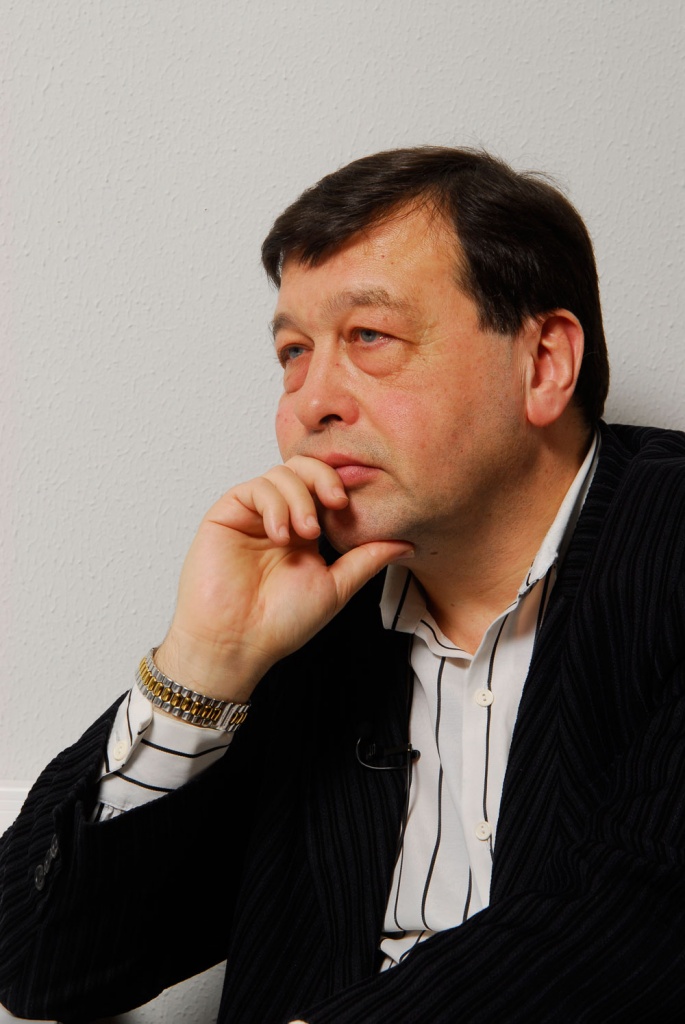
Last week it became known that the government has already approved the draft law “On Insurance Pensions”, that is, the next new pension formula that will begin to operate in 2015. Points, experience appeared in it, the accumulative part was dug up, incentives for working after reaching retirement age were declared. Explain that this is all that is beneficial and who does not?
The first is points. Now, in order to get a retirement pension, that is, to enter the insurance system, a person must earn at least 33 points. To do this, you need to work out 30 years, and so that all these 30 years your employer pays contributions to the Pension Fund for you from no less than one minimum wage: the minimum wage since January 2013 - 5205 rubles per month. Only if your pension capital is now formed from real rubles, then since 2015, rubles for a specific coefficient will be reached into points.
The hand is raking
And who will be recounting?
Government. Based on the financial provision of the Pension Fund: in the future, it must generally switch to self -financing. How much they collected, they paid so much. And the pension fund will collect the way the economy will breathe. It will be good to breathe - the salaries will be decent, the points will be filled with a full ruble, no - and who knows what will happen in five years, not to mention thirty?
The second, de facto for many, is an increase in retirement age. That is, as before, men retire at 60 years old, women are 55 years old, but if you work five years more, then, according to calculations, the pension will be 1.5 times higher than if you left work upon reaching retirement age. If you leave two years later, it will be conditionally 1.2. Each year, it will give about 1/10 to the pension that you would have if you went on a well -deserved rest at the current retirement age.
The third innovation: contributions to the funded part of the “silence”, that is, those who have not disposed of the funded part of their pension (and we have 2/3 of this age group) - this applies to those who were born after 1967, from October 1, 2013 are resettled. More precisely, 6%that used to go to the accumulation will now be simply transferred to a common piggy bank - this money will be given to current pensioners. Here, in fact, are three innovations that seemed to have agreed and a government decision was made on them.
"
We return to the absolutely Soviet system for ensuring old age, when a person is again dependent on the state: how much it will give, and will give so much
"
And what does that mean?
This means that the government will completely determine the cost of a pension ruble. If you collect less money to the pension fund, then accordingly the cost of your pension capital will decrease.
But today, pensions are not so hot.
On average, the country is about 10 thousand. But now, in the formation of pension capital, based on which the pension is calculated, real rubles are taken, which, of course, are depreciated by the magnitude of inflation. And now pension capital will make up from points. As a result of all filters and coefficients from every thousand rubles of the accumulated pension rights, by the time of retirement will remain, apparently, less: maybe 900, or maybe 700 rubles. And no pension calculator will tell you this. Due to these innovations, the current pensioners will be least lost, because the principle of calculating the pension they already receive does not change, but the young people have nothing to hope for.
It is worth making a reservation: while we are talking about intentions - the bills have not yet been submitted to the State Duma, but besides, there is a “Putin factor” - the president likes to make gifts ...
Back to Ussr
Correctly understand that in essence the system of Soviet experience is returning?
De Jure-no: in Soviet times, not just experience was required, but continuous experience. And de facto-yes. It’s just that now the total value of this experience will be of great importance.
And if a person studied? Putin just at the Valdai club said that education is the key to the future of the country: these years will enter the required 30 years?
For the Pension Fund, it matters whether contributions have paid for these years or not. If a person studies, for example, at the evening department, and works during the day - then, of course, these years are included in experience. But if no one pays contributions on the daytime department or abroad, then, of course, this is not included in the experience. Some relief has been done for women: now those who are sitting with a small child are included in the experience for three years. In short, we return to the absolutely Soviet system for providing old age, when a person is again dependent on the state: how much it will give, and will give so much.
Most of us do not understand at all and how pensions are calculated today, and to what extent they depend on earnings, on the number of years worked.
Well, look. The pension of those who have reached 55 or 60 years today is calculated based on the accumulated pension rights. In theory, these rights or this capital we accumulate all our working lives. It consists of several components.
The first component is the rights that were earned under the Soviet regime. Until 1991, the pensions were paid from the budget according to the elementary scheme: 0.65 from the salary for the last year or for any chosen three years. The experience was supposed to be for women 20 years old, for men 25. At the same time, there was an upper ceiling of the pension - 120 rubles per month. Plus, if a person had excess experience: men have 30, women - 25, then 10%were added, 132 rubles were obtained. It was the limit that everyone sought to get. Therefore, who could - chemicals: for example, the department received a bonus, it was rewritten on a person who had to retire, thus he recorded a large salary with whom the pension was calculated, and he distributed the premium to his colleagues in cash. It was then a standard scheme. In short, in Soviet times there was a simple and tough scheme: a long continuous experience, salary, as a rule, over the past year of work and the upper ceiling - 132 rubles.
But there were personal pensions - in particular, for the nomenclature.
Yes, there were pensions for the nomenclature one and a half to two times more.
Exactly as now, however, pensions of high -level officials and deputies once every 10 central in the country.
It comes to this. In the early 90s, when the country was a beggar, pensions were actually eliminated, people of retirement age received meager benefits. And only in 1997 a new pension formula was introduced. The experience was important, but from earnings to the Pension Fund already created then, in replenishment of your pension rights, the amount of no more than 1.2 from the average salary in the country was taken. Regardless of how much you earned. And only in 2002 a real insurance scheme was introduced, when a contribution that is completely proportional to your earnings began to be deducted in your pension wallet. Thus, those who retire today have actually leveled pension rights until 2002. Your contribution for work in Soviet times - and there was no personified accounting in the USSR - it is calculated based on the average salary that people of your profession had at that time.
Help yourself
And if a person finds data in the archives that he received above the average in Soviet times?
If Namerek now, in recent years before retirement, the salary is low, then this may matter. But keep in mind that the Soviet ruble is not equal to the current Russian: in the Pension Fund there are special recalculation tables, all sorts of coefficients, so Soviet rubles will not increase much to your pension. As well as your earnings from 1991 to 2002. But as a result of the reform of the then Social Minister of Zurabov, your earnings began to play paramount importance, and the experience became the minimum. But this scheme was quickly broken - already in 2004.
Why?
Firstly, there was a shortage of the Pension Fund. He appeared just in 2005 as a result of an erroneous, as it seems to me, solutions. Then the total contribution of employers, that is, businesses, to the Pension Fund, the Fund for Medical Insurance, Social Insurance and the Employment Fund was 36%. And the business howled, went to Putin. And there was time - oil money, economic growth, all in chocolate were poured. And it was really hard to business. In short, it was decided to reduce insurance premiums by 10 percentage points at once. The calculation was: the business will be delighted with the load, begin to withdraw salaries from the shadow and make up for these 10 percentage points due to large deductions to the Pension Fund. It did not happen: and for other countries it is known that the effect of reducing the tax burden occurs only after a few years. And we also had a factor in the security forces, raider raids on businesses, when it became dangerous to show profit. As a result, a hole was formed in the Pension Fund - first 300 billion rubles.
In addition, then it was decided to record the maximum amount of earnings from which pension contributions are deducted. This bar is changing every year due to indexation for an increase in medium wage and this year is 562 thousand per year. And on everything that is above this amount, now actually imposes a 10%tax. Moreover, few people know that money does not affect the pension rights of this person - this is just a tax on the rich. In other words, a person receives a large salary, respectively, and more pays to the pension fund, but he will receive a pension without taking into account this money.
"
Another serious misfortune: people, as a result of all these endless changes in the pension formula, have not the slightest motive to show salaries exceeding 562 thousand
"
What is the ceiling of pensions today?
Formally, there is no ceiling. There are people who receive 30 thousand and 40 thousand per month.
How, if the amount from which the fee is taken to the Pension Fund is limited, 562 thousand per year is limited?
There are people who worked in several jobs and everywhere received these five hundred thousand. As a result, the total deductions to the Pension Fund were three times higher than that of a person who earned three times more per year, but worked in one place.
That is, it is profitable to work in three places if the salary is high everywhere?
No, now this loophole has already been covered.
Most of those who have now approached the retirement age have no special savings: in Soviet times, the vast majority were poor as church mice, and if there were accumulations, they burned down at the savings box office. In the 90s, if the name was not very successful in business, there were no salaries at all, and the few employers agreed to pay.
Well, let's honestly say: the free privatization of apartments was a form of compensation for losses at the collapse of the country. Another question is that the housing fund during this time has become unusable and options, such as in the same United States, when they sell at home in old age the house and move to relatively small apartments, and they live well for the proceeds - most of us do not have this option.
Another serious trouble: people, as a result of all these endless changes in the pension formula, have not the slightest motive to show salaries exceeding 562 thousand. In addition, after the upcoming circumcision of accumulative pension rights, the “silent” confidence in the state will finally disappear. What is the point of deducting something if at any moment the rules of the game can change? It is better to try to secure old age for yourself.
Palaces from a hole
Now the deficit of the Pension Fund is already more than 1 trillion rubles. How did such a hole form?
Firstly, at the beginning of 2009, the so-called “Valorization of Pensions” occurred, that is, their value was changed, in the average pension were raised at a time by 30%. And this entailed an additional hundreds of billions of expenses. And now, in order to somehow shut up this hole, we again went to equalize pensions, as it was in Soviet times.
However, whatever city you will come, three richest buildings: Sberbank, tax service and a pension fund suffering from lack of money. Palaces all over the country! One thing does not converge with the other, no?
This is a good question. Thank God I never worked in the Pension Fund, but I know that this question is regularly asked there to all superiors. They reply that in the 90s, the fund’s employees were sitting in basements and bugs, where not a single pensioner could not be invited. And this problem had to be solved. There is some truth in this, but a sense of proportion, of course, refused.
What money did these palaces be built from - from the money of the Pension Fund?
Naturally. Where else? The pension fund lives at the expense of two sources - contributions, which, in fact, are paid for us by employers, and subsidies of the federal budget. All. The pension fund does not earn, it has no right to engage in commercial activities. If the money spent on these palaces is scattered by pensioners, it will turn out a little: an extra 200-300 rubles to the average Russian pension. But psychologically, this, of course, was a gross mistake, because people are very annoying, as well as the surcharge for civil servants' pensions. Although only a few tens of thousands of officials receive these surcharges, provided that the experience in the civil service is 15 years old and the official must retire from the civil service. Well, we have already talked about ministers and deputies.
Just life
If you allow you, a couple of practical questions. Suppose a person approached the retirement age with a small salary or with a small legal salary, and a meager pension was charged to him. Namerek finds a highly paid job and continues to work. Will the pension be counted?
Necessarily. In this case, pensions are required to recount every year while a person works.
Two friends living in Moscow at the same time retire. The last one has not worked for the last 15 years - or rather, she worked at home, raised children and grandchildren. She has a pension of 12 thousand. The other has worked all these years, and on a good salary, a pension of 15 thousand. How can it be?
The first has a Moscow allowance: the pension can be small, but, according to the Moscow social standard introduced under Luzhkov, less than 12 thousand should not have a pensioner - under one important condition: a person should not work. And the second pension is higher than 12 thousand, and the allowance is not laid for her. In my opinion, there are no such large surcharges in any other region.
How can a person check the correctness of calculating his pension?
In Moscow - in the Office for Appeals of Citizens of the Pension Fund, Slavic Square, 4. True, you will have to sit in line. Other cities also have the same services.
And in electronic form, in the age of the Internet - nothing? Drug debts or fines can be recognized on the website of the Ministry of Taxes and Rules for a minute for three or three clicks.
It is possible on the Internet, on the portal of public services. But, if you want to know why you are accrued so much, and not more, then you will have to go to the pension fund: the requirement to protect personal data will not allow you to see on your own what your pension capital is made up.
The main conclusion from our conversation: we must work until the legs are worn and the employer will not drive out?
Exactly.
Photo: Roman Goncharov