
Translated material
Europe in a hijab
How Europe solves migration problems
The migration processes in the west of the continent are slightly different from the Russian ones: hundreds of thousands of people from the Third World run to the countries of the “golden billion” from wars and poverty. Opponents of migration insist: Muslim strangers with a different religion and traditions, immune to democratic values, pull the old light back. In Europe, meanwhile, right -wing parties are gaining popularity, in Switzerland at a referendum they were forbidden to build minarets, in France to wear hijabs in present places, everywhere outbreaks of aggression by the “natives” provoke the response of visitors. How these problems solve in Europe - observed The New Times
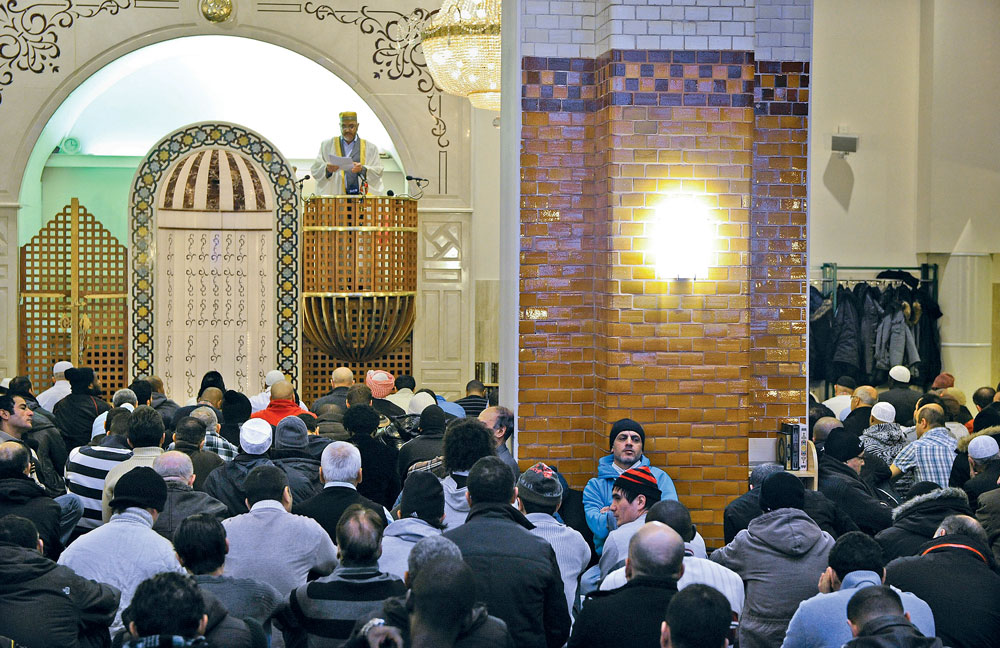
Imam of the Stockholm mosque bin Mahmud Rammeh reads a sermon
Sweden: under the wing of the state
They often say about Sweden that it suffered from migration "for nothing." Stockholm had practically no colonies, so far Sweden is still one of the most stable economies in Europe, and until recently it was also known as one of the most ethnically homogeneous countries. Apart from the Jews, the first non-Christian migrants began to arrive here from the Middle East in the 70s of the XX century, escaping from the bloody civil war in Lebanon. In the 80s, migrant workers from Turkey began to come to Sweden, then Iraqis, Kurds, Iranians who fled during the Iran-Iraq war, refugees from Bosnia, Somalia, Ethiopia, migrants from Morocco, Tunisia, Pakistan. Today, up to 350 thousand Muslims live here-this is about 4.5% of the 9 millionth population of the country. The problems are the same as everywhere in Europe: unemployment among visitors is twice, and among Muslims, depending on nationality, and ten times higher than among ethnic Swedes. 70% of visitors earn money with low -skilled labor. Discrimination when hiring has led to the fact that Muslims belong to 20-30% of the total number of new enterprises in the field of small business - after all, they can’t get into large companies.
As in other European countries, ethnic minorities sometimes feel like outcasts, as a result - a direct confrontation with the authorities. So, in 2011, in the suburbs of Stockholm and Gooteborg, mass clashes of adolescents from immigrant families with the police occurred, and cases of the manifestation of anti -Semitism became more frequent.
But there are examples of Islamophobia: on August 17, 2013, in Stockholm, an attack on a pregnant Muslim was made in Stockholm, with whom passers -by tore off the hijab and hit her head on the car. Many Swedish women, as a sign of solidarity, changed the avatars on social networks, photographed in a hijab. However, as surveys show, the population refers to the visitors with suspicion: 67% of the Swedes believe that Islam does not correspond to the values of the Swedish society.
"
Discrimination when hiring has led to the fact that Muslims belong to 20-30 % of the total number of small business enterprises - after all, they can not get into large companies
"
In Sweden, multiculturalism became the legislative norm only in 1975, but back in the XVIII century, a wide discussion unfolded in the country about the possibility of providing Swedish citizenship Jews who arrived here from other European countries. The Lutheran Church of Sweden was separated from the state only in 2000 and was immediately equal to other faiths, each of them today is funded by the state. As the referent of the Swedish Commission on State Financing Max Stockman explained the New Times, the budget pays not only construction, but also the maintenance of new mosques, churches and synagogues, as well as the organization of holidays, religious education and religious services in hospitals and prisons. Muslims who do not have a single organization similar to the Church of Sweden receive funds through several Islamic NPOs representing the interests of almost 75% of the Swedish Muslims. In 2012, 6.75 million Swedish crowns ($ 1.05 million) were spent from the state budget only on Muslims, the budget for 2013 is 8 million kroons ($ 1.2 million). One of the latest innovations was special religious courses for the preparation of Swedish imams.
The Swedes themselves react to such state support for Islam. Only 37% of the country's residents are opposed to the construction of new mosques, but this number increases in those areas where, in fact, mosques are being built. However, as the New Times explained to the University of Lunda, Jonas Obterbek, the construction of prayer houses is always the result of a long dialogue between local residents, authorities and the Muslim community.
Today in Sweden there are 15 mosques (one of them of Shiite) and more than 200 prayer houses, most of which also receive support from the state. Many prayer houses occupy the buildings of old schools, factories or even churches: Christians sometimes prefer to sell real estate to another religious community than to allow a supermarket or night club to open there.
Netherlands: My house is my city
The Muslim palette in the Netherlands resembles the Swedish. There are about a million Muslims (5.8% of the country's population) for 16.7 million inhabitants, most of them are ethnic Turks and Moroccans, but there are also visitors and descendants of migrants from Surinam, Afghanistan, Iraq, Iran and Somali. The ultra -right, the anti -migrant and anti -Islamic Party of Freedom has the third largest faction in the country's parliament. After joining the EU Romania and Bulgaria, from where a lot of Bulgarian and Romanian gypsies come to the Netherlands now, anti -musganic rhetoric has noticeably more frequently in the ultra -right environment.
The church in the Netherlands is completely separated from the state and, with the exception of rare grants, is not financed from taxpayers. Muslim communities nevertheless opened throughout the country about 450 mosques and chapel houses, as well as Muslim cemeteries and educational centers. Religious schools in Holland, both Muslim and Protestant, Catholic or Jewish, receive state financing, if they meet legislative norms.
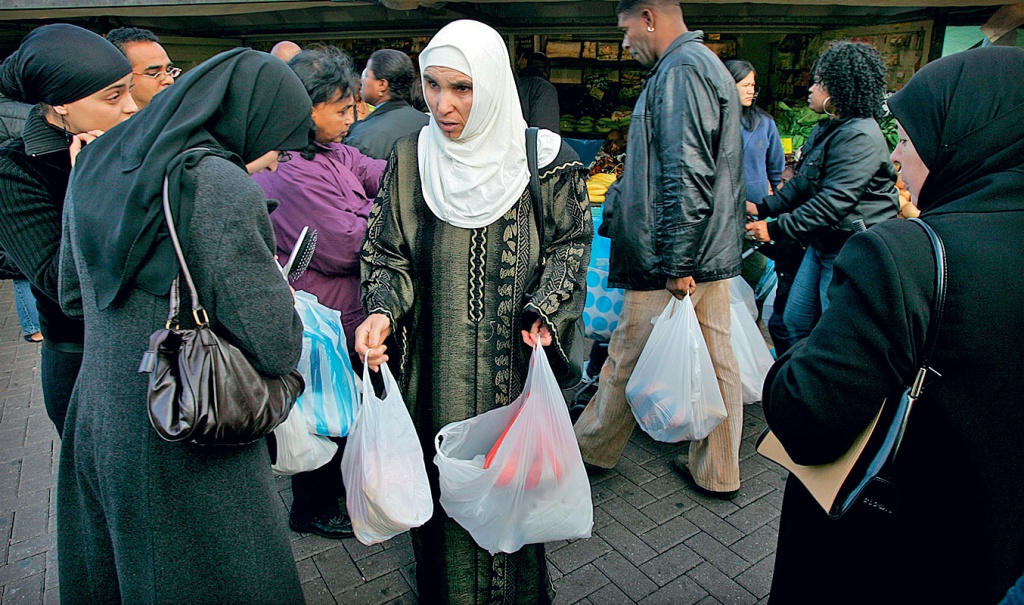
One of the largest European bazaars is in the Hague
As in Sweden, in Dutch universities in recent years, the Imams have opened. “Previously, all the imams came from abroad, but in the interests of religious communities, so that their leaders not only understand the intricacies of religion, but also understand the socio-political context in which they will have to work,” explained The New Times Marian Vrutorin, director of the non-profit fund of Islamic organizations Rijnmond (spior).
Almost all the interlocutors of The New Times (and not only in Holland, but also in other countries) see one of the main secrets of the comfortable residence of visitors - in political rhetoric and the efforts made by the state to integrate Muslims and the development of tolerance among the indigenous population. But no one denies objective difficulties. “For example, we have to deal with coercion marriages that are found among Muslims,” explains Marian Vorotorin. - In the Netherlands, such marriages are prohibited. But we try to explain to the Muslims themselves that renewal marriages are actually prohibited by the Qur'an! Such marriages are a part of a tradition that is not so difficult to move away from, but not part of the religion. ”
“10 or 20 years ago, our main task was to explain to people what a multicultural society is, and today everyone understands that the variety of cultures, religions are good, without it, it is impossible to live without it,” remarked in a conversation with The New Times, Corri Laws, Vice-mayor of Rotterdam, the second largest city in Europe, the mayor of which is a Muslim named after Ahmed Abutaleb. - Multipulturalism is not only about migrants. The world today is a variety. Cultural, religious, behavioral, sexual ... Many things that seemed strange yesterday are part of our life today. ”
According to surveys, it is more important for visitors to feel like Rotterdam, and then the Dutch in a broad sense
"
The efforts to integrate Muslims “from the nationwide level have already sank to the local,” says Vice-mayor: according to surveys, it is more important for visitors to feel the Rotterdam, and then the Dutch in a broad sense. “It is necessary that immigrants feel at home in a new city, responsible for the environment and people,” says Mrs. Laws. - I think this can be applied to Moscow. But on the other hand, the indigenous residents of Rotterdam (or Muscovites) must also be introduced to their new neighbors. ”
Acquaintance, of course, does not happen by itself. In the Netherlands in general, and in particular in Rotterdam, there are a lot of programs aimed at developing integration. According to one of them, unemployed immigrants help lonely pensioners in the household, and they in return teach them to the Dutch language. Ethnic and religious communities arrange their holidays in the central square of the city, introducing residents with national customs and cuisine. Many migrants take part in volunteer projects, becoming part of the city society.
In the Netherlands, attempts were made twice to create purely Muslim parties, and both times unsuccessfully. However, Muslims are present in almost all parties of the country (some of them even adhere to frankly right rhetoric, urging to fight migration). More than 10% of deputies in the national parliament (in total 150 seats) - migrants and 5% - Muslims.
Denmark: The struggle for cleanliness
Since 2001, in Denmark, the right -centric coalition has remained in power: now the Danish immigration legislation is the hardest in the European Union. According to the new laws, officials have become much easier to refuse a foreigner to provide political asylum or residence permit, as well as limit migration to reunite families. The rules for providing benefits and other social support for migrants and refugees are also significantly tightened.
One of the laws, for example, was a ban on marriages with foreigners who are less than 24 years old (as part of the fight against renewal marriages). In addition, in order to obtain a residence permit, the date-dachenan must prove the existence of financial opportunities for the maintenance of both spouses, as well as the availability of the necessary housing for living.
In parallel with this, a package of anti -terrorism laws was adopted in the country, not only untied the police 'hands in observing suspicious groups and persons, a wiretapping of negotiations and per lustration of the mail, but also obliged the imams in the mosques to conduct sermons in the Danish language, respecting democratic values, in particular, women rights.
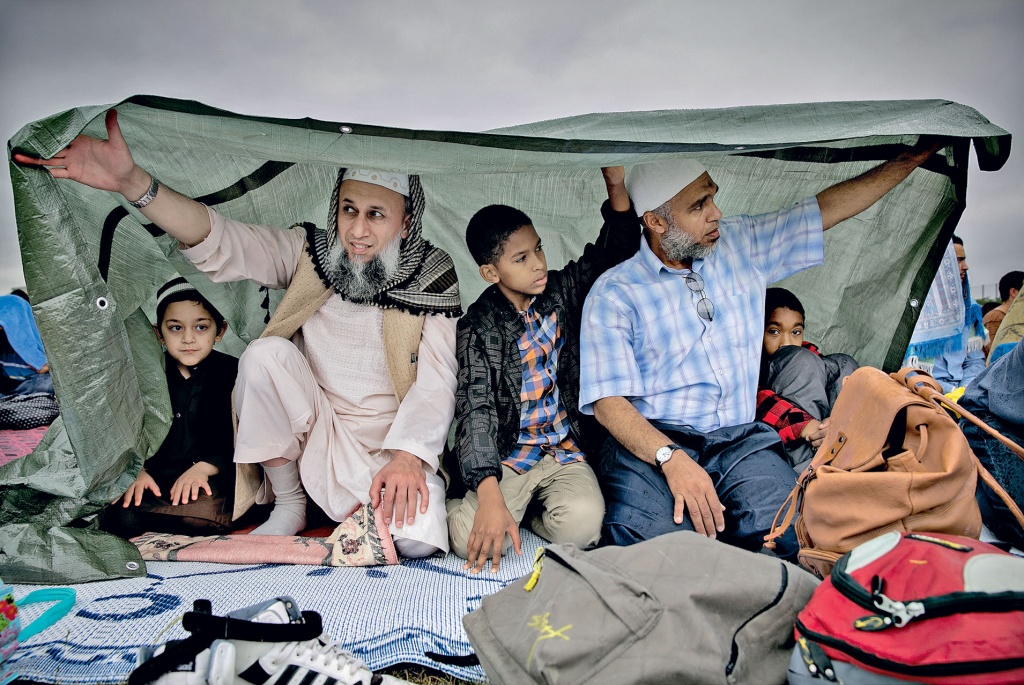
Danish Muslims celebrate Eid al-Fitr (Uraza-Bayram)
The Denmark Constitution prohibits adopting laws regarding religion. Nevertheless, one such act was given a green light - it is now allowed to deport "missionaries with radical views." True, it was not said about Islam in the text of the law, but it was obvious to everyone who and what they had in mind there.
These measures did not lead to a serious decrease in the Muslim community in comparison with neighboring countries: migrants make up about 10% of 5.6 million of the Danish population, Muslims - about 4%. However, numerous international organizations, including the European commission against racism and non -wealth, a year after year celebrate the level of xenophobia, anti -Islamic speeches, discrimination and crimes on the basis of racial and religious hatred. And the rhetoric of politicians and the media repeatedly caused indignation of both Danish Muslims and representatives of the liberal public. Thus, Associate Professor of Copenhagen University Brien Arly Jacobsen analyzed the image of Muslims created by the Right Media and Politics, and discovered a striking resemblance to the anti -Semitic rhetoric of the Danish establishment during the Second World War.
The apogee of the public confrontation became caricatures on the Prophet Muhammad, printed by the Danish newspaper Jyllands-Posten on September 30, 2005 and provoked a protracted international scandal and tough discussions of defenders of freedom of speech with those who called for respected the feelings of Muslims in Denmark itself. “The problem lies in the field of public discourse,” said an opinion in a conversation with The New Times, a deputy of the European Parliament from the Dutch Liberal Party Democracy 66, deputy chairman of the Commission on Civil Liberties, the Law and Internal Policy of Sophie Inta Veld. “We must stop feeding people with myths about migrants and Muslims and learn to live together.” The Euro -deputy is confident that migration is necessary for Europe: “Homogenic societies cannot survive in the modern world. From the point of view of creativity, industrial and economic development, diversity is the only possible way. ”
Photos: Peter Dejong/Ap Photo, Joachim Adrian/Polfoto/Ap Photo, Anders Wiklund/Ap Photo