
Translated material
The supply of red caviar from the United States did not allow Russian merchants to inflate prices
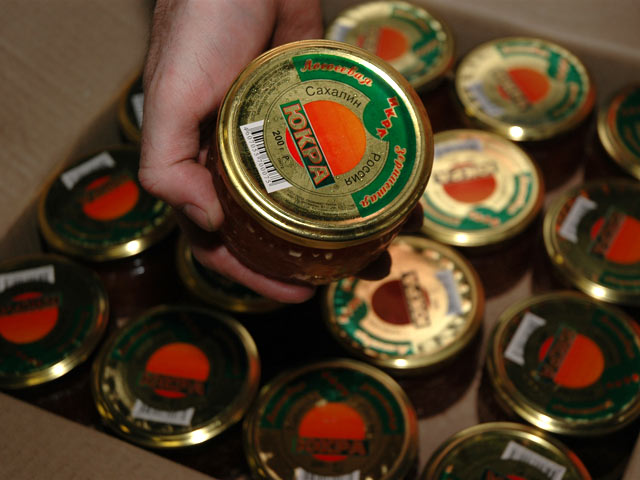
The increased volume of imports of Yastka red caviar from the United States led to a tangible drop in prices for this product, the Kommersant newspaper writes. A number of processors purchased almost 1.5 thousand tons of frozen caviar in the United States, which is offered on the wholesale market of Moscow at a price of 800-900 rubles. per 1 kg at an average cost of 1.2-1.3 thousand rubles. for 1 kg.
"The price of the customs clearance is incorrect that it is either last year’s stocks, since at auctions, the caviar of fresh crop is traded at $ 18-25 per 1 kg, or the importers underestimated the customs value and the state did not receive duties and VAT in the amount of 170 million rubles," the press secretary of the Federal Resort, Alexander Saveliev, explained.
In Russia itself, despite Putin’s failure in Kamchatka, the total catch has come close to today to 400 thousand tons due to the growth of salmon catching on Sakhalin. This means that about 15-16 thousand tons of red caviar will enter the market, not counting the non-distributed last year's remnants.
In Alaska, as in Russia, Putin's salmon began modestly, but by its end the situation was corrected, as a result of which only the pink salmon of the Alaskan fishermen got about 600 thousand tons. The average output of the caviar from it will be about 24 thousand tons, but in America it is of little interest to anyone.
According to the SPARK agency, from January to August, average consumer prices for salmon caviar increased from 1,500 to 2467 rubles per kg. In September, however, prices returned to the previous levels and may still decrease.
Today in Moscow there has been a wholesale price in the region of 1200-1300 rubles per kilogram, and the average wholesale price of red caviar in Kamchatka is recorded at 1.5-1.7 thousand rubles. for 1 kg.
The annual production volume of finished packed red caviar in Russia is 11-13 thousand tons in the amount of 28.6-30 billion rubles. per year (at the prices of processors taking into account VAT).
The market participants with whom the author of the publication talked are sure that such a situation is the result of the conflict between the processors of the Central Region and the Far East, which may have more serious consequences for both fish -to -makemen and processing companies and the industry as a whole.