
Translated material
Toporov Pact - Ribbentrop
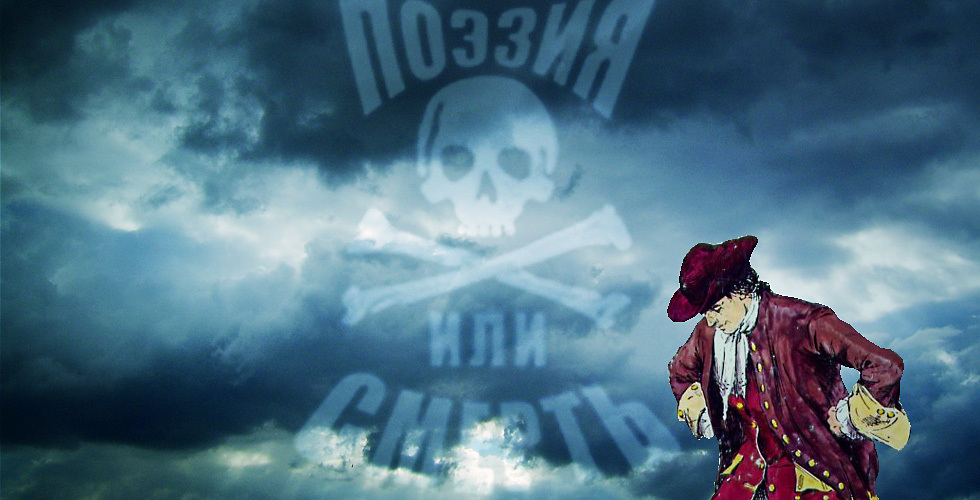
Recently, the attention of the literary public has been constantly attracted by the Gvideon magazine and the Russian Gulliver project, which is right before our eyes from a completely sane (see, for example, Vadim’s interview with three years ago ) turns into something completely different. This problem, it seems to me, is connected not so much with the personal qualities of the project participants or with the changed social situation as with the contradiction laid down in its very name. After all, it is known that as a ship (project) you will call, so it will float. So, if Jonathan Swift “Gulliver's Travels” was more likely to demonstrate extreme misanthropy and complete unbelief in a positive beginning in man and human society, then the Russian Gulliver project was initially oriented towards the Russian translation of two parts of this tetralogy intended for children. And if in the first case we have a strict and ruthless criticism of classic utopia, then in the children's version of Gulliver, of course, fabulous and wonderful elements of the story invented by Swift came to the fore, that is, the Gulliver myth was already working here. By the way, by nature, your myth is not totalitarian at all. The totalitarian regimes known to us had not a myth at all as the initial parcel, but a certain quite rational speculative structure. But at the same time, the most curious, they all actively used the myth when building their own ideology. Nevertheless, the myth is far from the best basis for a literary and publishing strategy that requires rationalism and a more or less clear idea of the general parameters of the modern literary situation. After all, the myth is primarily syncretic and can combine completely heterogeneous elements, which is usually contraindicated in a particular project.
All this became obvious when the Russian Gulliver began to publish the literary magazine Gvideon. It is no accident that the first issue of the magazine was subjected to merciless critical analysis in the article by Alexander Ulanov , which was followed by the polemic answer of Vadim the month and no less polemic replica of the same Alexander Ulanov . As a result, in the fifth issue of Gvideon, the project participants were forced to once again speak the fundamental principles of their activities, but in my opinion, they did not achieve a special clarification of the situation. Vadim for a month in the column of the project manager assures that “Russian Gulliver” is something much more than a literary project. Judging by his description, “Russian Gulliver” is something like a nascent religious order, or a small sect, or a group of enthusiasts that, for socially useful purposes, is engaged in magical practices. It is simply impossible without tears of adventure to read what amazing results were achieved by the project participants by “mixing sacred soils”, “calling the kings” and the like magical rituals: “We continued work: the results turned out to be stunning. The special services saved the hostages, the volcanoes unexpectedly stopped eruptions, the prophecies about the end of the world were postponed every day. If my friends could not go with me, I transported their blood to the sacred places. In early October 2010, the blood of the “Russian Gulliver” was poured on the Russian island in the Japanese Sea, as a result of which the test of the Russian peaceful missile “Bulava” was successful on October 7 (see here ). It turns out that we no longer need any Academy of Sciences - Vadim is quite enough with a Nepal tambourine, and in the country everything will work out by itself at once.
Okay, all this is beautiful in its own way, but it would seem, what does literature have to do with it? But what does: “[Poetry] becomes our non -vegetation religion, reaches mystical passion, transfers to another mode of being,” writes Vadim a month. He is echoed in his column “The Case of Freedom” the editor -in -chief of the magazine Andrei Tavrov: “It is clear that there is <...> that only and no accountable area, where both life and the power of creativity come out. She has many names, but the point is not in names and names, but in live contact with this area itself. ” Obviously, the participants of the “Russian Gulliver” perceive poetry as a special kind of spiritual, and in some places, perhaps even occult practice. And in this way they leave the field of literature itself and move to the area where strong positions occupy completely different organizations (including the Russian Orthodox Church, which is not too affectionate about competitors). And it would be possible to wave after them with a blue handkerchief and wish it a happy path, if not for one “but”: they are still trying to carry out their non-linear activities precisely within the framework of modern literature, because, despite all the assurances of the month, Gvideon currently has the form of a journal of literary, and not religious, mystical, occult-or what else can be the publication, or what else can be there, corresponding to the declaration set forth in the fifth issue? So, so far this declaration remains only on paper, moreover, despite all the statements that they are different and not at all with us, the editorial office of the magazine makes clear attempts to change the alignment of forces that now exist in the Moscow literary environment.
Fighting Dmitry Kuzmin in his territory is completely useless.
The beginning of the controversy, probably, should be considered the response of the month to the sharp review of Dmitry Kuzmin about the results of the award of the Debut Award in 2011. In the article “Citadel of Andrei Bauman and a cake the size of a city” (“New World”, 2012, No. 5), Kuzmin accuses Kuzmin of authoritarianism and the desire to impose his will and vision of poetry with the entire literary process and contrasts his own position and, in general, the Russian Gulliver project as “Literary Movement”, but some more open, tolerable, without ambitions: everyone is in its place, in its place, in its place, in its place. Without tricks, intrigues and fraud. " In the same place, the month clearly formulates its idea of what poetry should be: “I am not a supporter of lyrical and even secular literature, closer to me with a psalm or, if you like, an epic. I am for poetry outside of selfishness. For the “external” voice. Not for the “new epic”, the essence of which did not open to me, but for the creation of large -scale paintings, including history, philosophy, and theology, depending on the tasks. For poetry, which is more poetry, otherwise I do not see the point in it. ” Nevertheless, all these good intentions in the contents of the Gvideon magazine are not yet reflected in any way, what everyone can make sure by opening the corresponding page of the site or taking in a rarer paper number. So far, I repeat, Gvideon is very similar to an ordinary literary magazine without any intelligible concept, collecting under its cover all more or less famous writers or writers of not very famous, but in time, who were nearby from the editorial members. And even a polemic with a conditionally progressive literary direction does not highlight the magazine from the general row too much-there are few of them, polemicizing, and using very similar arguments?
It is from the point of view of Vadim that the literary controversy begun by Vadim and, in my opinion, it is necessary to consider the feuilleton “Shoshanna Ribbentrop” about Stanislav Lviv from No. 4 and Oleg Dark’s note about “Russian award” from No. 5. Oleg Darka’s note is also a response to a sharp review of Dmitry Kuzmin about the results of awarding the “Russian prize” for 2012, and it repeats largely a lot Argumentation of Vadim the month. Dark insists on the expansion of the literary field, on erasing borders and inclusion in the sphere of the Russian language and Russian culture as many active figures as possible. A similar strategy is developed as a whole by the Russian Gulliver project. Kuzmin, however, advocates more professionalism and severity of selection, which for some reason are accepted by many for the desire to “promote” exclusively some mythical intra-tug authors. On the one hand, in the position of Dark (and the “Russian Gulliver”) there is a meaning, on the other hand, in this case the “Russian prize” becomes only a simple amateur encouragement of those who, abroad in a foreign language environment, continues to write in Russian. She will not be able to ensure any advancement in the actual literary circles, but on the contrary, it will give rise to a certain number of unfortunate, deceived, no one needed by writers who roll endless tantrums in social networks. And there, in social networks, and without it enough.
The same problem concerns the entire Russian Gulliver project, which is trying to develop in several directions at once: he seeks to overcome literature at the same time and get key positions in it. If all this happened at least in turn-first to get, and then overcome, there would also be, maybe some kind of meaning, but two multidirectional actions at the same time cannot but be doomed to failure. Moreover, most writers do not show any tendency to perform magical rituals, nor to rejection of attempts by purely literary self -identification, that is, to offer them in return for the prevailing system of intra -literative relations of Vadim for the month, in fact, and nothing. In addition, I note in brackets, fighting Dmitry Kuzmin in his territory is completely useless, because Kuzmin - and this can be seen even with the naked eye - belongs to the type of people who "if they sit where they sit reliably and tightly, so that the place will crack and depress under them, and they will not fly away." So Dmitry Kuzmin must be taken as an unconditional given, with which one way or another will have to coexist for many years. The only result of the activity begun by the “Russian Gulliver” in the form as it has currently developed is only the inevitable marginalization of the project. In general, it is precisely the marginalization that is the publication of the Shoshanna Ribbentrop feuilleton about Stanislav Lviv, where an unintelligible attempt is made not even to criticize, but to simply make fun of poetry alien to the author of the feuilleton. However, the new Vic. For some reason, Toporova from Shoshanna Ribbentrop, but even if such a parody “pact” had taken place, this would not have increased the level of publication, but only would reduce its authority in the literary environment.
However, Vadim of the month and the “Russian Gulliver” has a win-win way to achieve a change in the situation in the literature-it is enough to mix the soils, to call the ancient kings, pour the blood of the project participants in the Moscow River, and everything will change at once: “Gvideon” will become the most authoritative literary publication, Vadim will create and destroy poetic reputations and determine the Moscow literary policy for many years. So you should try. True, I do not believe in magic as an approximate Soviet schoolboy. In my opinion, in order for the Bulava peaceful missile to fly, a good level of general school education, hard selection when entering universities, high quality training, strict control in production, and most importantly-love of their work and a sense of responsibility before the country. Can all this be filled with magic rites? The question is rhetorical.