
Translated material
2MorROW, Fourth Day: "History of my death"
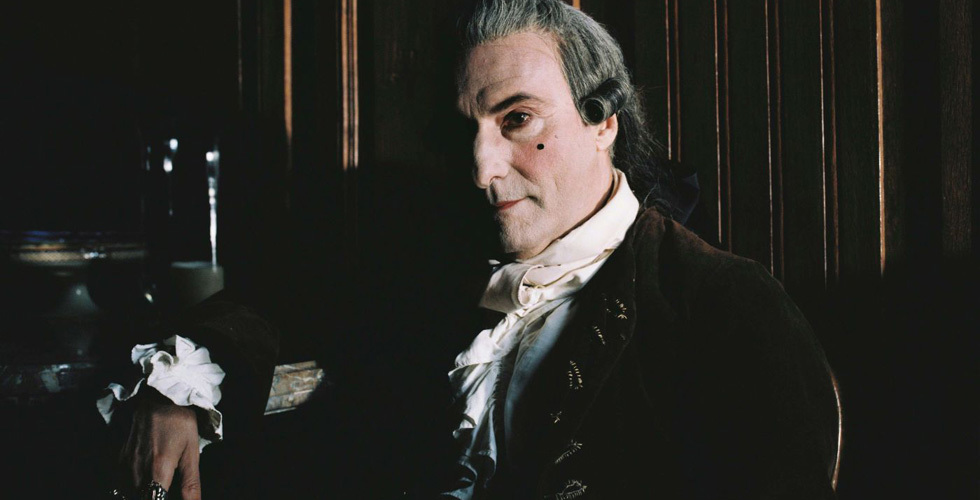
The “History of My Death”, the greatest film of this year, which took the “Golden Leopard” in the Locarno, has no beginning. The winding path of the events set forth in it leads from the missing preamble to the final, which was honestly declared in the name: death and the devilish resurrection of Jakomo Casanova, who fell in the Romanian mountains of Count Dracula. Nosferata publishes an animal cry of pleasure lying on the ground (in a wig - a forest ske, the shirt lifted up ugly), the dandy awakens from death, as if departing from severe anesthesia. Titras.
What brought him to this night forest? The desire for light, a thirst for liberation, which has reached its region, is an appetite for life in all its species and forms - oral, anal, genital. Casanova continuously eats, runs from the table to the buffet, from the first to the dessert, from wine to port, stuffs biscuits, grenades into his mouth, while counting on everything that comes to hand. Clamps girls. He sits on a pot with pleasure. He does not lose heart - an animal, the uterine giggling of an Italian crook seems barely less terrible than the howl of a Transylvanian vampire; “The story of my death” is a continuous parade of depraved vitality, so excessive that it becomes uneasy. This is literally philosophy in the boudoir - the difference between Serra and de Garden, perhaps, is that his libertine is never bored, which, however, can not be said about the audience of “history”.
 © Andergraun Films
Yes, the third film of Serge still requires a certain setting, tolerance, perseverance of the public-despite the fact that in comparison with his first two lack of being, unprotected work, it seems almost fiction. But these exciting lines are written by a heavy lead, which, however, transmutes into gold by the end. “The story of my death” hangs over the hall as a monolithic block, as a giant nugget. This is a miracle of installation, which appeared from 400 hours spontaneous, unorodulated dialogues taken as a god to the soul - on digital (and far from HD !) Cameras of three marks, in an incomprehensible format of the frame (operators were convinced that they were filmed for an old -fashioned format 3: 4, but the finished film was made in a broad -excess Sinemaskop). In Locarno, he was shown from the film - but a digital copy that will be shown in Moscow also brings an imprint of this old -fashioned film pulsation. In combination with a low -tech figure of conditional “negativity”, this gives the illusion of an old, smoked, in places of a crumbling picturesque image. The film literally looks like a revived “work of art”. Kubrick in Barry Lyndon, Ridley Scott - in Duelants, Jarmen in Caravaggio and Sebastian, tried to achieve a similar effect. But the difference between all these films from the picture of Serge is equal to the difference between design from art. Serra does not recreate the nuances of a particular picturesque style, but creates the spirit of old European culture - the spirit is heavy, musty, naphthalin.
 © Andergraun Films
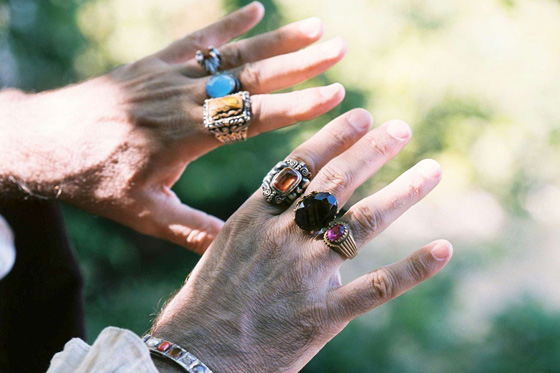
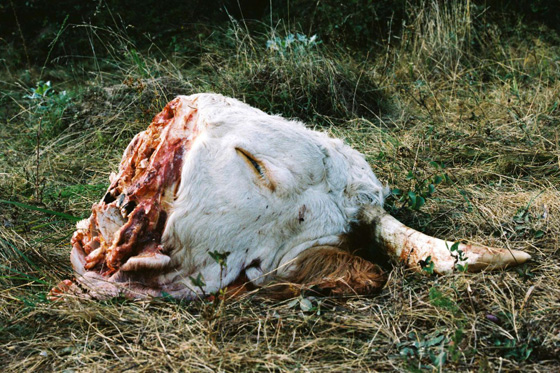
It is precisely so-unbearable, cruel, incomprehensible and indivisible-and it seems, probably, the collective old time to the modern audience-car, brought up in another optics, with other conflicts and challenges, with a different moral. The disputes and debates of this past seem to be made up of a dark, incomprehensible meaning, a whimsical verbal scribble, barely distinguishable from glossolaliya (Serra achieves such an effect with an exhausting editing - on the set, neighboring remarks that entered the final installation were divided by many hours of improvisation). In the film, the heroes of this old culture are Libertin Casanova, a decrepit, dying Don Quixote, a gloomy hermit of Dracula live their own life out of subordination to literature. Romanticism takes scores with enlightenment, freedom, crossing the line (“violation of borders - this is what we are doing here” - mutters the Dracula of the maid of seduced), becomes a bright and boring, like alcoholism, nihilism. The day turns into night, feast - into a massacre, Voltaire's books - into a whip, and shit from a night pot - into gold ingots. Actually, the fact that we observe on the screen is no longer dramaturgy, not a movie, not a story, but an alchemical process. The viewer has one choice: either take the result for a noble metal, or discard it like compost. “The story of my death” is invulnerable to criticism, “before this film is impossible to ... to be” - Serra himself boasts in an interview with Cinema Scope . It is clear why - decay, decay, decomposition of connections inside the text turn the “history of my death” into a pure phenomenon, a thing not subject to mental comprehension, dismemberment of a method, tasks, structure, poetics, and after all. But, losing the structure, breaking up on humus, the “story” does not lose its essence at all. We do not become different just because we die, as Montigne, so often remembered there, claimed.