
Translated material
Russia-2013: KGB in power
The President raised salaries to the heads of law enforcement agencies
The presidential decrees on raising salaries to the leaders of law enforcement agencies make you think that a revolution has occurred in the country
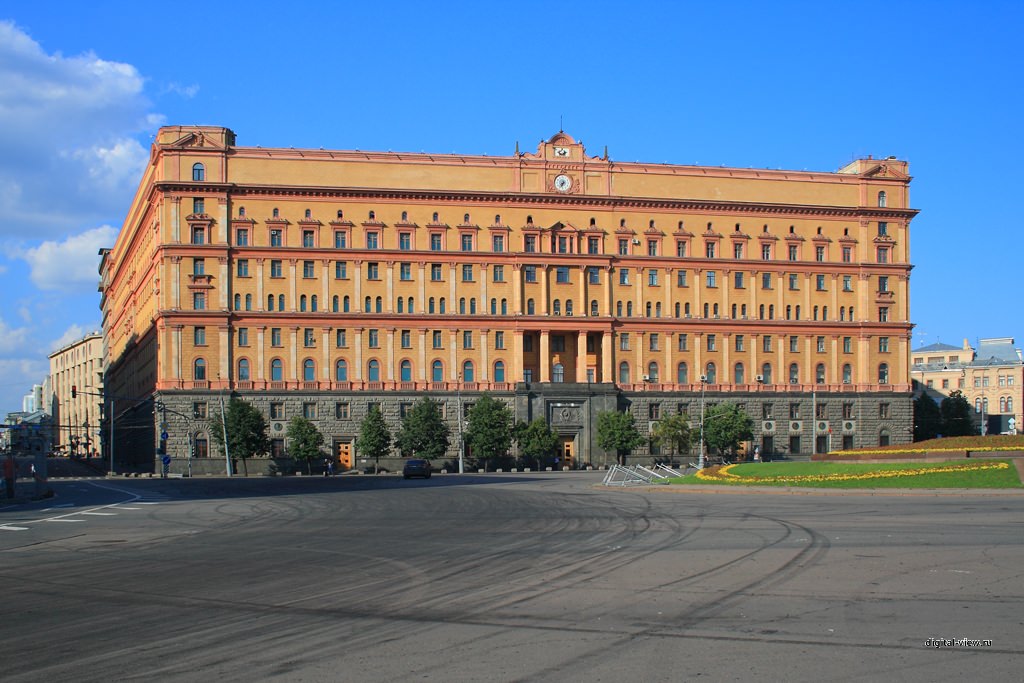
The building of the state security organs on Lubyanka
September 30, 2013 will go down in history. On this day, President Putin signed decrees No. 739–742, by which he increased money rewards (salary plus different bonuses) by 2–2.5 times - from the Minister of Defense to the head of the FSB, FSO, chairman of the Investigative Committee of the Russian Federation, etc.
The head of the FSB, General Bortnikov, from September 1, 2014 will receive more than the French president, and 30% more than
Prime Minister of Norway, rich in oil (see table*).
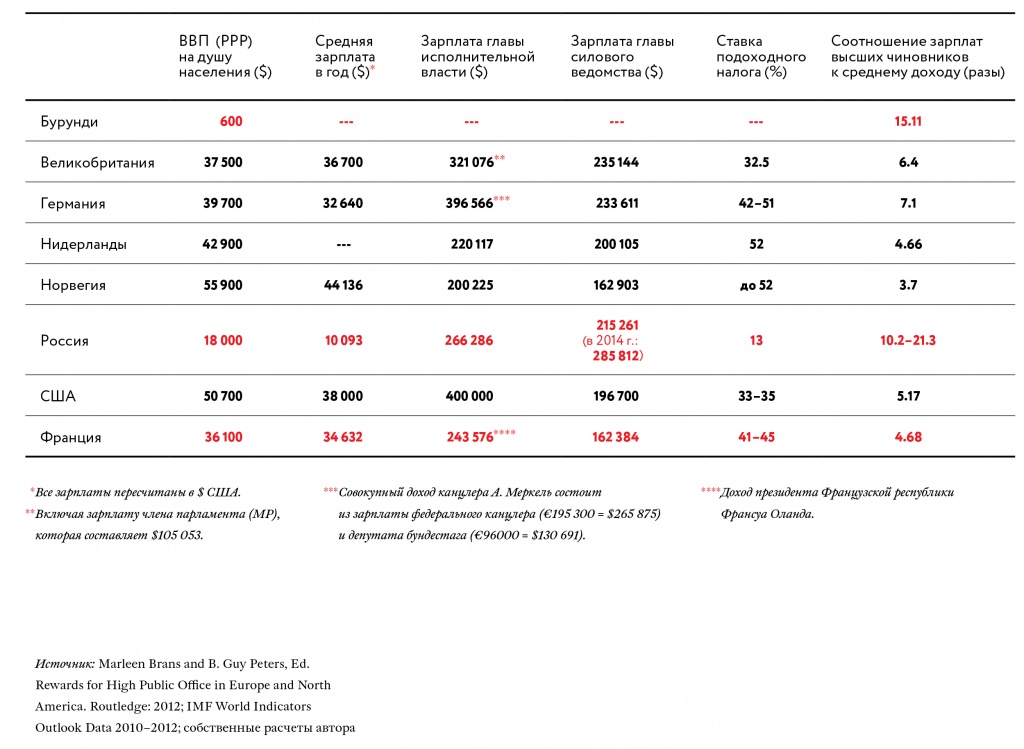

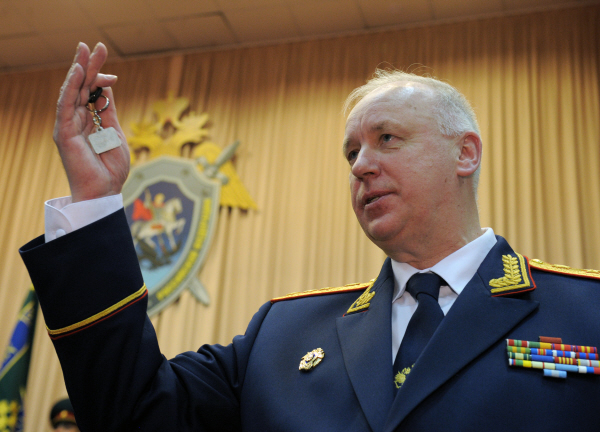
The head of the Investigative Committee, Colonel General of Justice Bastrykin, came close by income to the Prime Minister of the Netherlands. And the Minister of Defense of Great Britain or the head of the BND (Secret Service of Germany) of Germany can now run after our beer beer: their rewards are about $ 50 thousand per year less than, for example, the head of the FSKN Ivanov or the head of the FMS of Romodanovsky.
In the United States, the president can also determine the bonus for the salary of a political appointment - a member of his office. But the generosity of Putin Obama is far: the bonus is, as a rule, 35% of the salary.
Moreover, it is also worth noting that in democratic countries there is a progressive income tax scale (see the sixth column of the table) and the same BND head or the head of the British Mi-5 will have to give to the budget from 32.5% to 42% of their income, and the security forces of the Netherlands or Norway are 52%. And the head of the SVR - funny 13%.
But the point is not even in absolute numbers - the matter is the ratio between the average income of citizens and those to whom they pay salaries from their taxes. Studies of the famous specialist in bureaucracy, professor Gaia Peters show that in the most backward countries of Africa and in the authoritarian regimes of Latin America, the gap between the average salaries of subjects and their high -ranking rulers are the most significant. So, in poor Burundi, the minister’s salary is 15 times more than the average income of the layman.
Well, then Russia broke forward: after increasing the monetary reward of security forces in September next year, we will cost Burundi: the gap will be more than 20 times!
The question is, why did Putin suddenly decide to smell the security forces so much, despite the fact that the encouragement of civilian officials will not grow in 2014? Concerned about the growth of corruption? It is unlikely: the last ten years of endless increase in the salaries of officials have shown: the passion for a stranger is little related to the amount of salaries. Honest as they were honest, they remained or went to business, and the bribe takers learned that there was a lot of money for all money.
"
The head of the FSB, General Bortnikov, will receive more from September 1, 2014 than the French president
"
Buying the loyalty of security forces? Well, much more: they either through children, or by providing an umbrella of state security control cache flows in the most gold -bearing sectors of the economy.
But what if Putin sends a message to both civil officials and oligarchs without shoulder straps, these guys are real power in the country. However ... also not news. A lot of studies have already been written about the formation of militocracy, that is, a regime based on uniform. True, the authors tried not to mention that in Russia in the mid-2000s de facto there was a military (more precisely, Chekist) coup and it was precisely people in uniform who occupied command heights in management, although not always and not necessarily visible. However, Putin seems to be recorded by Putin: the president, the head of his administration, a number of assistants and heads of the AP Office, the second persons in the UK, in the General Prosecutor's Office, in most ministries - these are all immigrants from the KGB.
And for some reason Putin felt uncomfortable. Surrounded by brothers-chees, realized the need to throw expensive sweets to them. Fasting personal risks? It is possible.
Update dated 10/14/2013 (No. 33 (301), October 14, 2013
* The table stated that the salary of the head of the executive branch in Russia shall that recall for dollars $ 102,803, or 3 million 300 thousand rubles. per year. In fact, this amount should be more, since from 1.09. 2013, after raising the monetary reward in the Presidential Administration, the remuneration was raised by persons who replace public positions in the government (read-political appointments who are not subordinate to the law on public service, but are appointed by the president at the proposal of the Prime Minister): ministers, deputy prime ministers and the prime minister. Since September 1, 2013, the monetary maintenance of the Federal Minister has grown from 172,423 rubles. per month to 271,208 rubles, and from September 1, 2014, contrary to what the media wrote, will be increased to 426,585 rubles. per month. The remuneration of the deputy chairman of the government also increased from 206,905 rubles. per month to 324,457 rubles, and from 1.09.2014 will increase to 508,798 rubles. per month. Thus, by the next September, payments to civilian federal ministers and deputy prime ministers will increase by 63.5%. Accordingly, the remuneration of the head of the executive branch will be at least 712,317 rubles. per month, or 8 547 804 rubles. In the year, which will be comparable with the promotions of some security forces - the head of the UK, for example, but still less than that of the head of the FSB or FSO, whose income after the increase in September next year will be approximately 9,203,146 rubles. per year.
Photos: Alexey Druzhinin, RIA News