
Translated material
Visas to European values
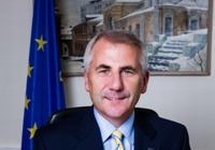
Problems with human rights in Russia can slow down ratification by European parliaments of an agreement on a visa -free regime between Russia and the EU. This was announced in an interview with Kommersant by the new representative of the European Union in Moscow, Vigaudas Ushaskas. According to him, in the issue of canceling the EU visas and Russia "gradually move forward", but this process cannot be sharply accelerated.
“In the end, the decisions are made not only by European officials and their Russian colleagues. Members of parliaments will have to say their word. On our part - the European Parliament and parliaments of 28 EU member countries. They will have to ratify agreements. And for them, as for elected representatives of citizens, the topic of human rights is of key importance,” said Ushaskas.
“Human rights are such a through topic. From our point of view, true trust is possible precisely when the parties share common values. Only by respect for human dignity, observing the rights of minorities and freedom of citizens, including political, we will be able to keep up to our common goal,” the EU representative said.
Ushatskas described as a “dynamically developing” relationship between Russia and the EU. “Yes, sometimes our interests differ from each other, and difficulties arise in relationships. But the EU is always aimed at finding mutually acceptable solutions,” he said.
Recently sent to Moscow Ushatskas - former Minister of Foreign Affairs of Lithuania. Since February 2010, he worked as an EU representative in Afghanistan.
On June 13, the European parliament by a majority vote adopted the resolution of "O rule of law in Russia." The Euro -deputies expressed concern about the persecution of NPOs, the adoption of a homophobic law, as well as a “swamp business” and the work of Alexei Navalny.
In addition, the European Parliament again raised the question of the EU Council and the European Commission on the introduction of restrictive measures against Russian officials involved in the death of Sergei Magnitsky, forbidden them with entry into the European Union and “frozen” financial assets in the EU.
On June 4, 48 members of the European Parliament signed an application for intention to block the initiative to grant a visa -free entry into the EU for Russian officials. In their appeal to the Ministers of Foreign Affairs and Internal Affairs of the EU member countries, the deputies stated that if in the near future an analogue of the American Law of Magnitsky, introducing visa sanctions against Russian officials involved in the Magnitsky case and other violations of human rights in Russia, will not be adopted in the near future. For owners of Russian service passports.