
Translated material
Mikhail Kosenko was carried out by applause
"Prisoner of Bolotnaya" sent for compulsory psychiatric treatment
On October 8, the Zamoskvoretsky court of Moscow found Mikhail Kosenko guilty of two articles: “Participation in the riots” on Bolotnaya Square on May 6, 2012 and “Application of violence to a representative of the authorities”. The judge sent Kosenko for forced treatment to a psychiatric hospital. Almost 1000 people came to support the “Prisoner of Bolotnaya”, about a dozen of whom were detained by the police. About what happened in court and around him - in the report of The New Times
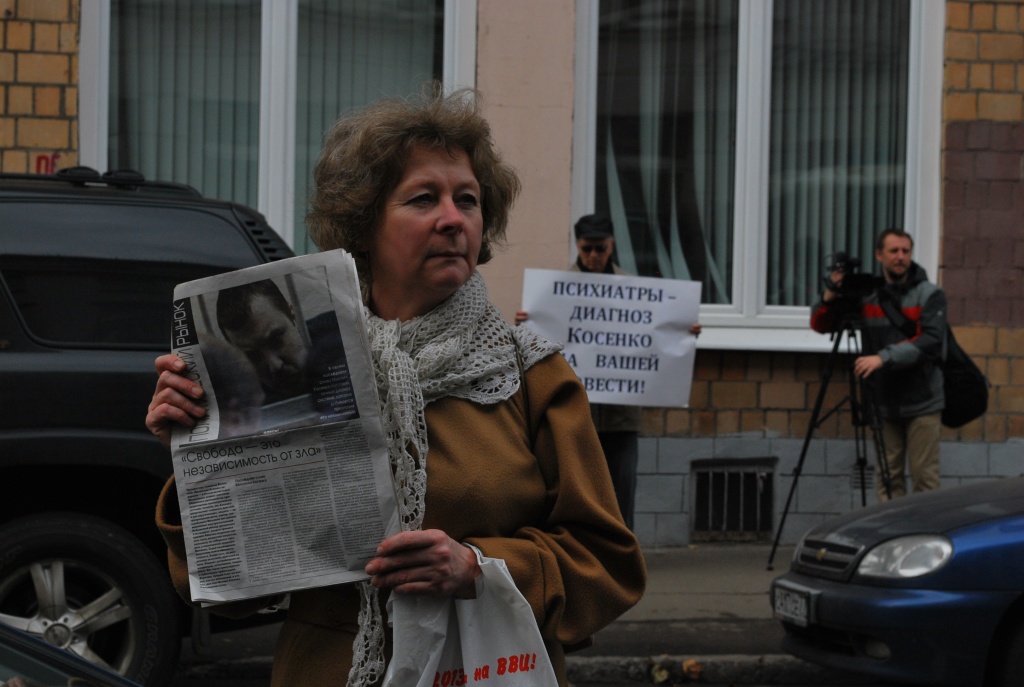
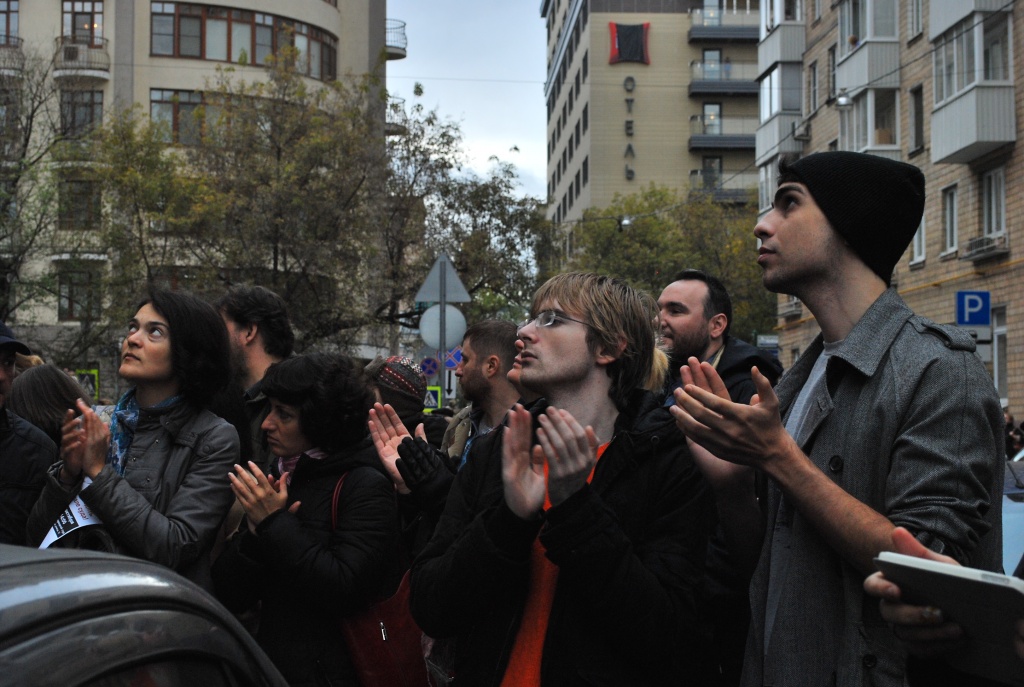
Half an hour before the appointed time, a huge queue lined up to the court’s entrance, very soon it stretched to the neighboring Tatar street. In order to overcome 10 steps of the court, it took at least half an hour. The bailiffs opened only one half of the double door, so those who wanted to go inside had to literally seep. The corridor on the second floor was very quickly filled with people, and it became very stuffy. What was happening in the hall, which was stuffed with a bit, was difficult to imagine. The bailiffs opened the windows, and people from the street tried to hear what was happening there. It seemed to them that they were clapping in the hall, - the street, deciding that they brought Mikhail Kosenko, also applauded. Alexey Navalny wrote from the hall on Twitter that they were clapping on the street, apparently, they brought Kosenko - the circle was closed. When Michael was finally brought, people on the street began to chant: "Misha!" On Twitter there were records from people in the hall that Kosenko hears screams and smiles.
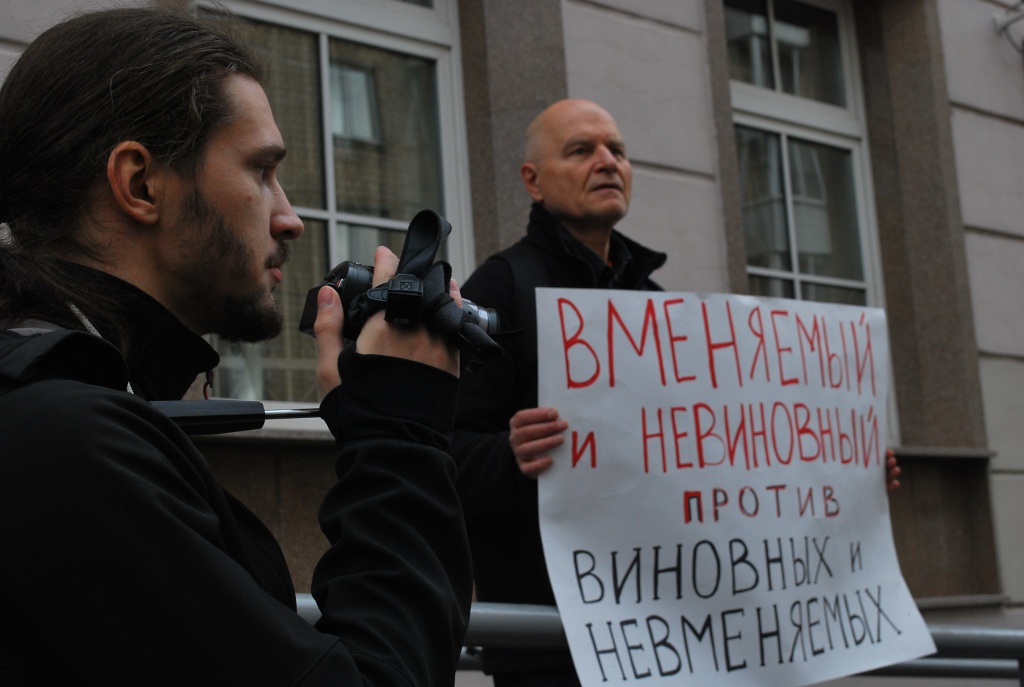
People on the street began to chant "Freedom!" - And then a small squad of riot police with a megaphone lined up on the roadway. One of the fighters began to broadcast: "Citizens, your actions fall under an article on unauthorized mass shares." They answered him that “there are such shares in the subway every day,” and continued to chant. At that moment it seemed that the police would be limited to a warning.
From the hall through Twitter came news about what the judge was saying. People on the street began to scream "Shame!" - And OMON began the detention. They pulled out one of the crowd and planted in a car parked nearby. In the first second, people could not understand what was happening, but when they led the second detainee, the street roared, chanting all the slogans of past rallies. The judge read the verdict for a little less than an hour, and all this time people were delayed on the street. It is difficult to understand the logic of riot police, but, apparently, they just took those who have louder's voice.
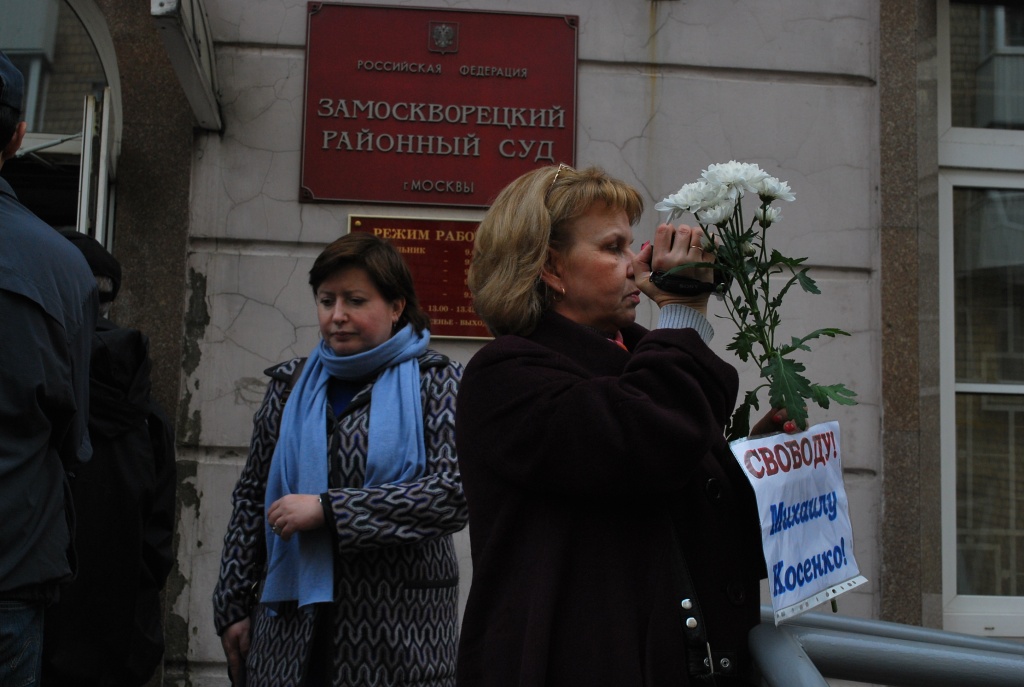
Judge Moskalenko read out the verdict: "Forced treatment in a general type of psychiatric hospital." Immediately in the hands of people standing near the wall of the court on the ramp, a long white ribbon appeared, on which bloody red letters were written: “Kosenko to freedom” - and something else about the court in black letters. But what exactly - no one had time to read: OMON rushed to pull out this tape from his hands. Tearing a banner, one of the fighters could not cope with adrenaline for a long time and continued to frantically tear the fabric even when the other fighters were already running with bites to drag the young man who had come to the protest to the railing of the fence of the fence.
Imagine! - the woman shouted to the riot police, leading a man to a car zak.
Not during working hours, ”the fighter answered calmly.
The human rights activist Lyudmila Alekseeva came out of the building. She cried. Aleksey Navalny, who ran out of the court, was clearly not in the mood to give any comments. Several journalists rushed behind him, but he did not say anything to them. “He is a fool,” one journalist said to another, “it was not for nothing that I voted for Sobyanin.”
People did not disperse, waited for Mikhail Kosenko to appear. He was taken out in an hour - the crowd spent him with applause.
Before the appeal that lawyers will file, Mikhail Kosenko will be in jail. He has been kept in prison for 1 year and 4 months - from June 8, 2012.
Photos: Maria Aismont
The New Times previously publishedthe material of Yegor Skovoroda on how the recognition of prisoners mentally ill promotes political repression , as well as a portrait of Mikhail Kosenko in the “Swamp People” cycle .