
Translated material
Light: The Kosenko case is an assessment of the right to a fair court
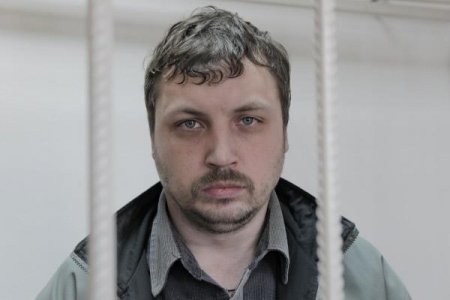
Mikhail Kosenko was found on October 8, guilty of participating in the riots and attacking a police officer and sent for compulsory treatment. The ATS-Info publishes a report of the United Public Surveillance Group (light) following observation on the courts in the case of Kosenko. On October 8, 2013, a verdict in the Kosenko case will be sentenced in the Zamoskvoretsky Court of Moscow. Mikhail Kosenko is one of the defendants in the so -called “swamp business”, associated with a demonstration on Bolotnaya Square on May 6, 2012. This is one of the cases that are observed by a group of light in the framework of public monitoring of ships. Mikhail Kosenko is accused under Part 2 of Art. 212 (participation in the riots, accompanied by violence, pogroms, arson, destruction of property, the use of firearms, explosives or explosive devices, as well as the provision of armed resistance to the representative of the authorities) and part 2 of article 318 (the use of violence that is dangerous to life or health in relation to the representative of the authorities or his relatives in connection with the performance of his duties) of the Criminal Code of the Russian Federation. Michael has II disability groups on psychiatric diseases (registered with the neuropsychiatric dispensary since 1999, after he received a shelter in the army). The state prosecutor demands for Mikhail Kosenko a direction for unlimited forced treatment. The facts are set out directly related to compliance with the right to a fair court recorded by the public surveillance group of the light during the monitoring of the trial in the case of Mikhail Kosenko. Comains everyone who wants to attend, including relatives, journalists and observers. So at the meeting in the case of September 13, 2013, more listeners came than to accommodate the hall allocated for the meeting. In total, about 30 people were in the hall during the trial, the rest remained outside the door. On October 2, 2013, before introducing two additional chairs, the bailiffs bickered with people for a long time, accompanying this with the following phrases: “This is not our duty”, “I won’t sink, or not”, “You will always have time to sit down, let's put it next to the accused in the cage.”
At the same time, throughout the time the meeting in the hall is quite stuffy, ventilation does not work, and on September 13, one window was opened only at the end of the court session at the request of those present.
At the entrance, it is necessary to present a passport at the entrance (the data is entered in a special journal, a note on the citizenship of foreigners is separately made in Zamoskvoretsky) and agree to the procedure for inspection of things for stitching-cutting objects and photo equipment.
At the last meetings, on average, two employees of the Ministry of Internal Affairs (or IC of the Russian Federation) in civilians without identification marks are constantly present in the hall or building of the court during the proceedings in this case.
The behavior of the bailiffs in the Zamoskvoretsky court was noted, which does not meet the requirements of respect for the honor and dignity of the individual, establishing excessive restrictions. So, for example, when, after more than an hour of waiting in the courtroom, one of the lawyers went to the door to the judge’s office and tried to open it with the aim of finding out about the time of the meeting, the bailiff stopped him and said: “I am doing the first warning to you”. During the inspection of personal belongings at the entrance to the court building, the bailiffs allow rough handling with visitors, do not explain the order and grounds for the inspection, do not strive to reduce the intervention to the minimum necessary level - on the contrary, it seems that the purpose of inspection is the creation of maximum inconvenience when accessing the court. To the question of the observer, on what basis the inspection is carried out, one of them replied: “If I want, you will not go to court now.”
Competence, independence and impartiality of the judicial authorities
Video materials presented by the charge were viewed using a laptop with a diagonal of 15 inches, which was set in such a way that the client and the public defender had to get up to consider the image.
Part of the audience did not have the opportunity to observe what was happening on the video. At the same time, the notbook screen was not turned towards the judge - thus, the court did not see the proof of the prosecution, which were primarily investigated by the court to establish true circumstances. We note the complete absence of a court reaction at this moment.
The application for the call to call an expert who conducted a psychiatric examination of the state of the defendant remained disgraced. At the same time, the conclusion of a psychiatric examination is a key document for the public prosecution, since they argue that on May 6, 2012 on Bolotnaya Square, and currently Kosenko is in an insane state and therefore the prosecutor’s office insists on its forced treatment.
Refusing to be a petition, Judge Moskalenko said that “the court will assist the protection of any witnesses,” however, in this particular episode, the court took off his responsibility for the show of an expert that has information that is essential for the court decision on this case.
Equality of the parties
Observers regularly recorded the removal of issues to witnesses from the defense. So at the hearing on September 27, 2013, after the phrase of the defense witness, “squeezed us to the bridge, I hesitated, received a stamp. I wrote complaints to the UK ”The judge removed the following issues of Ayvazyan’s lawyer:“ Have you seen who hit you with a stamp? ” And "Did you get answers to complaints?"
The defense witness in the case of Kosenko was ready to provide a video shot by him during a rally on May 6, 2012, on which, from a different angle, different from what is on the video presented by the prosecution as evidence of Kosenko’s guilt, is visible the episode sane. However, the presiding judge Moskalenko refused to review and introduce this video file as "received by non -subject and not removed with the design of all appropriate procedures." Such a wording refers to material evidence that really join the case by investigators. However, this does not apply to “other documents”, which the defense also has the right to provide documented certificates during a trial. If there are doubts about the authorship of the video, to determine the relevance and admissibility of evidence, it is still necessary to investigate before making a decision on familiarization with the case or refusal. However, the court did not.
Judge Moskalenko also refused lawyers to satisfy a number of motions to familiarize themselves with the medical documents of one of the main victims of Kazmin, depriving the defense to get acquainted with the evidence that were used by the charge.
Presumption of innocence
The defendant M. Kosenko during the court session was contained in the metal “cage”, while the materials and notes of protection were transmitted only through the hands of the escort and after familiarizing themselves with the latter with their contents. Moreover, the very fact of being in the cage creates a prejudice in the guilt of the defendant, can be considered as humiliating human dignity.
Throughout the process of defendant Kosenko, they also brought to the courtroom accompanied by a dog that in the eyes of others it also forms the image of a dangerous criminal, providing an awesome effect in relation to the accused himself.
The right to defense
During the trial, Kosenko was defended by 4 lawyers and defender (sister). At the same time, the side of protection did not always have the opportunity to coordinate positions. So, on September 13, the application for a break to coordinate the position with the client was refused - with oral wording: “Turn and coordinate” (the cell in which the defendant is located is located behind the tables of lawyers).
A separate moment of violation of the right to defense is that the escorts carefully listen to the conversations of lawyers and Kosenko, forbid to transmit papers, notes and other documents from the defendant and vice versa, until they themselves read these materials. In response to the objections of lawyers, the escort refer to departmental instructions.
On August 28, Kosenko disputed the provisions of paragraph 308 of the unpublished “instructions on the official activities of temporary detentional insulators, security and escort units”, approved by order of the Ministry of Internal Affairs of the Russian Federation of March 7, 2006 140ddSP, according to which the convoy prohibits the transfer of any documents from the lawyer to his client and back to get acquainted with the papers. The applicant asked to cancel these rules regarding confidential protection documents, since the relevant norms contradict Articles 47, 53 of the Code of Criminal Procedure of the Russian Federation, Article 18 of the Federal Law “On the Content of the Suspects and Crowns of Crimes”, Articles 6.8.18 of the Federal Law “On the Bar in the Russian Federation”, the legal positions of the European Court of Human Rights. Kosenko’s lawyers argued that the instructions for escorts violate the right of a citizen to receive qualified legal assistance, including creating obstacles to the confidential communication of a lawyer with clients
The stated requirements were refused, but at the same time, the court decided that in accordance with Article 48 of the Constitution of the Russian Federation and Articles 46, 47 of the Code of Criminal Procedure of the Russian Federation, the right of the suspect to receive the help of a defender is guaranteed - No. 63 of the Federal Law “On Bar” provides for the right of a lawyer to unhindemically meet with his principal, in conditions of confidentiality (including in The period of its detention), and paragraph 308 of the order of the Ministry of Internal Affairs determines the obligations of the escort to the defendants to come into contact with citizens, accept and transfer letters, notes, things, and other objects to strangers. The defender is a participant in criminal proceedings and does not belong to other citizens. Thus, paragraph 308 of the order of the Ministry of Internal Affairs does not regulate the procedure for meeting the suspect and lawyer during the court session, does not interfere with their confidential oral and written communication in the courtroom.
In fact, the court indicated that the convoy did not have the right to motivate its actions described above with the provisions of the specified instructions of the Ministry of Internal Affairs, but this did not affect the behavior within the framework of this trial.
The moment that seemed to observers unclear and causing additional questions. The judge refused M. Kosenko in the last word, citing the fact that this procedure is "not provided for in the Code of Criminal Procedure." Although the Code of Criminal Procedure has a separate article (Article 293 of paragraph 1. “After the end of the parties, the presiding judge provides the defendant with the last word”). Instead, after replicas on both sides, the judge asked if there were “additions” and, within the framework of this, allowed the defendant to make a speech prepared by him. In fact, the right of Kosenko was not violated, but formally the category of “additions” was not prescribed in the procedural either Russian or international legislation. What was guided by the judge in this decision is not clear. It can be assumed that the presence of a special psychological state of the defendant (according to the version of the state prosecution - paranoid schizophrenia, in which Kosenko, based on the examination conducted at the Serbian Institute, cannot participate in the trials) which, however, was not recorded by any court order, which means that the accused to consider the case on a common basis remains.
The right to interrogate witnesses of the other side and explore their evidence
On September 13, after the cross interrogation of the witness (OMON fighter), during which he stated that Kosenko did not recognize, did not see him on May 6, 2012, the prosecutor read out the protocols of the previous testimonies of this policeman. Then the prosecution representative showed the OMON employee the screenshots of the video on which Kosenko is supposedly located, and by which the witness identified him during the investigation, which confirms the signature under the protocol. At the same time, the prosecutor and the witness stood at the judge’s table, with their backs to lawyers who were not demonstrated by these photographs.
In turn, the application for the defense of viewing the video, which, according to the case file, was shown to the witness during his interrogation by the investigator (in which the lawyers expressed doubt), was rejected. The court motivated the refusal of untimely.
Reasonable terms of consideration of the case
On August 14, 2013, the meeting on the consideration of the case M. Kosenko did not take place due to the judge’s illness, but the information about this was absent on the court’s website. The public defender of the defendant - the sister of M. Kosenko - was not put on the course. The date to which the meeting was postponed was not determined. It is important to note that the continuation of the consideration of the case was postponed in the same way three times. The official justification was the failure to appear witnesses to the court and the inability to find witnesses and victims from the court and deliver them to the court. Nevertheless, after September 13, the court sessions went at an accelerated pace, several meetings per week. The prosecutor's office also stated that it was finishing the presentation of evidence - as a result, only 7 witnesses and victims were interrogated in court (with more than 365 witnesses, 55 victims, including 3 legal entities - in the case).
The meetings regularly begin late, and the time of delays-from the official principle to the actual one-is on average from 30 minutes to 3 hours-so on September 27 the expectation dragged on for more than 3 hours. It is especially worth emphasizing the situation of the judge’s waiting at the hearing on July 26, 2013, when after 1.5 hours, which passed from the appointed time the start of the meeting, the audience, lawyers and the defendant were reported about the failure to appear of the witness - as a result of which the meeting was postponed. At the same time, according to the secretary, the court was known about this fact in advance.
Respect for private life
Along with the circumstances testifying to the violation of the right to a fair trial, an important point in this trial was the refusal to satisfy Kosenko’s petition for the presence of his mother’s funeral. Such a refusal contradicts a number of decisions of the European Court on similar issues, and therefore violates the right to Kosenko's family life.
So at the end of 2011, in the decision in the case “Giszczak v. Poland ”(No. 40 195/08) The European Court of Human Rights has expanded the boundaries of interpretation of the right to respect family life. In the case under consideration, the applicant was in custody. When in 2008 his daughter after an accident was in intensive care, the court refused the applicant to visit his daughter. Two weeks later, the applicant’s daughter died, and he was allowed to visit her funeral under the escort of the police. The applicant did not hockey to appear at the funeral in the prison robe and asked him, as well as the convoy, to be allowed to come to the mourning ceremony in the suit. He was refused this. In §§ 27, 31 of the specified OFR resolution, with reference to the previously issued decision in the case “Ploski v. Poland ”(No. 26 761/95) indicated that the refusal to provide the applicant to visit the dying daughter in the hospital is a violation of Article 8 of the Convention. According to the second episode in §§ 39–41 of the resolution of the ECHR, he also recognized the violation of Article 8 of the Convention, motivating this conclusion by the fact that the applicant was not in a timely manner and unequivocally informed about the possible conditions for visiting the funeral.
The lawyer, referring to the request of the defendant, requested that part of the stage of the debate of the parties on September 2 regarding the medical data and the psychological status of Kosenko, to declare closed. A refusal was received with the justification that the judge "does not have the right to interrupt the debate." In this connection, lawyers were forced, according to them, to significantly reduce speech and not go into details using general phrases. The audience was ready to leave the hall voluntarily, but at the first torture to get up from the places, heard from the bailiffs (the convoy with the dog was next to the benches where the listeners were located), the shout: “Sit all in place!”. The meeting continued in open mode. Since facts from private life are revealed, this is the basis for closing the hearing in this part. In the Code of Criminal Procedure of the Russian Federation there are no restrictions at what stage and in which part the hearing is closed.