
Translated material
Dialogues about Titian
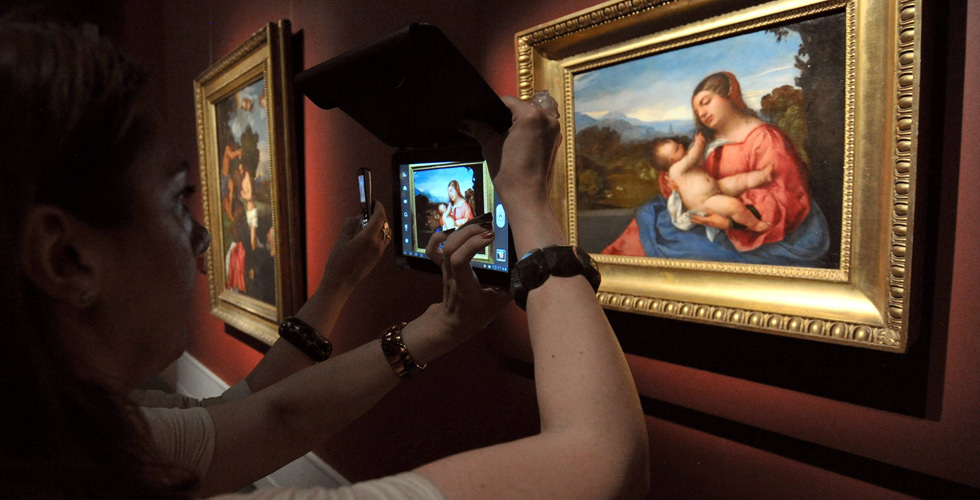
COLTA . RU is reviving the project "Likbez" , in which famous experts will represent their view on the fundamental concepts and phenomena of culture. We decided to start with the classics of fine art by organizing a walk-excursion of an amateur and connoisseur of the old European painting Alexander Timofeevsky and art critic Gleb Napenko on the recently closed Titian exhibition in the Pushkin Museum. The interlocutors discussed what ways they looked at the paintings of the great Venetian before and what we can see in them today.
Alexander Timofeevsky: Let's start with a preface. I am not an art critic, I am a writer. It seems to me that I know the European painting from the XIV to the XVIII century, especially the Italian, was probably in all major museums in Europe, read different books and thought, looking and reading. I hope I have an eye and some considerations, I do not know how valuable they are. All this is chaotic and unsystematic. Therefore, no interview will obviously work out, but there will be a dialogue, and I will also ask you. And my first question is: why do you think such lines are in Pushkin?
Gleb Napapenko: The queues, I think, not on Titian, but on the pre -Raphaelites. Here, by the way, the question is on which audience the Pushkin Museum bet. After all, he gained his fame since the Soviet era due to imported exhibitions.
Timofeevsky: Yes, and it is curious that what Antonov did is that no one does no one in the advanced museum world. A few years ago, I was in Vienna at the exhibition of late Titian, very understandable conceptual ... Exhibition of Titian, in which the world began to fall apart into pieces. This is my favorite Titian, by the way. And what is now in Moscow? There are chopsticks of early, strap -ons of the middle and alcohol of the late, it seems to be a claim for completeness and coverage. But for completeness and coverage, this is not too representative: a rather random sample is given. As it turns out, they showed what they managed to breathe with the huge, truly representative exhibition of Titian in Rome. She was not only in Rome, but in front of Moscow was there. And it seemed to be fifty works on it.
NAPENKO: And here is eleven paintings. With prerafaelites the same thing, this is about a third of the large exhibition from Tate.
Timofeevsky: Conceptual exhibitions that are interesting today are never made in Pushkinsky. And in general they are almost not done in Russia. A rare example is the exhibition of Arkady Ippolitov “Meppletorp and Mannerists”, which he made in the Hermitage with the help of Guggenheim.
NAPENKO: Do you mean exhibitions with the so -called old art?
Timofeevsky: Yes. I mean the use of museum funds to express important considerations today.
NAVPENKO: as I understand it, such imported exhibitions are the heritage of the Soviet era when there was another demand for information about art and access to foreign meetings?
Timofeevsky: Of course. Here, Piotrovsky’s position in the Hermitage and Antonova in Moscow differs little: for them it was, the purpose of the exhibition remained - to introduce the wide Soviet and post -Soviet spectators with the achievements of Western art. But in the USSR, these exhibitions made sense. And today, sit on the plane, fly in London and look at the pre-Raphaelites, what is the problem.
Naparenko: Well, for someone it is not so simple ...
Timofeevsky: Ulya. I take careless words back. And still, the information has become an order of magnitude larger and the meaning of exhibitions with the task of showing at least something is not as great as before.
Repin of the soul did not dull him in him, I don’t even understand why.
Naparenko: And at the level of scientific work, have the filling of exhibitions changed? For example, the texts at this exhibition Titian are quite naive.
Timofeevsky: Previously, the texts were completely shameful, in this regard the situation improved. And at this exhibition they seem to be translated.
NAVPENKO: Where is the best way to watch Titian?
Timofeevsky: Probably in Vienna. The Museum of the History of Arts in Vienna is, as they say, the museum of the peoples of the USSR: the best was brought there from the entire Austro-Hungarian Empire. Including from Venice, which was Austrian. There is the richest meeting of Georgon. There is the most beautiful and very different Titian. In general, the history of art is best to watch in German and American museums, in Berlin, in New York, where not the royal taste is represented, not imperial conquests, but the history of art ...
Naplyenko: ... as a discipline formed in our time. And if we approached her, I have a question. How did Titian's perception in culture change over time?
Timofeevsky: Titian has always been appreciated. Assunta, the ascension of Mary, was pulled out in quotes in the 16th century and continued to do this in the XVII -XVIII centuries. And in the 19th century, Turner or Manet is immediately recalled. It is interesting that Titian was almost the main artist for Russia of the second half of the XIX century: paradoxically, he was a favorite of socially concerned, literary wanderers. And Repin of the soul did not dull him in him, I don’t even understand why. There is such a fullness of the world in Titian, which attracted to itself and beckoned to an advanced Russian man. Venus in front of the mirror was perhaps the most copying picture in the Hermitage, until it was sold. Everyone knows a copy of Serov, but there were many others.
NAPENKO: When did such an interest in Titian in Russia arise? After all, some of his work was purchased under Catherine the Second. But then other artistic guidelines dominated: French painting ...
Timofeevsky: ... as well as Rafael and Bologna academicism. Catherine performed in the XVIII century in the same role as America - in XX. She had much more money than anyone. And by the way, she had a good taste-for example, she loved Sharden, and not Vizh-Labrene, which she called Vizh-Labrenka.
But Pushkin Titian does not appear in any way. There is Correggio and Canova in verses to the nobleman. They then knew everything only by engravings, according to black and white reproductions, because the Hermitage was discovered for the public only in the middle of the century (in 1852.-Ed. ). Raphael, for example, is more understandable in engraving.
NAPENKO: After all, he has everything built on compositions.
Timofeevsky: Yes, on composition and drawing first of all. And all that works with a spot, like Titian, disappears in engraving.
Napapenko: Like all Venetian painting.
Timofeevsky: But Pushkin did not have to visit Venice - they did not let him go ... So he did not see his beloved Europe.
Naplyenko: Is it possible to talk about the specific place of Titian in the minds of painters in Russia in the future, during the 20th century, in Soviet times?
Timofeevsky: Socialist painting was more focused on Veroneses than Titian, it seems to me. But Titian also loved. Soviet art history contrasted him with mannerism, which was considered painful, decadent and was persecuted almost in the same way as homosexuality is now. And there was a theory that there was no mannerism in Venice, but there was “healthy art”. In Florence and Rome - soreness appeared there, and Veronese, Titian, Tintoretto, everything was healthy and strong, like carrots. Although Tintoretto is such a mannerist, a manneristly go to find.
Naplyenko: But there was some kind of logic in the constructions of Soviet art historians, some kind of ideological necessity? Perhaps, for example, the fact is that the Venetians, Tintoretto, have more agreed and solemn clusters of people than some ponto or Parmijanino? And therefore they were in demand and did not go through the department of mannerism?
Timofeevsky: Bazovo in Soviet ideology stated that the art of revival is the art of realism. In the 15th century, Florentine art was looking for a natural person as he is, and at the beginning of the 16th century it finally found, and this was a genuine triumph of realism. And then suddenly a terrible mannerist, modernist distortion arose, which was imposed on the world Ponto, Rosso, Julio Romano, Parmijanino and so on. El Greco also did not complain Soviet art history.
The history of art is best to watch in German and American museums.
Naplyenko: And the late Titian?
Timofeevsky: Titian was always good, correct and realistic. All this is complete crap, because the art of high revival is a pure abstraction, like Malevich. There is no realism at all, it is not about natural, as it is, man, but about the unity of the real and ideal world. This is an infinitely idealistic art. It is about a world outlined by a triangle, holding on a perfect balance, on the harmony of visible and invisible. And this harmony has existed for only 20 years, the shortest two decades, from 1500 to 1520 - the year of the death of Raphael. Then - gradual, then a complete collapse and crash. This is very evident in the Farnesin villa in Rome, where in the first hall of Rafael's Triumph, and everything there is in perfect order with harmony, with a triangle, and with the unity of the real and ideal world, visible and invisible. But go to the next hall, where the Rafaelean student Julio Romano is the same Villa, the same ideas, but you got from the temple to the bathhouse. No modernist maliciousness - just the world collapsed. The mannerists just followed Maniera Grande (hence their name) - the great style of Michelangelo and Raphael, but the more or rather they followed, the further they left him.
And in Venice there was something similar. The ideal world is Georgone and the early Titian, for example, the Louvre Concert, which was listed for a Georgon for a long time and which is now attributed to Titian. But in the twenties, Titian also increases the gap between the ideal and real, Titian, as it were, recreates the world that he had in an early “concert”, but in a situation where tension and threat, a pronounced drama have already arose. This is its average period. And in the end, the world still breaks up. This is a late period. Titian is covered by the entire Spengler circle, all from beginning to end the life of culture.
NAVPENKO: It is interesting that what you say about the ideal world and the late Titian is also a person’s view of a certain era. For example, for the XIX century, Manet from Titian has removed something that we have since called art since then. But if you look at the portraits or religious canvases of Titian, no matter what the distillations of the aesthetic we do, we will never get rid of their feelings, roughly speaking, officerity, conventionality. They have found mane. And there is something else, inseparable from him, an order, which, of course, is even more at Tintoretto or Veronese. We can turn a blind eye to this and see pure art, but behind it is the material history of religion, order ...
Timofeevsky: Of course, Titian is a man of flesh and blood who loved honors and money. He lived with his painting, fought for orders with Lorenzo Lotto, and Lotto, by the way, often won and the long period was quoted no lower. And Tintoretto Titian also fought for orders. And in the end, he, pushing everyone, became the main artist of Venice. But why should we talk about intrigues? God is with them. This is what you yourself called Mane is much more interesting. Manet extracts from Titian just a new formula of large style, adequate XIX century. After all, “Breakfast on the grass” refers to Titian's “concert”, and “Olympia” to “Venus” Georgon and “Venus of the Urbin” Titian.
 © ITAR-TASS Opening the exhibition "Titian. Pictures from the museums of Italy ”in the Plane named after A.S. Pushkin
Napapenko: But Manet plunged this form, plunged the most sophisticated aesthetic finds into the household, rough reality of his time - as in the same Olympia.
Timofeevsky: Of course, she is a whore.
Napapenko: And Titian’s “Flora”, too, if we talk about the household substrate of this mythological image: it is most likely a courtesan. And this was perceived quite normally - by the way, the scandalousness of Manet was not only that he portrayed a prostitute, but also how he did it.
Timofeevsky: An artist who portrayed Flora all his life is a palm tree, he has many such prosaic aunts - Venetian courtesans.
Naparenko: In fact, there is a connection between all intrigues, orders and a rather cynical life of the artist in Venice - and Titian's exciting works. A simple separation of aesthetics and everyday life is not the only meaning that can be extracted from Titian, you can try to look at them in a relationship ...
Timofeevsky: No, it seems to me, here like Pushkin’s - “until the poet / for the sacred victim Apollo, / in the cares of vain light / he is indifferently immersed.” So it is with intrigues ... Yes, the artist exists in them, but when Apollo demanded - everything, the artist is no longer here. Similarly, in the "conversation of the book seller with the poet": "Inspiration is not for sale, / but you can sell the manuscript." Getting an order is one thing, and inspiration is completely different.
Naplyenko: What Pushkin writes about is already the logic of romanticism, which is generated by a completely different time, another device of the art market. Pushkin does not work to order like Titian - he first creates something and then tries to sell it.
For example, there is a question about the connection of Titian and counter-reformation, which began in the 1540s ... In his later works, they see a connection with the counter-reformation purely iconographically, but in general their inflated protobaric intonation fully meets the requests of the Catholic Church at that time, it seems to me.
Timofeevsky: Only one work really fits into your assumption at the exhibition-“Annunciation”. Look: in the depths of the picture, a non -repalled bubble, and a vase with a bouquet in the right side of the picture rhymes with it.
NAPENKO: That is, a connection is made between the phenomenon of God Moses and the Annunciation.
Timofeevsky: Yes. This is a picture about the fire, about the news of the fire that Archangel Gabriel Maria carries. The fact that everything will burn. And in horror, Maria is recoiling from what will happen. And in the sky there is also a fire ... By the way, these angels are not very well made in the sky.
NAVPENKO: He used the services of a workshop?
Timofeevsky: He had a workshop, and, of course, he worked a lot with her, but often he simply threw pictures, not ending ... The most striking example is the ingenious “shepherd and nymph”, my favorite picture of decay. Pay attention to the excess hand of the shepherd - I was too lazy to smear it. At first the shepherd hugged a nymph, then he began to hold the pipe. Is it important when the world collapses.
Pushkin did not have to visit Venice - they did not let them ...
Naplyenko: Could one of the artists influence the creation of Titian of his late style?
Timofeevsky: It seems to me that no one - he created the world of decay.
NAPENKO: So you think that it was his immanent development?
Timofeevsky: Absolutely. After the perfect world of “Venus”, “concert” and “three philosophers” collapsed with George, he begins to collect it in a new form, re -recreates the unity of the real and ideal on a new basis - according to the laws of his own will. And then these masterful laws lead him to a crash. Because that world, the world of the early, Georgonevsky Titian, was based on Revelation, and not in the wild.
NAVPENKO: But what happened?
Timofeevsky: God knows. Something happened in 1520. But for the late Titian it was a long time ago. We are now discussing the picture of the 1570s.
Naplyenko: But still, sorry for the vulgar sociologism, such a synchronism of the style breakdown, a style jump can hardly be separated from the events in Italy ... We must also understand what exactly happened there, and the issue of mediation is complicated in what way this affected art, but indeed the city-state in Italy at this moment approach the crisis.
Timofeevsky: And in art there was an ideal formula for perfection. Look at the "Venus" Georgon.
NAVPENKO: Perfection is half -hot. And then dreams become anxious.
Timofeevsky: Well, then, then he sleeps much worse.
Naplyenko: Already Georgon has a graduation.
Timofeevsky: Of course, but gradually. She is never directly declared. This is an alarming Eros, which is quite harmonious. About him - all Venetian trembling: everything is saturated with eros. Take the famous “thunderstorm” by Georgon, Gypsy and a soldier.
NAPENKO: Yes, and between them - tension, lightning in the sky. This anticipates the “Annunciation” of Titian, which we discussed: the lightning blocked by George, turns from Titian into detacular heaven. It is interesting how much we perceive Titian today through the prism of Western culture of the 20th century, through, for example, cinema or painting of expressionism ... After all, the same Caravaggio was appreciated not so long ago. And the late Titian seems to be an excellent object for the aesthetic postmodernists of the years of the 1980s, for example, for the British-Jarmen, Greenaway ...
Timofeevsky: It is amazing that Titian is completely consonant with the ideas of postmodernism about the end of the story, the end of the ordered world, and should have been, in theory, in their taste, but I do not remember any late Titian from any of them. If you take Greenai, then in the "Contract of the drawingman" - the art of Rome, in the "Books of Prospero" ...
Naplyenko: ... Prospero in a hat of the dozel a la Bellini.
Timofeevsky: Well, yes, Bellini. One of Titian's favorite things with a completely incomprehensible plot is a “boy with dogs”, and, in theory, she should have been melted with the XX century for pieces. But it was not. This picture is the end of the world, and at the same time its beginning: a boy and a nursing dog against the backdrop of a fire. What the plot is unclear. Is there a Persian king Cyrus, nurtured by the dog that I already mentioned by Arkady Ippolitov, it seemed that Titian Cyrus, and I believe him like God, but in the childhood of Kira was one dog, and not a few, and what did the fire have to do with it?
Naplyenko: From mythological paintings at the exhibition there is still “Danaya”. В мире она существует в нескольких вариантах.
Тимофеевский: Да, и та, которая на выставке, лучше той, что в «Эрмитаже», мне кажется. У нас на картине есть Даная, воплощающая сладострастие, и есть служанка, получающая с этого деньги. Одна отдается, другая снимает проценты. А здесь история про чудо: есть не помышляющая о сексе дева и есть пролившийся на нее дождь, нисшедшее откровение, и никакой тебе служанки. Наша история более житейская, бытовая, она про любовь, но со всеми ее прозаическими выгодами, а эта работа — про таинство.
Напреенко: Я читал, что здесь изображена любовница кардинала Фарнезе и что золотой дождь — намек на то, что Фарнезе очень богат.
Тимофеевский: Очень может быть.
На картине в Прадо служанка, кстати, тоже сознает факт чуда. А у нас она просто деньги собирает. Во всех вариантах, однако, появление служанки сразу занижает историю, ввергает в быт, опускает на землю.
Напреенко: Интересно, что служанки нет только в самой первой версии, которая и выставлена сейчас в Пушкинском, а потом Тициан повторяет эту сценку уже всегда со служанкой. Служанка вводит в картину ту самую диалектичность — между чудом и бытом.
Тимофеевский: А в самой поздней, четвертой, версии вообще появляется зримый лик бога в облаке, у которого монеты сыплются изо рта.
Напреенко: Да, такая божественная фигура вне тела, срастающаяся с облаком, — тоже позднетициановская тема.
Еще на выставке представлено несколько портретов…
Тимофеевский: Среди них самый странный, по-моему, — портрет Джулио Романо.
Напреенко: Иконографически довольно типичная схема для того времени — человек плюс атрибут…
Тимофеевский: Но Тициан как бы польстил Романо, изобразив его архитектором с чертежом какого-то куска Палаццо Те, и тут же поставил на место — Романо был не в первую очередь архитектор все-таки; он прекрасный живописец. Здесь же портрет благопристойности, в облике экстравагантнейшего Джулио Романо нет никакой экстравагантности, он здесь почти купец.
А вот портрет молодого человека на этой выставке — это идеальный портрет. Идеальный потрет идеального молодого человека. У него в Ренессансе много обличий — у Рафаэля, у Понтормо, у Бронзино… Самым знаменитым тогда был рафаэлевский портрет Бальдассаре Кастильоне.
Напреенко: Если сравнивать «Кастильоне» Рафаэля и портреты Тициана, то у Рафаэля все пребывает в совершенной завершенности, а у Тициана всегда есть из полноты готовность к переходу, к жесту. Всегда есть диалог между нарциссическим покоем, в котором пребывают фигуры внутри себя, и волнением направленной вовне динамики. Это было у него уже в ранних работах, и это создает возможность для его позднего стиля, где нарастает напряжение между этими составляющими. В общем, тут простор для формального анализа. А вот Эрвин Панофский любил анализировать работы Тициана, так как в них полно иконологических загадок.
Тимофеевский: Разумеется. Самая интересная в этом плане картина на выставке — это «Венера завязывает глаза Амуру». Здесь разыгрывается, как и в «Концерте», как и в картине из Боргезе «Любовь земная и Любовь небесная», сюжет земной и небесной любви — здесь все удваивается: два амура, с открытыми и завязанными глазами, и две девы, одна с обнаженной грудью, у нее лицо сладострастное, и другая с почти девственно чистым лицом… Но будучи разведены, все тут же соединены и спутаны: один амур смотрит на другого, у одной девы лук, у другой стрелы. Это картина о любви, которая тут же оборачивается своей противоположностью.
Напреенко: Диалектика. И то же самое в композиции: покой слева и порывистое движение справа, сопряженные друг с другом. Снова та самая диалектика.
Тимофеевский: Да, диалектика. Ведь все во всем откликается, и все противоположности сходятся. И на этом перетекании одного в другое и построено искусство живописи.
Вот мы с вами и дошли до главного в Тициане.