
Translated material
Will Kolobok ban?
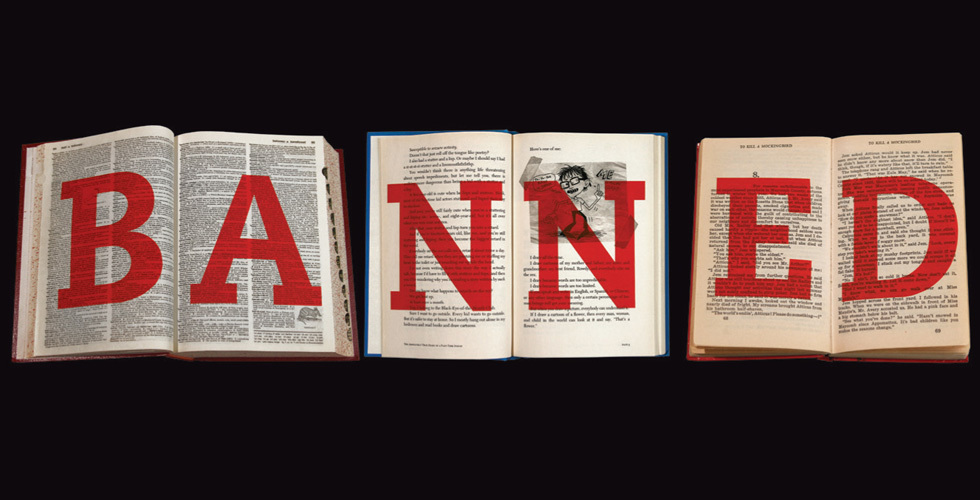
In my hands, the Constitution of the Russian Federation. I read out loud: "Censorship is prohibited." The youngest daughter, who hears this, is noticeably straining: “No, mother! No need to prohibit anything! " I lay out this quote from the 29th chapter of the Basic Law to Facebook and also strain-just in case. Thus begins a week of prohibited books - simultaneously with a similar annual action of the American Library Association and the International Amnesty. It seems that our library is the only one who supports it this year in Russia.
The plan is: an exhibition of books that were forbidden or tried to ban anywhere; adults and children's readings of these texts on our regular book gatherings; Laying out several curious facts from the history of censorship on social networks.
Why do we need this? There are several goals: from returning to the circle of forgotten names to the banal PR of the library, but most importantly, it is very interesting how readers will react to an action about the history of censorship.
By request " Banned Books Week » Google gives posters of different libraries with the call " Read Banned Books ! " including a photograph of a person with the “Anarchist's table book”. But this is "with them." Everything is modest: “Journey from St. Petersburg to Moscow”, “Decameron”, “Experiments” of Montaenya, Nabokov, Orwell are exhibited ... The fact that no one has been allowed for a long time and a hundred years. Nevertheless, the translated name of the week teases and attracts attention.
The first reaction of network commentators was predictable: questions about Mine Kampf and all other points of the federal list of extremist materials. Readers from online are noticeably disappointed that our week of prohibited books like a guinea pig (and not a pig, and not sea): “The name of the action is not true. What is “A week earlier forbidden books” ”; “The concept is generally turned upside down. It is much more useful (more relevant) to re -open works that were affordable, but became inaccessible. ”
There are few responses on the posted stories of past prohibitions, they are perceived as historical jokes, and offline the eyebrows are indulgent and raised: “Wow! How interesting! ” Like, that’s how they have been, even the tales of V.I. Dalya was destroyed (the very one who wrote the dictionary. By the way, now we will know that he had fairy tales). Or they are touched, asked on a subscription, say, a remark, who was not reread from youth. Seconds clarify where and when his books were forbidden.
How good it would be without empty literature, without vulgar humority, rough criminalism and all occultism!
... On book gatherings, where adults and I read each other out loud every week, books from the exhibition are leafing through. Here they take G. Miller, “Cancer Tropic”: “Yeah, my father would not allow me to read this. It is not surprising that this book was prohibited. And I will not allow such a son to my son. ” Here they read Gilyarovsky, “slum people”, and summarize: “I agree with the censor that banned this book:“ You cannot write such a truth. ” There must be something bright in the literature! ” We are talking about the school curriculum, how much is this light in it? .. But Taffy took, the story “Fools”, which we listen to and with a bitter grin nod each sentence. We gradually move from artistic texts to legal and discuss the current legislation.
All week, conversations were spinning, in fact, around two laws: “On counteracting extremist activity” (No. 114-ФЗ) and “On the protection of children from information causing harm to their health and development” (No. 436-ФЗ). According to the vast majority of laws, according to the vast majority (yes, extremist literature cannot be distributed, and children, of course, can be read by far from everyone), but they frown at the embodiment. But if the first law worries few, then the issues of the detlict of many are clinging to the living.
For example, Chukovsky still excites the minds: ““ Bunnies in a tram, toad on a broomstick ” - after all, this is nonsense! Why read it to a child? " And this is not to mention Barmaley and Crocodile, where the children are infinite, and the author seems to approve of them. How to not recall the resolution of the general meeting of the parents of the Kremlin kindergarten (1929) - our present with the Ural Parental Committee only continues the long -standing tradition of biased readings.
It was found that the theme of the design of children's books in modern mothers and dads is one of the painful. The fact that once watched this is closely watched, they are pleasing: “Yes, some children's books of our time are shocking me with ugly illustrations. Apparently, there used to be censorship for this. And this is great. " Even if the parent himself filters literature, he is embarrassed by the likelihood of an undesirable gift; It is better to reject books before printing.
About what clouds are thickening over the cod today, many simply do not know. While I am telling my friends how in the States they sued the court to include M. Prishvin’s “Stories of the Oz” in the school curriculum or how Glavlit was forbidden (he was poisoned for “excessive biologism”, “departure from reality to nature”), the interlocutors shake their heads, smiling with restraint, and politely summarize: “thank God, today we don’t have that!” But when it comes to fresh criminal cases or self -censorship of book -trade networks , they are puzzledly silent. Well, yes, the marking is 6+, “12+”, etc. They saw, but did not expect that this could be connected with her ...
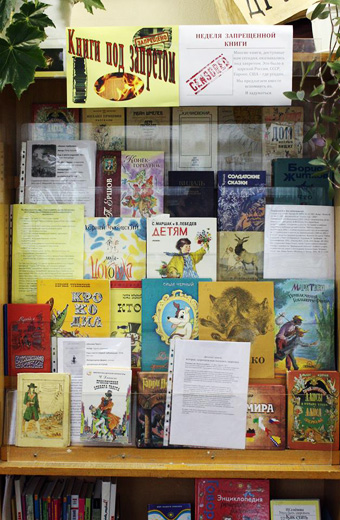 © Maria Klimova Exhibition "Children's Books that prohibited or tried to ban"
And here we smoothly cross the present and future. Many regret: "How much garbage is published!" Well, really, you must admit how it would become good without empty literature, without vulgar humority, rough criminalism and all occultism! OSS, I'm sorry, I selectively quoted N.K. Krupskaya and its “Instructions on the revision of the book composition of libraries and the removal of counter -revolutionary and anti -art literature” from 1923.
It seems that those long-standing instructions-renovations are stuck with us somewhere in the chromosomes. This is "with them", in the States, Banneded Books Week is a promotion in support of freedom of speech. All week here and there they dream of: let worthy people who will determine that they should not be issued somewhere. In our time, you can choose truly worthy! Thoughtful and old replicas sound much less often: “Still, I would like to decide what to read to my child. The state can recommend, but I would not want it to become the main expert. ”
I feel how to boil. Here is the Constitution, here are the laws on restrictions on literature (for all citizens or individual age categories), here are people of various ages who scold the legislation, but conclude: "Still, for censorship." What do they really need?
... Book gatherings again; This time, younger schoolchildren in front of me, and we are waiting for the “Uncle Tom’s hut” Bucher-Stow. We discuss whether everything can be read to children and how to determine the right one. “Let the adults first read and decide,” one listener suggests. “We don’t have this at home, I can read everything, if interesting. And if not interesting, I don’t read, ”another shrugs. My stories about attempts to ban some books, for example, “Flies-Tsokotuhi” amuse them. It reads on the faces: well, idiots are these adults! And the story of the “hut” itself is noticeably impressive, the fact that almost a war could flare up from the book, unexpectedly.
Local television is being removed. I'm afraid to blurt something wrong, not fully understanding the blurry formulations No. 436-FZ. In the evening, the journalist calls back in horror: "What, do Kolobok really are going to ban ?" Despite the assurances that this is not much like the truth, the editors still put on a report a phrase on violence in folk tales, which is not combined with age-related labeling under the law.
And now a week of forbidden books has ended. The events have passed. Reporting came out. The flow of “likes” and “comments” ended. Well, goals have been achieved, curiosity is satisfied. Only the sediment remained.
The editors thanks the All -Russian competition for the best literary work for children and youth "Booker" for support when working on this material.