
Translated material
Empire Mickey Mouse
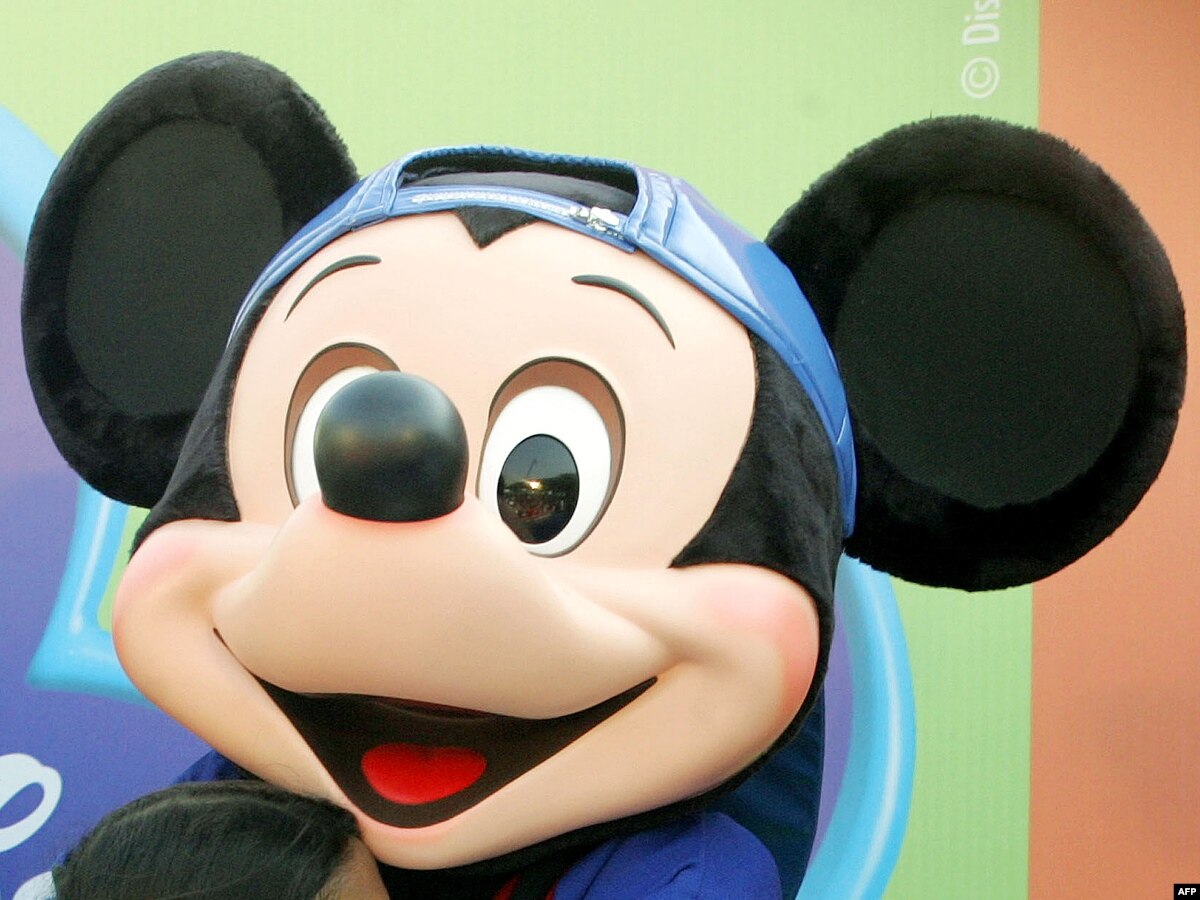
To start with the fact that this, undoubtedly, the most famous hero of Walt Disney became the malicious expression of Tatyana Tolstoy “national rodent of America” because Disney was lucky to create what happens extremely rarely, a new fabulous hero who managed to enter modern folklore. Moreover, he found him not where others were looking for.
Well, in fact, who loves mice? A small, unclean creature, secretly picking up crumbs from our plates, it causes squeamishness in some and panic horror in others. Where is the material for magical adventures? Disney went from the opposite. His Mickey Mouse is devoid of noble origin of traditional fairy -tale characters. The nondescript mouse appearance is not a spell of evil forces, as, say, in the case of a forester, but his nature, the nature with which he learned to put up. Mickey Mouse, like America itself, is extremely democratic. The American version of the "little man", he is David among the Goliaths. Nature made it vulnerable, estimated - unsinkable. Self -confident, he is beamed by the hope that the country was needed by the country, struck by unemployment.
Another component of success is due to the fact that Disney enthusiastically accepted a sound cinema, which turned out to be a painful test for the stars of dumb films. Charlie Chaplin, for example, believed that his career was over. But Disney, connecting the sound with the animation, in essence, created a new type of art, the capabilities of which we still have not mastered properly. The masterpiece of this hybrid genre was the "fantasy".
In this tape, we are still amazed at the audacity of the author, mixing high - classical music and low - animation. The personal motive of Disney, who dared to such an experiment, was his huge love for serious music, a passionate fan and expert whose life he was all his life. (Not so long ago, a magnificent concert hall built on Disney bequeated by Disney opened in Los Angeles.)
“Fantasy”, however, caused fierce criticism of snobs, who considered Disney a profanity. In fact, she was a search for new expressive means. The idea of this tape was to shift the illustrious musical opuses into the language of animation. In no case do not illustrate the music, namely to shift it. Connecting the sound with the moving pattern, Disney created a new work of art in which both components exist in convincing synthesis. At the same time, the author boldly combined the episodes in one divertissement, not for the unity of the style, but for the demonstration of the boundless possibilities of the animation. So, Bach tokkata in Disney is accompanied by magnificent evolution of abstract forms. Beethoven's pastoral symphony is scenes from ancient mythology. Tchaikovsky’s suite is interpreted as a change of seasons. The “sacred spring” of Stravinsky is associated with the history of the emergence of life on Earth. And then - a funny ballet with hippos, elephants and crocodiles, which replaces the lyrical game of indescribable painting to the Schubertov "Ave, Maria."
In "Fantasy" Disney torn the animation from realistic cinema. Yuri Mikhailovich Lotman wrote very interestingly about the importance of such demarcation. He said that the cartoon and the feature cinema are strikingly different from each other - like opera from ballet, because they use fundamentally different artistic languages. If in ordinary cinema, ”writes Lotman,“ the movement of photographs gives the image a realistic character, then in cartoons the movement of pictures sharply increases convention. Fantasy here is doubly fantastic.
Deeply realizing the nature of the art he chosen, Disney worked with pure plastic of the frame that exists regardless of the plot. Having left the dictatorship of the content, Disney got rid of the word as a plot rudiment. But he naturally combined animation with the most abstract of the arts - with music. In the film "Fantasy" visual and sound images connects the movement. Interestingly, some shots of this tape resemble paintings by the Lithuanian artist and composer Cheurlenis, who also sought to reproduce musical impressions with the means of painting. However, static forms deprive the music of the length. Disney went further, embodying the sound series into the dynamic, fluid images of his film. The viewer is given to the elements of pure movement, the transformation of forms, the play of lines and colors. The source of this experiment can be found in experiments with the light music of Scriabin, and maybe in the paintings of the first abstract artists. But Disney’s democratic genius managed to combine esoteric art with mass. He proved that a genuine artistic discovery can be available to absolutely everyone, starting with Mickey Mouse's friends.